A machine-tool bellow cover must fit the axis envelope, survive the actual coolant and chip load, and move without carrying machine forces or creating a hazard. By the end, you will know which measurements to send for a quotation, how to compare materials and protection systems, and how to test a cover before approving it for production.
Key takeaways
- Measure extended and compressed lengths, folded height, width and mounting position.
- Show every axis movement and fixing detail on the quotation drawing.
- Calculate fold compression and clearances to prevent bottoming out.
- Set material, inspection and acceptance criteria before selecting an Abu Dhabi supplier.
Define the axis envelope before choosing a cover
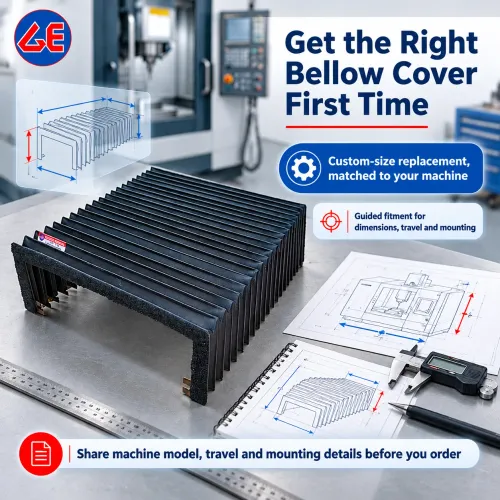
Axis travel alone does not define whether machine tool bellow covers will fit. Measure the fully extended length, compressed or folded length, folded height, available installation width, movement direction, guideway width, and mounting position.
| Dimension | Record | Failure if missed |
|---|---|---|
| Extended length | Maximum axis stroke plus the fixed mounting length | The cover cannot reach the far end of travel |
| Compressed length | Shortest permitted cover length at full retraction | Folds bottom out or obstruct the carriage |
| Folded height and width | Actual envelope at maximum compression | The cover strikes the table, spindle, guards, or way surfaces |
| Guideway and mounting position | Protected width, flange location, hole pattern, and attachment direction | The cover sits off-centre or cannot be secured |
| Clearance zone | Fixed and moving parts beside, above, and below the axis | Folds rub against chips, hoses, sensors, or machine structures |
Mark the minimum fold radius and every interference zone on the machine layout. Check clearance at both full extension and full compression; a cover that fits at mid-stroke can still buckle into a motor or scrape a guideway at the end position.
A quotation for custom bellow covers for machines should include these measurements, the maximum speed and acceleration, and whether the cover carries any load. It must not carry cutting forces, operator weight, or accumulated chips, so provide separate guideways, supports, or a support frame.
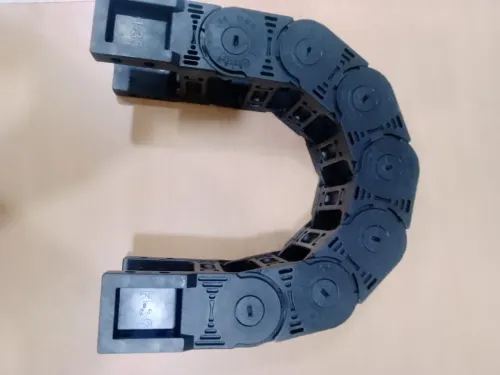
If cables and hoses travel beside the axis, specify them separately: the bellows protects the machine structure, while an energy chain controls their bend radius.
Prepare a quotation drawing with every movement and mounting detail
A comparable quotation starts with a dimensioned drawing, not “spot bellows supplier in Abu Dhabi.” State whether “spot” means a small point-of-protection cover, a spot-welding application, or a specific machine location, then attach photographs if the geometry is difficult to capture.
For custom bellow covers for machines, include these drawing and specification details:
1. Show maximum axis travel, movement direction, operating speed, acceleration, cycle frequency, and the full extended and compressed lengths.
2. Dimension available installation height and width, guideway width, folded height, minimum fold radius, and every adjacent interference zone at full extension and compression.
3. Mark the fixed and moving mounting faces, flange dimensions, attachment-hole pattern, bolt sizes, datum points, and the clearance available for guides, frames, and support strips.
4. Identify chip type, chip temperature, coolant, cleaning chemicals, cleaning method, ambient temperature range, required service life or cycle count, and replaceable wear parts.
5. State the protection target: chip deflection, coolant splash resistance, dust exclusion, or defined ingress protection. Open ends, seams, mounting flanges, guide clearances, and fold valleys can admit contamination.
The drawing must also show the support arrangement. A bellows is a contamination barrier, not a load-bearing component; provide guideways or a frame so it carries neither cutting forces nor operator or chip loads. Ask each supplier to quote against this identical data set, including the proposed fold count and compressed length.
Calculate folds, compression and clearance without bottoming out
A cover with 500 mm of axis travel does not automatically need 500 mm of usable fold movement. Add the supplier’s specified compressed length to the travel, then add end allowances and a margin that prevents the folds from flattening against one another at full stroke.
Calculate the geometry from the actual fold construction, not from travel alone:
- Number of folds = required usable movement ÷ movement provided by one fold; round up, then confirm the supplier’s pitch and construction.
- Extended length = compressed length + usable movement, including the fixed mounting sections.
- Compression ratio = extended length ÷ compressed length. Reject a design that reaches its stated limit during normal travel.
- Folded height must include the compressed pack, flange thickness, guide components and any wear strips; compare that total with the available installation height.
- Fold width must clear the guideway, table, saddle, clamps, lubrication lines and adjacent covers throughout the stroke.
Machine tool bellow covers need clearance checks at both ends of travel, not only at the midpoint. Model the cover in its most compressed and extended positions, then add clearance for lateral movement, sag, thermal growth and chip accumulation.
Check the minimum fold radius against the supplier’s drawing; a tight-radius axis can force folds to buckle or rub.
Run the assembled cover through the full stroke at operating speed and acceleration. Inspect for bottoming, flange contact, fold abrasion and interference after exposure to the specified coolant and cleaning method. Perform this test before approving the quotation drawing.
Match the geometry and material to the machine hazard
Chip form, coolant, heat and axis speed determine the cover choice more than the machine’s brand. For industrial bellows in Abu Dhabi, specify resistance to elevated ambient heat, airborne dust, UV exposure during storage, cleaning chemicals and the machine’s coolant.
| Application | Preferred bellows geometry | Alternative cover system | Material specification |
|---|---|---|---|
| Linear guideway with chips and flood coolant | Rectangular accordion folds with reinforced corners and wipers | Telescopic steel cover | Oil-resistant, polyurethane-coated polyester fabric; stainless fasteners |
| High-speed axis with light dust | Compact accordion bellows with low folded height | Roller cover | Low-friction, abrasion-resistant coated fabric with sealed edges |
| Grinding, welding or hot-chip zone | Multi-layer bellows with replaceable heat shield | Stainless-steel slat or telescopic cover | Aramid or glass-fibre outer layer with a heat-resistant coating; keep seams away from the spark path |
| Cable or hose travel beside the axis | Bellows for guideway protection only | Energy chain for cables and hoses | Abrasion-resistant coated fabric; size the chain for the largest manufacturer-specified cable bend radius |
| Outdoor, chemical or washdown exposure | Welded or sealed accordion bellows | Stainless roller or slat cover | UV-resistant polyurethane-coated fabric, corrosion-resistant hardware and adhesive compatibility with the cleaning agent |
Do not make the bellows carry cutting forces, operator loads or chip weight; provide guides, supports or a frame. A bellows also cannot replace guarding against crushing, shearing or entanglement.
Apply ISO 12100 and ISO 14120, and use an energy chain rather than forcing cables through the bellows unless bend radius, torsion, separation and acceleration have been designed together.
Qualify an Abu Dhabi supplier through testing and acceptance criteria
Approve the design only after it survives the machine’s real duty cycle, not a catalogue inspection. A machine-tool cover is engineered around axis travel, fold geometry, mounting and contamination control; a generic fabric bellows often lacks the abrasion resistance, guided movement and dimensional control needed beside a cutting tool.
- Cycle the cover through full extension and compression at the machine’s maximum axis speed. Record rubbing, fold collapse, bottoming-out and interference with guards, way covers or adjacent components.
- Repeat the required cycle count with the specified coolant, chip loading, cleaning method and temperature range. Inspect seams, adhesive joints, coatings and fold edges for abrasion or leakage.
- Check the installed cover against the approved drawing: extended length, compressed length, folded height, guideway width, mounting-hole pattern and minimum clearance must match the measured machine.
- Confirm the cover carries no cutting force, operator load or chip weight. Provide guides, supports or a frame where the bellows needs restraint.
- Request separate continuous temperature, short-duration chip temperature, substrate or coating temperature and cleaning-temperature limits. “High temperature” alone is not an acceptance criterion.
For industrial bellows in Abu Dhabi, include ambient heat, airborne dust, outdoor storage and cleaning chemicals in the service specification. The search phrase spot bellows supplier in Abu Dhabi is incomplete: state whether “spot” means a small point-of-protection cover or a spot-welding application, then attach photographs and a drawing.
A bellow covers supplier for machine tools in Abu Dhabi, including GURUKRUPA BELLOWS PVT LTD, should be judged on this evidence rather than a product label.
Related products
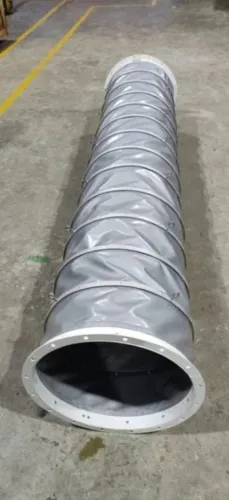
 | Round Bellow Covers To match with our reputation in the market, we are here to present an unparalleled assortment of Round Bellow Covers. View product → |
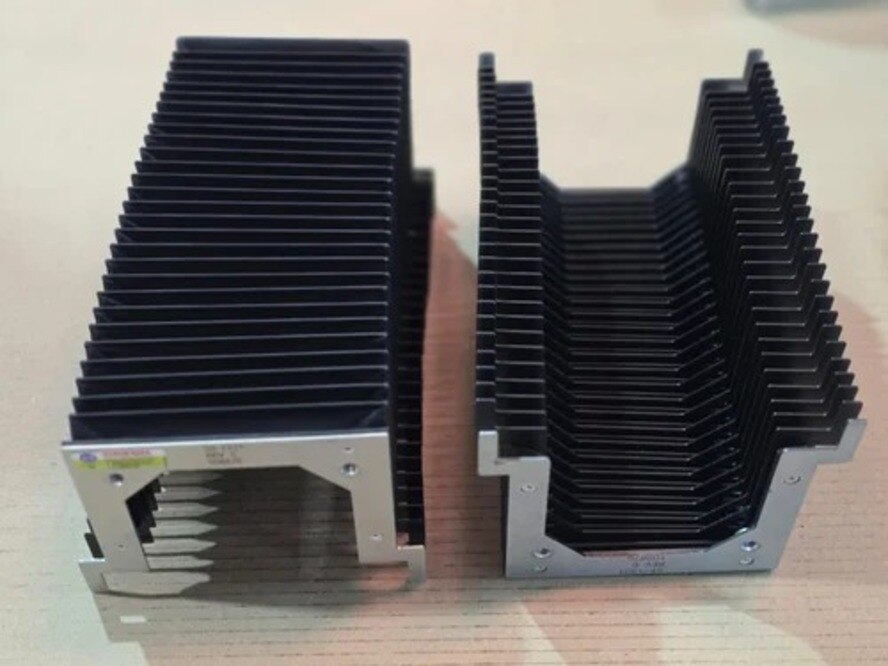
 | Bellow Cover The range of CNC Bellow Cover is manufactured on our premises, under the guidance of our expert professionals. View product → |
Frequently asked questions
What measurements define a machine tool bellow cover?
Record fully extended length, compressed or folded length, folded height, installation width, movement direction, guideway width and mounting position.
What should a quotation drawing for custom bellow covers include?
Show every axis movement, travel limits, mounting faces, fixing-hole details, clearances, guideway dimensions and the cover’s extended and compressed positions.
How do you prevent a bellow cover from bottoming out?
Calculate the fold pitch, total compression and available clearance, then check the folded pack against nearby machine components throughout the full travel.
How should you qualify a bellow covers supplier in Abu Dhabi?
Ask for drawings, material details and test evidence, then agree inspection points and acceptance criteria for movement, fit, compression, mounting and hazard resistance.
Related products
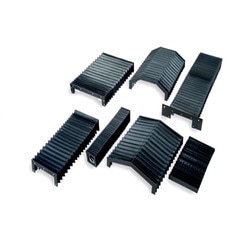 | CNC Bellow Cover Product Details: Brand GURUKRUPA Color BLACK Size ANY We are considered a well-known name in the business that manufactures and supplies CNC Bellow... View product → |
 | Bellow Cover We are considered a well-known name in the business that manufactures and supplies Bellow Cover. View product → |