
A bellow cover that matches an axis stroke can still fail when its folds bottom out, sag under gravity, rub against the machine, or deteriorate under coolant, chips, ultraviolet exposure and heat. By the end, you will have a measurement checklist, a material-selection method and a supplier brief that tests whether the proposed cover fits your machine and duty cycle.
Key takeaways
- Reject soft covers where hot swarf or sharp chips can cut the material.
- Measure the installed travel, compressed length, height and mounting points.
- Calculate fold count and confirm the cover clears every moving component.
- Specify material, coating and tests for Abu Dhabi heat, dust and service conditions.
Start with the machine hazard, not the cover shape
Hot swarf, sharp chips and heavy debris can destroy a flexible cover before its advertised stroke becomes relevant. Decide whether the hazard suits a soft cover first, then match the design to the guideway, slide, ballscrew or other moving mechanism.
1. Use a soft bellow cover for coolant, cutting oil, dust, fine abrasive particles and moderate chip loads on CNC machines, lathes, milling machines, grinders, lasers and presses. Check travel speed, acceleration, reversal frequency and production cycle; rapid reciprocation demands validated motion limits, not a thicker fabric.
2. Reject an unprotected soft cover where hot chips can burn or embed in the coating, sharp chips can cut folds or seams, or heavy debris can crush the bellows. Specify replaceable sacrificial flaps, overlapping slats, a chip deflector or a rigid enclosure, then verify that the added shield does not restrict movement.
3. Treat Abu Dhabi exposure as part of the hazard: ask for continuous temperature, UV, dust, sand and saline-humidity resistance, not only a short-term temperature rating. Request compatibility with the named coolant, oil and cleaning chemical at their actual concentrations.
4. Separate protection roles: the bellows shields the mechanism, while a cable carrier controls cable and hose bend radius. Check that neither system pinches, rubs or obstructs the other throughout the stroke before selecting soft material bellow covers in Abu Dhabi.
Measure the installation before requesting a quotation
1. A correct quotation starts with two length measurements: the cover’s fully compressed length and fully extended length. Add the axis stroke, travel direction, axis orientation, travel speed, acceleration and cycle frequency. State the required fold height or pitch, minimum bend radius or folding geometry, and whether motion includes frequent reversals.
2. Measure the cover cross-section at the installation, not from the machine’s nominal axis size. Provide the outer width or diameter, inner opening, mounting flange dimensions and bolt-hole pattern, plus the available clearance around the guideway. Include a drawing or photographs showing nearby tooling, workholding, cable carriers, lubrication lines and access doors.
3. Check both end positions in the machine’s CAD model or with a physical clearance study. At maximum compression, the folded package must clear the full travel path and must not bottom out, pinch a cable carrier or block an access door; at maximum expansion, it must not overstretch or rub adjacent parts.
Mark the required inspection and replacement access on the drawing. A supplier can then size the flexible soft bellow covers against the actual envelope rather than the stroke alone.
Calculate folds and check the moving envelope
Required working length equals extended length minus compressed length. For example, a 1,200 mm extended cover with a 700 mm compressed package needs 500 mm of working movement. Divide that difference by the supplier’s usable movement per fold, or fold pitch adjusted for overlap, then round up to estimate the fold count.
Soft bellow covers for machine tools in Abu Dhabi require confirmation of the exact count because fold depth and compression vary by construction.
- Ask the supplier to state the exact fold count, compressed package, extended geometry, minimum bend or folding radius, and permitted travel.
- Model both end positions in CAD or check them physically; the package must clear tooling, workholding, cable carriers, lubrication lines, access doors and adjacent machine parts.
- Confirm that the cover does not overstretch at full extension or bottom out and bunch at full compression.
- Check horizontal and vertical installations for sag, rubbing, twisting, chip-catching pockets and contact with guideways or moving components.
| Check | Pass condition | Failure consequence |
|---|---|---|
| Overextension | Travel stops before the limit | Torn seams or detached mounts |
| Compression | Folds close without force | Restricted axis travel |
| Adjacent clearance | No contact through the stroke | Abrasion, catching or collision |
| Chip exposure | Chips shed rather than lodge | Punctured folds and coolant ingress |
Choose material and coating for the actual Abu Dhabi exposure
Select by exposure, not by the label “fabric.” For soft material bellow covers in Abu Dhabi, state cutting-oil and hydraulic-oil brands, coolant concentration, cleaning chemicals, chip temperature, ambient heat, ultraviolet exposure, humidity, dust and sand before choosing the construction.
| Option | Best fit | Main limitation |
|---|---|---|
| PVC-coated fabric | General coolant, cutting oil, dust and ordinary chips | Heat, UV and sharp-chip resistance must be proven |
| Polyurethane-coated fabric | Abrasive chips, sand and repeated flexing | Confirm compatibility with the named oil and coolant |
| Silicone-coated fabric | Higher continuous heat and welding-spark proximity | Sparks can still burn or embed the folds; add a sacrificial shield |
| PTFE or fluoropolymer construction | Aggressive chemicals, low-friction contact and difficult cleaning agents | Cost and flex-life data require close review |
For flexible soft bellow covers, require continuous and peak temperature limits, UV/weathering data, abrasion results, fire classification, and chemical-compatibility evidence for each named fluid at its actual concentration. “Oil-resistant” is incomplete: demand the oil-resistance test method, such as ASTM D471, plus the tested fluid and exposure conditions.
Welding sparks, hot swarf or sharp chips call for overlapping flaps, slats or a separate deflector rather than a thicker coating alone. Check salt-laden humidity and sand ingress too.
Match the construction to orientation, speed and service life
Gravity changes the design. Require written confirmation for horizontal, vertical, inclined and inverted installation, including the maximum unsupported length. Assess gravity-driven sag, fold drainage, trapped coolant and whether support rails, guide strips, rollers or internal frames prevent folds from dragging, bunching, rubbing or collapsing into the moving envelope.
| Construction | Main limitation | Choose it when |
|---|---|---|
| Soft bellow cover | Needs orientation-specific support and validated motion limits | Flexible guideway protection suits the contaminant and temperature |
| Rubber bellow | Rubber compound may lack required abrasion, oil or UV resistance | The specified rubber has evidence for the named exposure |
| Ordinary fabric bellow | “Fabric” does not identify coating, seams or chemical performance | The complete material construction is documented |
| Telescopic steel cover | Heavy, rigid and vulnerable to impact or poor alignment | Hot, sharp or heavy chips demand metal protection |
| Aluminium apron cover | Protects against chips but is less sealed around complex motion | Sliding metal strips suit the travel path |
| Rigid enclosure | Restricts access and moving geometry | Complete containment outweighs flexibility |
Compare validated travel speed, acceleration, reversal frequency, cycle count and service-life basis with production settings. Soft bellow covers for machine tools in abu dhabi may need combined protection: a bellow for fine dust and coolant plus sacrificial flaps, steel slats, deflectors or a rigid enclosure for hot swarf and heavy debris.
Turn the supplier quotation into an acceptance test
Do not approve a quotation until it describes the supplied cover as a machine-specific assembly, not merely as a fabric product. Ask the soft material bellow supplier for:
1. A dimensioned drawing showing compressed and extended lengths, fold count, pitch, clearances, end clamps, mounting-frame details and access for replacement.
Record the material, coating, seam method, chemical compatibility with the named coolant and cleaner, continuous and peak temperature range, fire classification, corrosion or weathering evidence, tested orientation, and validated speed, acceleration, reversal and stroke limits.
2. Evidence for every claimed protection level. If an IP rating is stated, request the test basis and enclosure arrangement under IEC 60529. Confirm the tested orientation matches the machine, and reject “oil-resistant” or “weather-resistant” without fluid, concentration, UV, humidity, sand and temperature data.
3. Inspect after commissioning, then at intervals tied to cycle count and exposure. Check cuts, delamination, brittle folds, seam separation, loose clamps, embedded chips, coolant penetration, loss of attachment and abnormal movement. Run the axis through its full stroke at production speed; stop if the cover bottoms out, overstretches, twists or rubs.
For soft material bellow covers in abu dhabi, compare GURUKRUPA BELLOWS PVT LTD with other suppliers using this evidence, not a generic product description. A replaceable wear section or spare cover can reduce downtime when it changes without machine dismantling.
Related products
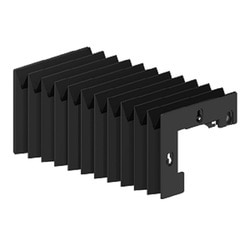 | Soft Material Bellow Product Details: Brand GURUKRUPA Specifications:- Function of accordion machine shield: water-proof,oil-proof, anti-corrosion, fire-proof... View product → |
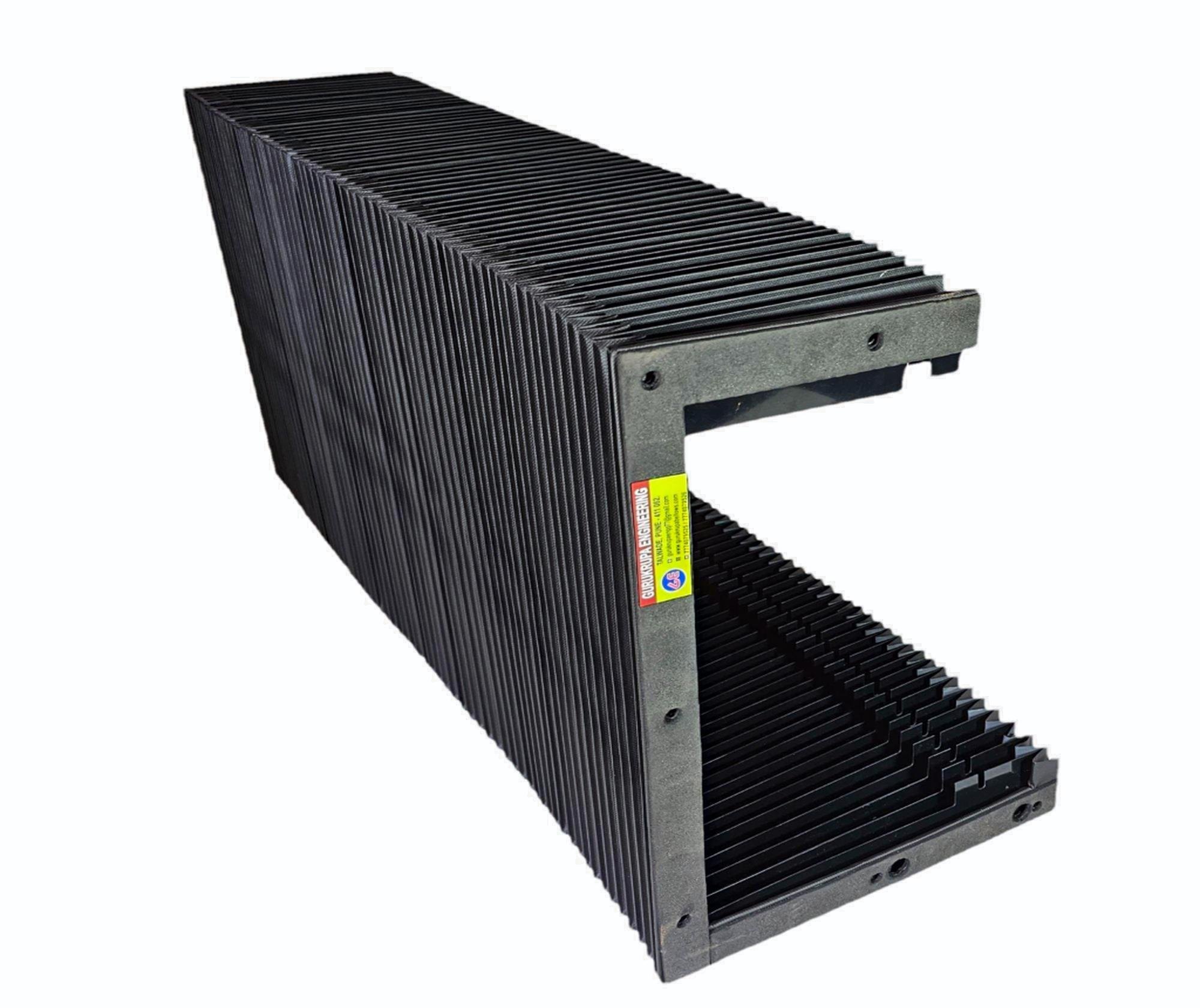 | Bellow Cover We are considered a well-known name in the business that manufactures and supplies Bellow Cover. View product → |
Frequently asked questions
When are soft material bellow covers unsuitable?
Choose another protection method when the installation faces hot swarf, sharp chips, heavy debris or hazards that can cut, burn or crush flexible material.
What measurements should you provide for a quotation?
Provide travel, extended and compressed lengths, cover height and width, mounting dimensions, guideway details, clearance limits and the moving envelope.
How do you calculate the required folds?
Divide the available travel by the usable movement per fold, then confirm the resulting compressed and extended dimensions against the machine envelope.
How should you choose material for Abu Dhabi conditions?
Match the fabric and coating to heat, dust, oil, coolant, ultraviolet exposure, corrosion risk and the specific chips or debris produced by the machine.
What should a supplier quotation include?
Require stated materials, coating, dimensions, fold geometry, mounting method, speed and cycle assumptions, service-life basis and an acceptance test with measurable pass criteria.