A bellow cover belongs where chips, dust, coolant, heat, moisture or mechanical movement can damage a machine component, but the correct design depends on the axis and contaminant. By the end, you will be able to match a cover type to each Chandigarh machinery application, collect the dimensions a supplier needs, and reject specifications that leave important risks unanswered.
Key takeaways
- Match the cover material to dust, chips, sludge, heat and sparks.
- Use guided designs for vertical axes and flexible designs for moving paths.
- Measure compressed length, extended length, width, height and mounting points.
- Request temperature, abrasion and flame-resistance evidence for Chandigarh conditions.
Match the cover to the machine component and contaminant
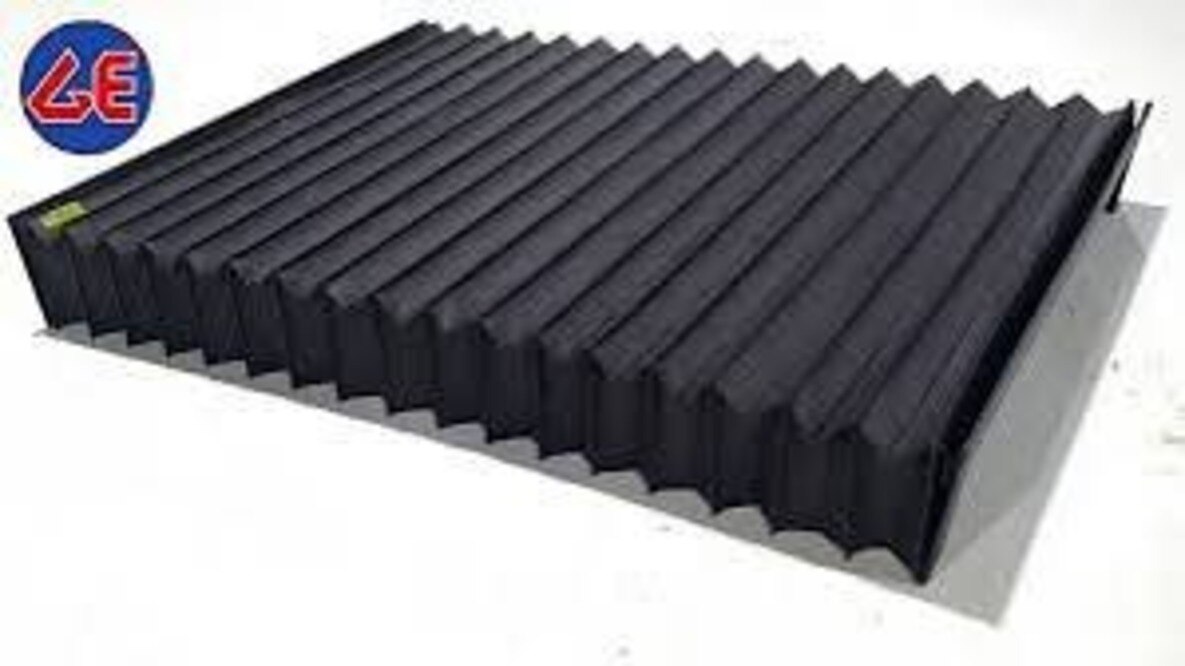
Start with the contaminant, then match the cover to the exposed component. A coated-fabric accordion bellows suits dry dust and light chips; it is not a universal enclosure for hot swarf, grinding sludge, or welding sparks.
| Component | Chandigarh hazard | Suitable protection |
|---|---|---|
| Linear guideways and slide surfaces | Abrasive workshop dust, cast-iron chips, coolant splash | Sealed fabric bellows with scrapers, drainage, and access for wiper inspection |
| Ball screws and lead screws | Chips, oil mist, cutting fluid, and corrosion from moisture | Close-fitting bellows that preserve lubrication access without touching the screw |
| Hydraulic and pneumatic rods | Dust, water, outdoor corrosion, and oil contamination | Rod bellows with secure end collars and enough extension for the full stroke |
| Grinding-machine slides | Fine abrasive sludge, sparks, and heat | Slurry-resistant material, reinforced folds, and heat-resistant outer protection |
| Laser or plasma axes | Radiant heat, sparks, molten metal, and smoke | Heat- and spark-resistant construction, with clearance from the cutting zone |
Machine bellow covers applications include machining centres, CNC lathes, milling machines, EDM equipment, transfer lines, and automation axes. EDM covers must resist dielectric fluid; grinding covers must resist abrasive slurry.
Check replacement access before approving the design. The cover must not block lubrication points, drain paths, fasteners, or factory wipers, because hidden contamination can damage a guideway before inspection.
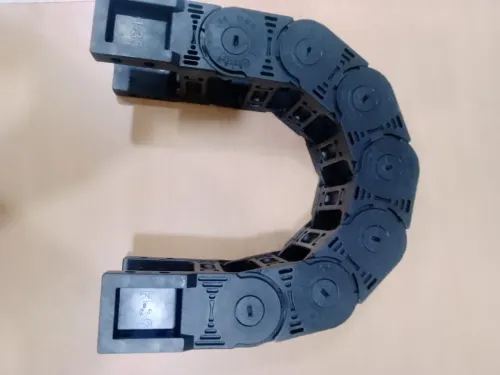
Protective bellow covers for applications in Chandigarh also need a separate solution for cable routing: a bellows shields machinery, while a cable carrier controls cable bend radius.
Use different cover designs for horizontal, vertical and moving axes
Use protective bellow covers for cnc machines on exposed guideways, ball screws, lead screws and slide surfaces where chips, coolant or abrasive dust can enter the travel path. The design changes with gravity, stroke direction and the space available around the moving component.
- Horizontal axes in machining centres, milling machines and CNC turning machines usually use supported accordion bellows over guideways or screws. Check the folded height so the cover does not sag onto the rail, scrape the carriage or restrict full travel.
- Vertical axes need a cover designed for its own weight. Specify the compressed height, extended length, mounting orientation and guide arrangement together; an unsupported fabric bellows can sag, fold inward and rub the axis. Add support strips or a guided construction when the vertical stroke is long.
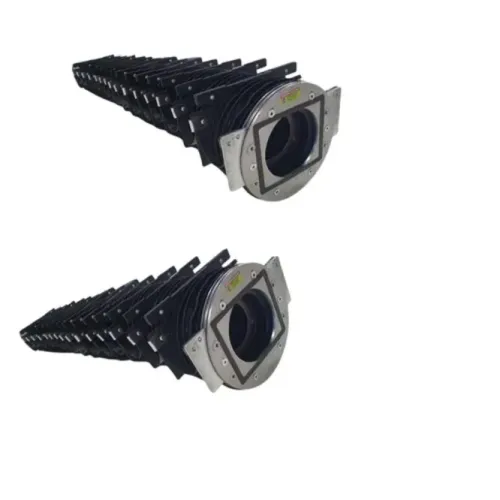
- Long, fast or compound moving axes in transfer lines, automation equipment, laser systems and plasma equipment need controlled extension and retraction. Use guided folds, internal frames or a rolling arrangement where repeated acceleration would make loose folds whip or collapse.
These machine bellow covers applications protect linear motion, not cable routing. Keep a cable carrier separate and preserve the cable manufacturer’s bend radius, because a bellows that shields the guideway can still fatigue power and signal cables.
Grinding and EDM equipment need resistance to sludge or dielectric fluid, while laser and plasma axes need protection from sparks and radiant heat. Inspect wipers, lubrication points and drains without removing the entire cover.
Choose the cover form for the travel path
The cover form must follow the travel path, not merely the component name. Protective bellow covers for CNC machines need enough compression space, guidance and clearance to move without rubbing, trapping chips or blocking inspection.
| Form | Best use | When it applies |
|---|---|---|
| Flat | Low-profile horizontal guideways and slide surfaces | Choose it where clearance above the way is limited and travel remains in one plane. |
| Round | Rods, shafts, hydraulic or pneumatic cylinders | Choose it for cylindrical movement, especially where a seal-like enclosure must follow a rod. |
| Rectangular | Ball screws, lead screws and wide linear ways | Choose it when the protected section has four-sided geometry and needs a stable mounting frame. |
| Telescopic | Rigid protection against heavy chips and hot swarf | Choose it for machining centres, lathes and grinding machines where steel boxes tolerate impact better than fabric folds. |
| Rolling | Long horizontal travel with little folded height | Choose it when a curtain can roll onto a drum; confirm that chips cannot collect between layers. |
| Scissor-lift | Vertical lifting mechanisms and telescopic lifts | Choose it when the cover must rise and collapse vertically with guided support. |
For industrial bellow covers in Chandigarh, check the compressed height, extended length and guide arrangement together. A vertical design that sags can rub, collapse or lose travel. Leave access to wipers, lubrication points, drains and fasteners; protection that conceals contamination can lengthen maintenance and damage the guideway.
Measure the machine before requesting a quotation
Record the full travel envelope and the clearances around it before asking for a quotation. Measure with the machine at both ends of its stroke, not only in its parked position; a cover sized for the parked axis can bottom out, rub, or restrict travel.
1. Measure the required extended length, folded or compressed length, cover width and height, and actual axis travel. Note whether the cover mounts horizontally, vertically, or at an angle.
2. Record the fixed and moving mounting faces, bolt-hole pattern, flange dimensions, guide arrangement, and available clearance above, below, and beside the cover. Check clearance at every travel position, including the maximum sag or fold height on a vertical axis.
3. Record speed, acceleration, cycle frequency, direction changes, and unsupported length. A vertical cover needs a check for weight, sag, fold collapse, and guide contact; scaling a horizontal design can lose travel.
4. Identify the contaminant and operating exposure: abrasive dust, chips, grinding sludge, flood coolant, oil mist, sparks, radiant heat, moisture, or dielectric fluid. For protective bellow covers for applications in Chandigarh, note monsoon exposure and outdoor corrosion where relevant.
5. Mark inspection access for wipers, lubrication points, drains, fasteners, and replacement removal. Ask for the proposed material stack-up, temperature limit, coolant and oil compatibility, permissible speed and acceleration, folded and extended dimensions, mounting details, and inspection interval. “Oil resistant” alone is not a usable specification.
Specify materials and supplier evidence for Chandigarh conditions
“Oil resistant” is not evidence. Ask a protective bellows supplier in chandigarh for the proposed material stack-up, including fabric, coating, thread, frame, scraper and fasteners, plus the exact coolant, oil and temperature conditions used for compatibility testing.
Request these records before comparing quotations:
- Maximum operating temperature, permissible speed and acceleration, cycle frequency, folded and extended lengths, and minimum clearance.
- Mounting drawing with hole pattern, guideway interface, drainage direction and access to wipers, lubrication points and fasteners.
- Inspection interval, replacement procedure and photographs of a comparable installation.
- Results from abrasion, repeated wet-dry cycling or spark-exposure tests when those hazards apply. A nominal temperature rating alone does not prove resistance to radiant heat or hot swarf.
Use the supplier’s proposed construction as a decision filter:
| Contaminant | Evidence to demand | Reject the proposal when |
|---|---|---|
| Dry abrasive dust or chips | Coated fabric, reinforced folds, scrapers and an abrasion test condition | Dust can enter through open folds or the supplier cannot state the tested abrasion exposure |
| Flood coolant, oil mist or monsoon moisture | Named fluid compatibility, sealed mounting ends and a low-point drainage plan | Water or sludge will collect in the lowest fold |
| Grinding sludge or EDM dielectric | Chemical compatibility and clean-out access | The cover blocks inspection or traps slurry |
| Hot swarf, welding sparks or laser heat | Rated heat barrier, spark-resistant outer layer or metal construction, with exposure limits | “Heat resistant” has no temperature, duration or distance attached |
For industrial bellow covers in chandigarh, GURUKRUPA BELLOWS PVT LTD should provide this application-specific evidence rather than a generic catalogue rating.
Related products
 | Round Bellow Covers ₹1000 To match with our reputation in the market, we are here to present an unparalleled assortment of Round Bellow Covers. View product → |
 | Bellow Cover ₹1000 We are offering an excellent quality of Protective Bellows for all type Guideways. This design covers three sides of the rail. View product → |
Frequently asked questions
How do you match a bellow cover to the contaminant?
Use coated-fabric accordion bellows for dry dust and light chips. Specify tougher, heat-resistant or spark-resistant construction for hot swarf, grinding sludge or welding sparks.
Which bellow design suits horizontal and vertical machine axes?
Horizontal axes often use covers that shed chips from the top surface. Vertical axes need support, guidance and a design that prevents sagging or bunching during travel.
How does the travel path affect the cover form?
A straight path can use a conventional accordion bellows, while compact or multi-axis paths may require guided, telescopic, roller, apron or customised covers.
What measurements should you provide for a bellow-cover quotation?
Provide compressed length, extended length, cover width and height, axis travel, mounting dimensions, fixing-hole details, clearance limits and the folded-pack size.
What supplier evidence matters for Chandigarh machinery?
Ask for material specifications, temperature range, abrasion data, flame or spark resistance where required, sample construction details and references for comparable machine conditions.
Related products
 | Bellow Cover ₹5000 Product Details: Brand GURUKRUPA Color Black-Blue Size Customised With the support of our excellent team workers, we have been delivering the best... View product → |
 | Telescopic Bellow Cover ₹1000 Product Details: Brand GURUKRUPA Ours is a distinguished name in the business that manufactures and supplies Telescopic Bellow Cover that is vastly... View product → |
 | Product Details: Brand GURUKRUPA Color Black-Blue Size Customised With support of our excellent team workers, we have been delivering the best... View product → |