A cylindrical bellows cover can look intact while hidden chips, fold damage, or mounting errors disrupt machine-tool movement. You will be able to inspect the cover through its full stroke, clean it without creating new damage, verify fit, select a suitable protection method, and decide when replacement is justified.
Key takeaways
- Inspect fully extended and compressed ends before restarting the machine.
- Remove chips from folds and check whether contamination reached the mechanism.
- Match cover travel, clearance, mounting geometry, material, and protection method.
- Record dimensions, travel limits, temperature, contaminants, and mounting details before replacement.
Inspect the cover at both ends of machine travel
Inspect the cover fully extended and fully compressed, because fold-to-fold rubbing, trapped chips, overstretched stitching, or guide contact can appear only at one end of travel. Stop the machine before examining it, and use a flashlight to view the folds, mounting edges, and spaces behind the cover.
- Fully extended: look for stretched seams, thin spots, cuts, pinholes, delamination, heat damage, and folds pulled out of shape.
- Fully compressed: check for crushed convolutions, trapped debris, hardened folds, oil swelling, and fabric touching the guide, shaft, cable, or hose.
- Through the stroke: watch for twisting, vibration, uneven folding, repeated rubbing, and interference at acceleration or end positions.
- Mounting hardware: check collars, retaining rings, fasteners, flanges, and frames for looseness, corrosion, or coolant trapped beneath a flange.
Good round bellow cover care uses a condition-based interval rather than a fixed calendar date. Check a high-cycle axis, abrasive cast-iron work, dry machining, or continuous coolant spray every shift or week according to observed wear; extend the interval only after records show stable condition.
Remove loose chips with a soft brush or lint-free cloth, or controlled low-pressure air directed away from the folds. High-pressure air can drive grit into seams and invert lightweight bellows. Treat any opening as a failure: the cover can still move while coolant and chips reach the mechanism.
Record the date, axis position, defects, and photographs after each inspection.
Clean the folds and verify whether contamination reached the mechanism
Stop the machine, isolate electrical and stored energy, and let hot surfaces cool before cleaning. A bellows cover is a barrier, not a chip tray: remove chips from every fold before they are pressed into seams or dragged against the guideway.
- Extend and compress the cover as the machine builder permits. Use a soft brush or lint-free cloth to lift chips and dried coolant; use controlled low-pressure air directed away from the folds. Never use high-pressure air, which can drive grit into seams or crease lightweight fabric.
- Wipe the folds dry and inspect pinholes, cuts, loose stitching, cracked coating, exposed reinforcement, hardened or crushed convolutions, oil swelling, and coolant penetration. During cylindrical bellow cover maintenance in Chennai, treat a small opening as a contamination path even if movement remains smooth.
- Open or remove the cover only under the machine builder’s procedure. Check the protected guideway, shaft, screw, spindle, wipers, and adjacent mechanism for chips, abrasive paste, pooled coolant, rust, or abnormal scoring.
- Remove contamination with the approved method, then apply only the lubricant specified for that guide, screw, or bearing. Do not spray oil onto the bellows unless its material instructions explicitly approve it; excess oil collects abrasive dust.
- Refit retaining rings and fasteners, confirm folds are free, and restart at low speed. Stop immediately if the cover rubs, binds, folds unevenly, or leaks contamination during a short travel test.
Match the cover to movement, clearance, and mounting geometry
Measure the complete axis stroke before fitting the cover. A search for cylindrical bellow covers for care in chennai is not enough to select a safe fit: record extended length, compressed package length, inside and outside diameters, travel direction, and every obstruction along the stroke.
Check the installation geometry with the machine at its specified reference position:
- Confirm which end is fixed and which end moves; reversing them creates fold bias.
- Align the guide, shaft, or mounting frame with the cover’s centreline.
- Check radial and lateral clearance at full extension and full compression.
- Keep cables, hoses, clamps, and nearby guards outside the folding path.
- Verify the mounting ring or flange, hole pattern, fastener length, and retaining-ring fit.
| Check | Pass condition | Failure sign |
|---|---|---|
| Travel and length | Cover reaches both limits without stretching or bottoming out | Overstretched stitching or crushed folds |
| Clearance | No fold, collar, or frame touches a guide or adjacent part | One-sided rubbing or shiny contact marks |
| Mounting position | Fasteners are installed without twisting at the reference position | Permanent spiral shape or uneven compression |
| Movement | Cover follows the axis without lateral snap, twist, or hesitation | Binding, fold-to-fold contact, or noise |
Inspect metal collars, retaining rings, and flanges separately. Humid coastal air and trapped coolant residue can corrode Chennai hardware, while a loose fastener lets the cover shift and rub. Correct the alignment or clearance before replacing a cover that failed on one side.
Choose the protection method and material for the working conditions
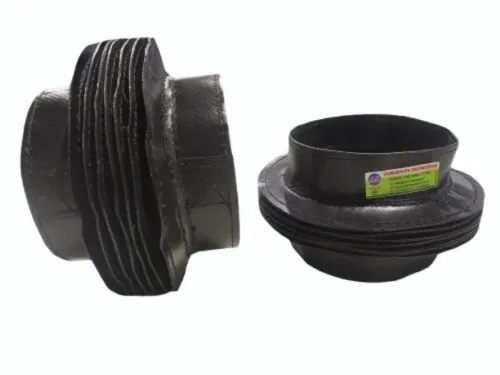
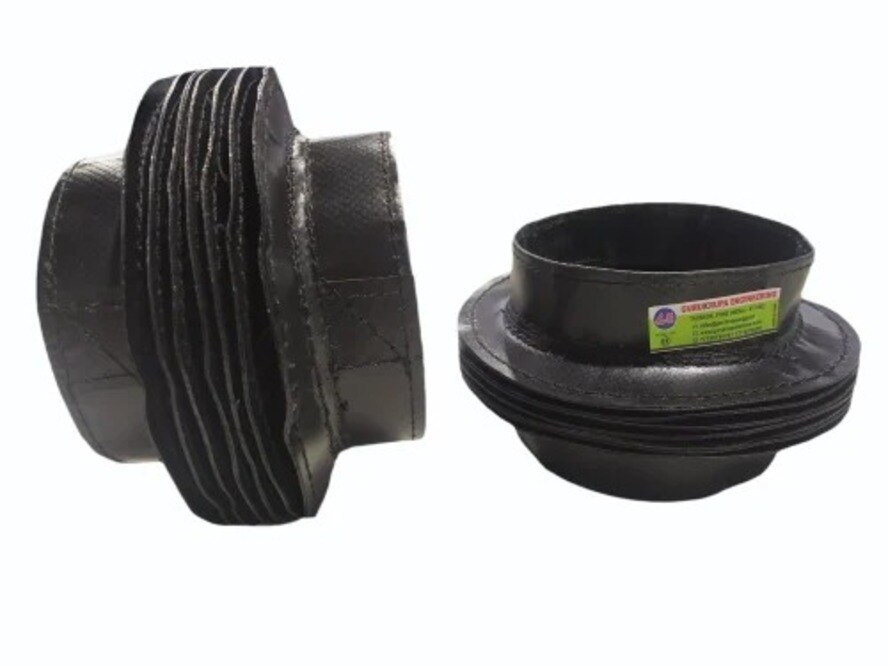
Use a round cylindrical cover when the protected shaft or guideway has axial travel and the available envelope is circular. It suits clean or moderately contaminated movement where folds can compress without rubbing. Choose another method for broad flat openings, heavy chip loading, or rigid impact hazards.
| Option | What it means | When it applies |
|---|---|---|
| Round cylindrical bellows | Flexible circular barrier | Axial shafts, rods, and compact round guideways |
| Rectangular bellows | Folded cover with a flat profile | Wide slides, tables, and rectangular openings |
| Telescopic steel cover | Rigid overlapping metal plates | Hot chips, impact, heavy cutting, and long flat ways |
| Wipers | Scraping seals at an exposed edge | Light contamination where full enclosure is unnecessary |
| Spiral guard | Helical metal or polymer shield | Rotating shafts, leadscrews, and limited chip protection |
| Exposed guideway | No protective cover | Only where contamination is controlled and inspection is immediate |
Select the cover and hardware for the actual environment, not the machine’s appearance. Check coolant chemistry, cutting oil, abrasive cast-iron dust, chip impact, operating temperature, sparks, ultraviolet exposure, humidity, and salt-laden coastal air. Confirm that the fabric, coating, seams, retaining rings, collars, and fasteners tolerate those conditions.
Use corrosion-resistant hardware where humidity or trapped coolant reaches a flange. A cover that fits mechanically but swells in oil, hardens from heat, or cracks under repeated folding will admit contamination and fail faster than an intentionally exposed, cleanable guideway.
Know when replacement is necessary and what to record before ordering
Replace the cover after any pinhole, cut, seam separation, delamination, hardened or crushed fold, exposed reinforcement, coolant penetration, permanent deformation, or loose retaining ring. Inspect it fully extended and fully compressed; fold-to-fold rubbing and trapped chips can appear only at one position.
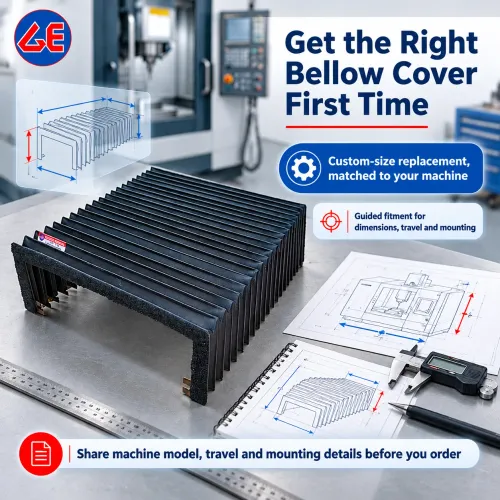
Before ordering cylindrical bellow covers replacement in chennai, send the supplier:
- Axis travel, fully extended length, fully compressed package length, outside and inside diameters, travel direction, and available clearance.
- Mounting-ring or flange dimensions, hole pattern, collar and retaining-ring details, fastener size, and mounting orientation.
- Minimum fold radius, compression ratio, operating speed, acceleration, temperature, and any lateral bending or vibration.
- Coolant type, chips, oil, cleaning chemicals, humidity, and exposure to salty coastal air.
- Photos of both end positions, plus photographs of corrosion, rubbing, or contamination behind the flange.
| Condition | Decision | Why |
|---|---|---|
| Pinholes, torn seams, or coolant inside | Replace and inspect the mechanism | A small opening admits chips and liquid |
| Hardware corrosion only | Replace hardware or specify corrosion-resistant parts | Chennai humidity and coastal air attack exposed metal |
| Normal outer movement but compressed folds touch | Replace or redesign | Stroke alone does not prove correct compression |
If chips or coolant have passed behind the cover, make the machine safe and follow the builder’s removal procedure before checking the guideway, shaft, or screw. GURUKRUPA BELLOWS PVT LTD can use these measurements and site details to distinguish a dimensional replacement from a cover requiring changed hardware or material.
Related product
 | Round Bellow Covers ₹1000 To match with our reputation in the market, we are here to present an unparalleled assortment of Round Bellow Covers. View product → |
Frequently asked questions
How should you inspect a cylindrical bellow cover at both ends of machine travel?
Stop the machine, extend and compress the cover, then use a flashlight to check folds, stitching, mounting edges, guide contact, and trapped chips at both positions.
How do you clean a round bellow cover and check for contamination?
Remove loose debris from every fold, inspect behind the cover, and verify whether chips, coolant, dust, or abrasive material reached the guideway or moving mechanism.
What must you match when selecting a cylindrical bellow cover?
Match the required movement, compressed and extended lengths, clearance, mounting geometry, fold dimensions, and attachment points to the machine.
When does a cylindrical bellow cover need replacement?
Replace it when folds split, stitching fails, mounting edges deform, rubbing persists, movement is restricted, or contamination reaches protected components. Record dimensions and working conditions before ordering.