The decision depends on what reaches your machine’s moving parts, how much contamination costs you, and whether the cover fits the axis without creating a new failure point. You will be able to compare cover types, estimate the cost of protection against downtime, and prepare the measurements and acceptance criteria a supplier needs.
Key takeaways
- Buy protection when chips, coolant or moisture threaten costly guideways and moving axes.
- Match cover construction to chip load, coolant exposure, travel speed and heat.
- Compare total downtime and maintenance costs, not only the purchase price.
- Ask Hyderabad suppliers for drawings, travel data, materials and fitment evidence.
When a Hyderabad Machine Actually Needs a Telescopic Cover
A telescopic cover earns its cost when contamination threatens a more expensive failure. Continuous metal chips, abrasive dust, coolant or monsoon moisture justify protection for CNC guideways, linear rails, ballscrews, racks, scales, hydraulic cylinders and lifting columns—especially on a high-use axis where contamination causes alignment work, premature wear or unplanned downtime.
The question behind telescopic bellow covers for worth buying in Hyderabad is not the purchase price alone. On a clean, slow, lightly used machine, a scraper, way wiper, chip tray, positive guard or redirected coolant flow may protect the same surface with less moving mass and replacement work.
| Operating condition | Buying case | Main caution |
|---|---|---|
| Continuous chips and coolant | Strong case for a cover integrated with chip evacuation | Confirm drainage and wiper access |
| Clean, low-use axis | Usually a weak case | Compare cover cost with occasional cleaning |
| Grinding dust, hot chips or sharp swarf | Protection is necessary, but material selection is critical | Flexible fabric, seams and coatings can fail |
Specify the cover from actual motion data, not table length. Provide closed and extended lengths, width, height, stroke, travel direction, speed, acceleration, mounting clearances and interference zones. Missing acceleration data can cause noise, buckling and premature guide wear.
Check the fully open and closed positions against cable carriers, tool changers, doors and chip conveyors before approval.
How Telescopic Covers Handle Chips, Coolant and Moisture
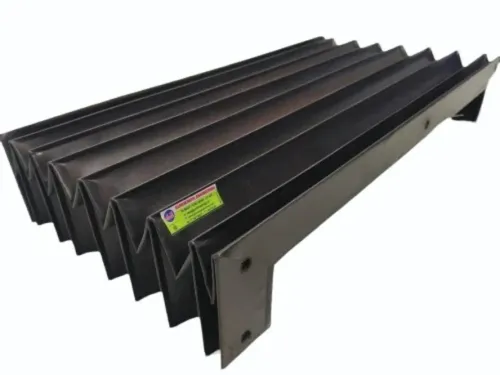
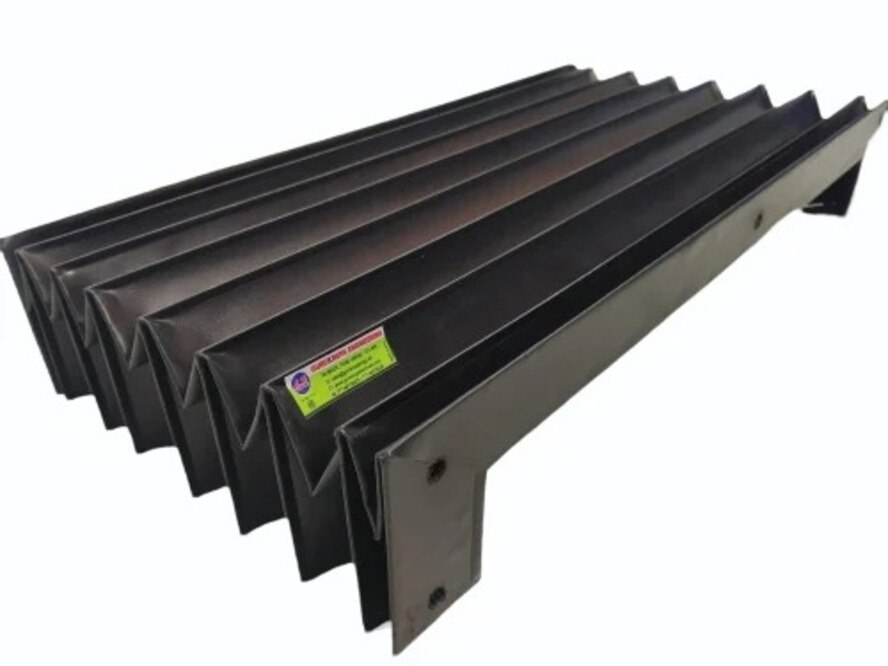
During rapid travel, telescopic machine bellows shield guideways and moving assemblies by moving with the axis rather than leaving the exposed way open. Nested sections extend and retract in sequence, while overlapping edges, wipers and scrapers push chips away from the protected surface.
This prevents swarf from grinding into guide blocks, ball screws or sliding faces.
Coolant protection depends on the cover’s joints and drainage, not its outer appearance. A poor overlap or damaged wiper lets coolant carry fine metal particles beneath the cover, where they can corrode rails and contaminate lubrication.
Horizontal and inclined installations need sloped surfaces, deliberate overlaps and drainage paths that send fluid away instead of storing it at a low point.
Specify these features for the actual contamination:
- Wipers or scrapers matched to chip size, dust abrasiveness and coolant chemistry
- Sealed or shielded joints where direct coolant jets reach the moving cover
- Drain holes positioned outside the guideway’s protected zone
- Sufficient clearance for the cover, cable carrier and hose loops throughout the full stroke
Rigid telescopic steel covers usually handle hot chips, heavy swarf and direct coolant impact better than flexible fabric or rubber bellows. Flexible covers suit low-mass motion, compact folded length and irregular shapes, but sharp chips, grinding dust, hot particles and concentrated jets can cut seams or degrade coatings.
For Hyderabad machinery, test the cover against abrasive airborne dust, monsoon moisture and the actual water-miscible or neat cutting fluid. Moisture trapped inside a closed assembly creates corrosion even when the external cover appears intact.
Steel, Flexible Bellows or No Cover: Which Option Fits
Choose rigid steel when hot chips, abrasive swarf and direct coolant impact threaten guideways or ballscrews. Choose flexible bellows when low moving mass, compact folded length or protection around an irregular shape matters more than resistance to sharp, hot debris. A clean, slow axis may need no cover at all.
| Option | Contamination resistance | Movement and space | Maintenance fit |
|---|---|---|---|
| Rigid telescopic steel | Highest against hot chips, heavy swarf and coolant jets; nested sections and scrapers limit entry | Adds mass and needs clearance; stacked closed length consumes axis space | Inspect wipers, seals, alignment and chip evacuation; repair damaged sections promptly |
| Flexible fabric or rubber | Good against dust, mist and ordinary coolant when material, seams and temperature rating match | Low mass and compact folded package; suits irregular paths | Check fabric, coating, seams and frames; sharp chips, grinding dust and heat shorten life |
| No cover | Lowest protection; acceptable only with controlled chips, positive guarding or effective wipers | Preserves full travel and adds no moving load | Lowest purchase cost, but contamination can destroy rails, scales, screws or hydraulic parts |
The telescopic bellow cover benefits justify the added cost when contamination causes repeated cleaning, accuracy loss or unplanned stoppages. Compare that avoided work with wiper or fabric replacement, installation access and lost travel.
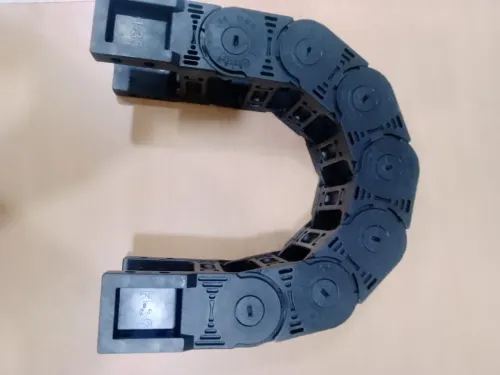
Remember that telescopic machine bellows do not manage cables: use a cable carrier for bend radius control, then verify both systems’ swept volume and clearances.
The Cost Test: Protection Against Maintenance and Downtime
Price the failure, not the cover. Calculate one hour of lost production, then add technician time, replacement parts, alignment checks and the cost of scrapped work. The telescopic bellow cover benefits outweigh purchase, installation and replacement costs when one prevented contamination event costs more than the cover’s service life.
Build the estimate from these costs:
- Unplanned downtime while chips or coolant damage a guideway, ballscrew or scale
- Corrective maintenance, including cleaning, re-lubrication, alignment and component replacement
- Planned cover maintenance, including wiper inspection, seal replacement and access time
- Installation changes, such as brackets, drain paths, guards or reduced usable travel
A machine running every shift under continuous chip and coolant loading is the strongest case. In Hyderabad, abrasive chips, humid monsoon air, coolant residue and heat increase the price of neglect, especially when a contaminated axis stops a production cell rather than one isolated machine.
The business case weakens for a clean, slow, lightly used axis. A scraper, way wiper, chip tray, positive guard or improved coolant direction may protect it at lower cost, without adding moving mass or recurring wiper replacement.
Include the cover’s closed length and service access in the calculation. A cover that consumes travel or obstructs a chip conveyor can create a new cost. Searches for “telescopic bellow covers for worth buying in hyderabad” should end with a machine-specific comparison: avoided downtime and repairs versus purchase, installation, maintenance and eventual replacement.
If the avoided cost is not clearly higher, do not specify the cover.
How to Specify and Vet a Telescopic Bellow Cover Supplier in Hyderabad
Approve a telescopic bellow cover supplier in hyderabad only after the supplier sizes the cover from the machine envelope, not from table length alone.
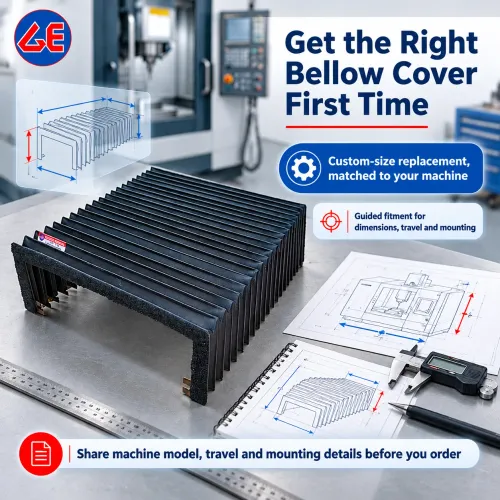
Provide a dimensioned drawing or 3D model showing mounting points, closed and fully extended positions, service access, drain paths and interference zones around tool changers, cable carriers, guards, doors and chip conveyors.
1. Submit dimensions: closed length, maximum extended length, cover width and height, axis stroke, mounting-hole pattern, guideway position, and minimum clearances on every side.
2. Submit motion data: travel direction, maximum speed, acceleration, cycle frequency and stopping behaviour. Missing acceleration data can cause noisy sections, guide wear and buckling.
3. Identify the exposure: chip size and shape, grinding dust, coolant type and concentration, oil, monsoon moisture, operating temperature and concentrated jet locations. Select sheet metal, wipers, fabric, coating, seams and fasteners for that exposure; appearance is not evidence of compatibility.
4. Put acceptance tests into the purchase order. Require a dry full-stroke test at specified speed and acceleration, with no collision, binding, abnormal noise or section buckling. Then test representative chips and coolant, confirming drainage, wiper contact, mounting security and access for replacement.
Ask GURUKRUPA BELLOWS PVT LTD, or any shortlisted supplier, for the general-arrangement drawing, material details, test record and replacement-wiper plan before approval. Reject telescopic bellow covers that fit the nominal axis but lack verified mounting geometry or service clearance.
Related products
 | Telescopic Bellow Cover ₹1000 Product Details: Brand GURUKRUPA Ours is a distinguished name in the business that manufactures and supplies Telescopic Bellow Cover that is vastly... View product → |
 | Bellow Cover The range of CNC Bellow Cover is manufactured on our premises, under the guidance of our expert professionals. View product → |
Frequently asked questions
When does a Hyderabad machine need a telescopic bellow cover?
Use one when metal chips, abrasive dust, coolant or monsoon moisture can reach CNC guideways, linear rails, ballscrews, racks, scales, hydraulic cylinders or lifting columns. High-use axes with costly alignment or wear problems are strong candidates.
How do telescopic covers protect against chips, coolant and moisture?
Overlapping metal boxes block chips and direct contamination away from the protected axis. Seals, wipers, drainage details and corrosion-resistant materials determine how well the cover handles coolant and moisture. Specify the coolant type, chip size, washdown method and exposure rather than assuming every cover has the same resistance.
Are steel telescopic covers better than flexible bellows?
Steel covers suit heavy, hot or sharp chips and demanding machining environments. Flexible bellows suit restricted spaces, lighter contamination and applications requiring lower mass. Choose no cover only when contamination cannot reach the moving components or the cost of protection exceeds the likely maintenance risk.
How should you compare the cost of a telescopic bellow cover?
Compare the cover price with cleaning labour, replacement parts, alignment work, lost production and emergency repairs caused by contamination. Include installation, seals, guides and planned maintenance when calculating the ownership cost.
What should you ask a telescopic bellow cover supplier in Hyderabad?
Provide axis travel, closed and extended lengths, width and height limits, speed, acceleration, mounting points, heat, coolant, chip and washdown conditions. Ask for a dimensional drawing, material and seal details, service limits, maintenance instructions and evidence of successful fitment on comparable machinery.
Related products
 | Bellow Cover ₹5000 Product Details: Brand GURUKRUPA Color Black-Blue Size Customised With the support of our excellent team workers, we have been delivering the best... View product → |
 | Steel Telescopic Cover Product Details: Brand GURUKRUPA Our company is considered a renowned name in the field that manufactures and supplies Steel Telescopic Cover. View product → |
 | Round Bellow Covers ₹1000 To match with our reputation in the market, we are here to present an unparalleled assortment of Round Bellow Covers. View product → |
 | Product Details: Brand GURUKRUPA Color Black-Blue Size Customised With support of our excellent team workers, we have been delivering the best... View product → |