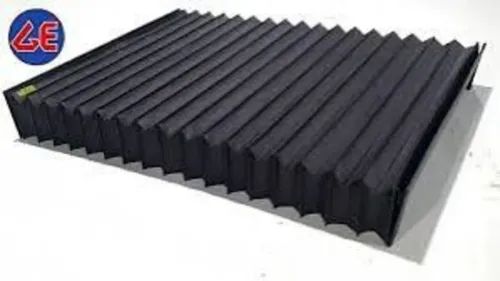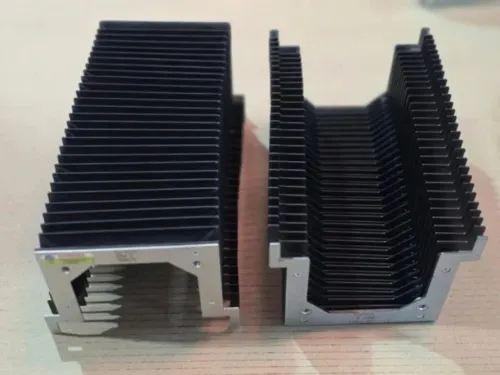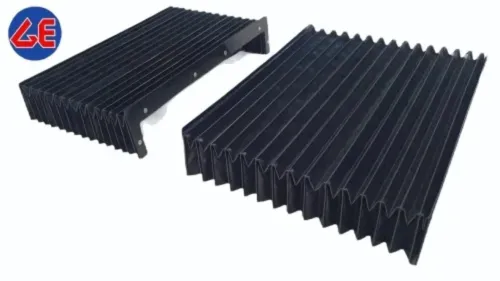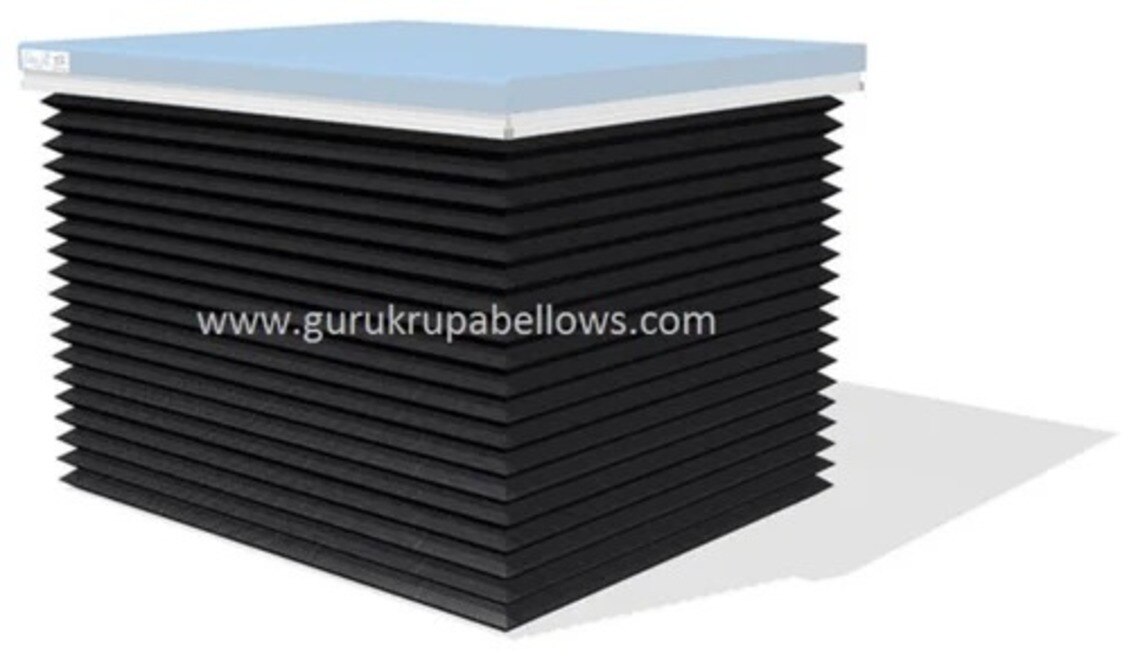
A scissor lift bellow cover belongs wherever a platform changes height and leaves a moving mechanism, cylinder, hoses, or pinch zone exposed. By the end, you will be able to identify suitable Indore applications, distinguish a lift bellow from other machine covers, specify the geometry and material, and check whether the installation is safe and serviceable.
Key takeaways
- Protect exposed lift mechanisms from dust, debris, heat, and moving-part hazards.
- Measure the folded height, extension, width, mounting points, and travel limits.
- Match the fabric and coating to heat, oil, sparks, chemicals, and abrasion.
- Inspect folds, fasteners, clearances, and compression before returning the lift to service.
The Indore machinery that uses scissor lift bellow covers
Scissor lift bellow covers for machinery in Indore perform a useful job wherever a platform changes height and leaves the pantograph, cylinder, hoses, pivots, bearings, or pit exposed. They suit die-handling tables, pallet lifters, hydraulic or pneumatic lifting stations, vehicle service and assembly lifts, loading platforms, fabrication machinery, and mobile elevating work platforms.
In automotive and general-engineering plants around Indore and Pithampur, scissor lift bellows applications include dusty indoor production areas and loading bays. The folded cover keeps hands, clothing, chips, dust, oil, and washdown debris away from the mechanism.
Specify it from the lift geometry, not platform size alone: record raised and lowered heights, stroke, folded height, clear opening, mounting perimeter, arm and roller positions, speed, cycle frequency, payload, skew, and exposure.
| Equipment | Suitable cover | Why |
|---|---|---|
| Scissor lift, lift table, pallet lifter | Scissor lift bellow | Follows vertical travel while enclosing the pantograph and pit |
| CNC machining centre, turning centre, grinder, EDM | Axis-specific bellow or telescopic steel way cover | Protects horizontal or compound-moving ways and screws |
| Laser, plasma, or special-purpose automation | Heat- and motion-specific cover | Requires clearance for its axis path, sparks, and process heat |
Do not use a vertical lift bellow on CNC equipment; sagging, drag, or interference can damage the axis. Route cables and hydraulic hoses through an energy chain, hose carrier, or guided loop, because the bellow is guarding, not cable management.
How the folded cover follows a rising and lowering platform
The cover is fixed between the lift platform and the stationary base, so it opens as the platform rises and compresses as the platform lowers. Its pleated sections take up the changing height while retaining a protective enclosure around the scissor arms, cylinder, piston rod, hydraulic lines, pivots, bearings, and joints.
Each end is secured to a mounting frame or perimeter retainer. The scissor frame carries the payload; the cover carries no platform load. Allowance for side travel, skew, rollers, and pinch points prevents the folded sections from rubbing, snagging, or pulling out during an emergency stop.
Scissor lift bellows applications therefore require geometry based on the full stroke and folded height, not just platform dimensions.
| Cover type | How it moves | Main limitation on a scissor lift |
|---|---|---|
| Scissor lift bellow | Pleats expand and fold between the fixed base and rising platform | Must match stroke, clear opening, and pantograph movement |
| Skirt | Hangs from the platform and drapes over the gap | Offers simpler debris screening but can flap, bunch, or expose the mechanism |
| Telescopic cover | Overlapping rigid boxes slide inside one another | Suits guided CNC axes, not a changing scissor gap with pivots and uneven movement |
| Conventional concertina bellow | Folds along a regular rectangular path | A standard shape can interfere with arms, rollers, or irregular clearances |
In dusty factory environments, scissor lift bellow covers in indore protect the mechanism without restricting vertical travel. A machine-tool bellow for a horizontal slide is a different design; fitting it to a lift can create drag, sagging, or interference.
Hazards, materials, and guarding limits that decide the design
A cover that survives clean indoor dust can fail in a fabrication bay. Specify each hazard separately: metal chips can cut folds or lodge in pleats, while welding spatter and hot chips burn coatings and seams.
Use reinforced, smooth outer faces and heat-resistant fabric or shields where sparks, hot swarf, or radiant heat reach the bellows.
- Abrasive dust: choose tightly closed seams and folds that do not trap grit.
- Cutting oil and coolant: require compatibility data for the actual fluid; swelling, softening, or delamination can make the cover rub against the scissor arms.
- Washdown water: add sloped surfaces, drainage, sealed fasteners, and a fabric that tolerates the cleaning chemical.
- Weather at a loading bay: select UV-, ozone-, rain-, and temperature-resistant materials, with corrosion-resistant frames and fixings.
- Sparks and welding spatter: use a high-temperature outer layer or a separate spark shield; ordinary coated textile is not a fire barrier.
- Heat: state the continuous temperature, peak chip temperature, and exposure duration before selecting polyurethane, rubber, coated textile, or high-temperature fabric.
For scissor lift bellow covers for machinery in Indore, keep the cover clear of pivot joints, bearings, hydraulic lines, and the pantograph at both extreme positions. A cover is not a personnel guard: fit fixed side barriers, toe guards, or an interlocked enclosure wherever hands, clothing, or feet can enter a closing gap.
Machine bellow covers in Indore for CNC axes need different geometry and must not be substituted here.
Measurements, installation details, and inspection checks
Measure the entire travel envelope, not just the lift stroke. Record platform length and width, raised and lowered heights, compressed stack height, minimum bend radius, extension allowance, corner-fold pattern, fixing surfaces, lift speed, cycle frequency, payload, side travel, and skew.
Photograph the scissors at both limits and document clearance from cylinders, rods, pivots, bearings, hoses, and pinch points.
Include operating conditions in the drawing: temperature, chips, dust, oil, coolant, washdown method, indoor or loading-bay location, and required cleaning access. These details separate durable scissor lift bellows applications from covers that fit once and tear during production.
- Install the cover square to its mounting flanges, with no twisting or forced stretch.
- Keep folded sections clear of the pantograph through the complete raise-and-lower cycle; run the lift slowly during the first test.
- Provide drain paths and sealed transitions around corners, inspection openings, cables, and hoses.
- Check that fasteners, clamps, and reinforcement cannot enter a pinch point or abrade the fabric.
Clean chips and dried coolant before they pack into folds. Inspect daily for cuts, heat damage, loose stitching, oil swelling, distorted folds, rubbing marks, loose hardware, blocked drains, and exposed mechanism. Cycle the lift after cleaning and record abnormal noise, drag, sagging, or restricted travel.
Unlike machine bellow covers in Indore designed for linear machine axes, this record must confirm protection at both height limits and during repeated scissor movement.
How to verify a replacement or new cover in Indore
A supplier who receives only the lift stroke cannot verify a replacement. For scissor lift bellow covers in Indore, send a drawing or photographs plus:
- Platform length and width, raised and lowered heights, and required compressed stack height
- Lift speed, cycle frequency, payload, and emergency-stop behaviour
- Side travel, skew, minimum bend radius, and clearance from scissors, pivots, and guides
- Fixing surfaces, retainer dimensions, corner fold pattern, and attachment method
- Exposure to chips, dust, oil, coolant, washdown water, heat, sparks, and outdoor weather
- Indoor or loading-bay location, access restrictions, and preferred installation date
| Criterion | Compare | Stronger evidence |
|---|---|---|
| Fit | A dimensional promise versus a full-cycle drawing | Check extension, compression, bend radius, and interference at both end positions |
| Evidence | Generic photographs versus application-specific details | Request material, seam, frame, retainer, and previous comparable-installation information |
| Downtime | Site fabrication versus a prepared replacement | Compare measurement time, delivery time, removal, fitting, and trial-run duration |
| Maintenance | A sealed cover that blocks access versus removable retainers or panels | Ask how inspection, cleaning, and replacement occur without disturbing the lift |
| Local support | Remote instructions versus site measurement and installation | Confirm Indore travel, measured-drawing approval, fitting responsibility, and post-installation adjustment |
For scissor lift bellow covers for machinery in Indore, ask GURUKRUPA BELLOWS PVT LTD to document these points before fabrication, not after the cover arrives. Reject any design that lets the bellow carry platform, side, or stopping loads; the frame and guides must carry them.
Related products
 | Bellow Cover ₹5000 Product Details: Brand GURUKRUPA Color Black-Blue Size Customised With the support of our excellent team workers, we have been delivering the best... View product → |
 | Product Details: Brand GURUKRUPA Color Black-Blue Size Customised With support of our excellent team workers, we have been delivering the best... View product → |
Frequently asked questions
Where are scissor lift bellow covers used in Indore machinery?
They are used on die-handling tables, pallet lifters, hydraulic and pneumatic lifting stations, vehicle service lifts, assembly lifts, loading platforms, fabrication machinery, and mobile elevating work platforms.
How does a scissor lift bellow cover follow platform movement?
The folded cover expands as the platform rises and compresses as it lowers, shielding the pantograph, cylinder, hoses, pivots, bearings, and pit while allowing the lift to travel.
What determines the design of a scissor lift bellow cover?
The design depends on the exposed hazard, lift travel, folded and extended dimensions, operating temperature, oil or chemical contact, sparks, abrasion, required guarding level, and available mounting space.
What measurements are needed for a replacement bellow cover?
Record the opening width and length, compressed and extended heights, travel direction, mounting-hole pattern, attachment method, nearby obstructions, fold spacing, and the lift's full movement range.
How do you inspect a scissor lift bellow cover after installation?
Run the lift through its full stroke and check for rubbing, stretching, trapped folds, loose fasteners, gaps, damaged fabric, interference with hoses or cylinders, and safe clearance from pinch points.
Related product
 | Bellow Cover The range of CNC Bellow Cover is manufactured on our premises, under the guidance of our expert professionals. View product → |