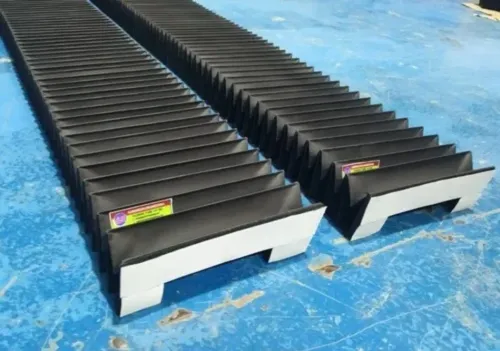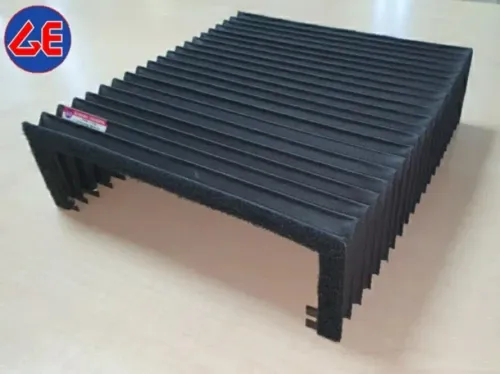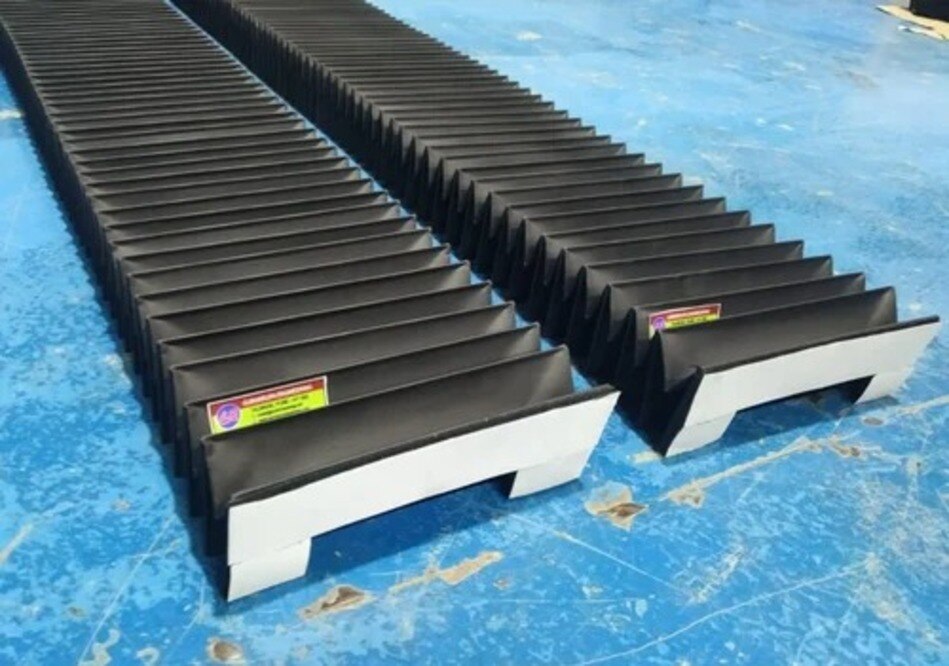
A bellows cover can protect a guideway from dust, dross, sparks, and mechanical wear, but it is not automatically suitable for every cutting axis or every laser hazard. By checking the exposure, motion, dimensions, construction, and safety boundaries, you can decide whether a bellows is appropriate or whether a metal cover, shield, enclosure, or combined protection system is the better choice.
Key takeaways
- Protect guideways, racks, ball screws, scales, cables, and hoses first.
- Confirm heat, sparks, dust, spatter, and laser-safety limits before choosing bellows.
- Use steel covers or enclosures when abrasion, impact, or radiant heat exceeds bellows limits.
- Include travel, compressed length, expansion, mounting, materials, and environment in the RFQ.
Start with the parts that actually need protection
Protect the guideways, racks, ball screws, linear scales, cable carriers, and hoses that sit in the path of dust, molten spatter, sparks, or moving chips. A bellows protects these machine elements from contamination and mechanical wear; it does not protect the laser head, lens, nozzle, sensors, or operators from laser radiation.
| Component | What threatens it | Bellows decision |
|---|---|---|
| Guideway or linear scale | Abrasive dust, spatter, fumes, impact | Use a cover if it stays outside the direct plume and beam path |
| Rack, pinion, or ball screw | Debris packed into teeth or threads | Cover it when folds will not obstruct engagement or maintenance |
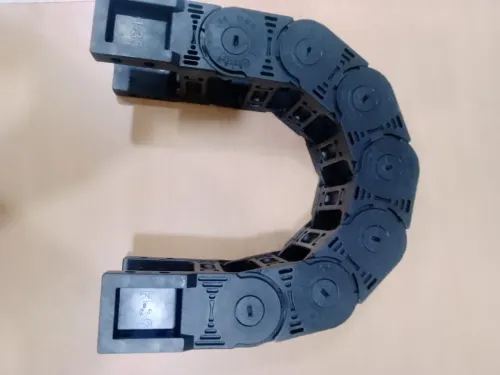
| Cable carrier and hoses | Heat, sparks, bending, and snagging | Protect with a bellows or separate shield after checking bend radius |
| Laser head, lens, nozzle, or sensor | Beam exposure, reflected radiation, slag | Do not treat an ordinary bellows as a laser barrier; use purpose-designed guarding |
| Fume-extraction path | Restricted airflow or deposited particles | Keep the cover clear of extraction openings and moving joints |
Check laser machine bellow cover suitability against the actual axis, not its nominal length. Confirm stroke, compressed length, expanded length, travel speed, acceleration, mounting space, fold direction, and minimum bend radius.
Run the installed cover through the full stroke at operating speed, then inspect seams, folds, mounts, and nearby ways for rubbing, snagging, heat damage, and particle ingress. Laser cutting machine protection fails when a cover bottoms out or enters the beam path.
Match the cover to heat, sparks, dust, and laser safety limits
A bellows is suitable only when it protects the axis without becoming part of the laser barrier. For laser cutting machine protection, identify the laser source and wavelength. Confirm optical power and beam path, then assess reasonably foreseeable misalignment.
A cover in the direct beam or reflected path needs documented laser-radiation resistance; ordinary coated textile is not automatically a barrier.
Match construction to the process:
- Dry sheet cutting with an enclosed fibre laser: prioritise abrasion resistance against fine metal dust and smoke condensate during repeated travel.
- Tube cutting or open-gantry work: account for sparks and dross arriving from changing directions; shield the bellows or specify resistance to molten particles and pinholing.
- Mild steel, stainless steel, and aluminium: verify compatibility with each material’s dust, hot spatter, and assist-gas environment.
- High-power or continuous-duty cutting: check radiant heat, peak particle temperature, adhesive, thread, coating, and mounting hardware. Flame-retardant labelling alone does not prove durability.
Keep the bellows on guideways, racks, screws, scales, cables, and hoses. Do not use it as protection for the lens, nozzle, sensors, or fume-extraction equipment. Heat, coolant, oil, corrosive residue, travel speed, acceleration, stroke, and bend radius also determine service life.
Many systems are Class 4 hazards, requiring an enclosed beam path, guarding, interlocks, and access procedures. A bellows cannot replace them.
Choose between bellows, steel covers, shields, and enclosures
Choose a bellows when the moving guideway, rack, ball screw, or linear scale needs flexible contamination protection and the cover can stay outside the direct plume. A laser machine bellow cover suitability decision fails if molten metal, reflected radiation, or continuous sparks reach the fabric; add a sacrificial guard or choose metal protection instead.
| Option | What it protects | When it applies |
|---|---|---|
| Bellows | Guideways, racks, screws, and scales across changing travel | Use for enclosed or deflected contamination, long strokes, and axes needing low moving mass |
| Telescopic steel cover | Rigid guideways and slides | Choose for heavy chips, hot spatter, abrasive dust, or repeated impact; allow space for stacked sections |
| Roller shutter | A straight opening or access point | Use where compact retraction matters and the shutter will not face direct slag or beam exposure |
| Cable carrier | Moving cables, hoses, and fibre conduits | Use to control bend radius and routing; it does not seal a guideway from dust |
| Wiper | A narrow exposed sliding surface | Use as a sealing edge or secondary cleaner, not as the primary cover for an open axis |
| Shield or sacrificial guard | Bellows and nearby components | Add it to deflect sparks and replace wear strips without blocking travel, extraction, or interlocks |
| Full machine enclosure | People, beam path, fumes, and ejected material | Use for laser safety and process containment; a bellows never substitutes for guarded doors and interlocks |
Inspect the actual spark trajectory before choosing fabric. If the cover sits inside the cutting zone, receives direct beam exposure, or contacts molten slag, redesign the guard or specify steel protection rather than relying on heat-resistant bellows.
Specify the construction and dimensions before requesting a quote
A quotation is meaningful only when the drawing shows how the cover moves, folds, mounts, and survives the process. Give the supplier the machine axis drawing, not just the model number or outside width.
1. State the maximum and minimum travel, fully compressed length, fully extended length, available installation envelope, allowable lateral movement, fold pitch, bend radius, axis speed, and acceleration. These figures prevent bottoming out, fold interference, and excess axis load.
2. Mark the fixed end, moving end, fold direction, mounting-hole pattern, bolt access, inspection access, and mounting method. Identify nearby racks, screws, cable carriers, guideways, sensors, and extraction paths that the cover must not touch.
3. Specify the material stack: inner and outer fabrics or films, support layers, coatings, temperature range, seam method, and replaceable wear layer. Describe the sealing level you need; heavier, tighter construction improves exclusion but increases folded-pack size, friction, and acceleration load.
4. Attach process conditions: laser type and power, sheet or tube cutting, material grades and coatings, assist gas, duty cycle, spark direction, plume location, and whether the cover sits inside the guarded zone. For laser machine bellows in Kolhapur, request written exclusions for direct beam exposure, reflected radiation, molten-metal contact, and continuous sparks.
Run the installed cover through the full stroke at operating speed and acceleration before approval. Check compressed folds, seams, mounts, guideways, heat marks, rubbing, snagging, and particle ingress, then record the replacement interval and acceptable damage limit.
Use an application-specific RFQ and an installed acceptance test
Ask every supplier for a drawing and quotation against the same machine data. For laser machine bellow covers for cutting machine users in Kolhapur, record laser type, cutting power, material grades, assist gas, duty cycle, spark direction, guarded-zone location, stroke, speed, acceleration, and bend radius.
Add seasonal condensation, airborne dust, cleaning method, electrical and pneumatic routing, and replacement response time.
Include these RFQ requirements:
- Fully compressed and extended lengths, moving and fixed ends, fold direction, mounting-hole pattern, bend radius, and material stack-up.
- Seam method, inspection access, allowable speed and acceleration, and exclusions for direct beam, reflected radiation, sparks, or molten-metal contact.
- The flame-resistance test method, exposure or temperature limit, and evidence from a representative cutting application.
- Expected service interval, inspection points, replacement lead time, and the damage level that requires removal.
Install the selected cover and run the axis through its full stroke at operating speed and acceleration. Stop the test if folds rub, snag, bottom out, or restrict travel; then inspect seams, fasteners, guideways, racks, scales, and screw drives for heat damage and particle ingress.
GURUKRUPA BELLOWS PVT LTD belongs in the same comparison when its drawing supplies these measurable details.
| Supplier evidence | What to compare | Acceptance question |
|---|---|---|
| Drawing | Dimensions and exclusions | Does it match the machine? |
| Material claim | Test method and exposure limit | Is it proven against this process? |
| Service offer | Interval and response time | Can you replace it before downtime escalates? |
The same method applies when comparing laser machine bellows in Kolhapur: compare documented performance, not the city name or a generic “flame-retardant” label.
Related products
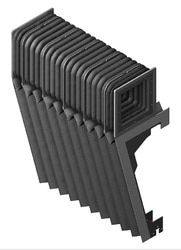 | Laser Cutting Machine Bellows ₹1000 We offer Laser Cutting Machine Bellows made specifically for your laser machine. View product → |
 | Laser Machine Bellows Product Details: Minimum Order Quantity 1 Number Brand GURUKRUPA Color BLACK, SILVER Size ALL Specifications: Capabilities Applied/Processes: Thermal... View product → |
Frequently asked questions
Which parts of a laser cutting machine need bellow protection?
Protect guideways, racks, ball screws, linear scales, cable carriers, and hoses when they sit in the path of dust, spatter, sparks, or chips. Bellows do not protect the laser head, lens, nozzle, sensors, or operators from laser radiation.
Are laser machine bellows suitable for heat, sparks, and cutting dust?
Suitability depends on the cover material, coating, temperature exposure, spark intensity, dust type, and movement. Specify these conditions before selection, then confirm the design does not interfere with laser safety controls.
Should you choose bellows, steel covers, shields, or an enclosure?
Choose bellows for flexible protection around moving components, steel covers for severe chip or impact exposure, shields for localised hazards, and enclosures when containment or operator protection is required.
What information belongs in an RFQ for laser machine bellow covers?
Provide protected-part drawings, travel, width, height, compressed and extended lengths, mounting details, speed, acceleration, cycle frequency, temperature, contaminants, spark exposure, and required materials.
How do you test a bellow cover after installation?
Check full machine travel, compressed and extended positions, mounting security, clearance, folding, rubbing, heat exposure, cable and hose movement, and contamination protection during a witnessed operating cycle.