A nominal width and stroke do not tell you whether a metal flap cover will clear the machine, survive its chips and coolant, or move without binding. Before requesting a quotation, you need a measured travel envelope, a complete material and construction specification, and acceptance criteria that suppliers can price against consistently.
Key takeaways
- Specify slat material, thickness, overlap, travel, compression, and mounting dimensions.
- Measure the full machine travel envelope, including folded height and side clearances.
- Match wipers and slat finishes to chips, coolant, heat, sparks, and corrosion.
- Require drawings, test conditions, delivery scope, and acceptance measurements in the quotation.
Confirm the cover design and its construction before comparing prices
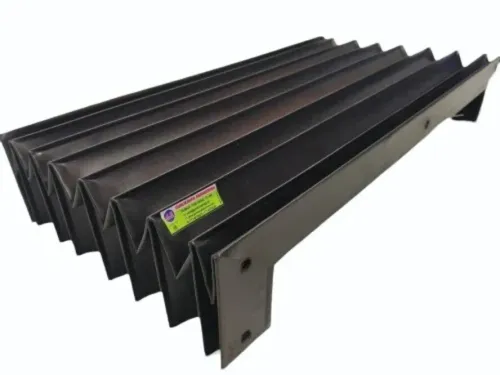
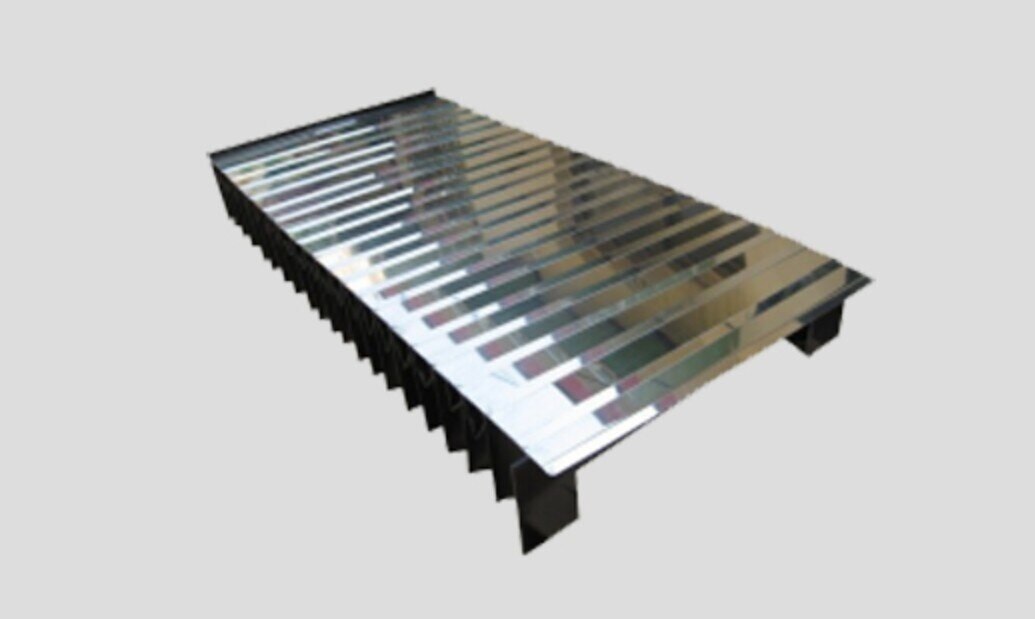
An SS lamella bellow cover combines overlapping stainless-steel slats with a flexible bellows body. The slats articulate as the axis moves, shielding guideways, linear rails, screws, and other exposed machine surfaces from chips and coolant. It is neither load-bearing nor a replacement for a personnel guard.
Confirm these metal flap bellow cover details before comparing prices:
- Stainless-steel grade, flat or formed slats, slat thickness, flap width, and surface finish
- Overlap direction and dimension, slat pitch, hinge or linkage type, and edge treatment
- Guide shoes or rollers, joint sealing, flexible bellows material, and fastening method
Open joints can admit fine chips and abrasive coolant despite continuous-looking external slats. Confirm permitted travel direction, minimum bend radius, lateral movement, and compatibility with the actual guideway geometry.
| Cover type | Construction and use | Wrong choice when |
|---|---|---|
| Metal flap bellow cover | Articulated overlapping slats over flexible bellows | The application needs load-bearing access or personnel guarding |
| Fabric accordion cover | Folded fabric bellows for lighter contamination | Sharp hot swarf, sparks, or severe abrasion are present |
| Telescopic steel cover | Sliding rigid steel boxes | Compact folding or complex geometry is required |
| Roll-up cover | Flexible material wound on a drum | Lateral guidance or high chip loading is unavoidable |
Choose the cover by its joints, guidance, and movement—not its quoted width and stroke alone.
Build a complete SS lamella bellow cover specification
A complete SS lamella bellow cover specification must define materials, movement, interfaces, wear parts, and service conditions—not only width and stroke. State 304 stainless steel for general workshop exposure, or 316/316L for chlorides, aggressive cutting fluids, salt contamination, or frequent washdown.
Request these metal flap bellow cover details in the quotation:
- Lamella thickness, flap width, overlap dimension and direction, slat pitch, edge finish, surface finish, joint design, fastener and hinge material, guide arrangement, flexible bellows fabric or elastomer, wiper material, contact pressure, replaceability, and spare-part availability.
- A dimensioned drawing showing fully closed length, fully extended length, stroke, folded height, cover width and height, mounting-face dimensions, hole pattern, guideway profile, minimum bend radius, allowable compression and extension, and the required clearance envelope.
- End plates, mounting transitions, overlap with adjacent covers, drainage paths, and cleaning access, with an explanation of how each prevents coolant from reaching the guideway.
| Claim | Evidence to require |
|---|---|
| Stainless steel | Grade, temperature limits, corrosion conditions, and component materials |
| Chip-resistant | Chip type, impact or cycle test conditions, slat thickness, and joint design |
| Waterproof | Sealed interfaces, drainage test conditions, end-transition details, and washdown pressure |
Confirm the drawing also identifies guide clearance and lateral movement. Wipers are wear parts: specify their material, contact pressure, replacement method, and stocked spares. A selected stainless grade does not protect lower-grade fasteners, hinges, guides, welds, or wipers.
Measure the machine’s full travel envelope, not just the visible opening
Measure the axis at both travel limits, not just the opening visible from the operator side. A quotation based only on nominal stroke can leave slats striking an end stop or tooling.
1. Record the fully closed length, fully extended length, actual stroke, cover width and height, folded height, guideway profile, moving and fixed attachment points, mounting-face dimensions, hole pattern, and clearance at both ends. These dimensions form the core of the SS lamella bellow cover specifications.
2. Record maximum speed, acceleration, cycle frequency, direction of travel, motion profile, and allowable compression and extension. High acceleration can make slats vibrate, lose overlap, or collide with end stops even when the nominal travel fits.
3. Inspect the space above, beside, and below the guideway. Note tooling, workholding, cable carriers, coolant pipes, chip conveyors, guards, end stops, and the space needed for service access.
4. Photograph both mounting faces and make a simple dimensioned sketch showing the axis limits, attachment points, obstructions, and clearance envelope. Include unsupported length and any offset between the guideway and mounting surfaces.
5. Ask the supplier to confirm the minimum bend radius, permitted lateral movement, flap articulation, guide clearance, and the correct travel direction for the articulated slats. These checks reveal geometry problems that width and stroke cannot show.
Send the drawing and machine data together. A metal flap cover that fits on paper can still bind, leak coolant at its ends, or fail early if the supplier has to guess the motion profile or mounting arrangement.
Match the slats, wipers, and protection options to the working environment
Match protection to the actual hazard: hot swarf, sharp steel chips, sticky aluminium chips, cast-iron dust, abrasive grinding debris, welding spatter, oil, alkaline coolant, chloride-bearing coolant, and outdoor moisture do not impose the same load. Do not accept a generic “chip-resistant” claim.
Include these metal flap bellow cover details in the quotation:
- Slat material, flat or formed construction, thickness, flap width, overlap direction and dimension, slat pitch, edge treatment, and hinge or linkage type.
- Scraper or wiper material, contact pressure, surface condition required on the guideway, replacement method, and spare-part availability.
- Guide rail or support frame, guide shoes or rollers, brush, chip deflector, drainage path, and sealed or open joints.
- Continuous and peak surface-temperature limits for the complete assembly, not merely the ambient temperature.
- Coolant pressure, washdown method, cleaning chemicals, and exposure frequency.
- Spark-resistant construction where welding spatter or sparks occur.
Excessive wiper pressure raises drive load and accelerates wear; insufficient pressure lets chips and coolant pass underneath. Check that operators can clean the cover and replace wipers, brushes, or individual slats without removing the entire assembly.
A 304 assembly is not automatically corrosion-proof: fasteners, guides, hinges, welds, and wipers may have lower resistance than the slats. Confirm 316 or 316L where chlorides, aggressive fluids, salt, or frequent washdown is present.
Make a Pune quotation comparable and define acceptance before ordering
Before issuing a purchase order, make competing quotations describe the same machine and operating conditions. If you are searching for metal flap bellow for details in Pune, use this checklist rather than comparing nominal width and stroke alone.
1. Ask a metal flap bellow supplier in Pune for a pre-production drawing showing mounting points, guideway orientation, stroke, unsupported length, end stops, clearances, and attachment holes. Require a written assumptions sheet covering coolant type, chip type, temperature, cleaning method, maximum speed, acceleration, cycle frequency, and motion profile.
2. Require service life in cycles or operating hours with exact test conditions. Clean, dry motion cannot be compared with abrasive chips, coolant, high acceleration, or three-shift operation. Request inspection records for critical dimensions and a full-travel functional test before dispatch.
3. Put these acceptance checks in the purchase order: smooth motion without binding; no slat collision at maximum speed; correct overlap after repeated cycles; clearance from tooling, guards, and conveyors; secure mounting; and no chip or coolant path at either mounting end. Reject performance described only as “chip-resistant” or “waterproof.”
For a Pune installation, confirm site-measurement and commissioning response times, replacement-wiper and individual-slat availability, guide and hinge identification, emergency repair timing, and lead time for a complete replacement. GURUKRUPA BELLOWS PVT LTD is worth evaluating when it documents these fitment, service, and inspection details instead of quoting only a nominal size.
Frequently asked questions
What should an SS lamella bellow cover specification include?
Include stainless-steel grade, slat thickness and overlap, bellows material, dimensions, travel, folded height, mounting details, wipers, and protection options.
Why must you measure the machine’s full travel envelope?
The cover needs clearance for its extended length, compressed or folded height, mounting space, side movement, and nearby machine components—not only the visible opening.
How do you choose slats and wipers for the working environment?
Match the slat finish, wiper material, seals, and optional heat or spark protection to the chips, coolant, temperature, corrosion, and fire hazards present.
What should a Pune quotation for a metal flap bellow cover define?
Ask suppliers to state the complete dimensions, materials, travel, mounting scope, drawings, price basis, delivery terms, inspection method, and acceptance limits.