A scissor lift bellow cover can look intact while a hidden split, distorted fold, or loose mounting edge exposes the cylinder and creates a snag point. You will be able to isolate the lift, inspect every fold through its travel range, classify defects, and decide whether to repair, replace, or remove the lift from service.
Key takeaways
- Isolate power, secure the platform, and release stored energy before inspection.
- Inspect every fold during retracted, partial, and extended lift travel.
- Replace covers with torn fabric, failed mounts, or unsafe cylinder clearance.
- Repeat checks after overloads, collisions, washdown, chemical contact, or unusual vibration.
Make the lift safe before touching the bellow cover
An overload, side load, collision, abrasive dust, coolant or chemical contact, welding heat, outdoor rain, washdown, abnormal vibration, or a speed change demands a safety reset before inspection. These events can leave the platform unstable, damage supports, or force contamination into moving joints.
1. Stop the lift and keep people outside the hazard zone. Follow the manufacturer’s instructions to lower the platform to a safe position where permitted; do not choose a position that leaves the mechanism suspended without support.
2. Install the specified mechanical maintenance props, locking bars, or platform supports. Confirm that each support is seated and rated for the lift. A bellow cover is neither a load-holding device nor personnel-protection equipment.
3. Isolate every energy source: electrical supply, hydraulic pressure, and pneumatic pressure where fitted. Lock and tag each isolator so another person cannot restore power during the inspection.
4. Verify zero energy before touching the cover. Test for electrical isolation with the approved method, release hydraulic and pneumatic pressure through the designated controls, and confirm that the platform and scissor arms cannot move.
5. Keep hands out of folds, gaps, and pinch points. Never stand on, pull against, or rely on the cover to support the platform. This is the safe starting point for how to inspect scissor lift bellow covers in Ludhiana, or at any site.
Inspect every fold through retracted, partial, and extended travel
One lift position can hide a torn seam, trapped chip, or rubbing point. Start fully retracted: vacuum chips, abrasive dust, and dried coolant, or use a soft brush compatible with the cover material. Never use a knife, scraper, or uncontrolled high-pressure air; each can cut fabric or drive debris into seams and guides.
Use a bright inspection light, then mark suspect areas with removable tape and photograph them. This scissor lift bellows inspection must cover the top, sides, accessible underside, and the complete travel path.
- Examine every fold, stitched or welded seam, corner, end frame, clamp, mounting strip, and fastener for cuts, pinholes, delamination, popped stitching, cracked coating, hardening, swelling, loose hardware, deformation, or rubbing damage.
- Check the fully extended position next. Compare what becomes visible: folds, seams, guide areas, and chips hidden during retraction.
- Inspect partial-travel positions with guarded, slow, controlled movement. Never reach into moving folds.
- Watch for rubbing, trapping, stretching, or snagging against scissor arms, rollers, brackets, hoses, cables, guideways, and the platform frame.
- Look for bent supports, displaced guides, damaged rollers, projecting fasteners, excessive lateral play, uneven folding, early bottoming-out, one-sided bunching, or abnormal force.
- Measure compressed stack height and fold spacing against the original drawing or supplier specification. A different height signals alignment, mounting, or dimensional trouble even when the fabric appears intact.
Classify fabric, mounting, and cylinder defects
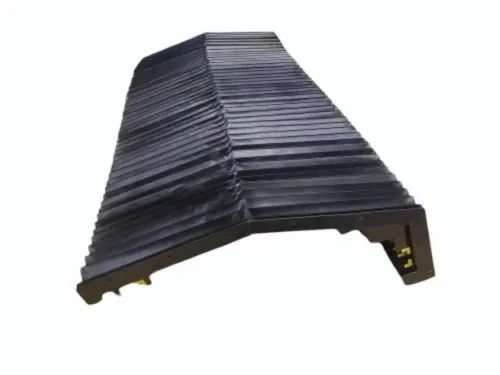
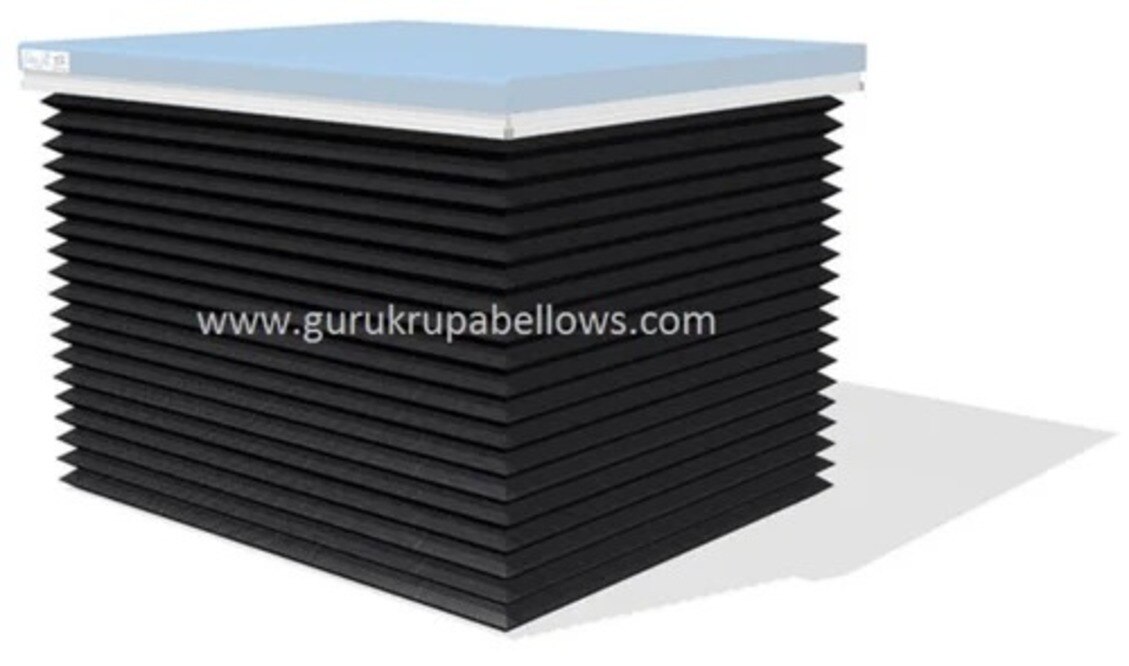
Treat any opening, failed seam, or detached edge that exposes the protected mechanism as a service defect. During scissor lift bellows inspection, examine every fold, seam, corner, mounting edge, and fastener in fully retracted and fully extended positions.
| Finding | What it means | Required response |
|---|---|---|
| Fabric damage: punctures, pinholes, cuts, torn folds, split seams, loose or popped stitching, delamination, cracked coating, melted areas, hardened or embrittled fabric, swelling, sticky or oil-softened material, discoloration, permanently crushed folds | The barrier or its flexible movement has failed | Keep the lift out of service until an approved repair or replacement restores a sealed, flexible cover |
| Mounting damage: corrosion, loose hardware, deformation, or distortion at fasteners and mounting edges | The cover can detach, rub, snag, or leave an opening | Correct the mounting and the interference; do not replace the fabric alone |
| Cylinder findings: dust or metal debris on the rod, oil on the cylinder, scoring, pitting, a bent rod, or leaks | Contamination or mechanical damage has reached the protected area | Investigate the cylinder and cover before returning the lift to service |
Do not dismiss chemical staining as cosmetic. Coolant, hydraulic oil, and cutting oil can swell, soften, discolor, embrittle, or detach the fabric, coating, adhesive, or thread; an incompatible solvent can worsen the damage.
Find the cause before fitting another cover: check misalignment, debris in the travel path, lateral play, bent frames, and projecting fasteners. Otherwise, the same interference will destroy the replacement.
Decide whether to repair or replace the cover
Repair is suitable only for a small, isolated puncture when the surrounding fabric, coating, folds, seams, mounting edge, and dimensions remain sound. The approved method must restore a flexible, sealed surface without restricting travel.
1. Repair the cover when the defect is limited to that puncture and the material shows no swelling, softening, embrittlement, delamination, heat damage, or loss of adhesion. Use a patch, adhesive, thread, fabric, or elastomer compatible with the original construction.
2. Replace the cover, or obtain a documented engineering decision, for a torn seam, missing fold, detached mounting edge, exposed cylinder, heat-melted area, widespread delamination, oil-softened material, permanently crushed stack, distorted mounting, or repeated failure at the same location.
Any opening that admits chips, coolant, or a moving component is a service defect; keep the lift out of service until protection is restored.
3. For scissor lift bellow cover repair in Ludhiana, match the repair materials to the operating temperature range, chemical exposure, and required fold flexibility. A thick patch creates a stiff spot that catches adjacent folds and fails again.
4. Correct misaligned scissor arms, damaged rollers, displaced guides, debris, projecting fasteners, bent frames, or excessive lateral play before fitting either cover. Replacing the cover alone leaves the failure cause active.
A specialist such as GURUKRUPA BELLOWS PVT LTD can assess the cover’s construction and interference pattern before recommending a repair that fits the actual failure.
Related products
 | Bellow Cover ₹5000 Product Details: Brand GURUKRUPA Color Black-Blue Size Customised With the support of our excellent team workers, we have been delivering the best... View product → |
 | Product Details: Brand GURUKRUPA Color Black-Blue Size Customised With support of our excellent team workers, we have been delivering the best... View product → |
Set event-based checks and verify the lift after service
After repair or replacement, cycle the lift through its complete permitted travel at low speed while observing from outside the hazard zone. Stop the test if the cover catches, folds unevenly, or changes the lift’s movement.
- Confirm every fold moves freely without rubbing or snagging.
- Check for an even stack height through retraction and extension.
- Verify that no pinch point or protected mechanism remains exposed.
- Confirm mounting strips, clamps, fasteners, and edges stay secure.
- Check the correct end-of-stroke position.
- Listen for abnormal motor or hydraulic loading.
- Watch for abnormal structural load, deflection, vibration, or hesitation.
Keep the lift out of service if a hole, failed seam, or detached edge remains. Return it only after the protection function is restored and the post-repair test passes.
Record the inspection date, operating hours or cycles, lift position checked, contamination found, photographs, defect dimensions, corrective action, and post-repair test result. Track defects against cycles and contamination exposure, not elapsed months alone.
Set the calendar and cycle-based schedule from the lift maker’s installation and maintenance limits and your site risk assessment; do not replace them with a generic annual interval. Shorten it after overloads, collision, severe contamination, chemical exposure, abnormal vibration, washdowns, or speed changes.
For scissor lift bellow cover maintenance in Ludhiana, include industrial dust, metal chips, oil or coolant mist, high summer temperatures, and humid monsoon conditions, with checks after heavy-use shifts and washdowns.
Frequently asked questions
How do you make a scissor lift safe before inspecting its bellow cover?
Stop the lift, isolate its power source, secure the platform against movement, and address stored hydraulic or mechanical energy before touching the cover.
Why inspect a scissor lift bellow cover through multiple travel positions?
Retracted, partial, and extended positions reveal folds, mounting points, and clearances that remain hidden in one position.
Which bellow cover defects require repair or replacement?
Classify torn or burned fabric, loose or damaged mounts, blocked folds, and cylinder interference; replace the cover when damage threatens movement or protection.
When should scissor lift bellows receive an additional inspection?
Inspect after an overload, side load, collision, abrasive contamination, chemical contact, welding heat, washdown, abnormal vibration, or speed change.