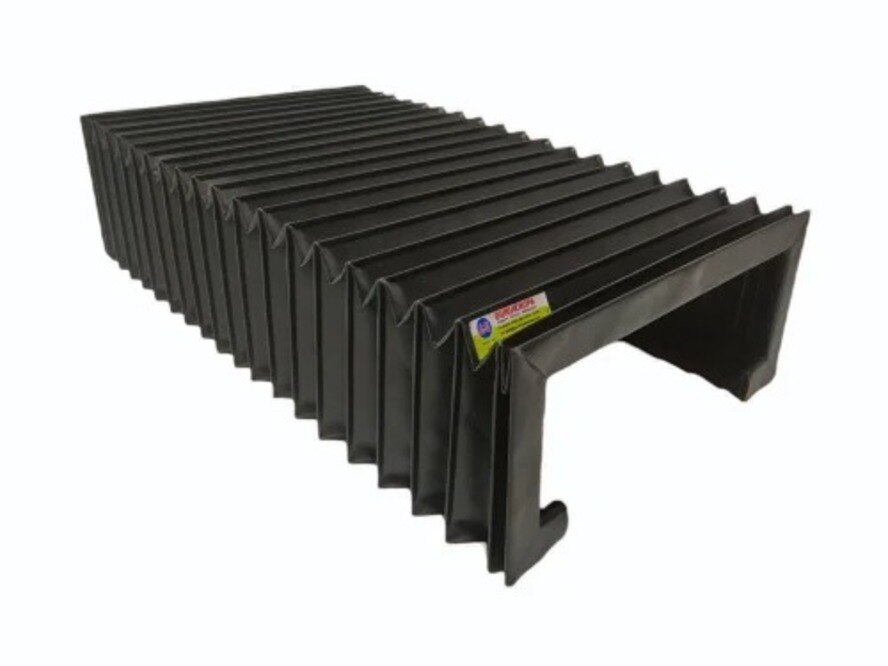
A CNC bellow cover that matches axis travel can still fail when sharp chips puncture the fabric, coolant enters through a mounting edge, or compressed folds collide with the slide. By the end, you will be able to match each hazard to a cover construction, specify the dimensions and materials precisely, and create an acceptance check before production downtime exposes a poor choice.
Key takeaways
- Match the cover to swarf, heat, abrasion, coolant and fire hazards.
- Use sewn bellows for flexibility, telescopic covers for rigid heavy-duty protection.
- Specify compressed length, extended length, folds, mounting and movement clearance.
- Require material limits, drawings, inspection checks and replacement parts from suppliers.
Match the cover to the hazard, not the axis travel
The first comparison should be the hazard, not the axis travel. A cover sized only for stroke length can puncture under sharp swarf, wear through from abrasion, or pack chips between its folds.
The right cnc bellow covers for comparison start with what reaches the guideway, how hot it is, and whether it strikes, drags or chemically attacks the cover.
| Hazard | First cover comparison | Failure to prevent |
|---|---|---|
| Fine chips, dust, coolant splash and moderate-temperature coolant | Sewn fabric bellows with a compatible coating and sealed seams | Dust ingress, coolant penetration and fold contamination |
| Heavy, sharp or tangled chips | Steel telescopic covers, or a steel-and-fabric hybrid | Puncture, abrasion and chip packing |
| Hot swarf or welding sparks | Heat-rated steel or hybrid protection with a documented temperature limit | Burn-through, ignition or loss of flexibility |
| Oil, corrosive chemicals or outdoor exposure | A complete material stack selected for chemical and weather resistance | Swelling, cracking, delamination or corrosion |
Record the actual exposure before requesting quotations. Note chip shape and size, coolant type and temperature, spark sources, oil contact, cleaning chemicals and outdoor sunlight or rain. Then ask each supplier to identify the outer fabric, coating, reinforcement, lining and seam construction, rather than accepting “fire-resistant fabric” as a specification.
If cable carriers move beside the cover, include hose and cable abrasion in the same hazard review; a carrier that rubs against the bellows can create an exit failure even when the cover itself matches the chips.
Choose sewn bellows, telescopic covers or hybrid protection
Choose the construction by the material reaching the guideway and by how the cover must move, not by axis stroke alone. A lightweight fabric cover can fail quickly when sharp swarf packs into its folds.
| Construction | Movement fit | Choose it when |
|---|---|---|
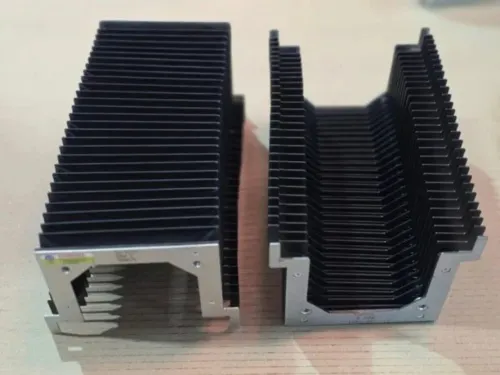
| Sewn bellows | Flexible, low-mass movement across changing or multi-axis paths | The hazard is fine chips, dust, coolant splash, oil or moderate-temperature debris, and compact folded length matters. |
| Telescopic covers | Straight, guided linear travel with rigid sections | Heavy, sharp or hot swarf threatens the guideway. Allow space for section overlap, added mass and the cover’s retracted footprint. |
| Hybrid protection | Rigid shielding at the impact zone with flexible sections at transitions | The machine combines hot chips or welding sparks with an irregular path, moving saddle or restricted mounting area. |
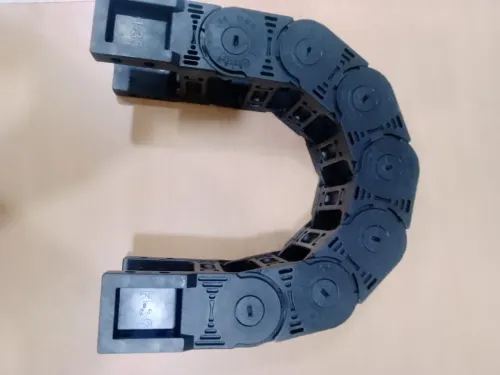
For cnc machine bellow covers, coordinate the cover with the cable carrier as one moving system. Check that the carrier bend radius suits the largest hose and cable, and prevent the chain from pushing sideways into the bellows or exposing the cable exit.
A rolling cover or apron cover suits long, straight travel when fold packing is unacceptable; a three-sided guideway cover suits exposed top and side faces with open access below. Choose independent covers on multi-axis machines when motions, chip paths or servicing differ.
Use one cover only when fewer seams and mounting points outweigh interference and replacement risks.
Specify the envelope, movement and mounting dimensions
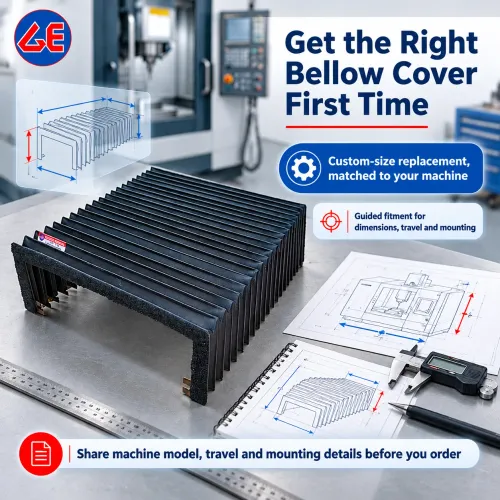
Record the machine envelope and movement at full extension and retraction before requesting a quote. Measure the protected travel, guideway cross-section, fixed and moving mounting points, and every obstruction around the axis. Include the slide, saddle, spindle head, tooling, chip conveyor and existing guards; a cover that matches nominal stroke can still collide when compressed.
| Measurement | Record | Why it matters |
|---|---|---|
| Protected travel | Stroke between end positions | Sets extended and compressed lengths |
| Cover envelope | Width, height and folded height | Prevents contact with slides, guards and tooling |
| Length | Extended length and compressed length | Defines usable travel and stack space |
| Mounting | Fixed-point, moving-point and mounting allowance | Allows brackets, flanges and sealing surfaces |
| Pleats and folds | Pleat pitch, smallest fold radius and permissible compression | Prevents crushed folds and premature wear |
| Clearance | Gap at full stroke, smallest radius and adjacent equipment | Exposes interference before fabrication |
| Movement | Speed, acceleration, orientation and travel cycle | Establishes tested cover limits rather than borrowing the axis rating |
Document cable-carrier routing with the cover. Specify the largest cable and hose, its bend radius, exit location and carrier support; the chain must not impose side loads on the bellows.
These CNC bellow cover specifications belong on the drawing, along with mounting-hole patterns, datum points, tolerance limits and photographs from the machine survey. Ask the fabricator to confirm the complete envelope against the measured machine, not against a catalogue axis-travel figure.
Compare materials, exposure limits and installation details
Verify survival against the machine’s actual hazards, motion and mounting orientation—not the axis rating. For CNC machine bellow covers, request the complete stack: outer fabric, coating, reinforcement, inner lining, seam construction and stated temperature range. Match those limits to coolant chemistry, oil, abrasive chips, hot swarf, sparks, corrosive agents and outdoor exposure.
| Check | Require | Reject |
|---|---|---|
| Material stack | Named layers, temperature range, coolant and chemical compatibility, abrasion and flame-performance data | “Fire-resistant fabric” with no construction or exposure limits |
| Movement rating | Tested or guaranteed speed, acceleration, orientation, travel and cycle conditions | A rating copied from the CNC axis |
| Guidance | Guide rails, frames or wear strips sized for the folded mass and minimum bend radius | Bellows carrying side loads or rubbing the guideway |
| Cable routing | Carrier bend radius larger than the largest hose and cable; independent carrier support | Chain pulling at the bellows or an unprotected cable exit |
Confirm the cnc bellow cover specifications on the machine, not only on a drawing. Measure fixed and moving mounting points, guideway cross-section, full-stroke clearances, compressed length, folded height and interference with the saddle, spindle head, tooling, guarding and chip conveyor. A nominally correct cover can collide when compressed.
Run the cover through the complete programmed stroke at the specified acceleration, then inspect folds, seams, guides and mounts for rubbing, buckling and tension. Record the cover mass, permissible compression, minimum fold clearance and carrier routing.
Require commissioning support, replacement-cover lead time and spare wear parts; treat the assembly as machine guarding under ISO 12100 and ISO 14120, not as a cosmetic seal.
Turn the comparison into a supplier and acceptance specification
Make acceptance conditional on a measured fit, documented materials and a dynamic machine trial—not on appearance or fabric name. Give the supplier the machine drawing, photographs and hazard list, then require these deliverables:
- A signed survey showing protected travel, extended and compressed lengths, width, height, folded height, mounting allowance, pleat pitch, minimum fold-radius clearance and permissible compression.
- A drawing showing fixed and moving mounts, slide, saddle, spindle head, tooling, chip conveyor and guard clearances at both stroke limits.
- Written coolant, oil, chemical, temperature and cleaning compatibility, plus the cover construction and joining method selected for your chip and heat exposure.
- A coordinated cable-carrier layout. Confirm the largest cable and hose meet the carrier’s bend radius and that the chain cannot impose side loads on the bellows or leave the cable exit exposed.
- Local installation and commissioning support, spare wear parts, and a replacement-cover lead time. Ask a cnc bellow cover supplier in abu dhabi for each item in writing.
Run the complete axis travel at intended speed and acceleration with actual coolant, chip type and cleaning process. Reject the cover if folds lose synchronisation, seams open, mounts loosen, chips pack between folds, coolant reaches the guideway, or any component interferes when fully extended or compressed. Record photographs and measurements.
Include the cover in the machine risk assessment under ISO 12100 and guarding review under ISO 14120; GURUKRUPA BELLOWS PVT LTD can be evaluated against this same evidence-based checklist.
Related products
 | CNC Bellow Cover Product Details: Brand GURUKRUPA Color BLACK Size ANY We are considered a well-known name in the business that manufactures and supplies CNC Bellow... View product → |
 | Bellow Cover The range of CNC Bellow Cover is manufactured on our premises, under the guidance of our expert professionals. View product → |
Frequently asked questions
How should you compare CNC bellow covers?
Compare the hazard first: identify swarf shape, abrasion, coolant, heat, corrosion, fire risk and cleaning methods before choosing a cover.
When should you choose sewn bellows, telescopic covers or a hybrid?
Choose sewn bellows for flexible protection and complex movement, telescopic covers for rigid heavy-duty protection, and hybrids when the machine presents both needs.
Which dimensions belong in a CNC bellow cover specification?
Record the envelope, compressed and extended lengths, fold size, axis travel, mounting points, movement direction, clearances and attachment method.
What should you request from a CNC bellow cover supplier in Abu Dhabi?
Request material limits, exposure data, installation drawings, mounting details, inspection criteria, replacement-part information and a written acceptance specification.
Related product
 | Round Bellow Covers To match with our reputation in the market, we are here to present an unparalleled assortment of Round Bellow Covers. View product → |