A bellows cover that matches the width of a Trumpf machine can still fail when its stroke, fold pitch, flange geometry, or clearance is wrong. By the end, you will know how to identify the machine and axis, measure the existing cover, compare materials and lifecycle costs, and verify a replacement before production resumes.
Key takeaways
- Match the cover to the machine model, axis travel, mounting points, and compressed length.
- Check fabric, coating, seams, and heat shielding against sparks, slag, dust, and laser debris.
- Compare installation time, maintenance access, replacement intervals, and total ownership cost.
- Ask an Ahmedabad supplier for drawings, material details, tolerances, and inspection records.
What separates a Trumpf-specific cover from a standard laser bellows?
A standard laser bellows is a general protective cover chosen by broad dimensions or application. A Trumpf-specific replacement matches the machine’s geometry and motion, not merely its outside width. That distinction matters in any laser machine bellows comparison, including trumpf laser machine bellow covers versus standard bellows in ahmedabad.
| Option | Standard bellows | Trumpf-specific replacement |
|---|---|---|
| Fit | Broad width and application match | Matches movement range, compressed length, extension length, stroke, fold pitch, folded height, overlap, mounting orientation, flange position, hole pattern, frame spacing, and laser-head clearance |
| Motion | May rub the guideway, collide as pleats compress, stretch at full travel, or skew | Validated for velocity, acceleration, cycle frequency, and guided or unsupported movement |
| Sealing | A gap can admit dust and dross; tight wiping improves exclusion but raises friction, drag, and wear | Sealing is balanced against free movement and service life |
| Installation | Trial fitting, modified flanges, and longer downtime increase purchase risk | Correct fixing points reduce installation time, maintenance, and repeat adjustments |
A generic cover can obstruct the laser head even when its width appears correct. Check the complete stroke at operating speed, not while stationary; a bellows that looks smooth by hand can suffer pleat collision or frame fatigue in production.
Compare trumpf laser bellows by requesting a drawing showing folded and extended dimensions, flange geometry, hole pitch, frame spacing, and clearance. The machine brand alone does not prove interchangeability.
How to identify the Trumpf model, axis, and replacement dimensions
Record the exact machine model, axis, and available part or drawing number before ordering. “Trumpf laser bellows” is not a sufficient identification: related machines can use different geometries.
1. Read the model from the nameplate or control documentation, then record the axis location and part or drawing number. Do not identify the replacement by the Trumpf brand or product family alone.
2. Photograph both mounting ends and mark the fixed side and moving side. Record whether the cover folds upward, sideways, or around a guide, plus obstructions, wipers, reinforcement strips, and sealed corners.
3. Measure the guideway or rail width and height, cover width and height, frame spacing, closed length, extended length, usable stroke, fold count, and fold pitch. Measure from the fixed mounting face to the moving mounting face, never from fabric edge to fabric edge.
4. Measure the cover at rest, compress it fully only within safe machine limits, and extend it through the available stroke. Record overlap at each end, mounting orientation, flange shape, mounting-hole pattern, and fixing method.
5. Check clearance around the laser head throughout travel. Note folded height, pleat collision points, guide contact, and any interference at the stroke limits.
6. Draw a dimensioned sketch with datum points for each mounting face, hole centre, guideway edge, and laser-head clearance. This gives a supplier more usable information than one width measurement and helps distinguish suitable trumpf laser machine bellow covers from a generic replacement.
Which construction and material suit laser-cutting hazards?
A laser-cutting cover must be judged as a complete construction, not by a fabric label such as PVC or polyurethane. Coated textile, support frames, reinforcement strips, stitched or thermally welded seams, wipers, mounting plates, and conductive or antistatic layers all affect protection, flexibility, grounding, and service life.
| Construction detail | Check against | Failure risk |
|---|---|---|
| Coating, fabric, seams, and reinforcement | Hot dross, sparks, radiant heat, fumes, ozone, and scattered or ultraviolet laser exposure | Melting, embrittlement, delamination, or seam opening |
| Wipers, frames, and mounting plates | Abrasive metal dust, coolant, cutting oil, hydraulic oil, condensate, and cleaning chemicals | Swelling, corrosion, drag, or contamination bypass |
| Conductive or antistatic layer | Static charge, dust attraction, and the machine’s grounding arrangement | Uncontrolled discharge or ineffective dissipation |
For a laser machine bellows comparison, request a material datasheet stating continuous operating temperature, short-duration peak temperature, chemical-resistance limits, abrasion data, and whether the cover tolerates direct sparks or only incidental heat.
Request the named flame-retardant standard and flame-test report; never infer performance from “heat-resistant” or “flame-retardant.” Ambient-temperature data does not prove resistance to slag landing on the cover.
A bellows is not a laser enclosure or interlocked guard. Assess radiation protection separately under IEC 60825-1 and ISO 11553-1, including wavelength, enclosure, viewing windows, doors, and interlocks.
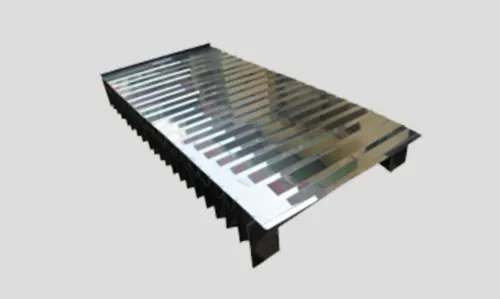
Direct slag or heavy hot-chip impact can defeat both Trumpf laser bellows and standard designs. Specify a telescopic steel cover, metal flap bellow, scraper, shield, or redesigned guarding arrangement instead.
How do installation, service life, and total cost compare?
Purchase price is only one line in this laser machine bellows comparison. Removing a cover can stop production while you remove the old bellows, clean guideways, inspect mounting faces, correct debris or corrosion, align the replacement, and test the complete axis stroke.
| Option | Installation and service effect | Cost exposure |
|---|---|---|
| Machine-specific Trumpf laser machine bellow covers | More measurement and a longer first-order process; correct flanges, compression, stroke, and clearance reduce fitting changes and repeat failures | Higher unit price, but lower emergency downtime and modification risk |
| Standard replacement | Lower unit price, but trial fitting can require altered flanges or fasteners; incorrect compression can shorten service life | Add freight to Ahmedabad, fitting labour, lead-time delays, and possible repeat replacement |
| Either design | Cleaning frequency depends on dust, dross, oil, and wiping friction; inspect the cover during scheduled maintenance | Hold one installed spare for a critical axis, or more only when lead time and failure consequences justify it |
Compare the quotation with freight to Ahmedabad, minimum order, first-order lead time, emergency delivery, cleaning effort, and the cost of a restart delay. A standard cover is a poor saving if pleats collide, the cover stretches, or contamination reaches the guideway.
Accept the replacement in stages:
- Run the axis slowly through full travel; check compression and extension.
- Repeat at operating speed and acceleration.
- Inspect pinch points, pleat collision, fold clearance, guideway or laser-head contact, loose fasteners, open corners, frame deformation, seam or weld opening, hot-particle damage, abnormal motor load, and guideway contamination.
Confirm that acceleration is unrestricted before production resumes. A dry-run alone is insufficient; the cover must survive a production-like cycle.
What should you ask a Trumpf bellow cover supplier in Ahmedabad?
A quotation from a trumpf bellow cover supplier in ahmedabad is useful only when it proves fit, construction, and acceptance—not when it says “Trumpf compatible.” Ask for:
- Written machine-model and axis compatibility, a measurement drawing, compressed and extended dimensions, fold count, flange geometry, hole pitch, frame and fabric construction, temperature range, chemical-resistance information, flame-test report, and proposed fixing method.
- Photographs or a sample of both mounting ends. Compare them with the old cover’s flange shape, stitch or weld pattern, fold count, and axis dimensions; the Trumpf label alone does not prove interchangeability.
- Site measurement, installation, and replacement guidance, plus lead time, warranty terms, delivery configuration, freight to Ahmedabad, minimum order, and recommended spare-cover inventory.
Require the first-article quotation to state checks for flange alignment, hole pitch, folded height, full-stroke clearance, guideway rubbing, and laser-head obstruction. Ask whether the cover will be inspected at low speed and through the complete axis travel before production release.
| Supplier response | Acceptable evidence | Red flag |
|---|---|---|
| Model and axis | Named model, axis, drawing, and dimensions | “Trumpf compatible” only |
| Construction | Frame, fabric, seams, wipers, and chemical data | Fabric name alone |
| Mounting | End photographs, flange and hole details, fixing method | Generic mounting claim |
| Acceptance | Written full-stroke inspection criteria | No first-article checks |
For buyers comparing trumpf laser machine bellow covers versus standard bellows in ahmedabad, GURUKRUPA BELLOWS PVT LTD is one local option to evaluate against the same drawing, material documents, measurement discipline, and full-stroke criteria. Local manufacture can simplify measurement and lead time, but it does not establish OEM-equivalent performance.
Related products
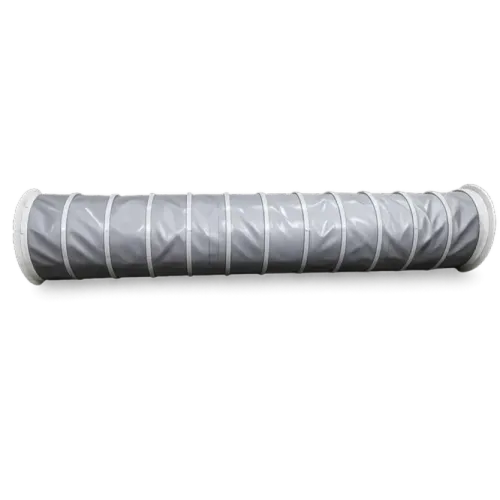
 | Trumpf Laser Bellows Product Details: Minimum Order Quantity 1 Number Brand GE Color Black Size any We offer bellows made specifically for your Trumpf® laser machine. View product → |
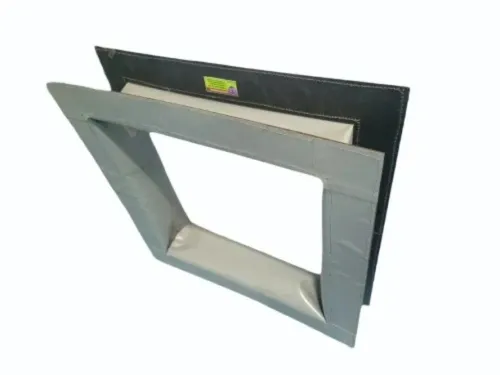
 | Laser Machine Bellows ₹1000 We are committed to manufacture, export, and supply a qualitative range of Laser Machine Bellows for our esteemed clients. View product → |
Frequently asked questions
What separates a Trumpf-specific cover from a standard laser bellows?
A Trumpf-specific cover follows the machine’s axis geometry, travel, mounting pattern, folds, clearances, and compressed length. A standard bellows usually matches broad dimensions and may require adaptation.
How do you identify the Trumpf model, axis, and replacement dimensions?
Read the machine nameplate and service records, then measure the installed cover’s extended and compressed lengths, width, height, flange pattern, mounting holes, and travel direction. Confirm the axis name from the machine documentation.
Which construction and material suit laser-cutting hazards?
Select a construction that handles sparks, hot slag, abrasive dust, coolant, and repeated flexing. Compare coated fabrics, internal support, seam protection, heat shields, and the manufacturer’s stated temperature and chemical resistance.
What should you ask a Trumpf bellow cover supplier in Ahmedabad?
Request model and axis confirmation, a dimensioned drawing, material and coating specifications, mounting details, inspection checks, lead time, installation guidance, and warranty terms before ordering.
Related product
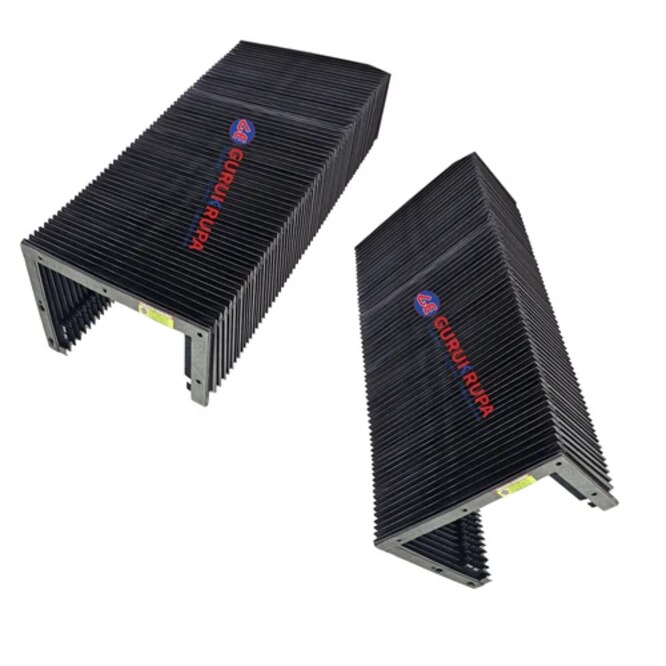
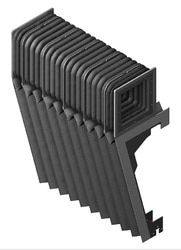 | Laser Cutting Machine Bellows ₹1000 We offer Laser Cutting Machine Bellows made specifically for your laser machine. View product → |