Tears, loose stitching, collapsed folds and coolant leakage usually point to a specific failure mechanism rather than ordinary wear. You will be able to identify the damage, trace it to Ahmedabad operating conditions, measure the replacement correctly and test the new cover before returning the machine to production.
Key takeaways
- Replace covers with torn fabric, leaking folds, or abnormal movement.
- Control heat, coolant, abrasive dust, humidity, and poor drainage around the cover.
- Match fold geometry, travel, speed, mounting, and load before specifying replacement.
- Test full machine travel and inspect every fold before approving installation.
What does a failed canvas bellow cover look like?
A failed canvas bellow cover shows physical damage, distorted folds or abnormal movement—not merely an aged appearance. These canvas bellow cover problems usually reveal the mechanism behind failure:
- Torn fabric, pinholes, cracked coating, broken stitches or frayed reinforcement indicate abrasion, thermal burn-through or chemical attack.
- A blistered, peeling or separating outer layer indicates delamination. Swelling, tackiness or embrittlement points to incompatible coolant or cutting oil.
- Loose flaps, detached mounting frames and failed adhesive are structural defects, not cosmetic wear.
- Collapsed or bulging folds indicate over-compression, excess extension, trapped swarf or movement at the wrong angle.
Uneven travel, noisy folds, pleats slapping against guides, coolant behind the cover or exposed guideways require immediate investigation. Treat a tear as urgent when it sits near the first pleat, mounting frame, seam, fold valley, chips or coolant.
Inspect while the machine is stopped, then observe the cover through its full stroke. Record the failure as abrasion, chemical swelling, thermal burn-through, delamination, seam failure, frame detachment, compression damage or contamination bypass. This gives the repair team a cause to correct instead of the vague label “worn out.”
Which Ahmedabad conditions accelerate fabric bellow cover failure?
Dry abrasive dust, granite grinding debris, metal swarf and foundry particles settle in horizontal pleat valleys. Monsoon humidity makes chips, coolant residue and dust stick to the coating; each machine cycle then folds the abrasive deeper into the bellows. That trapped material drives fabric bellow cover failure by scuffing inner layers and preventing full compression.
- Identify the exact coolant or oil formulation, concentration, temperature and exposure pattern. “Water-soluble” does not prove compatibility: chemicals can swell, soften, embrittle or delaminate the coating.
- Treat hot chips, grinding sparks, welding spatter, plasma cutting and laser cutting as separate hazards. They can burn pinholes into a cover designed only for ordinary chips.
- Store covers clean, dry, shielded from direct sunlight and heat, with no heavy object compressing the folded package. Ultraviolet exposure ages coatings, while heat and folded compression distort pleats before installation.
- Do not use high-pressure air or hard scrapers outside the supplier’s stated pressure, solvent, temperature and brush limits. They can drive swarf into seams, cut the coating or lift bonded layers.
| Condition | Damage mechanism | Check |
|---|---|---|
| Coolant or oil | Swelling, tackiness, embrittlement or delamination | Formulation and concentration |
| Heat or sparks | Pinholes and burned spots | Outer layer and spark exposure |
| Seams and edges | Fluid entry despite panel resistance | Needle holes, unsealed seams, damaged edge binding and mounting interfaces |
How do geometry, loading and machine speed destroy the folds?
A dimension or movement mismatch is the first suspect when canvas bellow covers fail despite intact fabric. Compare the actual stroke, speed, acceleration, reversal frequency, extended length and available installation length with the bellows design. Over-compression flattens pleats until they rub together; excessive extension pulls seams and attachment points apart.
| Condition | What goes wrong | What to compare |
|---|---|---|
| Short installation length | Pleats flatten, rub and trap chips | Compressed length versus designed minimum |
| Excessive travel | Seams, frames and attachments separate | Actual stroke versus designed extension |
| Excessive folded height | Nearby components become blocked | Folded height versus surrounding clearance |
| Insufficient clearance | Chips, guide rails or moving members abrade folds | Clearance through the full stroke |
A bellows is a flexible barrier, not a load-bearing guide. Side loading, torsion, misalignment or unsupported movement folds pleats diagonally; long or high-speed covers may need guide strips, end frames or a separate guide arrangement.
Check cable bundles and drag-chain interfaces with the cover. Uncontrolled slack, an insufficient bend radius or a damaged carrier can rub from inside. A cover that folds correctly by hand can balloon, slap or collapse asymmetrically at production speed, especially during rapid reversals. Test the complete stroke at production speed in the dirtiest operating condition.
What should you inspect before deciding to replace the cover?
Stop the machine, isolate and secure the axis, and remove accumulated chips without forcing debris into the folds. Record canvas bellow cover problems by failure mechanism, not simply as “worn out.”
1. Inspect the cover fully extended and fully compressed. Use a light in every fold valley, concentrating on the first pleat and both areas beside the mounting frames.
2. Look for pinholes, shiny rubbing marks, dark heat spots, cracked coating, frayed fabric, broken stitches, lifted laminate, adhesive separation, and hardened or sticky patches. These indicate abrasion, heat, chemical attack, or structural separation.
3. Confirm the surface is safe, then run a finger along accessible seams. A stiff ridge signals a damaged layer; a soft blister indicates separation beneath the surface.
4. Check that end frames remain square, mounting bolts are tight, flaps overlap correctly, and coolant is not wicking through seams, needle holes, edge binding, or mounting interfaces. Photograph each defect with its location, then record the machine axis, fluid, cycle speed, and recent maintenance.
Replace the cover instead of patching it when a tear reaches a seam or frame, exposes a guideway, returns after cleaning, or lies in a fold valley that opens and closes each cycle.
If contamination remains behind the replacement, inspect nozzle direction, splash velocity, adjacent gaps, cover orientation, and the way surface before blaming the cover.
How do you measure and specify a replacement bellows?
A replacement bellows must match the machine’s movement, envelope and hazards, not merely the old cover’s appearance. Record the machine stroke and travel direction, then measure:
- Extended length and compressed length
- Folded height, overall width and guideway width
- Both end-frame dimensions
- Mounting-hole pattern, hole diameter, bolt spacing and flange thickness
- Available clearance at both ends
Note nearby nozzles, chip guards, cables, drag chains and every surface the cover must not touch. These details expose geometry errors that cause fabric bellow cover failure, including flattened folds, rubbing and pulled seams.
Do not specify “canvas” alone. Ask whether the textile uses a PVC, polyurethane, neoprene, silicone or PTFE coating, and obtain written limits for the exact coolant, oil, concentration, operating temperature, chip type, spark exposure and cleaning solvent.
| Material option | Main strength | Check before selection |
|---|---|---|
| Coated canvas | General chip and dust protection | Coolant and heat limits |
| Polyurethane- or elastomer-coated fabric | Flexibility and fluid resistance | Oil, solvent and temperature compatibility |
| Leather-like material | Abrasion resistance | Chemical and moisture resistance |
| Heat-resistant construction | Welding spatter, grinding sparks or laser heat | Rated exposure and required spark shielding |
Specify seam sealing, edge binding, reinforcement, adhesive compatibility and frame attachment. A chip cover is not automatically suitable for sparks or laser heat. Store it clean, dry, shielded from ultraviolet light, and free from heavy objects compressing the folded package.
How should a replacement cover be fitted, tested and approved?
The acceptance test for canvas bellow covers for failure industrial machines in Ahmedabad starts with correct mounting, not visual approval.
1. Fit the cover without forcing the end frames into alignment. Move the axis slowly through its complete stroke. Confirm every pleat opens and compresses in the intended direction, with clearance at both ends.
2. Watch the first pleat-to-frame junction and maximum extension. The cover must not pull on the machine, cable bundle or guideway.
3. Repeat the test at programmed production speed, including reversals, vibration and coolant or chip exposure.
4. Stop if folds balloon, slap, skew, rub, remain partly collapsed or expose the guideway.
If it fails again, classify contamination bypass, wrong geometry, side load, cable interference, chemical attack, heat or maintenance damage before reordering. Ask the manufacturer to review measured dimensions, the machine cycle, fluid safety data and failure photographs.
For Ahmedabad machine shops, GURUKRUPA BELLOWS PVT LTD is one supplier to approach for application review. Compare proposed construction, movement range, mounting details and documented hazard compatibility—not colour or nominal size.
Related products
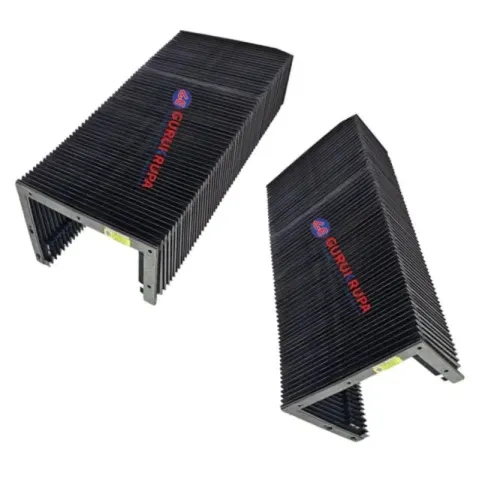
 | Bellow Cover ₹1000 Product Details: Brand GE Color Black-Blue - Gray -White Size ANY ( C shape, Square, Round, Rectangular) Ours is a trustworthy name in the business... View product → |
 | Bellow Cover ₹5000 Product Details: Brand GURUKRUPA Color Black-Blue Size Customised With the support of our excellent team workers, we have been delivering the best... View product → |
Frequently asked questions
What does a failed canvas bellow cover look like?
Look for torn or pinholed fabric, separated seams, cracked coatings, collapsed folds, exposed guideways, and abnormal movement during machine travel.
Which Ahmedabad conditions accelerate fabric bellow cover failure?
Heat, monsoon humidity, standing water, metalworking coolant, abrasive dust, chips, and inadequate drainage accelerate fabric bellow cover failure.
How do geometry, loading and machine speed destroy the folds?
Incorrect compressed length, unsupported folds, excessive tension, side loading, sharp contact points, and travel speeds beyond the design limit distort and tear folds.
What should you inspect before deciding to replace the cover?
Inspect fabric, seams, coatings, end frames, sliders, mounting points, guideway clearance, fold spacing, travel limits, and contamination patterns.
How do you measure and specify a replacement bellows?
Record extended and compressed lengths, width, height, fold pitch, travel, mounting details, temperature, contaminants, speed, and required clearances.
Related products
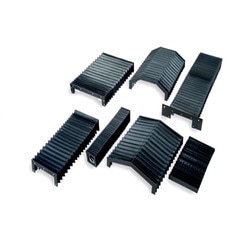 | CNC Bellow Cover Product Details: Brand GURUKRUPA Color BLACK Size ANY We are considered a well-known name in the business that manufactures and supplies CNC Bellow... View product → |
 | Bellow Cover We are considered a well-known name in the business that manufactures and supplies Bellow Cover. View product → |
 | Fabric Expantion Bellow ₹1000 Make in Heavy duty Fabric’s View product → |