Distributors should not stock a fly ash bellow cover from diameter alone: the right choice depends on the loading spout, ash conditions, movement cycle, dust-control system, and replacement pattern. By the end, you can qualify an end user, reject incomplete specifications, compare alternatives, and decide whether a cover is suitable for repeat distribution.
Key takeaways
- Match covers to moving spouts, not to the bulk material alone.
- Keep the inner chute or sleeve responsible for dust-tight product containment.
- Specify dimensions, movement, temperature, fabric, and mounting details before quoting.
- Treat rapid wear, dust escape, and restricted movement as possible system faults.
Which distributor customers are a good fit for a fly ash bellow cover?
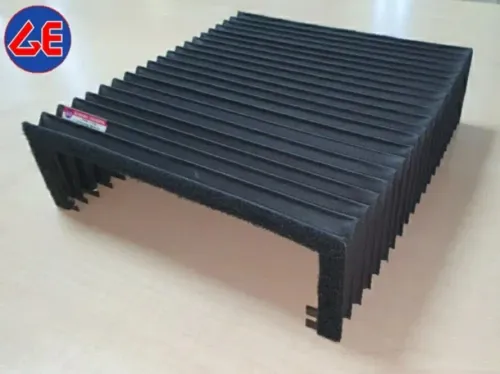
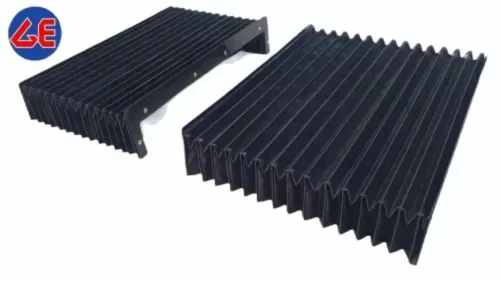
A distributor customer is a good fit when fly ash moves through a spout that travels, extends, retracts, or pivots while loading a tanker, silo, or receiving hopper. The bellow is a flexible protective envelope around that movement, not the primary product-containment path; the inner chute, sleeve, or telescopic spout must carry the dust-tight flow.
Stocking fly ash bulk loading bellow covers for distributors makes sense when the end user can provide:
- Loading-spout design, including mounting arrangement, travel, and clearance
- Loading rate, loading-cycle duration, and replacement frequency
- Fly ash temperature, moisture, dust concentration, and exposure to outdoor UV
- Movement pattern, including vertical travel, lateral offset, vibration, and bending
- Evidence that the cover will be independently supported by rings, bands, or carriers rather than carrying spout or tanker loads
| Operation signal | Fit decision | Why it matters |
|---|---|---|
| Moving enclosed spout with ash escaping at folds or interfaces | Strong fit | The envelope protects the moving assembly and supports controlled dust capture |
| Fixed open chute with no folding or telescopic travel | Poor fit | A rigid hood or redesigned chute may solve the problem better |
| Cover requested without spout dimensions or loading details | Not ready to quote | A generic replacement can bind, collapse, leak, or wear at its attachment points |
Confirm that extraction is designed separately: excessive airflow disrupts loading, while weak capture releases ash. Reject the “generic replacement” request until the customer identifies the spout, support method, and actual fly ash service.
What does the cover do during tanker loading?
During loading, the flexible envelope expands and contracts with the spout’s travel. Its bellows folds accommodate vertical movement, retraction, extension, and small alignment changes between the silo outlet and tanker inlet. Bulk loading bellow covers limit fly ash escaping around the moving spout and reduce contamination of nearby equipment.
The cover is not the product path. Material should travel through the inner loading chute while the outer cover remains a protective shroud. If the bellows is treated as the primary seal, abrasive ash can work through folds and seams; if it carries product or impact loads, its attachment points can fail early.
At the receiving end, the cover approaches or surrounds the tanker inlet without taking the inlet’s load. Support must come from an independent carrier arrangement, not from the chute or vehicle.
A dust-extraction connection captures displaced air at the receiving point; it does not replace the cover, and excessive suction can pull fabric into the spout.
Witness a complete operating cycle before accepting spout bellow covers for distributors:
- Extend and retract the actual spout with the tanker positioned.
- Check for pinched folds, product-stream contact, and attachment-point strain.
- Confirm extraction neither collapses the cover nor releases visible dust.
- Inspect seams after cycling, not only during a static fit check.
What must be specified before you quote a replacement?
Specify the replacement against the actual loading spout, not a catalogue diameter. The outer bellows protects the moving assembly; the inner chute, sleeve, or telescopic spout remains the dust-tight product path.
1. Record the collapsed and extended length, inside and outside diameter, minimum bend radius, travel direction, mounting orientation, available clearance, and the spout’s position at full retraction and extension.
2. Copy the flange or clamp arrangement, bolt-hole pattern, bolt size, ring or carrier details, and attachment loads. The cover must be supported independently; loading-chute or tanker impact will tear attachment points before the fabric reaches its rated life.
3. Document loading rate, cycle frequency, replacement history, end-user industry, dust concentration, and extraction connection. Include the extraction flow and filter arrangement because excessive negative pressure can pull the cover into the spout.
4. Specify fly ash particle size, moisture, carbon content, chemistry, and alkalinity. Require abrasion evidence from the actual service rather than accepting a generic PVC-coated fabric claim.
5. State continuous and peak temperatures, radiant heat, compressed-air cleaning temperature, outdoor UV exposure, static-charge controls, and moisture contact. Check the coating, thread, stitching, clamps, and inspection window—not only the advertised fabric limit.
6. Make acceptance a witnessed cycle: extend and retract the actual spout, inspect folds and seams, confirm clearance from the product stream, and verify extraction does not distort the cover.
This discipline makes fly ash bulk loading bellow covers for distributors easier to match and supports reliable fly ash equipment protection in bangalore.
Which fly ash bellow cover problems indicate a system fault?
A system fault is more likely than a defective cover when symptoms change with airflow, spout position, or tanker connection. Fly ash bellow cover problems should be separated from failures in the loading system before you approve a replacement.
| Symptom | Likely cover fault | Check elsewhere first |
|---|---|---|
| Fold cracking | Crests have worn through from repeated flexing, ash abrasion, or moisture-caked deposits | Misalignment, excessive travel, or a clamp edge rubbing the fold |
| Pinholes | Local abrasion, heat damage, chemical attack, or poor seam condition | A sharp flange, bolt, hose, or spout contact |
| Delamination | Fabric and coating separate across a broad area | Heat or alkaline contamination beyond the specified material limit |
| Leakage | A torn seam, failed attachment, or damaged bellows wall | The inner chute, sleeve, tanker inlet, or product seal; the outer cover is not the primary containment path |
| Dust accumulation | Ash has packed into folds, adding weight and stiffness | Blocked cleaning access or moisture entering during shutdown |
| Collapse | The cover is pulled inward during movement | Excessive extraction airflow, a blocked filter, or an incorrectly sized duct |
| Travel interference | The pack pinches, snags, or fails to extend fully | Misaligned spout, loose clamps, incorrect collapsed length, or tanker filling that shifts the inlet |
Run a witnessed cycle with the actual spout. Check extension, retraction, fold clearance, seams, clamps, and extraction response while the tanker fills. If dust escapes only when the spout is off-centre, correct positioning before changing the cover.
How should a distributor compare covers with other loading options?
A cover is the right choice when the loading spout needs a moving outer envelope, not when it is being asked to replace the product path.
| Option | What it means | When it applies |
|---|---|---|
| Flexible bellow cover | Follows spout travel and shields folds, clamps, and nearby equipment; it is not the primary dust seal. | Moving spouts with a separate inner chute or sleeve |
| Rigid chute | Fixed product path with little flexibility. | Aligned loading points with no significant movement |
| Telescopic spout | Extends into the tanker and controls the material route. | High-volume loading where reach and dust control are integral |
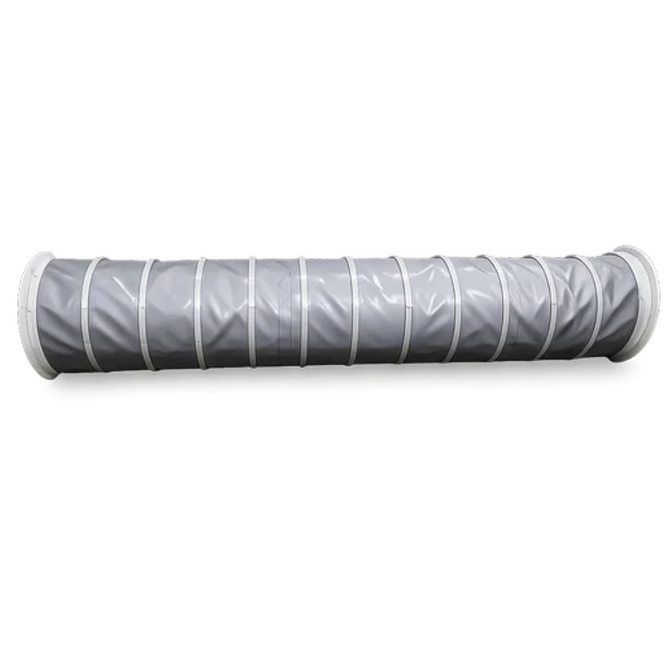
| Fabric sleeve | A simpler flexible connection with limited structural protection. | Short travel, low-abrasion service |
| Extraction hood | Captures airborne dust through controlled airflow. | Use alongside a sealed product path, never instead of one |
| Replacement-only bellow | Matches an existing assembly without redesign. | Verified dimensions, travel, temperature, and clamp pattern |
Run an acceptance test before stocking spout bellow covers for distributors:
- Cycle the empty spout through full extension, retraction, and sideways movement; check fold clearance and clamp stability.
- Load actual fly ash at operating rate, then inspect the tanker interface, fold crests, and extraction balance for dust escape.
- Repeat after shutdown and moisture exposure; reject designs that cake ash inside folds or obstruct travel.
Procure against a drawing showing collapsed and extended length, diameters, flange, bolt pattern, bend radius, temperature, and material history. GURUKRUPA BELLOWS PVT LTD can be evaluated through that same evidence-based route for fly ash equipment protection in Bangalore.
Related products
 | Fly Ash Bulk Loading Spot Bellow Fly Ash Bulk Loading Spot Bellow ₹10000 Product Details: Minimum Order Quantity 01 Number Brand GURUKRUPA Size ANY We manufacture a wide range of Fly Ash Bulk Loading Spot Bellow in various... View product → |
 | Cement Plant Bulk Loading Unloading Bellows Cement Plant Bulk Loading Unloading Bellows ₹5000 Product Details: Brand GURUKRUPA Size ANY Having rich experience and thorough understanding of the market operations, we are engaged in manufacturing... View product → |
Frequently asked questions
Which distributor customers are a good fit for a fly ash bellow cover?
Customers are a good fit when fly ash moves through a spout that travels, extends, retracts, or pivots during tanker, silo, or hopper loading. The cover protects that movement; the inner chute, sleeve, or telescopic spout carries the dust-tight flow.
What does a fly ash bellow cover do during tanker loading?
It forms a flexible protective envelope around the moving loading equipment, helping shield guides, joints, cables, and surrounding machinery from fly ash. It is not the primary product-containment path.
What must be specified before quoting a replacement fly ash bellow cover?
Confirm the cover's relaxed and extended dimensions, travel and bend pattern, mounting method, operating temperature, fabric and coating, abrasion exposure, number of folds, and clearance around the spout.
Which fly ash bellow cover problems indicate a system fault?
Rapid abrasion, torn folds, dust escaping from the loading path, snagging, restricted extension, uneven folding, and heat damage can indicate misalignment, excess travel, inadequate clearance, a leaking inner sleeve, or an unsuitable material.
How should distributors compare covers with other loading options?
Compare containment responsibility, movement range, access for inspection, replacement time, abrasion and temperature resistance, installation constraints, and the consequences of dust exposure rather than comparing cover price alone.