A replacement cover cannot be ordered safely from the Trumpf machine name alone: the axis, travel envelope, fold geometry, end fittings, heat exposure, and mounting pattern all determine the design. By the end, you will know what to measure, how a Bangalore supplier converts those measurements into a finished cover, and how to verify the part before installation.
Key takeaways
- Send axis travel, mounting dimensions, and interference limits before requesting a quote.
- Select fabric, coating, and reinforcement for heat, chemicals, motion, and impact.
- Approve a drawing or sample fit before production begins.
- Ask suppliers for inspection records, test results, and completed machine-specific references.
Start with the machine geometry, not the keyword
The axis motion envelope determines the replacement, not the machine name alone. A machine-specific cover is built to the Trumpf geometry, mounting interface, travel and interference limits; a generic laser-cutting-machine bellow is only a starting shape.
| Machine-specific replacement | Matches model, axis, fittings, stroke and clearance | Use for a direct replacement |
|---|---|---|
| Generic bellow | Standardised dimensions with unverified interfaces | Use only after engineering checks |
Give a trumpf laser bellow cover supplier:
- Machine model, serial number or build details; axis, stroke and travel direction
- Fully extended and compressed lengths; width, height, fold pitch and number of folds
- Opening size, mounting-hole pattern and flange dimensions
- Clearance around the laser head or guideway, plus speed, acceleration and cycle frequency
- Minimum bend radius, installation orientation, coolant or oil exposure and chip load
- Quantity, delivery requirement and installation constraints, including access and maintenance space
Measure an installed cover without removing it. Record the carriage position at full extension and full compression, then measure the installed envelope in both positions. Mark fixed reference points on the cover and machine frame.
Photograph both end connections and capture hidden clearances, frames, flanges, Velcro, clamps, screws, nearby cables and hoses. Include a scale in each image. A sample alone can hide stiffeners, tolerances, travel stops and the original material specification, so request a dimensioned drawing and bill of materials.
For trumpf laser bellow covers in bangalore, provide these records before approving design or fabrication. Two machines from one product family can still require different covers.
How the cover is made from drawing to finished assembly
A Trumpf-compatible cover is made from measured machine geometry, not from the Trumpf name alone. How Trumpf laser bellow covers are made in Bangalore follows a controlled route from inspection to motion testing.
1. Inspect the machine, old cover, or sample. Record the axis, travel, extended and compressed lengths, opening, clearances, and end connections.
2. Prepare a dimensioned 2D drawing. Add a 3D model when the laser head, guideway, cables, or adjacent guards create interference risk. Obtain buyer approval before cutting.
3. Select the coated technical textile, reinforcement, slats, and end-frame material for the heat, coolant, oil, chips, and motion involved.
4. Cut fabric panels, reinforcement pieces, and any internal stiffeners to the approved dimensions.
5. Form the folds to the approved pitch, height, and count. Deep folds increase compressed length and collision risk; shallow folds can overstretch fabric, weaken sealing, and fatigue the creases.
6. Join the assembly using sewing, bonding, thermal welding, high-frequency welding, or a combination selected for the material and service conditions.
7. Fabricate and fit mounting frames, flanges, plates, and stiffeners. Reuse existing frames, Velcro, clamps, or screws only after checking hole position, flatness, access, and load; otherwise replace them with new mounting plates.
8. A Trumpf laser bellows manufacturer inspects dimensions, frame alignment, seams, and clearances, then runs compression, extension, and repeated-travel tests before dispatch. Ensure the cover moves smoothly without rubbing, inversion, or leakage.
Choose construction for heat, chemicals, motion, and impact
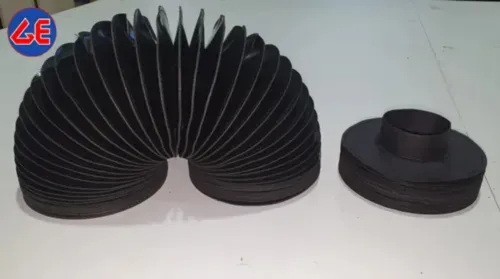
Silicone-coated fabric suits radiant heat and sparks; polyurethane handles abrasion, lubricant and coolant; neoprene offers a broader oil-and-chemical compromise; PTFE-related fabrics suit higher chemical or thermal demands. Aramid reinforcement supports flexing and tear resistance, while glass fibre adds heat stability but can reduce flexibility.
Compare cutting gas, hot swarf, cleaning chemicals, cycle count, and available clearance—not fabric names alone.
A trumpf laser bellow cover supplier should provide the actual continuous and peak operating-temperature range, coating and reinforcement construction, chemical-compatibility data, flex-cycle evidence, and a flame-test report naming the method and specimen condition. ASTM D6413 or ISO 15025 may be useful references, but a fabric flame result does not make a cover laser-safe.
Direct or reflected radiation requires a separate enclosure and risk assessment using ISO 12100 principles; consider guarding under ISO 14120.
Joining choice changes service behaviour:
| Option | Strength | Trade-off |
|---|---|---|
| Thermal welding | Sealed, cleanable joints | Less repairable; process and lead time matter |
| Sewn seams | Flexible and repairable | Leak paths and abrasion at stitching |
| Perforated folds | Compact, flexible movement | Lower sealing and fold-life potential |
| Combination folds | Balances sealing and flexibility | Higher price and longer manufacture |
Use a telescopic steel cover for rigid chip impact, a slatted or segmented shield for heavy hot-metal loads, a simple flexible guard for light contamination, or a separate heat shield for radiant heat.
Approve the fit before production and test the finished cover
Approve the dimensioned drawing before production, not after the cover is sewn. It must show extended and compressed lengths, fold pitch, fold count, end fittings, flange holes, mounting plates, cable and hose clearances, and travel direction. A Trumpf laser bellows manufacturer should obtain written approval.
1. Use a first article, trial installation, or 3D interference check when the carriage, laser head, guideway, or adjacent covers leave little clearance. Check wrong fold pitch, insufficient compressed length, carriage rubbing, trapped cable or hose movement, inadequate heat shielding, incorrect flange holes, and blocked maintenance access.
2. After manufacture, inspect dimensions at both end positions. Confirm smooth full-stroke movement, consistent folds without inversion or rubbing, frame flatness, hole alignment, seam and bonded-joint integrity, no pinholes or exposed reinforcement, and clearance from the laser head and guideway.
3. Run repeated-motion testing at actual machine conditions or agreed simulated speed, stroke, acceleration, and cycle frequency. Stop approval if the cover stiffens, folds collapse, seams open, or cables contact the moving assembly.
4. During maintenance, inspect torn folds, exposed fabric, coating cracks, delamination, stiff movement, heat damage, spark or dust leakage, loose frames, and rubbing marks. Stop using the cover when any defect changes the travel envelope; continued motion can damage the laser head, guideway, hoses, or the replacement cover.
Choose a Bangalore supplier by evidence, not by machine name
A Trumpf laser bellow cover supplier needs more than a machine name. Send the model, serial or build details, axis, photographs, old-cover sample if available, complete dimensions, operating environment, quantity, required delivery date, and installation restrictions.
| Option | Compare | Risk to control |
|---|---|---|
| Local manufacture | Easier inspection access, measurement clarification, installation support, and replacement turnaround; freight is simpler | Confirm material limits, drawing revision, documentation, and fit |
| Imported cover | Factory documentation may be stronger, but freight, communication, installation support, and replacement handling add effort | Do not order from a keyword alone |
| One-piece replacement or repeat order | A single part needs geometry confirmation; repeat orders are safer against an approved drawing and bill of materials | A changed revision can make later covers incompatible |
Use this purchasing sequence:
- Clarify missing measurements and operating conditions.
- Review the dimensioned drawing and bill of materials.
- Approve material, end fittings, and mounting interface.
- Decide whether a prototype or first article is required.
- Inspect and trial-fit the first part.
- Release repeat orders against the approved revision.
Check that the supplier can produce machine-specific drawings, provide material traceability, document dimensional and motion inspection, match end fittings, support replacements, and confirm fit before production. Gurukrupa Bellows Pvt Ltd is a Bangalore manufacturing option only when it meets those checks.
For Trumpf laser bellow covers in Bangalore, compare the complete delivered specification—not unit price alone. A sample can conceal stiffeners, hole tolerances, travel stops, and material limits.
Related products
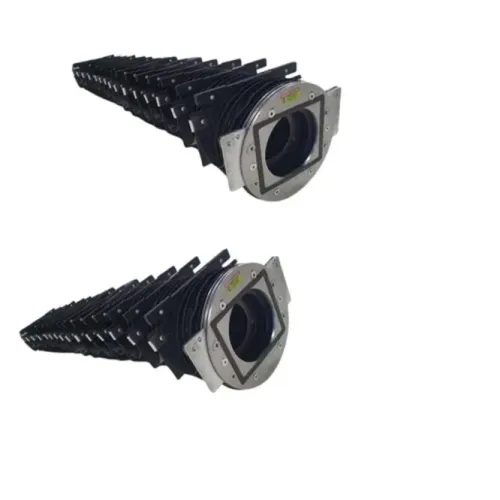
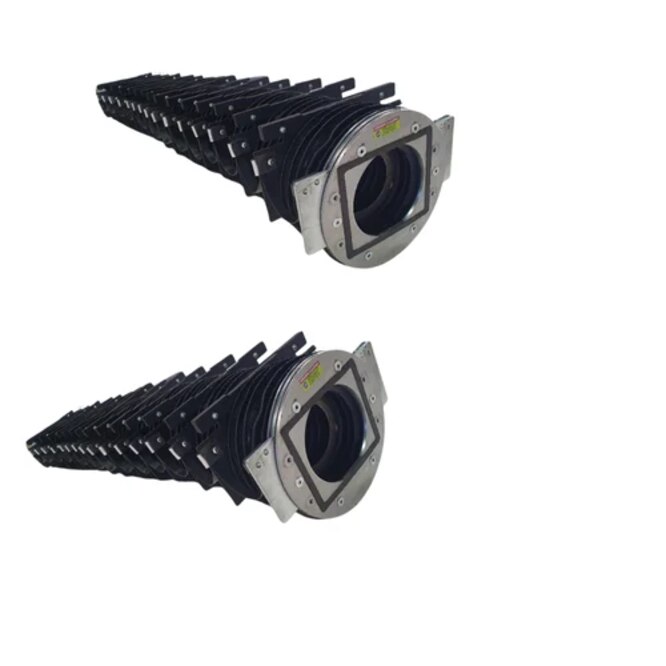
 | Trumpf Laser Bellows Product Details: Minimum Order Quantity 1 Number Brand GE Color Black Size any We offer bellows made specifically for your Trumpf® laser machine. View product → |
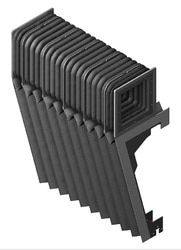 | Laser Cutting Machine Bellows ₹1000 We offer Laser Cutting Machine Bellows made specifically for your laser machine. View product → |
Frequently asked questions
What information determines a Trumpf laser bellow cover replacement?
Provide the axis travel envelope, mounting interface dimensions, folded and extended lengths, nearby interference points, and the machine’s heat and contamination conditions.
How are Trumpf laser bellow covers made?
The process moves from machine measurements and a drawing to material selection, cut panels, stitched or bonded folds, mounting components, assembly, and final inspection.
How should you choose construction for a laser bellow cover?
Match the fabric, coating, reinforcement, and fold design to heat exposure, chemicals, motion frequency, debris, and impact at the protected axis.
What should you test before approving a finished bellow cover?
Check folded and extended dimensions, mounting-hole alignment, smooth travel through the full axis stroke, clearance at interference points, and resistance to the stated operating conditions.
How can you evaluate a Trumpf laser bellow cover supplier in Bangalore?
Ask for machine-specific drawings, material specifications, inspection records, test evidence, and references for comparable protective-cover work rather than relying on the machine name alone.
Related products
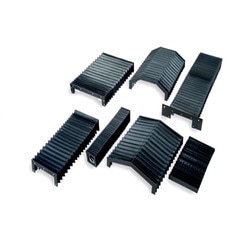
 | Laser Machine Bellows ₹1000 We are committed to manufacture, export, and supply a qualitative range of Laser Machine Bellows for our esteemed clients. View product → |
 | CNC Bellow Cover Product Details: Brand GURUKRUPA Color BLACK Size ANY We are considered a well-known name in the business that manufactures and supplies CNC Bellow... View product → |
 | CNC Telescopic Cover Product Details: Brand GURUKRUPA Being one of the trustworthy names of the industry, we bring forth CNC Telescopic Cover that can be availed at... View product → |
 | Telescopic Cover Product Details: Brand GURUKRUPA Color Steel Material Steel Size Customised We are one of the pre-eminent names of the industry to manufacture and... View product → |