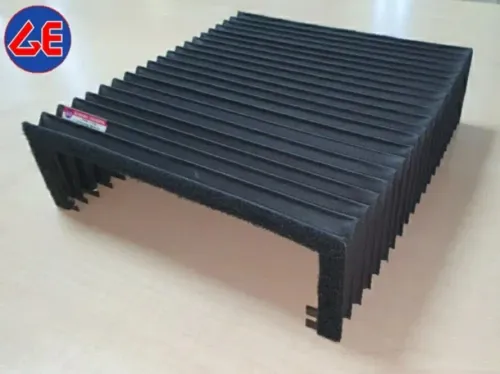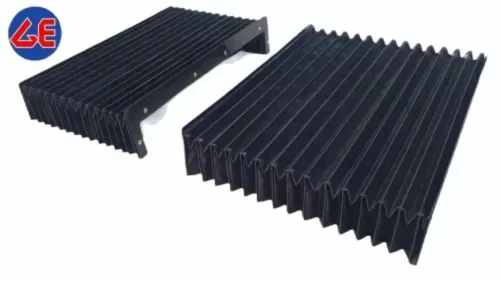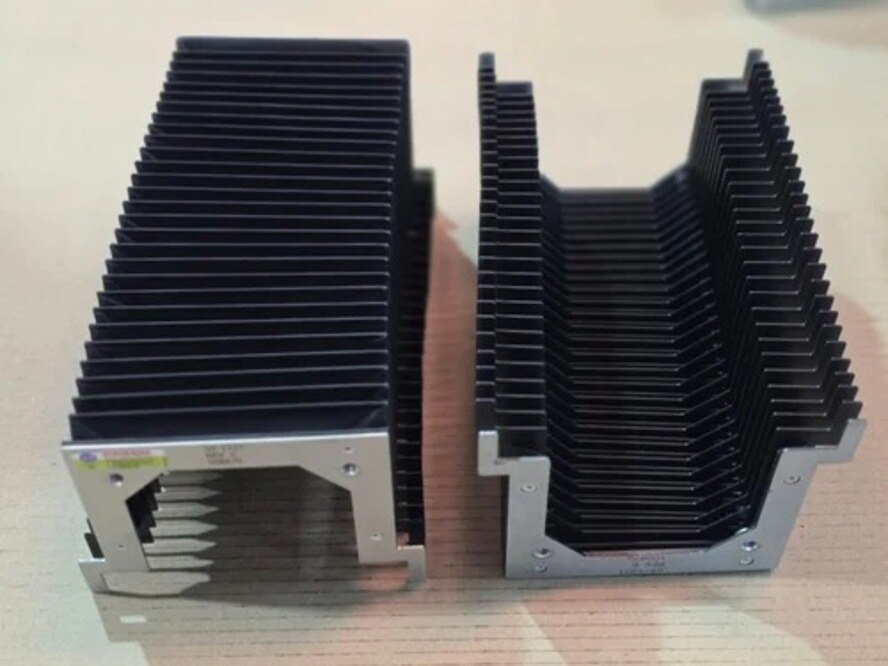
Replace a bellow cover when its damage, movement, or material condition no longer keeps chips, coolant, heat, or abrasive debris away from protected machine components. By the end, you will be able to inspect the cover safely, decide between a repair and full replacement, and verify the replacement’s dimensions before ordering.
Key takeaways
- Use contamination, duty cycle, and damage—not age alone—to decide replacement.
- Replace covers that expose guideways, bind during travel, or shed material.
- Measure the axis through its full stroke before ordering a replacement.
- Give suppliers the heat, chips, coolant, and motion conditions the cover faces.
Use condition and duty cycle—not age—to set the replacement decision
Calendar age alone does not tell you when to replace bellow covers on industrial machinery. Set the decision by condition, contamination, operating hours, and stroke cycles: a cover moving thousands of times beside abrasive chips will consume its travel life faster than one protecting a lightly used, clean axis.
Replace the cover when inspection finds any of these conditions:
- Cracks, pinholes, abrasion-through, delamination, hardened or swollen fabric
- Torn stitching, detached end frames, loose fasteners, or distorted mounting points
- Folds that collapse, rub against each other, bind, stretch, or fail to extend fully
- Exposed guideways, screws, cables, or other components the cover was installed to protect
- Coolant, cutting oil, chips, sparks, or dust passing through damaged areas
- Material that no longer returns to its shape after compression
Treat exposure of a moving machine component as a guarding failure, not a cosmetic defect. Stop the machine for assessment if a loose frame or torn fold can enter the travel path.
Inspect more frequently as stroke cycles, travel speed, heat, coolant concentration, welding spatter, ultraviolet exposure, or cleaning intensity rises. Record operating hours, cycle counts, failed locations, and the cause of each defect; repeated failures at the same fold point indicate that the cover has reached its duty limit or the installation is forcing premature wear.
That record gives you a defensible replacement interval without guessing from age.
Separate cosmetic dirt from damage that exposes the machine
Dirt is cosmetic only when the cover remains flexible, intact, correctly mounted, and able to shield the guideway throughout its stroke. Industrial bellow cover damage becomes a protection failure when it exposes moving parts, creates a path for chips or coolant, or changes how the cover folds and travels.
| Symptom | What it indicates | Decision |
|---|---|---|
| Surface dust or discoloration with intact coating | Contamination without loss of protection | Clean using the specified method and recheck |
| Cracks, pinholes, torn stitching, delamination, or abraded coating | Openings or weakened fabric can admit chips, oil, or coolant | Replace or obtain an engineered repair |
| Loose end frames, damaged end plates, stretched material, or distorted mounting points | The cover can separate from the machine or leave a gap | Stop and correct the mounting or replace the cover |
| Collapsed folds, rubbing marks, uneven opening, or fold-to-fold wear | The cover is binding, misaligned, or losing its designed geometry | Inspect alignment and replace if deformation remains |
| Higher axis force, jerky travel, noise, or asymmetric extension | Stiffened material, failed reinforcement, contamination, or frame distortion | Stop production until the cause is identified |
Run the axis slowly through its complete travel after cleaning and during diagnosis. A cover that looks sound at one end can stretch, bind, or expose the guideway at the other. A hole also does not prove liquid-tight protection is required; coolant exclusion may need wipers, drainage, seals, or a separate telescopic cover.
Inspect safely, then choose a patch, sectional repair, or full replacement
Lock out and isolate the machine before touching the cover; remove chips and coolant, let hot surfaces cool, and release stored pneumatic or hydraulic energy. Never inspect a moving bellow by hand. Use a flashlight and photograph each fold, frame, seam, mounting point, and guideway.
Check for cracked or brittle fabric, pinholes, delamination, torn stitching, collapsed folds, stretched material, loose frames, distorted mounting points, and exposed guideways. Dirt or colour change alone is cosmetic; a hole, stiffened fold, separated layer, or material that no longer follows the stroke is damage.
Choose the repair level against what remains sound:
| Option | What it means | When it applies |
|---|---|---|
| Patch | Local covering over a small hole or tear | Temporary containment only; use it when the cover still folds freely and replacement is scheduled |
| Sectional repair | Replace a damaged fold or section | Localized damage, with sound fabric, stitching, frames, end plates, and mounting points elsewhere |
| Full replacement | Remove and rebuild the complete cover | Heat, chemicals, widespread flex fatigue, multiple damaged folds, loose frames, or protection failure |
Reject a patch if it adds stiffness, creates a stress concentration, prevents compression, or increases rubbing. A sectional repair is reliable only after inspecting the undamaged sections and confirming that the original material has not become brittle or chemically attacked.
After any protective bellow replacement or repair, run the machine slowly through full travel. Check compression, extension, mounting security, clearances, guideway coverage, and access to lubrication points; a cover that clears at one end can bind at the other.
Measure the machine through its full stroke before ordering
Axis stroke alone is not enough to size a replacement. Measure the machine at both travel limits and record the installation envelope, because dead length and folded height can make a cover over-compress, stretch, or obstruct nearby parts.
1. Measure the bellow’s closed length with the axis fully retracted and its extended length at full travel. Record the available width, height, and depth around the guideway, including any space needed for folds to rise or move sideways.
2. Measure fold pitch, the number of folds, and the folded height. Check the mounting arrangement at both ends: frame dimensions, hole spacing, bolt size, end-plate orientation, and whether the cover moves in one direction or reverses.
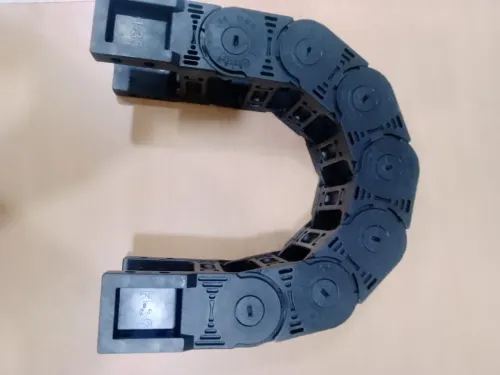
3. Mark nearby risks through the complete stroke. Check clearance from tooling, cable carriers, clamps, lubrication points, swarf conveyors, and machine guards. A cover that clears at one end can bind against a component at the other.
4. After fitting the proposed protective bellow replacement, run the machine slowly through its full travel. Watch each fold compress and extend, then stop if material stretches, rubs, buckles, or fails to open evenly.
5. At both limits, verify mounting security, fold compression, clearances, and access to lubrication points. Repeat the check at operating speed only after the slow stroke is clean; a bellow that passes a static measurement can still flutter or catch during acceleration.
Specify the exposure and verify the supplier’s proposed construction
Give the supplier the machine’s actual exposure, not just its model name. State the coolant or cutting oil, chip size, dust, sparks, welding spatter, ultraviolet light, chemicals, operating temperature, travel speed, acceleration, and cleaning method.
Hot chips can burn through or embrittle fabric locally, so a standard coolant cover is not automatically suitable near laser, plasma, welding, grinding, or heavy dry machining.
- Send photographs of the failed cover, guideway, mounting points, and surrounding tooling.
- Provide closed length, extended length, folded height, width, axis stroke, and clearance at both travel limits.
- Describe the failure: pinholes, delamination, torn stitching, cracked coating, collapsed folds, loose frames, or heat damage.
- Ask the supplier to state the fabric, coating, thread, reinforcement, temperature range, chemical resistance, end-frame material, and mounting method.
- Confirm the proposed construction suits the required speed, acceleration, fold compression, chip impact, spark exposure, and cleaning process.
When comparing bellow covers in bangalore, treat the machine environment as the specification; “machine-tool bellow” is not enough. GURUKRUPA BELLOWS PVT LTD can be included in the quotation comparison, but request construction details rather than accepting a generic product category.
Before approval, require a drawing or sample showing mounting holes, frame dimensions, folded profile, and clearance. Run the installed cover slowly through the full stroke and check for binding, stretching, loose fasteners, blocked lubrication points, and contact with moving parts.
Related products
 | Bellow Cover ₹1000 We are offering an excellent quality of Protective Bellows for all type Guideways. This design covers three sides of the rail. View product → |
 | Round Bellow Covers ₹1000 To match with our reputation in the market, we are here to present an unparalleled assortment of Round Bellow Covers. View product → |
Frequently asked questions
When should you replace bellow covers on industrial machinery?
Replace them when damage exposes the protected machine, movement binds or folds incorrectly, material sheds into the work area, or contamination exceeds the cover’s design conditions. Use operating hours, stroke cycles, and exposure alongside calendar age.
Which bellow cover wear problems require immediate attention?
Treat holes, torn folds, split seams, detached mounting frames, hardened material, and covers that fail to close as urgent. These industrial bellow cover damage signs can expose guideways, screws, cables, or hydraulic components.
Should you patch a damaged bellow cover or replace it?
Use a patch for a small, isolated tear when the fabric remains flexible and the cover still travels correctly. Choose sectional repair when one portion is damaged but the frame and remaining sections are sound. Order a full protective bellow replacement when damage is widespread, repeated, or caused by incorrect construction.
What must you measure before ordering a replacement bellow cover?
Record the closed length, extended length, usable stroke, folded height, width, mounting-hole pattern, frame dimensions, and clearance at both ends. Check the cover through the complete axis stroke so folds do not collide, stretch, or obstruct nearby parts.
Related products
 | Bellow Cover We are considered a well-known name in the business that manufactures and supplies Bellow Cover. View product → |
 | Bellow Cover ₹5000 Product Details: Brand GURUKRUPA Color Black-Blue Size Customised With the support of our excellent team workers, we have been delivering the best... View product → |
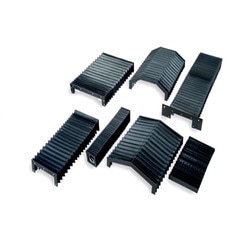 | CNC Bellow Cover Product Details: Brand GURUKRUPA Color BLACK Size ANY We are considered a well-known name in the business that manufactures and supplies CNC Bellow... View product → |