Fly ash loading combines a silo outlet, conveying spout, vehicle inlet, dust-extraction system, and flexible protection around the moving connection. By the end, you will be able to map the loading sequence, prepare the dimensional and material specification, check safety and dust-control interfaces, and compare a flexible cover with other loading arrangements.
Key takeaways
- Confirm vehicle position, grounding, wheel chocks, and dust extraction before loading.
- Size the bellow for outlet height, vehicle movement, stroke, and retraction clearance.
- Specify abrasion-resistant fabric, sealed joints, clamps, and compatible dust-control connections.
- Inspect folds, seams, suspension, and interlocks before accepting the installation.
What happens from silo discharge to sleeve retraction?
Loading starts only after the truck or railcar is beneath the outlet, wheel-chocked, and confirmed by the vehicle-presence system. The loading spout carries fly ash; the bellow covers the moving connection.
1. Start the vent or dust-collector extraction before opening the silo gate. Confirm the tanker vent path is open and the extraction connection is not blocked.
2. Lower or extend the telescopic spout into the vehicle inlet. Check that the outlet is seated without dragging on the hatch or forcing the flexible assembly sideways.
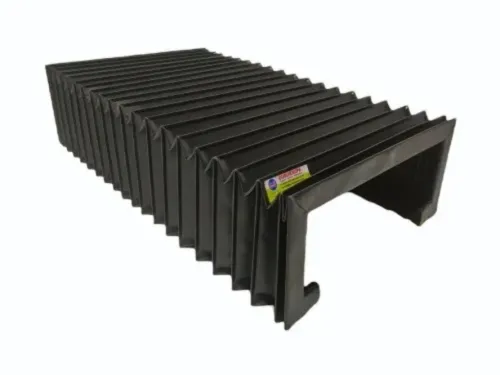
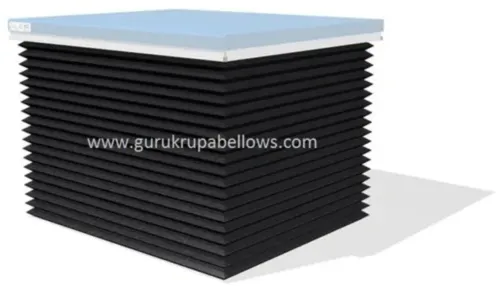
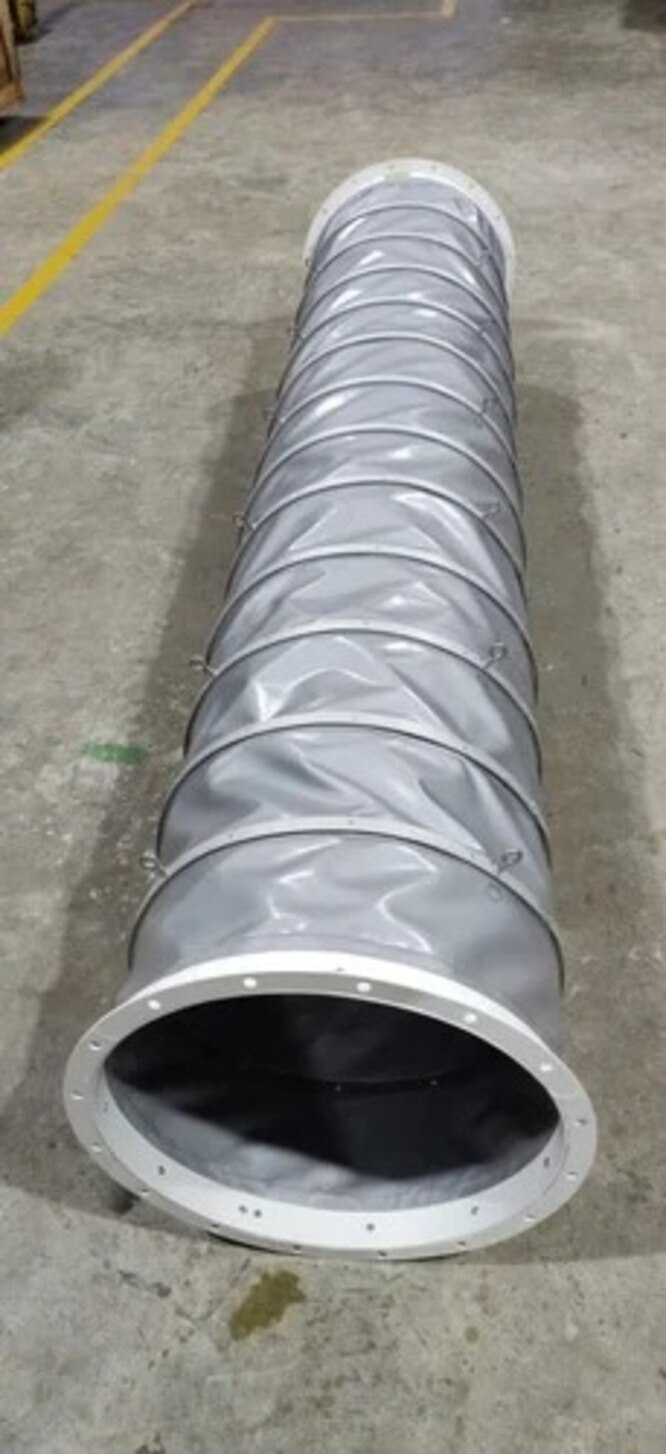
3. Deploy the fly ash loading bellow cover around the joint between the spout and hatch. It contains dust at this moving interface and protects the spout, cables, hoses, and drive mechanism from ash ingress and abrasion.
4. Open the silo gate or start the feeder gradually. Control the feed to prevent surging, while monitoring vehicle level and system differential pressure.
5. Stop before the vehicle is overfilled. A sealed cover cannot correct a blocked vent, excessive filling rate, poor pressure relief, or a misplaced extraction port.
6. Close the gate, keep extraction running until residual dust clears, then retract the sleeve. Secure it above the hatch and inspect the folds for ash buildup or snagging.
A fly ash bulk loading spot bellow is a short protective section around a joint or exposed transition, not automatically a full telescoping loading chute. Confirm whether the quotation includes the spout, filter, vent, extraction connection, level sensor, and overfill interlock; “bellow” alone includes none of these.
How do you size the bellow for the vehicle and its movement?
Size the cover from the vehicle’s movement envelope, not from nominal pipe diameter. Record the silo outlet diameter, vehicle hatch size, outlet elevation, loading height, required vertical travel, horizontal offset, available headroom, and every attachment point.
Put these procurement dimensions on the drawing:
- Minimum and maximum installed length, collapsed height, and extension stroke
- Inside and outside diameters, flange-hole pattern, mounting arrangement, and minimum bend radius
- Full clearance envelope while the truck positions, suspends, vibrates, and moves beneath the outlet
- Cable-carrier, chain, frame, grounding-strap, inspection-opening, drain, and moisture-management locations
- Cleaning access and the space required to remove the cover without dismantling unrelated equipment
State the travel speed and cycle geometry, including stroke, pauses, acceleration, and return path. Test the cover against truck suspension movement, vibration, positioning error, and spout-to-hatch movement; over-compressed folds can tear, while excess length can lose containment.
| Position | Drawing and acceptance check | Failure prevented |
|---|---|---|
| Fully retracted | Show collapsed height, headroom, changeout access, and clear drive components | Ash-packed folds and snagging |
| Partially extended | Show bend radius, cable and chain paths, and hatch approach | Rubbing, abrasion, and fold collapse |
| Fully extended | Show vertical travel, lower-cuff clearance, outlet-to-hatch alignment, and containment | Dragging, tearing, and dust escape |
Confirm that the outlet cannot drag on the hatch, the lower cuff clears the vehicle, and no cable carrier, chain, frame, or grounding strap enters a fold. A spot bellow for fly ash suits a short exposed transition; use a full-length cover when the moving assembly remains exposed throughout travel.
Specify whether bulk loading bellow covers include cleaning and inspection provisions.
What materials and dust-control interfaces belong in the specification?
Write the specification around the actual ash and plant environment, not the label “fly ash.” A fly ash loading bellow cover needs material data, wear details, and dust-control interfaces that match the loading cycle.
1. Identify the ash grade and safety data sheet, then record calcium content, unburned-carbon content, particle-size distribution, moisture content, bulk density, abrasiveness, loading rate, and loading time. State normal, peak, and upset temperatures at the cover.
2. Name the construction: inner liner, coated fabric, reinforcement, fold-crest wear layer, lower-edge wear strips, seam construction, cuffs, flanges, and replaceable wear sections. Check resistance to alkaline ash, condensate, washdown chemicals, and flex fatigue. Do not use “high-temperature fabric” as the complete material specification.
3. For outdoor fly ash bulk loading bellow covers in Bangkok, state ambient temperature and humidity, rain exposure, storage conditions, corrosion protection, electrical-area classification, and local service expectations. Add a moisture-control plan so rain or washdown cannot harden settled ash inside the folds.
4. Specify the extraction port, airflow, filter, tanker vent path, pressure-relief arrangement, level sensor, overfill interlock, inspection opening, and grounding or bonding provision. The bellow contains dust around the moving joint; it is not a dust collector, silo vent filter, or pressure-rated conveying pipe.
If combustible dust is possible, verify continuity through conductive or dissipative fabric, seams, hardware, frame, and machine earth. Fabric alone is not grounding. Include containment and local exhaust as performance requirements, with acceptance tests for leakage and airflow.
How should operators run, inspect, and accept the installation?
1. Before each load, inspect the fly ash bulk loading spot bellow and bulk loading bellow covers. Check folds, cuffs, clamps, flanges, seams, wear strips, cable carriers, frames, grounding straps, and limit switches for pinholes, split seams, bent frames, ash-packed horizontal pockets, water intrusion, and rubbing against the spout.
2. Position and chock the vehicle, then verify vehicle presence through the interlock. Connect the outlet, confirm that the sleeve is engaged, and start dust extraction before opening the gate. Keep emergency-stop access clear, use hatch fall protection, and follow the site’s ignition and static-control procedures.
3. Never load with extraction off or with the sleeve disconnected. Stop if folds over-compress, the cover overextends, or the cover drags on the hatch. Watch for spout movement, vibration, snagging, and ash collecting where cables or chains travel.
4. After loading, close the gate, clear residual dust through the extraction path, retract the sleeve, and secure it. Vacuum the cover or use the approved low-dust method; never beat, scrape, or blow settled ash into the fabric or workplace air.
5. Accept the installation only after recording leak inspection, full-extension and retraction cycles at specified speed, representative dust exposure, extraction airflow, differential pressure, interlock and emergency-stop tests, grounding continuity, and operator training. Record defects and replace worn cuffs, filters, limit switches, or sleeves before containment is lost.
When is a flexible spot bellow the right investment?
A flexible spot bellow is the right investment when the loading point needs dust containment around a moving spout, but does not carry ash or contain conveying pressure. Choose it for short travel, repeated misalignment, and low operator effort; choose rigid equipment when alignment and pressure control matter more.
| Option | Containment and flexibility | Maintenance, wear life, and operator effort |
|---|---|---|
| Flexible spot bellow | Seals a moving joint and tolerates offset | Inspect folds and wear strips; low handling effort, but life depends on cycles, abrasion, and fit |
| Rigid loading spout | Strong alignment and pressure control | Low flex fatigue, but demands accurate positioning and more rigid support |
| Telescopic steel chute | Carries ash with high structural durability | Handles impact better; heavier, costlier, and less tolerant of vehicle movement |
| Screw or pneumatic connection | Conveys material through a sealed route | Best for pressure or distance; requires drives, seals, controls, and specialist maintenance |
| Simple dust hood | Captures dust without enclosing the joint | Cheapest arrangement, but poor containment during movement and greater cleanup effort |
Reject a flexible cover for high-pressure conveying, clumped-ash impact, extreme temperature, corrosive chemicals, or any point requiring rigid alignment and pressure containment. Its service life is cycles under your speed, bend radius, temperature, and dust conditions—not a calendar warranty.
Ask for temperature, pressure and vacuum ratings, emission results, material grades, abrasion evidence, tested cycle count, failure criterion, warranty, installation scope, delivery time, spare policy, and service coverage. Include sleeves, wear parts, inspection labor, cleaning, downtime, spares, and damage from poor fit in ownership cost.
For fly ash bulk loading bellow covers in Bangkok, GURUKRUPA BELLOWS PVT LTD belongs in the comparison only after reviewing the plant drawing and operating data. Require a drawing, bill of materials, acceptance procedure, and written exclusions.
Related products
 | Fly Ash Bulk Loading Spot Bellow Fly Ash Bulk Loading Spot Bellow Product Details: Minimum Order Quantity 01 Number Brand GURUKRUPA Size ANY We manufacture a wide range of Fly Ash Bulk Loading Spot Bellow in various... View product → |
 | Cement Plant Bulk Loading Unloading Bellows Cement Plant Bulk Loading Unloading Bellows Product Details: Brand GURUKRUPA Size ANY Having rich experience and thorough understanding of the market operations, we are engaged in manufacturing... View product → |
Frequently asked questions
What happens from silo discharge to sleeve retraction?
After vehicle confirmation, wheel chocking, grounding, and dust extraction checks, the spout enters the vehicle inlet. Fly ash flows through the sealed connection, then the loading spout and bellow retract when the fill cycle ends.
How do you size a bellow for a fly ash vehicle and its movement?
Measure the outlet height, inlet position, vertical stroke, lateral movement, rotation, minimum bend radius, and fully retracted envelope. Add clearance for vehicle variation without allowing the bellow to drag or collapse into the flow path.
What materials and dust-control interfaces belong in the specification?
Specify abrasion-resistant, antistatic fabric; reinforced folds; sealed seams; corrosion-resistant hardware; flexible clamps; and a dust-extraction connection sized to the loading system. Confirm temperature, chemical exposure, grounding, and cleanout requirements.
How should operators run, inspect, and accept the installation?
Check the bellow before each shift for tears, worn folds, loose clamps, blocked extraction, and faulty position interlocks. Accept the installation after a loaded movement test confirms sealing, full travel, retraction, dust capture, and safe clearances.
When is a flexible spot bellow the right investment?
Choose a flexible spot bellow for a defined loading point that needs a compact, replaceable connection around vehicle or spout movement. Compare it with a rigid chute when alignment is fixed and abrasion or impact demands a permanent structure.