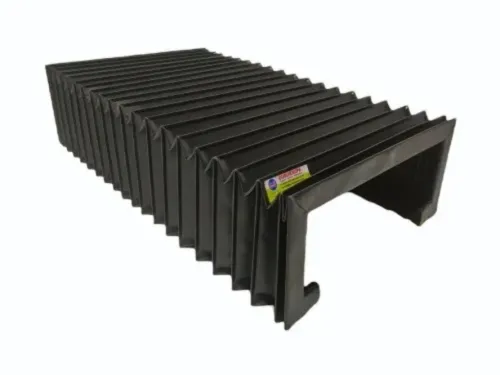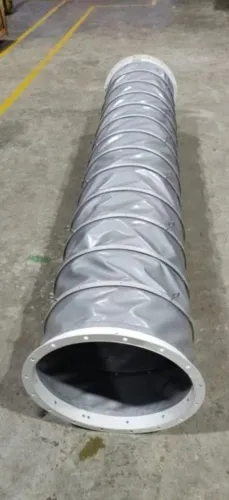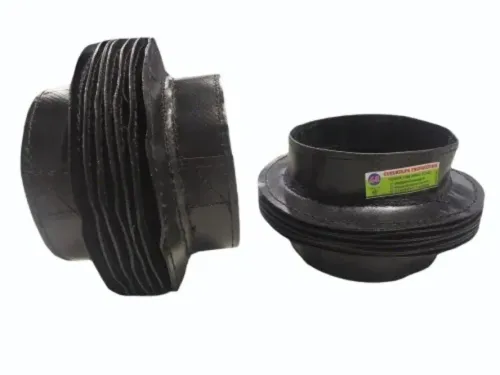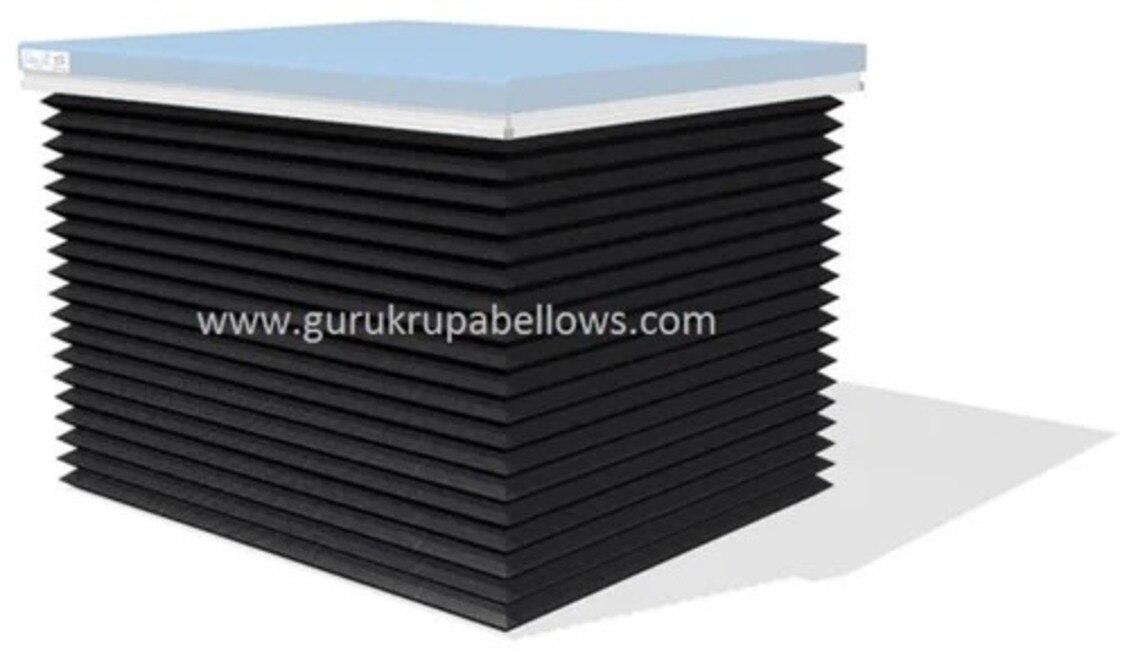
A scissor lift bellow cover is a moving contamination barrier, not a structural guard or personnel-safety device. By matching the cover to the lift’s motion, hazards, climate, and maintenance needs, you can decide whether a bellow, skirt, telescopic cover, or no added cover is the sound choice.
Key takeaways
- Use bellows to block dust, debris, heat and sparks without guiding lift movement.
- Choose skirts for simple coverage, telescopic covers for rigid precision protection.
- Measure travel, folded height, width, clearances, tilt and attachment points before ordering.
- Test full lift motion, pinch points, heat exposure and emergency access before approval.
What does a scissor lift bellow cover protect during operation?
A scissor-lift bellow cover protects moving components by expanding, compressing, and folding with the assembly as the platform raises, lowers, or tilts. It forms a flexible contamination barrier without carrying load or guiding movement.
| Type | What it shields | Best fit |
|---|---|---|
| Cylinder bellow | A hydraulic cylinder rod or other defined moving element | Dust, chips, oil, coolant, and abrasion concentrated around one component |
| Full scissor-lift skirt | The wider opening around scissor arms, rollers, hoses, and the lifting mechanism | Exposed mechanisms requiring broader contamination control |
Industrial scissor lift covers can block dust, metal chips, oil, coolant, welding spatter, heat, abrasive particles, and moisture that promotes corrosion. A general fabric cover is not automatically suitable for hot swarf or welding spatter; specify the chip temperature, size, and impact direction before selecting sacrificial slats, lamellae, heat-resistant layers, or a separate shield.
The cover must not carry platform load, guide the lift, or replace fixed guarding, emergency stops, anti-crush edges, maintenance supports, mechanical locks, or manufacturer safety controls. Lift bellow covers for businesses need clearance throughout the complete stroke, including around rollers, hoses, arms, and support hardware.
EN 1570-1 addresses lifting-table hazards, including access to the lifting mechanism. A cover can hide pinch points, restrict inspection visibility, or block a safety device, so review its layout in the machine risk assessment under ISO 12100. Provide inspection openings or removable sections where access is necessary.
When is a bellow, skirt, telescopic cover, or open mechanism the right choice?
Choose the protection architecture from the exposed hazard, not the lift’s name. A cylinder bellow suits contamination on one rod or hydraulic cylinder. A full skirt suits an exposed scissor pack, arms, rollers, and a larger access opening.
| Option | Best fit | Main limitation |
|---|---|---|
| Cylinder bellow | Factory machining areas with dust, oil, or coolant on a defined cylinder | Does not shield the scissor mechanism |
| Full skirt | Vehicle workshops, warehouses, and scissor lift bellows for factories with exposed moving assemblies | Needs clearance and planned inspection access |
| Telescopic cover | Guided movement where rigid sections fit the available space | Binds if the lift twists or shifts laterally |
| Open mechanism | Clean areas or controlled equipment where guarding, access control, and the risk assessment already control hazards | Unacceptable if debris, fingers, or clothing can reach moving parts |
Outdoor sites and humid Bangkok facilities need moisture-resistant fabric, drainage, ventilation, and sealed or corrosion-resistant fasteners. A cover must not block locks, switches, maintenance supports, or emergency access.
Hot chips and welding spatter require the buyer to specify chip size, temperature, impact direction, and exposure time. Ask whether the design needs sacrificial slats, lamellae, heat-resistant layers, or a separate shield; ordinary dust fabric can fail quickly.
PVC-coated fabric suits general dust and splash. Polyurethane may improve abrasion or oil resistance, while silicone, aramid, coated glass fabric, or an external heat shield suit harsher heat or chemical exposure. IP54 and IP65 under IEC 60529 rate electrical enclosures, not textile bellows. Do not use either rating as proof of a watertight moving cover.
When comparing scissor lift bellow covers in bangkok, demand component-level test evidence.
Which lift measurements and movement data determine a workable fit?
Before quoting, give the supplier a dimensioned lift drawing and movement record; platform dimensions alone cannot define a workable fit.
- Record collapsed length, extended length, maximum extension, minimum folded height, stroke, cylinder or mechanism diameter, mounting-face dimensions, clearances, travel direction, and every attachment point.
- Add lifting speed, acceleration, lateral movement or deflection, fold pitch, rotation, and expected operating cycles, including repeated full-stroke cycling.
- State whether the cover must tolerate side loading, uneven folding, or rotation, and measure the complete kinematic envelope around arms, rollers, hoses, locks, and supports.
| Movement data | Why it changes the design |
|---|---|
| Stationary dimensions | Show mounting space, not movement clearance |
| Full stroke and speed | Expose binding, fold inversion, ballooning, and tearing risks |
| Lateral offset and acceleration | Reveal side-load transfer into the bellows or lift mechanism |
A cover that looks correct on a stationary lift can bind at maximum extension, invert its folds at minimum folded height, balloon during rapid travel, or tear against a scissor arm. It can also transfer side load into the mechanism.
For scissor lift bellow covers for business in Bangkok, require guided frames, flexible mounting points, or an independently supported skirt when movement is not purely vertical. Do not expect fabric to correct misalignment. Include these measurements and acceptance limits in the specification for lift bellow covers for businesses.
How do you prove the cover will not interfere with the lift?
Prove it with a documented fit-validation and acceptance test, not a stationary measurement. The complete stroke must remain within the lift manufacturer’s safety design limits before industrial scissor lift covers are approved.
1. Obtain a dimensioned installation drawing showing mounting points, folded and extended lengths, fold geometry, removable sections, inspection openings, and access routes. Check clearance at every position from scissor arms, rollers, hydraulic hoses, switches, access panels, mechanical locks, maintenance supports, and emergency-lowering systems.
2. Run a factory acceptance test or site acceptance test through the complete stroke at operating speed. Use the highest expected load and the permitted lateral offset, then repeat the cycles specified for approval.
3. Inspect during and after testing for rubbing, trapped material, fold inversion, ballooning, mounting-load transfer, restricted visibility, blocked safety devices, and damage. Reject the cover if it contacts moving hardware, limits inspection access, or transfers force into the lift.
4. Put measurable acceptance criteria in the purchase specification: minimum clearances, maximum fold height, permitted speed, cycle count, and zero contact with moving parts or safety controls. “Custom size” alone proves neither safe movement nor service life.
5. Specify the material and coating, temperature range, chemical exposure, minimum fold geometry, cleaning method, mounting hardware, drainage needs, and replacement parts. Review the layout within the machine risk assessment under ISO 12100, alongside the lift’s guarding and emergency systems.
What should Bangkok businesses check before committing to bellows?
Make it a go only when contamination is damaging cylinders, hoses, rollers, guideways, or nearby equipment, and the lift has enough clearance and support without restricting safety access.
| Decision | Evidence to verify | Result |
|---|---|---|
| Go | Damage is documented; full-stroke clearance and independent support are available | Specify and test the cover |
| No-go | The cover would rub arms, block locks, emergency lowering, or reduce maintenance access | Redesign the protection |
| Delay | The supplier cannot provide drawings, motion data, material evidence, or acceptance criteria | Do not commit |
For scissor lift bellow covers in Bangkok, treat heat, humidity, rainfall, and wet cleaning as design inputs. Ask about moisture-resistant fabric, mildew risk, detergent and coolant compatibility, sealed or corrosion-resistant fasteners, drainage, drying access, and ventilation; deep folds can trap fines, coolant, dust, and condensation.
Require a written inspection plan covering:
- Pinholes, cuts, cracked coatings, delamination, and seam separation
- Distorted folds, loose fasteners, reduced clearance, and chemical swelling
- Cleaning method, inspection access, permitted cycle exposure, and replacement parts
Base replacement on observed degradation and cycle exposure, not an arbitrary calendar date. For scissor lift bellow covers for business in Bangkok, GURUKRUPA BELLOWS PVT LTD should be asked for the same dimensioned drawing, motion-data, material, test, and maintenance evidence required from any qualified supplier.
Choose verified fit and hazard control over colour, brand, or a generic “industrial” label.
Related products
 | Bellow Cover Product Details: Brand GURUKRUPA Color Black-Blue Size Customised With the support of our excellent team workers, we have been delivering the best... View product → |
 | Product Details: Brand GURUKRUPA Color Black-Blue Size Customised With support of our excellent team workers, we have been delivering the best... View product → |
Frequently asked questions
What does a scissor lift bellow cover protect during operation?
It shields moving components, guideways, cables and mechanisms from dust, debris, heat, sparks, corrosion and mechanical wear while the lift moves.
When is a bellow, skirt, telescopic cover or open mechanism the right choice?
Choose a bellow for flexible contamination protection around changing geometry, a skirt for simpler perimeter coverage, a telescopic cover for rigid precision protection, and an open mechanism when access, ventilation or low obstruction matters more than shielding.
Which lift measurements and movement data determine a workable fit?
Record the lift's maximum and minimum heights, folded height, width, depth, stroke, tilt angle, movement speed, attachment points, clearances and the space required at full compression and extension.
How do you prove the cover will not interfere with the lift?
Test the installed cover through the complete raise, lower and tilt cycles, checking compression, extension, pinch points, snagging, attachment loads, emergency access and clearance from surrounding equipment.
What should Bangkok businesses check before committing to bellows?
Check the factory environment, heat and chemical exposure, cleaning method, fire risk, material compatibility, maintenance access, replacement process, supplier drawings and a documented motion test.
Related product
 | Scissor Lift Skirt Product Details: Brand GE Color Black,Blue Material PVC Coated Size Anyany Gurukrupa specializes in providing Scissor Lift Skirt for both standard... View product → |