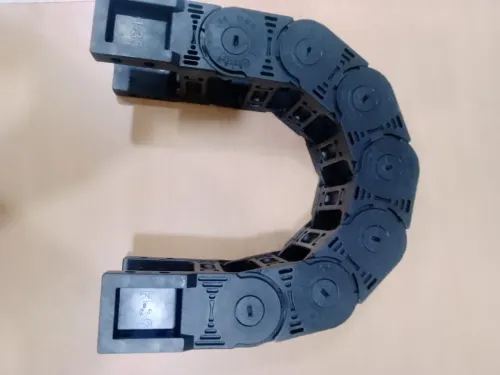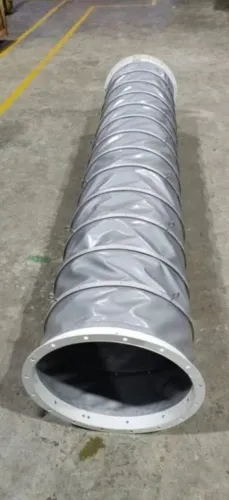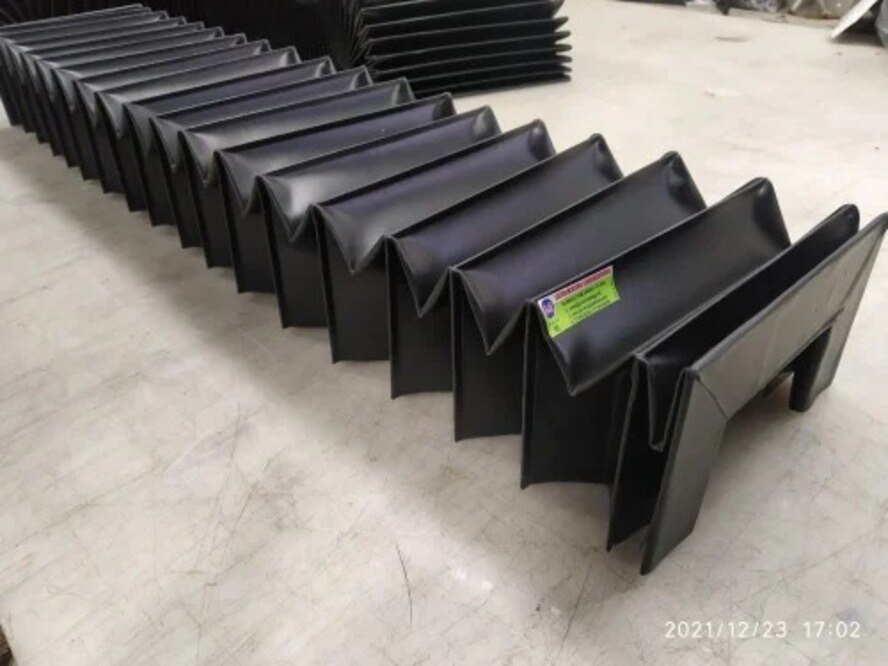
A laser cutter’s guideway, laser head, cable chain and enclosure face different hazards, so one cover rarely protects the whole machine. By the end, you will be able to match each exposure and moving part with a bellows cover, steel cover, roll-up system, cable carrier, brush seal or simple shield, then write a specification a Berlin supplier can quote and your safety assessor can verify.
Key takeaways
- Protect guideways, screws, racks, bearings, cables, and hoses from cutting debris.
- Choose bellows for flexible coverage; use steel covers against severe impact and heat.
- Measure full travel, folded length, clearances, and mounting points before ordering.
- Specify fabric, coating, and temperature resistance for the actual exposure.
Start with the hazard and the machine part you are protecting
A laser cutter’s exposed guideway is the machine part most likely to need a moving cover. Protect the rails, ball screws, racks, linear bearings, and nearby cable or hose runs from abrasive dust, molten spatter, slag, smoke condensate, coolant, oil, and cable abrasion.
Do not confuse this with protecting the laser head or beam path: a bellows cover does not replace an enclosed optical path, access guarding, safety interlocks, or fume extraction.
| Protection | Best suited to | What it must withstand |
|---|---|---|
| Bellows cover | Moving guideways and compact cable or hose runs | Repeated folding, sparks, hot particles, abrasion, cleaning chemicals, radiant heat, and the specified motion speed |
| Telescopic steel cover | Rigid, heavily contaminated guideways with installation space | Impact, slag, chips, coolant, oil, and thermal loads without interfering with axis travel |
| Roll-up cover or shield | Long travel, limited folded space, or stationary hazard zones | Abrasive dust and sparks while maintaining clearance from the gantry and cutting head |
Specify laser cutting machine bellows by exposure, not by the label “flame retardant.” Require documented limits for temperature, spark and slag contact, chemical compatibility, minimum bend radius, cycle life, and any laser wavelength or irradiance rating.
The main hazard is often hot spatter rather than the direct beam, but reflected laser energy and ultraviolet exposure still require machine-level safeguarding. Laser machine protection in Berlin belongs in that complete risk-control design, not as a standalone cover purchase.
Choose a bellows, steel cover, roll-up cover or shield
Choose a bellows when a moving guideway, screw, cable bundle or hose needs continuous protection through changing travel. Laser machine bellow covers keep dust, sparks, coolant and cutting residue away without blocking axis movement, but their mass, friction and folded height must suit a fast laser axis.
They are not automatically laser-tight and never replace fume extraction, beam-path enclosure, access guarding or interlocks.
| Option | What it protects | When it applies |
|---|---|---|
| Bellows cover | Moving guideways, cables and hoses | Use for irregular travel, compact spaces and frequent contamination |
| Telescopic steel cover | Rigid guideways and flat beds | Choose for heavy chips, molten spatter, impact and high radiant heat |
| Roll-up cover | Long, straight travel paths | Choose when a folded bellows pack would collide with the gantry or consume workspace |
| Shield or brush seal | A local hazard zone or narrow opening | Use for splash, residue or cable abrasion that does not require full enclosure |
Specify laser machine protection in Berlin as part of the complete safeguarding and extraction design. Ask for documented limits before approving laser machine bellow covers:
- Laser wavelength, exposure condition, temperature range and spark or slag resistance
- Compatibility with cutting fluids, oils and cleaning agents, plus a cleaning method
- Minimum bend radius, permitted speed, acceleration, cycle life and replacement criteria
- Seam, end-seal and mounting details, followed by a laser-safety assessment under ISO 11553-1 and EN/IEC 60825-1
Measure the motion envelope before ordering a replacement
A correctly sized replacement comes from the machine’s full motion envelope, not its nominal X/Y travel. Measure the moving guideway and the space around it while the laser head or gantry reaches every limit.
- Record protected stroke, compressed length, extended length, folded height, maximum width and maximum height.
- Measure both mounting frames, including overall length and width, hole spacing, hole diameter, flange thickness, orientation and attachment surfaces.
- Map clearances to the cutting head, gantry, rails, cable carrier, hoses and enclosure. Include the smallest gap at full compression and full extension.
- Provide motion data: axis direction, travel speed, acceleration, cycle frequency, minimum bend radius and the machine’s daily duty cycle.
- Identify the protected component and its position relative to the beam path, nozzle, extraction point and service doors. Add dimensioned drawings, photographs and the machine model or retrofit revision.
Ask the supplier to show how the proposed folded height and mounting geometry avoid collisions. A bellows that fits the stroke can still buckle into a rail or restrict the cutting head.
For custom laser bellows, state the laser wavelength and exposure condition separately from hot-spatter exposure. For laser cutting machine bellows, also provide temperature, spark and slag conditions, cleaning chemicals, required cleanability and inspection criteria. Do not approve a design from “laser bellows” alone; request its operating limits in writing.
Specify materials by exposure, not by the words flame retardant
A “flame-retardant” label proves little. Approve laser machine bellow covers against the actual exposure: radiant heat, molten spatter, slag, abrasive dust, smoke condensate, cutting fluids, cleaning chemicals and laser energy.
1. Describe the heat load in writing. Give the supplier radiant temperature, contact temperature, exposure duration and duty cycle. Require a stated continuous and peak temperature range, plus evidence that seams, coatings and attachment points survive hot particles rather than only a brief flame test.
2. Test spark and slag resistance with the metal, thickness and assist-gas settings used on your cutter. Record burn-through, embrittlement, sticking and pinholes. Check abrasion with representative dust and the guideway’s real sliding or folding motion; request cycle-life data and a minimum bend radius.
3. List every fluid and cleaner by name, including coolant, oil, degreaser and alcohol-based products. Require compatibility results showing swelling, cracking, delamination, colour transfer and loss of flexibility after exposure. Specify cleaning method and the inspection or replacement limit.
4. Treat laser radiation separately from sparks. State wavelength, optical power, beam diameter, exposure duration, beam geometry and maximum permitted irradiance. Require evidence for the complete material stack, seams and end seals; custom laser bellows are not automatically beam barriers or laser-safety enclosures.
Document each result against the proposed construction, whether coated fabric, laminated layers, metal protection or replaceable wear strips. Complete the machine assessment under ISO 11553-1 and EN/IEC 60825-1; the cover does not replace beam guarding, interlocks or extraction.
Make the installed protection pass a mechanical and safety check
Before commissioning, record the installed cover as part of the machine’s safeguarding file, not as a separate fabric purchase. Laser machine bellow covers for laser cutters in Berlin are not automatically laser-tight or suitable for an enclosure.
1. Confirm the supplier’s written limits: laser wavelength, maximum permitted irradiance or exposure condition, temperature range, spark and slag resistance, compatibility with cutting fluids and cleaning agents, cleanability, minimum bend radius, cycle life, and inspection or replacement criteria. GURUKRUPA BELLOWS PVT LTD should provide these limits for the selected construction, including seams and end seals.
2. Run the axis through its full travel at operating speed. Check compressed and extended length, folded height, rail clearance, mounting-hole alignment, rubbing, snagging, excessive pull, trapped cables, and contact with the laser head or workpiece.
3. Inspect every radiation and contamination path: end gaps, open seams, worn folds, transparent sections, cable entries, fasteners, access panels, and joints. A sound flat material coupon does not prove that the installed assembly blocks reflected or scattered radiation.
4. Verify that fume extraction, enclosed beam paths, access guarding, door switches, emergency stops, and safety interlocks operate together. The complete laser system needs assessment under ISO 11553-1 and EN/IEC 60825-1, alongside German occupational-safety rules and the manufacturer’s risk assessment.
Sign the acceptance record with photographs, measured clearances, test results, responsible persons, and a replacement trigger. State the applicable conformity route, including the EU Machinery Regulation transition position; component CE marking does not certify the completed machine. That is the standard for laser machine protection in Berlin.
Related products
 | Laser Cutting Machine Bellows ₹1000 We offer Laser Cutting Machine Bellows made specifically for your laser machine. View product → |
 | Laser Machine Bellows Product Details: Minimum Order Quantity 1 Number Brand GURUKRUPA Color BLACK, SILVER Size ALL Specifications: Capabilities Applied/Processes: Thermal... View product → |
Frequently asked questions
Which machine parts need protection on a laser cutter?
Protect exposed guideways, ball screws, racks, linear bearings, cable runs, and hoses from abrasive dust, molten spatter, slag, smoke condensate, coolant, oil, and abrasion.
How do bellows compare with steel covers, roll-up covers, and shields?
Bellows suit guided moving parts that need flexible, enclosed coverage. Steel covers resist heavier impact and hot debris. Roll-up covers suit compact installation spaces, while fixed shields protect local hazard zones.
What measurements are needed before ordering replacement bellows?
Record the guideway dimensions, total travel, compressed and extended lengths, folded height, mounting-hole pattern, operating clearances, bend direction, and nearby cable or hose movement.
How do you verify an installed machine cover is safe?
Cycle the machine through its full motion envelope, check for rubbing and snagging, confirm fasteners stay secure, inspect sightlines and access, and verify that the cover does not interfere with guarding or emergency stops.
Related products
 | Bellow Cover ₹1000 We are offering an excellent quality of Protective Bellows for all type Guideways. This design covers three sides of the rail. View product → |
 | Trumpf Laser Bellows Product Details: Minimum Order Quantity 1 Number Brand GE Color Black Size any We offer bellows made specifically for your Trumpf® laser machine. View product → |