A loading bellow must contain dust while allowing a tanker spout, telescopic chute, or transfer point to move through its working stroke. By the end, you will be able to identify the correct enclosure, measure the installation, specify materials and temperature limits, and ask for the documentation needed for a safe purchase near Berlin.
Key takeaways
- Measure travel, collapsed length, outlet diameter, and mounting space.
- Use abrasion-resistant fabric at ash impact and rubbing zones.
- Bond conductive components and define dust extraction responsibilities.
- State temperature, weather exposure, ATEX zone, and inspection access.
What a loading bellow does at a fly ash transfer point
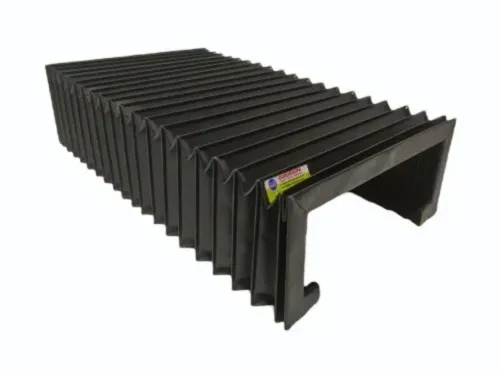
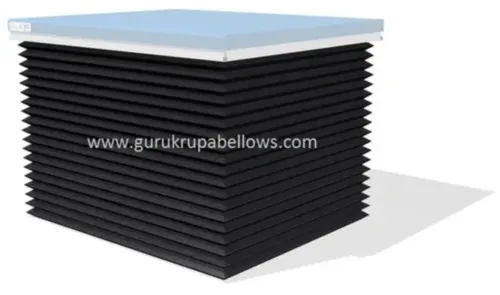
A loading bellow surrounds the gap between a silo outlet, telescopic loading spout, or chute and the tanker or receiving vessel. Its flexible folds follow the spout’s vertical travel while an extraction connection draws displaced air and airborne fly ash into the dust-collection system.
The bellow contains the dust source; it does not replace controlled extraction.
Balance extraction airflow to capture dust without pulling excessive product from the tanker or collapsing the flexible assembly. For bellow covers for fly ash loading equipment in berlin, confirm the assembly’s pressure and vacuum limits rather than assuming every cover can carry conveying air.
| Part | What it does | Wrong choice consequence |
|---|---|---|
| Loading bellow | Encloses a moving bulk-material transfer point | Restricted spout travel or tanker leakage |
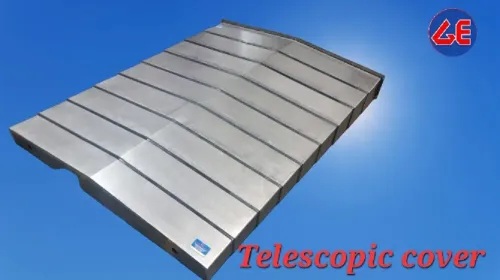
| Guideway bellow cover | Shields machine rails or slides from debris | It cannot enclose the loading gap or manage extraction |
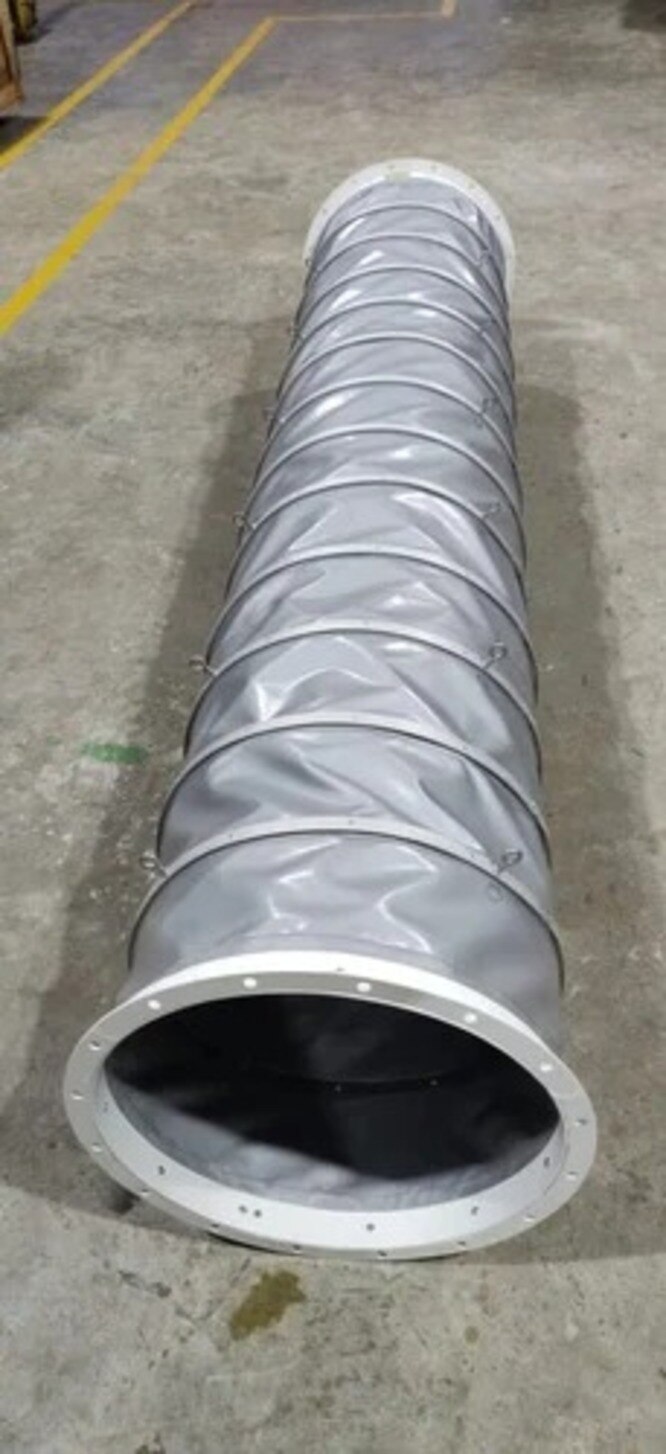
| Flexible connector | Joins fixed ducts and absorbs vibration | It will not follow a telescoping spout |
| Dust-extraction sleeve | Provides an airflow path or enclosure for collection | An un-rated cover can collapse or leak under pressure |
Choose fly ash loading bellows by function, movement, and airflow duty—not by the general label bellow covers. A guideway cover used at a loading point can obstruct travel, while a dust-extraction sleeve without suitable flexibility can tear during telescoping movement.
How to choose the enclosure and measure the loading point
Choose the enclosure by function: a fly ash bulk loading spot bellow surrounds a moving tanker-loading point, cement plant bellows serve loading or unloading duties across plant layouts, a telescopic chute enclosure follows a sliding spout, and a separate flexible connector joins fixed ducts while absorbing vibration.
| Option | Use it when | Reject it when |
|---|---|---|
| Fly ash bulk loading spot bellow | The tanker fills below a silo or spout | The assembly must carry unsupported extraction pressure |
| Cement plant bellows | Loading or unloading equipment has abrasive dust and plant movement | Temperature and movement data are unknown |
| Telescopic chute enclosure | The chute changes length during filling | Folded sections obstruct sensors or access |
| Flexible connector | Two fixed ducts need vibration isolation | It must contain a moving transfer point |
Measure with the tanker parked in its normal position and safe access maintained. Record:
- Collapsed and extended length, vertical stroke, lateral offset, spout travel, inlet and outlet diameters, flange bolt-circle diameter, and bolt-hole count.
- Clearance from the tanker roof and weighing equipment, level-sensor sight lines, dust-collection duct position, and mounting orientation.
- Fold pitch, compressed envelope, minimum bend or fold radius, unsupported length, and the positions of clamps, inspection doors, and wear liners.
Maximum extension is not enough: compressed folds can rub, trap ash, obstruct sensors, or increase extraction resistance. Ask the site engineer for drawings or photographs showing tanker approach, emergency access, load cells, high-level probes, and the cleaning route.
If cables move with the spout, specify their dynamic bend radius, travel speed, acceleration, cycle count, abrasive-dust resistance, and cable-management route separately. Do not place ordinary fixed-installation cable inside a repeatedly flexing bellow.
Specify fabric, wear zones, temperature, and Berlin weather
Specify each wear zone separately: the outer fabric cover is not the same component as the lower outlet cone, product-contact liner, reinforcing rings, or other replaceable wear parts. The lower section takes the abrasive duty; treating the assembly as one “cement plant bellows” specification can produce early failure.
1. Record fly-ash or cement-dust particle size, loading rate, conveying velocity, expected service hours, and allowable wear thickness before replacement. Request the fabric type, coating, abrasion test method or rating, resistance to alkaline dust and moisture, and chemical-compatibility limits. State which liners, cones, rings, and clamps are replaceable.
2. Measure continuous temperature, peak temperature, exposure duration, and cleaning temperature at the loading point. A bellow beside a kiln, cooler, hot filter, or heated pipe has a different duty from one loading finished cement or fly ash.
3. For outdoor bellow covers near Berlin, specify the lowest ambient temperature, cold-soak duration, ultraviolet exposure, rain, condensation, and flexibility required after freezing. State nearby fire and welding exposure; heat-resistant fabric is not a fire barrier.
4. Require allowable positive and negative pressure, collapse resistance, unsupported-length limits, and stability through the full telescoping stroke. Ask for proof that extraction airflow will not collapse the assembly or pull excessive product.
Check static control, dust extraction, and ATEX responsibilities
The word “antistatic” does not prove that bulk loading bellows in Berlin are safe. The complete fly ash loading bellows assembly needs a continuous, verified discharge path and an extraction design that controls dust without pulling excessive product from the loading stream.
1. Ask for dust-explosion data for the actual fly ash, including its unburned-carbon content. Fuel type and combustion conditions change the hazard. Do not classify the material from its name alone.
2. Have the site engineer identify any hazardous area as Zone 20, 21, or 22 and select the corresponding ATEX equipment category: 1D, 2D, or 3D. Review ATEX Directive 2014/34/EU for equipment placed on the market and Directive 1999/92/EC for workplace assessment and zone classification. An ATEX-marked component does not complete the site assessment.
3. Request measured resistance or resistance-to-ground values, the test method, limit, and installation instructions. Check continuity through the fabric, reinforcing wires, loading spout, clamps, cable screens, bonding conductors, and flanges. Painted interfaces, flexible joints, and dust deposits can break the path. Use TRGS 727 when assessing electrostatic ignition hazards in Germany.
4. Define inspection access, allowable dust deposits, cleaning method, and replacement access. Compressed-air blowdown can re-suspend combustible dust. The machine builder or integrator must document guarding, extraction, the completed machine, and each ATEX-relevant assembly.
Turn the measurements into a supplier-ready specification
Turn the measurements into one supplier-ready drawing and data sheet, not a string of emails. Mark the service point, material and flow direction, then record:
- Collapsed and extended lengths, stroke, lateral offset, inlet and outlet diameters, bolt-circle diameter, hole count and mounting orientation
- Clearance envelope, fold pitch, minimum bend or fold radius, unsupported length and extraction connection
- Pressure or vacuum duty, wear zones, liner thickness, temperature profile, ambient range, moisture exposure, grounding path, cleaning method and inspection interval
Ask each bidder for a dimensional drawing, fabric and coating data, temperature limits, pressure and collapse limits, resistance-to-ground results where relevant, installation instructions, replacement-part details and a written statement of what it has not assessed.
Include the minimum working length and compressed envelope: maximum extension alone can leave folds rubbing, trap ash or increase extraction resistance.
Compare like this:
| Option | What it protects | Use it when |
|---|---|---|
| Loading bellow | Moving transfer point | Filling a tanker or vessel |
| Guideway bellow cover | Rails, slides or machine guides | Debris threatens moving machinery |
| Extraction enclosure | Dust-capture path around the source | Airflow design needs a separate engineered enclosure |
Compare verified geometry, wear-replacement strategy, cleanability and documentation—not “long-lasting.” GURUKRUPA BELLOWS PVT LTD can be one bidder alongside other manufacturers for bulk loading bellows in Berlin or cement plant bellows; give every bidder the same duty and compliance questions.
A specialist supplier is useful when offsets, hot zones or extraction balance make standard bellow covers unsuitable.
Related products
 | Fly Ash Bulk Loading Spot Bellow Fly Ash Bulk Loading Spot Bellow ₹10000 Product Details: Minimum Order Quantity 01 Number Brand GURUKRUPA Size ANY We manufacture a wide range of Fly Ash Bulk Loading Spot Bellow in various... View product → |
 | Cement Plant Bulk Loading Unloading Bellows Cement Plant Bulk Loading Unloading Bellows ₹5000 Product Details: Brand GURUKRUPA Size ANY Having rich experience and thorough understanding of the market operations, we are engaged in manufacturing... View product → |
Frequently asked questions
What does a loading bellow do at a fly ash transfer point?
It encloses the gap between the outlet, chute, or telescopic spout and the receiving tanker, while extraction removes displaced air and fly ash.
Which measurements does a supplier need for a fly ash loading bellow?
Provide outlet and inlet diameters, vertical travel, collapsed and extended lengths, mounting dimensions, available clearance, and the spout’s movement path.
How should you specify fabric and wear zones?
State the ash temperature, abrasion exposure, outdoor weather conditions, cleaning method, and the locations requiring reinforced or replaceable wear sections.
What static-control and ATEX details belong in the specification?
Identify the dust hazard assessment and zone classification, specify conductive or dissipative materials where required, and assign bonding, earthing, extraction, and inspection responsibilities.