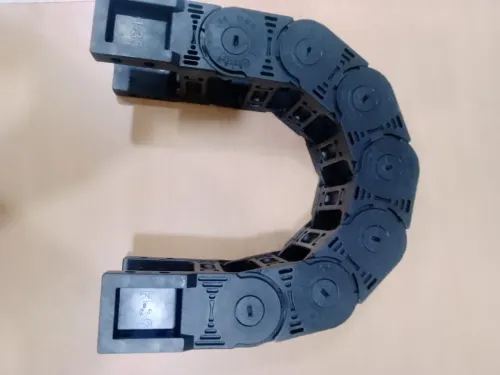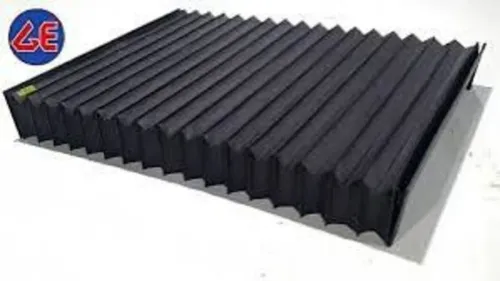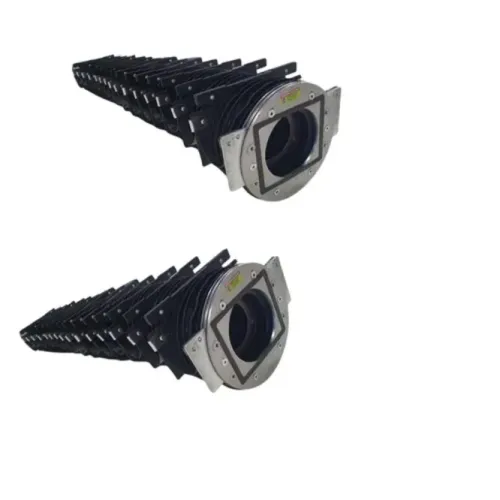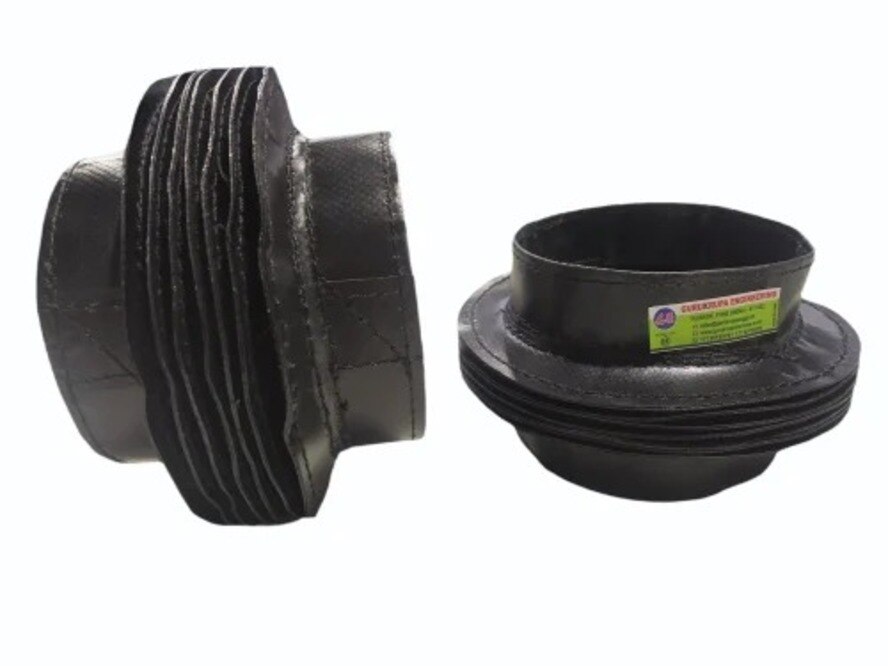
Choosing a cover by diameter alone is a reliable way to create rubbing, fold fatigue, blocked travel, and premature failure. By the end, you will be able to match the bellows construction to the movement, measure the machine correctly, compare materials, prevent installation errors, and request evidence that fits your operating conditions.
Key takeaways
- Match cylindrical sleeves to straight travel and accordion bellows to repeated compression.
- Measure stroke, folded length, extended length, speed, and bend radius before ordering.
- Compare rubber, fabric, and reinforced layers against heat, abrasion, oil, and debris.
- Specify inspection access, mounting details, clearance, and a replacement testing plan.
Match the bellows form to the movement
Choose the construction from the movement first: a cylindrical sleeve suits straight travel with little folding, while an accordion bellows suits repeated axial compression and extension.
| Movement and exposure | Suitable construction | Main caution |
|---|---|---|
| Axial compression and extension | Molded rubber or thermoplastic accordion bellows | Confirm fold stiffness and compressed length; bottoming out damages the folds |
| Long stroke with high speed | Coated-fabric or multi-layer flexible bellows | Extra reinforcement improves protection but adds mass and actuation force |
| Lateral offset or bending | Fabric bellows with guided folds and adequate bend radius | Do not force a round rubber bellows to bend beyond its fold geometry |
| Rotation or combined movement | Specially engineered fabric, reinforced, or formed-metal bellows | Verify torsion and angular travel; ordinary axial bellows can twist and split |
| Sharp chips, hot particles, or heavy coolant | Reinforced bellows with wipers or external armour | A light cover can puncture even when its diameter is correct |
Round bellow covers or flexible bellows in Chandigarh should therefore be selected by stroke, speed, bend radius, rotation, and available space—not by diameter alone. Round rubber bellow covers provide quiet sealing and simple clamp or flange mounting, but stiff folds can increase motor load on a fast machine-tool axis.
A flexible bellow covers the mechanism; it is not normally a pressure vessel. If compression traps air, add a designed vent or breathable filter without creating a path for coolant, dust, or chips.
For a simple guideway moving only along one axis, use an accordion form; for protected cables following a changing path, choose a flexible fabric form instead.
Measure movement before choosing a cover
Record the cover’s installed, compressed, and extended lengths before requesting a bellows. A cover that fits the diameter but bottoms out at full stroke will tear or load the guideway.
- Measure the protected component’s minimum and maximum diameter.
- Record fixed-end and moving-end diameters, including flange, collar, clamp-band, or retaining-ring dimensions.
- Measure available compressed length and required maximum extended length.
- Specify axial stroke, lateral offset, angular movement, bending radius, rotation, speed, acceleration, and cycles per shift.
- Note guideway clearance, nearby edges, screw threads, clamps, and interference at both travel limits.
- Record temperature at the cover, coolant or oil type, chip size, dust, moisture, and cleaning chemicals.
| Measurement | Record | Why it matters |
|---|---|---|
| Compressed length | Shortest installed length | Prevents fold stacking and bottoming out |
| Extended length | Longest installed length | Prevents stretching and seam or mount failure |
| End dimensions | Bore, outside diameter, and mounting land | Keeps clamps off active folds |
| Motion path | Stroke, offset, angle, speed, and acceleration | Identifies axial, lateral, bending, or combined movement |
| Clearance | Minimum gap through the full travel | Stops rubbing against guideways or sharp edges |
| Environment | Temperature, fluids, chips, and dust | Determines material and reinforcement compatibility |
Send photographs and a drawing showing both travel limits. For machine movement bellows in Chandigarh, ask for a sample or trial cover to be checked under the machine’s actual stroke, not merely matched to a catalogue diameter.
Compare rubber, fabric, and reinforced constructions
Molded rubber gives the tightest seal and quietest movement, but it is not automatically the best choice for every axis. This round bellow covers comparison turns on compound, coating, reinforcement, fold design, and the actual contaminants—not on the word “rubber” alone.
| Construction | Oil and coolant | Heat and chips | Repeated flexing |
|---|---|---|---|
| Molded rubber | Resists specified oils and coolants when the elastomer is compatible; the wrong compound swells, hardens, or cracks. | Seals well, but sharp hot chips can cut exposed folds. Add external shielding where needed. | Usually lasts well in controlled axial compression, but stiff folds increase force and compression variation. |
| Coated fabric | Coated surfaces can resist coolant and oil; stitched seams, pinholes, and damaged coatings become leak paths. | Handles light chips with suitable coating; hot chips can burn or puncture the fabric. | Low mass and flexible folds suit fast axes, long strokes, and frequent cycling. |
| Reinforced or multi-layer | A reinforcement layer does not guarantee chemical resistance; check the outer coating and inner liner separately. | Better tear and puncture resistance, especially with aramid, wire, or armor, but exposed metal can corrode. | Longer life under abrasion and bending, at the cost of added mass, stiffness, packed length, and actuator load. |
The common round bellows problems are fold fatigue, swelling, seam failure, and chips trapped between folds. Specify the chemical exposure and temperature, then request a sample cycled through the full stroke at operating speed. A vent or breathable filter may prevent pressure buildup, but it must not admit coolant, dust, or chips.
Prevent fold, mounting, and clearance failures
Many round bellows problems begin during installation, not operation. Set the cover at its specified neutral length, align the fixed and moving ends on one axis, and secure clamps or flanges without twisting the first fold. A skewed mount forces lateral loading into an axially designed bellows and quickly cracks the mounting transition.
Before commissioning, check:
- Move the axis through its complete stroke by hand or at low speed. Confirm that no fold bottoms out, stretches tight, rubs a guideway, or contacts a chip guard.
- Check clearance at both compressed and extended positions, including nearby cables, tooling, clamps, and machine covers.
- Confirm that the bellows does not carry side load, torsion, or an unapproved bend angle. Specify allowable lateral offset and rotation instead of guessing from diameter.
- Inspect the first and last active folds, valleys, seams, and attachment zones for whitening, cuts, wrinkles, delamination, or clamp pull-out.
- Verify that hot chips cannot strike or lodge between folds. Add an external shield when chip impact exceeds the selected material’s resistance.
- Check the air path. Flexible bellow covers are barriers, not pressure vessels; repeated compression can pressurise a sealed volume, while extension can create a vacuum. Use a protected vent or breathable filter that does not admit coolant, dust, or chips.
Repeat this inspection after the first production shift and at the machine’s planned maintenance interval. Replace the cover when cracks, permanent deformation, exposed reinforcement, or repeated fold contact appears; a temporary patch rarely restores movement clearance.
Specify a cover that can be tested and replaced
A quotation that says “custom size” is incomplete. Ask for a drawing that shows the bellows compressed and extended, with the actual stroke, speed, movement direction, and any lateral offset, bend angle, or rotation.
Include these details in the request:
- Fixed-end and moving-end diameters, mounting flange or collar dimensions, and available clearance
- Compressed length, extended length, fold height, and maximum compression ratio
- Material, reinforcement, seam construction, and resistance to oil, coolant, chips, heat, and chemicals
- Attachment method, clamp or flange hardware, and whether the protected volume needs a filtered vent
- Inspection method, including the sample stroke cycle, visual checks, leakage checks, and acceptance limits
- Replacement lead time, drawing revision, identification mark, and whether individual sections can be replaced
Request a sample or prototype test at the machine’s real stroke and speed. A bellows that survives a bench fold can fail when lateral offset, heat, torsion, or chip impact is added.
For machine movement bellows in Chandigarh, a local supplier is useful when engineers can inspect the machine, confirm interference at full travel, and test a sample before production. That matters more than matching a catalogue diameter. The same applies when sourcing round bellow covers or flexible bellows in Chandigarh.
GURUKRUPA BELLOWS PVT LTD should receive the movement drawing and replacement requirement, not just an outside diameter.
Related products
 | Round Bellows Our organization is a leading name, which is engaged in offering a superior range of Round Bellows. View product → |
 | Round Bellow Covers ₹1000 To match with our reputation in the market, we are here to present an unparalleled assortment of Round Bellow Covers. View product → |
Frequently asked questions
When should you choose round covers instead of flexible bellows?
Choose a cylindrical sleeve for straight travel with little folding. Choose an accordion bellows for repeated axial compression and extension.
What movement measurements are needed before selecting a bellows cover?
Record total stroke, extended length, compressed or folded length, movement speed, cycle frequency, mounting diameter, and available clearance.
How do rubber, fabric, and reinforced bellows constructions differ?
Rubber offers elastic sealing, fabric suits flexible lightweight protection, and reinforced constructions handle demanding abrasion, heat, pressure, or mechanical loads.
How can you prevent fold, mounting, and clearance failures?
Check fold geometry, avoid sharp creases, confirm end-ring dimensions, allow clearance through the full stroke, and test the cover under real movement.
What should a replaceable bellows specification include?
Specify dimensions, material, temperature and chemical exposure, mounting method, movement limits, inspection points, test conditions, and replacement identification.