A bellow cover earns its cost when it prevents abrasive dust, hot debris, oil or coolant from reaching an exposed laser axis and causing cleaning, repairs or downtime. By the end, you will be able to calculate the risk, specify the correct cover, identify cases where another guard is better, and compare suppliers before approving a purchase.
Key takeaways
- Compare cover cost with one avoidable axis-cleaning or repair event.
- Specify travel, compression, heat, sparks, debris and mounting details before buying.
- Use bellows for exposed guideways, not as a substitute for sealed enclosures.
- Request drawings, material details, lead time and installation scope from each supplier.
When the avoided downtime justifies the purchase
If you are asking whether laser machine bellow covers for worth buying in chennai, compare the installed cover cost and installation effort with the losses from exposed axes. The case is strongest for open X/Y guideways facing abrasive dust, metal fines, smoke residue, coolant, oil and cutting debris, especially on multi-shift machines with recurring contamination.
| Option | Cost exposure without protection | When the cover pays |
|---|---|---|
| Open, contaminated axis | Cleaning, wiper replacement, service calls, positioning errors, guideway, ball-screw or rack damage, and lost production hours | One serious repair or unplanned stoppage can exceed the installed cover cost |
| Factory-enclosed axis | Low contamination and limited maintenance | Usually weak unless sealing has failed |
| Clean, low-debris process | Routine inspection keeps mechanisms clean | Weak; installation effort may not recover its cost |
- Record contamination-related cleaning, wiper changes, service calls, positioning faults and stoppages for three to six months.
- Estimate the production cost of every stoppage, then add repair and replacement costs.
- Compare that total with the installed cover cost, including fitting time, and its expected replacement interval.
A cover does not need to remove every maintenance task to earn its value. If routine cleaning already keeps the mechanism clean, or the axis is fully enclosed, spend elsewhere; if contamination repeatedly interrupts production, avoided downtime is the stronger calculation.
What protection a laser cutting machine bellow actually provides
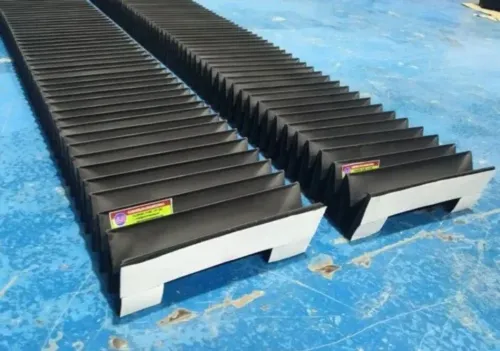
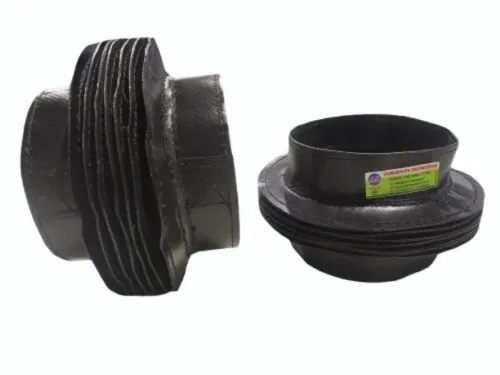
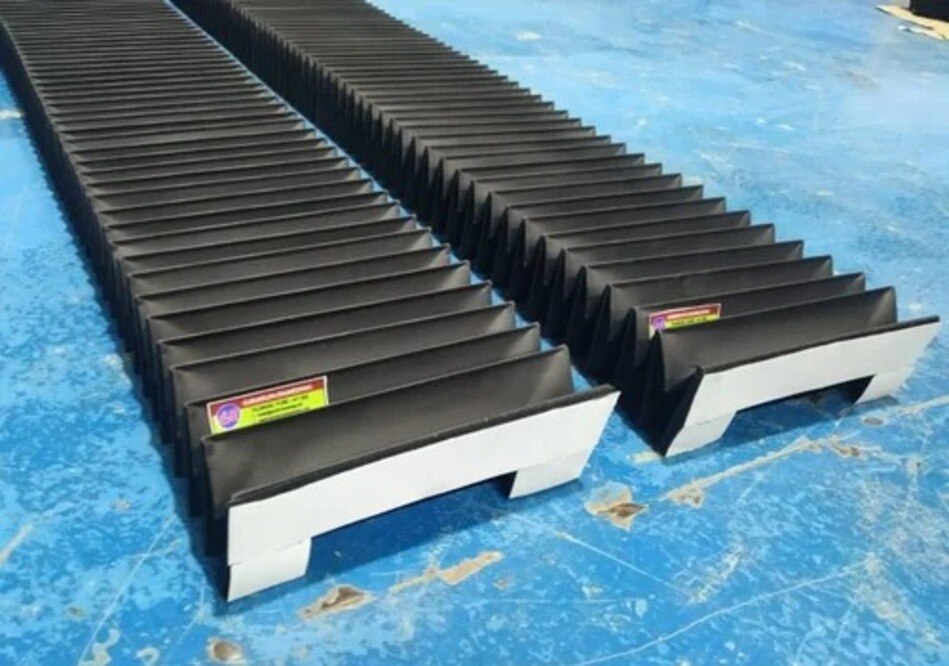
A laser machine bellow cover is a moving contamination barrier, not a laser-safety enclosure. It travels with the axis to shield guideways, linear rails, ball screws, racks, cables and hoses from abrasive dust and metal fines.
By keeping smoke residue, coolant and oil away from mechanisms, it reduces sliding and rolling wear, cable or hose rubbing, cleaning frequency and alignment checks.
| Option | What it means | Main trade-off |
|---|---|---|
| Exposed guideways | Contamination reaches sliding and rolling surfaces directly | Constant cleaning and faster wear |
| Telescopic steel covers | Rigid protection against impact and chips | Adds mass, needs space and may not fit every travel geometry |
| Fabric curtains | Blocks broad debris near an opening | Does not follow a moving axis or seal closely around the guideway |
| Routine cleaning | Removes contamination after exposure | Cannot prevent particles entering between cleaning intervals |
These laser machine bellow cover advantages are strongest on open axes with recurring dust, smoke residue or cutting debris. Cleaning still matters, and fume extraction and enclosure sealing remain necessary; never place a bellow across the intended extraction path.
Heat, molten spatter and sharp chips exceed the protection of generic fabric. Specify a coated or heat-resistant face, sacrificial shield, internal wear strip, metal lamellae or remote mounting so the flexible cover is not the first surface struck. That is the practical boundary of laser cutting machine bellow protection.
How to specify the right cover for the machine and axis
Overall width is only one dimension; specify the protected component first. A laser head, X- or Y-axis guideway, Z-axis assembly, cable carrier, hose bundle and ball screw each face different exposure, motion and mounting demands.
1. Identify the component and send its travel or stroke, extended length, compressed or folded length, folded height, number of folds and cover width. Add bend direction, minimum bend radius, mounting-hole pattern, end-frame geometry, axis speed, acceleration and installed clearance.
2. Require an interference check through the complete stroke. Check carriage edges, cable carriers, access doors and the compressed pack; an incorrect folded height can bottom out before travel ends or pull sideways on the carriage.
3. Ask the manufacturer for permissible speed, acceleration, fold-stability and mounting-load data. Do not infer suitability from dimensions: a cover stable on a slow axis can buckle, balloon or flutter during rapid traverse.
Treat a stated thickness range of 0.2 mm to 1.5 mm as incomplete until the supplier identifies whether it means coated fabric, foil, laminate or a construction layer. Select thickness against abrasion, heat, chemical exposure and flexing, then confirm that it will not create an oversized folded pack or restrict motion.
Request the material name, coating, temperature range, flame rating and chemical-resistance data. Also provide photographs or a drawing, the machine and axis model, nearby hazards and at least one failed-cover sample; a visually similar replacement can still be mechanically incompatible.
When a bellow is the wrong protection choice
Do not buy a standard flexible bellow when direct high-energy laser exposure, repeated heavy sharp-metal impact, or molten slag and hot spatter exceed its stated rating. Fabric that becomes the first surface hit will burn, tear, or transfer heat to the protected axis.
Use a rigid telescopic steel cover, overlapping metal lamellae, a sacrificial chip shield, redirected debris path, or a remote-mounted flexible section when the process-facing surface cannot safely be fabric.
Choose another design when the travel path creates a tight bend, the compressed pack lacks clearance, acceleration causes buckling or ballooning, or the machine’s guarding design requires a rigid cover.
A bellow is not a laser-safety enclosure. It does not make an open machine safe from accessible radiation; assess the engineered enclosure, interlocks, viewing windows, and laser-safety controls separately.
For Chennai installations, specify corrosion-resistant fasteners and frames, protected mounting interfaces, and drainage that prevents standing-water traps. Check salt-air exposure and galvanic contact between dissimilar metals; humidity resistance alone is not proof against coastal corrosion.
Use this rejection procedure before approval:
- Check for hardened, cracked, delaminated, or misshapen folds.
- Look for fold-to-fold rubbing during the complete stroke.
- Tighten or replace loose mounting screws and inspect distorted frames.
- Examine the underside for holes hidden from the operator.
- Confirm chips discharge away from the guideway, rather than being carried into it.
How to compare Chennai suppliers and distributor quotations
A reliable quotation starts with an identification package, not a catalogue photo. For laser machine bellows for distributors, send every supplier the same information:
- Machine and axis model, drawing or clear photographs, travel, extended length, folded height, number of folds, bend direction and minimum bend radius
- Mounting method, hole pattern, end-frame geometry, installed clearances and nearby obstructions
- Required material or coating, temperature and chemical exposure, quantity and a failed-cover sample
Ask every laser machine cover supplier in Chennai for a dimensional drawing before manufacture. Require stated inspection criteria for folded height and full travel, permissible speed and acceleration, fold stability, mounting loads and available mounting hardware. A visually similar cover can buckle, balloon or pull on its mounts during rapid traverse.
| Supplier evidence | Weak quotation | Why it matters |
|---|---|---|
| Dimensional drawing and approval sample | Catalogue image and overall width only | Prevents carriage interference and wrong folded height |
| Motion and inspection data | “Suitable for laser machines” | Confirms travel, speed, acceleration and fold stability |
| One-unit replacement lead time and repair support | Price with no service terms | A failed cover can stop the axis |
Require a sample or approval drawing when the supplier cannot identify the construction behind a thickness range. Compare installation guidance, replacement availability, inspection advice and fit-problem response; GURUKRUPA BELLOWS PVT LTD is one Chennai-based business to include in that evidence-based comparison.
Approve the cover only when hazard rating, motion geometry, corrosion details and service support match the machine, and the avoided-risk calculation is positive.
Related products
 | Laser Machine Bellows ₹1000 We are committed to manufacture, export, and supply a qualitative range of Laser Machine Bellows for our esteemed clients. View product → |
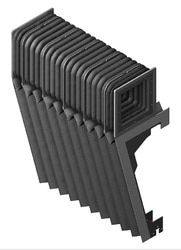 | Laser Cutting Machine Bellows ₹1000 We offer Laser Cutting Machine Bellows made specifically for your laser machine. View product → |
Frequently asked questions
When do laser machine bellow covers justify their purchase?
They make the strongest financial case when exposed X/Y guideways collect abrasive dust, metal fines, smoke residue, coolant, oil or cutting debris on a multi-shift machine. Compare the installed cover cost with cleaning, alignment, replacement and downtime losses.
What protection does a laser cutting machine bellow provide?
A correctly designed bellow shields guideways, rails, screws and moving components from dust, fines, smoke residue, oil, coolant and cutting debris. Its protection depends on the fabric, coating, seams, end frames and resistance to the machine’s heat and sparks.
How do you specify the right bellow for a laser machine axis?
Provide the axis travel, fully open and compressed lengths, width, height, mounting points, folded thickness, movement speed, acceleration, operating temperature, exposure to sparks and the required clearance around the moving parts. Ask for a drawing and confirm that the compressed cover will not restrict travel.
When is a bellow the wrong protection choice?
Choose another solution when the machine needs full perimeter containment, direct high-energy laser protection, heavy molten-spatter resistance or protection from a flood of coolant and debris. A rigid enclosure, telescopic steel cover or combined system may suit those conditions better.
How should you compare Chennai laser machine cover suppliers and distributor quotations?
Compare the same scope: measured dimensions, material and coating, heat and spark resistance, mounting hardware, end frames, testing, delivery, installation, warranty and replacement parts. Request a dimensional drawing and written exclusions before comparing prices.