The correct cover depends on movement geometry, debris load, temperature, pressure, and available retracted space—not simply on whether the cover is flexible or rigid. You will be able to compare both designs, specify the measurements and test data a supplier must provide, and identify the better option for your machine, duct, pipeline, or exhaust system.
Key takeaways
- Choose fabric bellows for multi-axis movement and compact compressed length.
- Choose rigid covers for guided travel and heavy, sharp chip loads.
- Specify movement, dimensions, heat, materials, and exposure on every quotation.
- Compare replacement access and service life, not purchase price alone.
Which cover matches the movement and hazard?
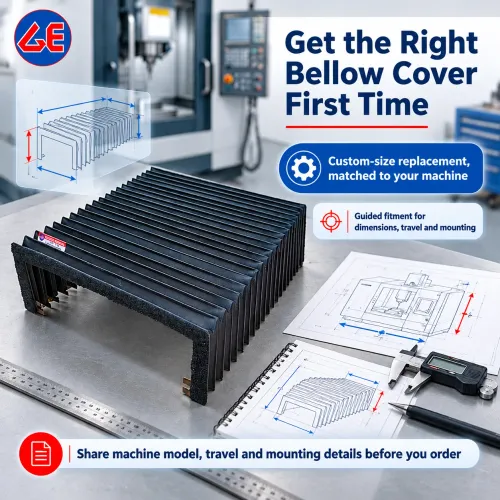
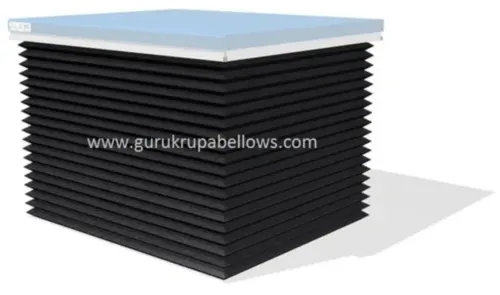
A fabric expansion bellow cover fits axial, lateral, angular, multi-axis, or irregular movement when the assembly must compress into a short package. A rigid telescopic cover fits guided linear travel on precision machine ways, where aligned sections can deflect large, sharp, heavy chips.
| Option | Movement and package | Protection and clearance |
|---|---|---|
| Fabric bellow cover | Axial, lateral, angular, and multi-axis travel; suits non-rectangular geometry and short compressed lengths | Seals dust, fumes, hot gas, moisture, and light debris; exposed folds need clearance from snagging and sharp chips |
| Rigid telescopic cover | Primarily guided linear travel; retracted plates require dedicated space | Stronger barrier against heavy chips and point impact; needs aligned guides, wipers, scrapers, and retraction clearance |
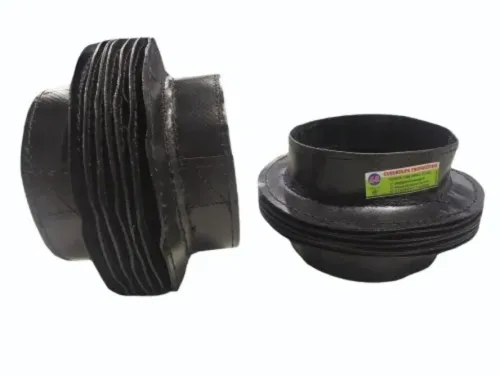
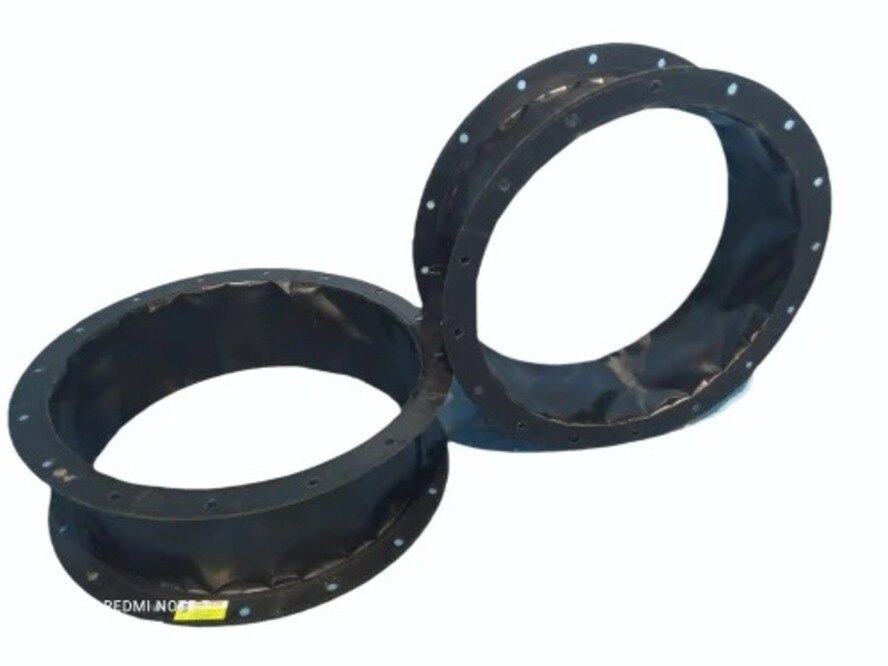
| Fabric expansion joint | Thermal or mechanical movement in ducts and pipelines | Designed around process media, temperature, pressure, and line movement, not moving machine components |
| Machine-way cover | Straight travel over machine guideways | Protects precision ways from chips and coolant; its rigid structure is not intended for arbitrary multi-axis motion |
Specify the compressed length, extended length, fold height, minimum bend radius, and permissible speed and acceleration; machine travel alone cannot size a fabric cover. Fabric expansion bellows avoid sliding interfaces but need inspection for tears, delamination, burned folds, loose attachments, and seam leakage.
A rigid cover needs inspection for scored plates, blocked guides, damaged wipers, and corrosion.
Neither cover automatically serves as a personnel guard under ISO 14120. If people can reach the hazard, provide a separate fixed or movable guard designed for access, strength, visibility, and safe removal. For fabric expansion bellow covers in Chennai, identify the machine axis and chip load before choosing between flexibility and impact resistance.
How should fabric, coating, heat, and Chennai exposure be matched?
| Construction | Flexibility and abrasion | Chemical, spark, and temperature fit |
|---|---|---|
| Nylon | Very flexible; limited abrasion resistance | Check coolant, oil, washdown water, fumes, and corrosive media; low heat and poor spark resistance |
| Polyurethane-coated fabric | Flexible with useful wear resistance | Good only after chemical confirmation; ordinary polyurethane or PVC coating is not spark-safe and can burn through on hot chips |
| Silicone-coated fabric | Flexible and heat-tolerant | Better for intermittent sparks and heat; verify abrasion and chemical compatibility |
| PTFE-coated fabric | Flexible, low-friction, chemically resistant | Strong choice for aggressive media; verify temperature, flex life, and spark exposure |
| Aramid fabric | Flexible and cut-resistant | Useful near abrasion and heat; coating still determines chemical and spark performance |
| Glass-fibre fabric | Less flexible, heat resistant | Warranted for welding sparks or hot chips; add a sacrificial spark deflector where impact is local |
| Stainless steel or rigid cover | Least flexible; strongest chip barrier | Best for heavy, sharp chips and high mechanical abuse; specify corrosion-resistant hardware |
For flexible expansion covers in Chennai, match the complete assembly to humidity, rainfall, and salt-laden coastal air. Specify stainless or protected frames and fasteners, drainage, and no water traps; inspect eyelets, attachment strips, seams, and guide hardware for corrosion.
Ask whether a stated 1000 C limit means continuous or short-duration exposure, fabric surface or internal gas temperature, and performance with or without an insulated liner. PTFE-coated glass fibre suits severe chemical or heat duty; use glass fibre plus a deflector for sparks. Require compatibility evidence for coolant, oil, washdown water, fumes, and corrosive media.
A fabric bellow cover that survives heat can still fail when trapped water, abrasive chips, or incompatible chemicals attack its coating.
What dimensions and performance limits belong on the quotation?
A quotation is incomplete if it uses machine travel alone. Give the supplier the envelope, movement, mounting geometry, and operating limits needed to design industrial expansion bellows rather than guess.
1. Measure the opening, closed length, maximum extended length, required axial travel, lateral and angular travel, width, height, flange pattern, bolt-hole pitch, mounting orientation, and surrounding clearance.
2. Request fold height, number of folds, compressed length, extended length, minimum bend radius, maximum speed, and acceleration. Identify any internal guides, support frames, sliding shoes, or special fold design needed to prevent rubbing, pinching, or collapse.
3. Specify permissible movement in each axis, pressure and vacuum limits, leak-tightness expectations, fatigue-cycle rating, seam and end-frame design, and the test method used to establish every limit. Fabric type or a temperature rating alone proves none of these values.
4. For fabric expansion bellows serving ducts, pipelines, exhausts, or high-pressure coolant, state the media, pressure, vacuum, flow temperature, cleaning method, and whether leakage is acceptable. Include the required drainage and describe leakage limits at seams, end frames, fasteners, and moving interfaces.
Ask the supplier to show the compressed envelope and maximum permitted speed and acceleration on the drawing. The design must prevent folds from contacting at end travel; otherwise a nominal fabric thickness cannot establish suitability for a fast machine tool. Surface material and heat rating do not substitute for movement, sealing, fatigue, and test evidence.
Which option costs less over its service life?
A lower purchase price does not decide service-life cost. Fabric bellow covers usually install faster around irregular geometry because they avoid sliding plate interfaces; rigid telescopic covers need accurately aligned machine ways, guide systems, wipers, scrapers, and clearance for retracted sections.
| Option | Installation and access | Service-life cost |
|---|---|---|
| Fabric expansion bellow covers | Fast fitting around non-rectangular motion; compact access | Fewer moving parts, but replacement follows fatigue cycles, speed, acceleration, heat, or failed seals |
| Rigid telescopic covers | Precise alignment, guide setup, and retracted-space clearance | Higher parts and cleaning burden, but stronger protection from heavy, sharp chips |
Rigid covers are not maintenance-free. Trapped chips can score plates, overload guides, and damage wipers; coolant can accelerate corrosion and degrade seals. Budget replacement wipers, scrapers, guide parts, and machine access time.
Inspect fabric covers for tears, delamination, burned folds, coating embrittlement, embedded abrasive particles, loose attachment, and leakage at seams or end frames. Flexible expansion covers in Chennai also need stainless or protected hardware, drainage, and no water traps against humidity, rain, and salt air.
For high-pressure coolant or washdown, specify sealed or overlapping end connections, protected fasteners, drainage paths, and a cleaning procedure that removes chips without forcing fluid into folds. Include expected fatigue cycles, operating speed and acceleration, cleaning time, replacement cost, and the consequence of a failed seal.
Choose rigid protection when sharp chips, snagging, or repeated point impact dominate; fabric becomes poor value then.
How should you evaluate a Chennai supplier before ordering?
Before accepting a quotation for fabric expansion bellow covers in Chennai, send a dimensioned drawing and require evidence that the proposed assembly matches your machine, hazard, and environment. A quote based only on “industrial expansion bellows” is incomplete.
Your drawing must show:
- Every measured dimension, travel direction, axial, lateral and angular movement, compressed envelope, flange and bolt-hole pattern, mounting orientation, and surrounding clearance
- Media, temperature profile, pressure or vacuum, chip type, speed, acceleration, cleaning method, and exposure to rain or salt air
Ask for the actual fabric and coating names, continuous and short-duration temperature limits, insulation or liner details, and the chemical-resistance basis for coolant, oil, washdown water, fumes, or corrosive media. Request the leak-test procedure, movement test, fatigue-cycle evidence, and inspection or replacement criteria.
Require the quotation to state these items explicitly:
| Quotation item | What to require |
|---|---|
| Service life | Assumptions and expected fatigue cycles |
| Movement | Permissible fold compression, maximum speed, acceleration, and support requirements |
| Construction | Fastener material, frame or guide details, seams, liners, and insulation |
| Warranty | Specific exclusions for chips, sparks, chemicals, incorrect cleaning, and wear |
GURUKRUPA BELLOWS PVT LTD can be one Chennai supplier for a design review; compare its drawing and test evidence with competing quotations. Choose the design that fits the motion and hazard profile, not the lowest initial price or an unqualified temperature figure.
Related products
 | Fabric Expantion Bellow ₹1000 Make in Heavy duty Fabric’s View product → |
 | Bellow Cover We are considered a well-known name in the business that manufactures and supplies Bellow Cover. View product → |
Frequently asked questions
When should you choose fabric expansion bellow covers over rigid covers?
Choose fabric expansion bellow covers for axial, lateral, angular, multi-axis, or irregular movement where the cover must compress into a short package. Choose rigid telescopic covers for guided linear travel on precision machine ways.
How do you match fabric bellows to Chennai operating conditions?
Match the fabric, coating, heat rating, and construction to the actual hazard. Specify contact with coolant, oil, abrasive chips, welding sparks, UV exposure, humidity, salt air, and the machine’s temperature range.
What information should a quotation for industrial expansion bellows include?
Provide compressed and extended lengths, width and height, movement directions, stroke, mounting dimensions, folded height, operating speed, acceleration, bend radius, temperature, hazard type, material, coating, and inspection requirements.
Which costs less over its service life, fabric or rigid covers?
Compare the purchase price with installation time, access for cleaning, replacement intervals, downtime, repairability, and the cost of damage from chips, heat, coolant, or misalignment.
How should you evaluate a supplier of flexible expansion covers in Chennai?
Ask for drawings, material and coating details, temperature limits, movement calculations, mounting methods, inspection records, sample seams, replacement-part support, and evidence of experience with your machine and hazards.
Related product
 | Product Details: Brand Gurukrupa Material Nylon Fabric coated with polyurethane Max Temp Resistance 1000 C Offered in the market at the most... View product → |