
A cover that matches the nominal axis stroke can still fail when its folded height, mounting faces, wipers, or cable clearance are wrong. By following the measurement, fabrication, installation, and acceptance steps below, you can specify the right cover and verify its movement before production resumes.
Key takeaways
- Measure travel, mounting points, clearances, and operating conditions before fabrication.
- Use flexible fabric bellows for adaptable protection around moving machine axes.
- Choose telescopic covers when rigid, high-speed chip protection is required.
- Test full axis travel after installation before returning the machine to service.
How machine measurements become a bellow-cover design
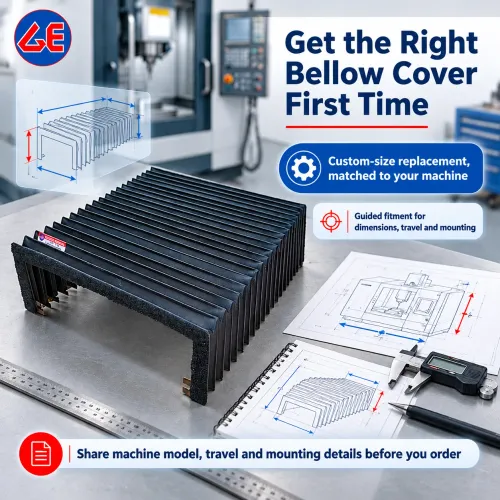
Before fabrication, measure the axis travel, attachment locations, cover envelope, operating conditions, and available clearances. A machine drawing provides the starting dimensions, but site measurements catch changes that make a nominally correct cover bind.
1. Establish the machine-axis reference and measure the distance between the fixed and moving attachment faces. Record usable stroke, fully extended length, retracted stack length, guideway width and height, and the required cover width.
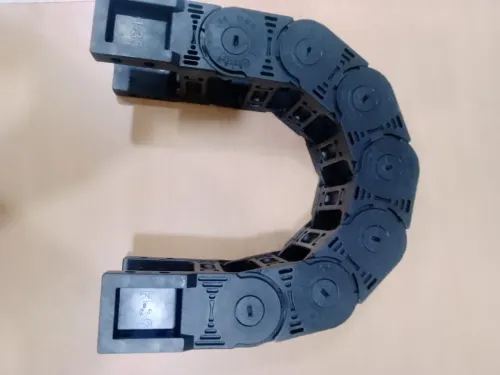
2. Map the complete movement envelope. Measure clearance from the tool, chuck, workpiece, guards, adjacent covers, cables, hoses, and lubrication lines. Include the bend radius and the space occupied by the folded pleats; a correct stroke still fails if the compressed stack enters another component.
3. Record every mounting detail: hole positions, hole diameter, thread type, flange size, bracket depth, and the surfaces available for an end frame. Do not plan to drill through an active pleat or clamp fabric directly, because the attachment can tear the material and create a leak.
4. Give the fabricator operating data: axis speed, acceleration, cycle frequency, coolant type, chip shape and temperature, abrasive dust, sparks, and the protection level required. These conditions determine the fabric, coating, reinforcement, seam construction, pleat pitch, and whether CNC machine bellow covers need guides or floating mounts.
The measurements become a drawing showing extended and compressed positions, frame geometry, pleat count, and clearances. Check that drawing against the machine before cutting material; changing a dimension then costs less than rebuilding a finished cover.
How a flexible fabric bellow is fabricated
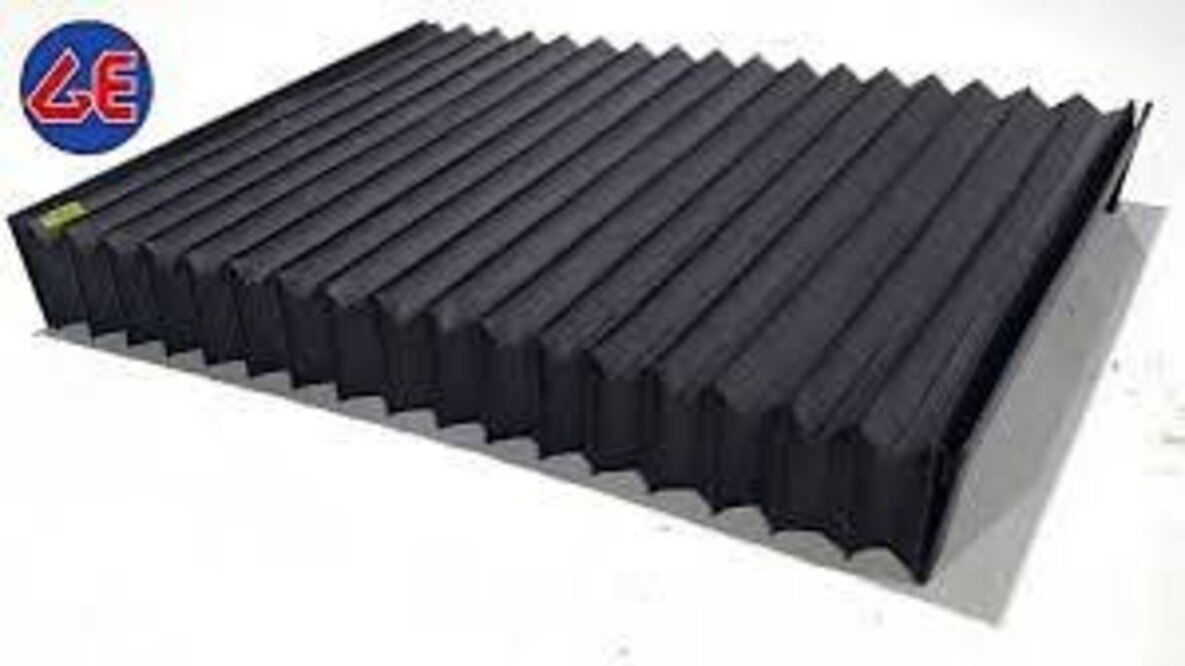
The answer to how CNC machine bellow covers are made in Coimbatore starts with a full-scale pattern, not a standard fabric rectangle. The fabric panels are cut for the required width, height, stroke and folded stack, with allowances for seams, corner turns and attachment faces.
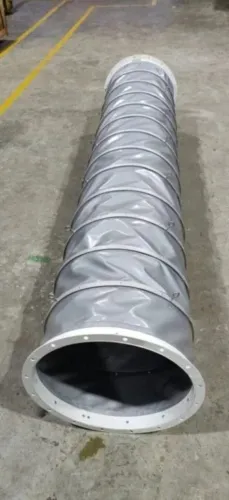
The body uses a coated technical textile selected for the coolant, chips, heat and flexing involved. Reinforcing layers are added at corners, edges and high-wear faces; internal slats or light support frames keep each pleat open and stop the fabric collapsing into the guideway.
Excessive stiffness adds mass and drive load, while inadequate support causes rubbing and folding.
Fabrication normally follows this sequence:
- Cut the panels and reinforcement pieces from approved patterns, marking pleat centres and seam allowances.
- Form the pleats around a former or temporary frame, checking the compressed stack against the machine clearance.
- Join corners and longitudinal seams by sewing, hot-air welding, high-frequency welding or bonding, according to the fabric and coating.
- Fit wear strips, slats and corner guards without creating sharp edges that can cut the body.
- Fabricate the end frames or mounting flanges, then attach them through reinforced hems or dedicated pockets rather than clamping bare fabric.
- Extend and compress the finished cover by hand to find tight seams, distorted pleats and frame interference.
GURUKRUPA BELLOWS PVT LTD is one supplier a buyer can ask to confirm whether its proposed reinforcement and seam method suits the machine’s speed, coolant and chip exposure, rather than choosing by appearance alone.
Related products
 | Bellow Cover ₹1000 Product Details: Brand GE Color Black-Blue - Gray -White Size ANY ( C shape, Square, Round, Rectangular) Ours is a trustworthy name in the business... View product → |
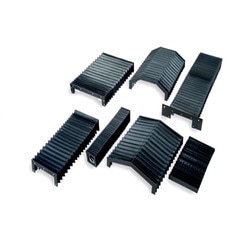 | CNC Bellow Cover Product Details: Brand GURUKRUPA Color BLACK Size ANY We are considered a well-known name in the business that manufactures and supplies CNC Bellow... View product → |
How a CNC telescopic cover differs from a fabric bellow
A flexible fabric bellow handles repeated bending around an exposed screw, cylinder, or auxiliary slide. A CNC telescopic cover is the stronger choice where hot, sharp chips strike a horizontal or vertical guideway; use both when the main guideway needs steel protection while a connected component still requires flexible travel.
| Option | Best choice | Main reason |
|---|---|---|
| Flexible fabric bellow | Exposed screws, cylinders, and auxiliary slides | Folds around irregular paths and travels with little added mass |
| Metal telescopic cover | Guideways facing heavy chips, heat, or coolant | Overlapping steel sections resist impact and shed debris |
| Both together | Machines with separate high-risk zones | Steel protects the guideway while fabric seals a moving attachment |
Telescopic bellow covers are made from progressively smaller sheet-metal boxes nested inside one another. The sections move along guide rails as the axis travels: rollers or sliding supports carry the load, while overlapping edges, replaceable wipers, and scrapers limit chip and coolant entry.
Sloped surfaces and drain paths prevent liquid from collecting inside the nested sections.
The metal cover must follow the machine axis, not guide it. The slide and guideway carry machine loads; end frames, brackets, or floating attachments allow the cover to accommodate movement without binding. Increasing sheet thickness cannot fix poor alignment.
Set the sections too tightly and the drive sees extra resistance; leave wipers too loose and chips reach the guideway. Check cable and hose clearance before choosing either design.
How to install the cover without restricting machine travel
A correct CNC bellow cover installation starts with a clean, isolated machine and ends with a slow full-travel test. Do not use the cover to guide or carry the axis; the slide and guideway carry those loads.
1. Lock out power and remove chips, coolant residue, burrs, and old sealant from the guideway, mounting faces, brackets, and surrounding guards. Check that the fixed and moving attachment points match the drawing, and confirm clearance from the tool, chuck, workpiece, and adjacent covers.
2. Place the cover in its retracted position without forcing the pleats or telescopic sections. Attach the fixed end frame to its mounting face, then attach the moving end to the machine slide or approved floating bracket.
Use the specified fasteners and washers; never drill through an active pleat or clamp fabric without an attachment frame.
3. Set the cover’s axis reference, height, width, and closed stack position. Align both ends with the guideway centerline, leaving the designed allowance for lateral movement, thermal expansion, and full extension. Tighten fasteners gradually so the frame does not twist.
4. For a telescopic cover, level and shim the rails or boxes until sections move evenly. Set wipers for contact without excessive preload; too much pressure increases axis load, while too little admits chips and coolant.
5. Jog the axis at low speed through several short strokes, then its complete programmed travel. Watch for pleat rubbing, section binding, uneven folding, stretched fabric, noise, coolant gaps, or contact with machine parts. Stop, correct alignment, and repeat the test before production.
The final inspection and replacement checklist
Confirm the cover only after the machine is isolated and access points are safe. A cover that passes a visual check can still pinch a cable, block an axis, or trap coolant.
1. Check every fastener, mounting frame, bracket and floating attachment. Confirm that no screw head, frame edge or damaged plate enters the moving clearance.
2. Move the axis slowly through its complete stroke. Each pleat must open and fold in the intended direction, with no rubbing against a way, cable, hose, tool, chuck, workpiece, guard or adjacent cover.
3. Repeat the test at production speed. Stop if the drive load rises, the cover buckles, stretches, compresses below its specified stack height, or fails to reach either end position.
4. Inspect the seal line. Overlapping sections must meet, wipers or scrapers must contact evenly, and no open seam or torn fold may admit chips. Pour coolant along the working direction and confirm that sloped surfaces and drain paths carry it away rather than into folded sections.
5. Remove trapped chips and inspect lower folds, seams, wear strips and telescopic boxes. Replace the cover when fabric is torn, a seam opens, a wiper loses contact, a section deforms, or drainage remains blocked after cleaning.
6. Record the closed stack, full extension, clearances and test result. Plan replacement access before production: isolate the machine, remove guards or covers needed to reach both attachment points, and stage the replacement beside the machine.
If access requires dismantling guarding or moving the table, schedule that work as a planned outage rather than discovering the downtime after failure.
Frequently asked questions
What measurements are needed to design a CNC machine bellow cover?
Measure axis travel, attachment locations, compressed and extended lengths, cover envelope, operating temperature, contaminants, and all surrounding clearances.
How does a CNC telescopic cover differ from a fabric bellow?
A CNC telescopic cover uses interlocking rigid metal boxes for strong chip protection, while a fabric bellow uses flexible folded sections for lighter and more adaptable protection.
How do you install a CNC bellow cover without restricting machine travel?
Align the mounting points, confirm compressed length, keep the cover clear of guides and tooling, and move the axis through its complete travel by hand or at low speed.
What should you check before replacing a machine bellow cover?
Inspect folds, stitching, mounting frames, wipers, fasteners, heat damage, cracking, trapped debris, and evidence that the existing cover has limited axis movement.
Related products
 | CNC Telescopic Cover Product Details: Brand GURUKRUPA Being one of the trustworthy names of the industry, we bring forth CNC Telescopic Cover that can be availed at... View product → |
 | Telescopic Cover ₹5000 Product Details: Brand GURUKRUPA Being one of the trustworthy names of the industry, we bring forth CNC Telescopic Cover that can be availed at... View product → |
 | Telescopic Cover Product Details: Brand GURUKRUPA Being one of the trustworthy names of the industry, we bring forth CNC Telescopic Cover that can be availed at... View product → |