Dust trapped on overlapping panels, wipers, folds, and guideways can turn routine contamination into binding, corrosion, or premature wear. You will be able to isolate the machine, remove dust without driving it into sliding joints, choose safer cleaning methods for steel and fabric protection, and verify free movement before returning the machine to production.
Key takeaways
- Apply lockout/tagout and block the axis before cleaning.
- Vacuum loose dust before wiping panels or opening cover sections.
- Use neutral detergent, soft brushes, and lint-free cloths on finished surfaces.
- Inspect wipers, seals, folds, fasteners, and smooth travel before restarting.
What to do before cleaning a dust-loaded telescopic cover
1. Stop the machine, cancel automatic cycles, and apply your site’s lockout/tagout procedure. Isolate electrical, hydraulic, pneumatic, and gravity-stored energy, then block the axis so it cannot move while you work. Local or manual mode is not isolation; a commanded movement can still trap hands beneath a cover.
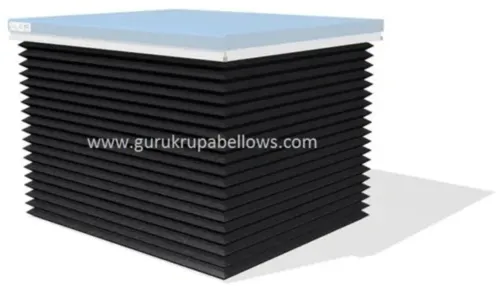
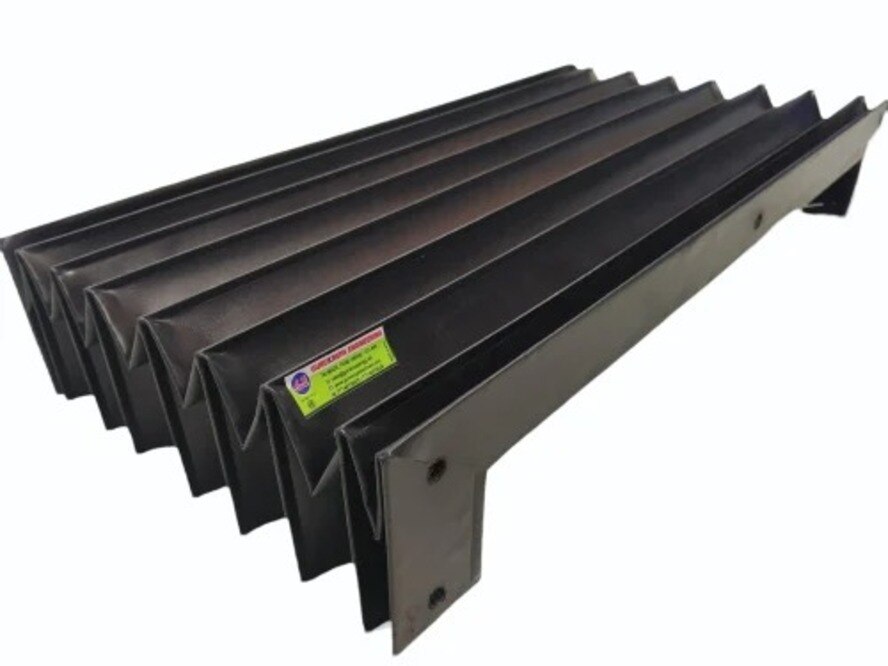
2. Identify the protection before selecting a cleaner. Confirm whether it is a telescopic steel cover, a fabric bellows, or a hybrid with scraper wipers, seals, coated fabric, adhesive joints, or flexible panels. These materials can react differently to detergent, solvent, water pressure, and compressed air.
3. Photograph the cover and check its nameplate, service manual, or supplier specification. Look for stated limits on cleaning agents, pressure, temperature, and lubrication. Do not assume a detergent safe for steel is safe for wipers or fabric.
4. Move the cover only to a position that exposes the dust without placing your hands between overlapping panels. If the axis cannot be secured in that position, arrange a qualified maintenance procedure rather than forcing access.
5. Check what the dust contains before choosing equipment. Fine dry dust calls for controlled removal; visible coolant, oil, metal chips, or construction residue needs a different plan. Record the buildup and set the next inspection from cycle count, dust loading, coolant exposure, and contamination risk—not an automatic monthly interval.
Telescopic cover maintenance in Gurgaon needs closer checks when visible roadside or construction dust appears.
How to remove loose dust without forcing it under the panels
Start at the outermost accessible panel and work toward the machine, never blowing dust deeper into an overlap. This sequence makes dust removal from machine bellows safer because abrasive particles leave the cover before moisture or wiping pressure is introduced.
1. Keep the cover in its isolated, safe position and expose one section at a time. Do not retract it fully while loose dust remains on the panels.
2. Place an industrial vacuum nozzle beside the dust, not hard against a wiper or seal. Vacuum the exposed panel, overlap edge, guide area, and nearby machine surface.
3. Follow with a soft, dry brush or lint-free cloth, moving from the clean outer surface toward the vacuum nozzle. Lift dust from corners instead of pushing it across the overlap.
4. Repeat the vacuum-and-brush pass after advancing the cover only enough to reveal the next section. Treat every telescopic steel segment as a separate cleaning area.
5. Use low-pressure air only when vacuuming cannot reach a recess. Direct it outward and away from wipers, folds, bearings, seals, and guideways; never use a high-pressure jet or blow directly into a panel joint.
For telescopic bellow cover cleaning, apply an approved mild solution only after loose material is gone. Wipe with a lightly damp cloth, collect the residue, and leave the cover extended until completely dry. Do not force the cover closed while moisture or dust remains in an overlap.
Which tools and cleaning agents are safe for steel, fabric, wipers, and seals
Good telescopic machine cover care uses the gentlest method that removes the residue: a vacuum with a soft brush attachment, a lint-free cloth, and a small amount of manufacturer-approved mild detergent. Keep water away from panel overlaps, folds, wiper lips, seals, and adhesive joints; flooding pushes dust into the sliding mechanism.
| Material | Safe tools and pressure | Cleaning agents | Avoid |
|---|---|---|---|
| Steel panels | Vacuum and soft nylon brush; wipe with a damp lint-free cloth. Do not exceed gentle hand-applied pressure. | Manufacturer-approved mild, non-abrasive detergent followed by clean water. Dry promptly. | High-pressure water, abrasive pads, wire brushes, caustic cleaners, chlorinated products, and solvent wiping. |
| Fabric bellows | Soft brush and vacuum; blot rather than scrub. Use only a lightly damp cloth. | Fabric-compatible mild detergent approved for the coating. Test a hidden area first. | Saturation, stiff brushes, steam, petroleum solvents, and aggressive degreasers that attack coatings or stitching. |
| Wipers and seals | Clean damp cloth or cotton swab around the sealing edge. Never lift or scrape the lip with metal. | Mild soapy water approved for the rubber or plastic compound. | Petrol, diesel, acetone, brake cleaner, silicone-unknown chemicals, and high-pressure spray. |
| Hybrid joints and adhesive areas | Vacuum nearby dust, then wipe without directing air or water into the joint. | Only the adhesive manufacturer’s approved cleaner. | Solvent soaking, standing water, and compressed air aimed at the bond. |
Compressed air is not the default: it drives abrasive dust beneath scrapers and into guideways. If its use is unavoidable, keep the nozzle below 30 psi, use chip guarding and personal protective equipment, and direct air away from overlaps and seals. Let every wet surface dry before retracting the cover.
How to handle coolant, chips, oil mist, and sticky Gurgaon road dust
The right method for cleaning telescopic bellow covers for after dust buildup in Gurgaon depends on what the dust has absorbed. Coolant, oil mist, metal chips, abrasive particles, and cement residue require different handling; one aggressive wash can damage wipers, coatings, seals, or adhesive joints.
1. For coolant film, wipe with a lint-free cloth dampened with the cover maker’s approved mild detergent solution. Rinse residue with minimal clean water, then dry each overlap before retracting the cover.
2. For metal chips, lift them with a vacuum or soft brush while wearing cut-resistant gloves. Do not drag chips across sliding joints or blast them beneath scrapers with compressed air.
3. For oil mist, remove the oily layer with a compatible degreaser only after checking the steel coating, fabric, wiper, and seal specification. Unapproved solvent can swell rubber or strip protective coatings.
4. For abrasive dust or construction residue such as cement and sand, vacuum first, loosen bonded deposits with a damp cloth, and repeat rather than scrubbing dry. Abrasive paste can score panels and guideway-facing surfaces.
5. For sticky Gurgaon road dust, use several light damp wipes instead of one saturated wash. Keep water away from electrical parts, collect dirty runoff, and leave the cover extended until fully dry.
Do not apply oil or grease to the cover, scraper, or folds unless the manufacturer specifies it; lubricant traps fine dust and creates grinding paste.
What to inspect before putting the machine back into service
A clean cover is safe to run only when it moves through its full travel smoothly, maintains protection, and shows no damage that could release parts or expose the guideway. Keep the machine isolated during inspection; local or manual mode does not prevent unexpected axis movement.
1. Check every steel panel, bellows fold, wiper, seal, guide, fastener, and weld. Look for dents, cracked welds, torn fabric, hardened seals, corrosion holes, loose screws, and missing scraper sections.
2. Move the cover by the approved manual method and observe the complete stroke. Stop if it binds, jerks, rattles, closes unevenly, or shows abnormal panel overlap. These symptoms indicate a mechanical fault, not leftover dirt.
3. Inspect the closed cover for continuous contact at wipers and seals. A visible gap, folded scraper, exposed guideway, or dust packed inside a fold requires repair before production resumes. Do not add oil or grease unless the cover maker specifies it; lubricant can turn Gurgaon dust into abrasive paste.
4. Return the machine to service only after fasteners are secure, panels align, the cleaning residue is removed, and the cover passes its normal travel check without noise or resistance.
Use telescopic machine cover care records to note the defect, location, cycle count, and photographs. For telescopic cover maintenance in Gurgaon, ask GURUKRUPA BELLOWS PVT LTD or the original maker to assess replacement when distortion returns after repair, corrosion weakens a panel, guides are worn, or wipers and seals cannot maintain contact.
A cover that repeatedly fails inspection costs less to replace before it contaminates the machine guideway.
Related products
 | Telescopic Bellow Cover ₹1000 Product Details: Brand GURUKRUPA Ours is a distinguished name in the business that manufactures and supplies Telescopic Bellow Cover that is vastly... View product → |
 | Dust Covers Product Details: Brand GURUKRUPA Backed by rich industry experience, we are presenting vast variety of Dust Covers. View product → |
Frequently asked questions
What should you do before cleaning a dust-loaded telescopic cover?
Stop the machine, cancel automatic cycles, apply your site’s lockout/tagout procedure, isolate electrical, hydraulic, pneumatic, and gravity-stored energy, and block the axis against movement.
How do you remove loose dust without forcing it under the panels?
Use a vacuum with a soft brush attachment, working from the outside toward accessible edges. Avoid compressed air directed at gaps, wipers, seals, or guideways because it can drive dust beneath the panels.
Which tools and cleaning agents are safe for telescopic covers?
Use soft nylon brushes, lint-free cloths, a vacuum, and clean water with a mild neutral detergent. Avoid abrasive pads, sharp scrapers, chlorinated solvents, and high-pressure spray unless the cover manufacturer approves them.
How should you clean coolant, chips, oil mist, and sticky Gurgaon road dust?
Lift or vacuum chips first, absorb oil before wiping, and use a compatible mild degreaser for oily residue. Rinse detergent residue with a damp cloth, then dry the cover and surrounding areas completely.
What should you inspect before returning the machine to service?
Check for damaged panels, blocked drainage, torn wipers, loose fasteners, distorted seals, trapped debris, corrosion, and abnormal resistance during manual inspection. Remove tools and barriers before restoring energy and run a controlled test cycle.
Related products
 | Telescopic Cover Product Details: Brand GURUKRUPA Being one of the trustworthy names of the industry, we bring forth CNC Telescopic Cover that can be availed at... View product → |
 | CNC Telescopic Cover Product Details: Brand GURUKRUPA Being one of the trustworthy names of the industry, we bring forth CNC Telescopic Cover that can be availed at... View product → |
 | Steel Telescopic Cover Product Details: Brand GURUKRUPA Our company is considered a renowned name in the field that manufactures and supplies Steel Telescopic Cover. View product → |
 | Telescopic Cover ₹5000 Product Details: Brand GURUKRUPA Being one of the trustworthy names of the industry, we bring forth CNC Telescopic Cover that can be availed at... View product → |