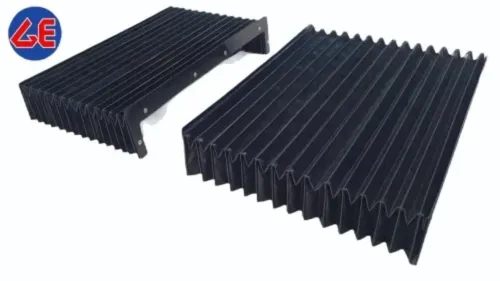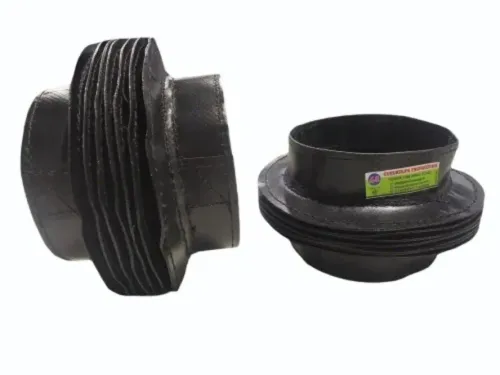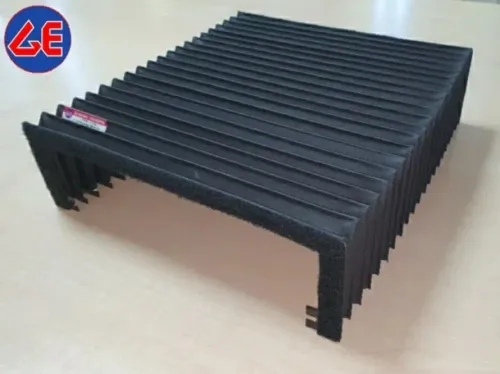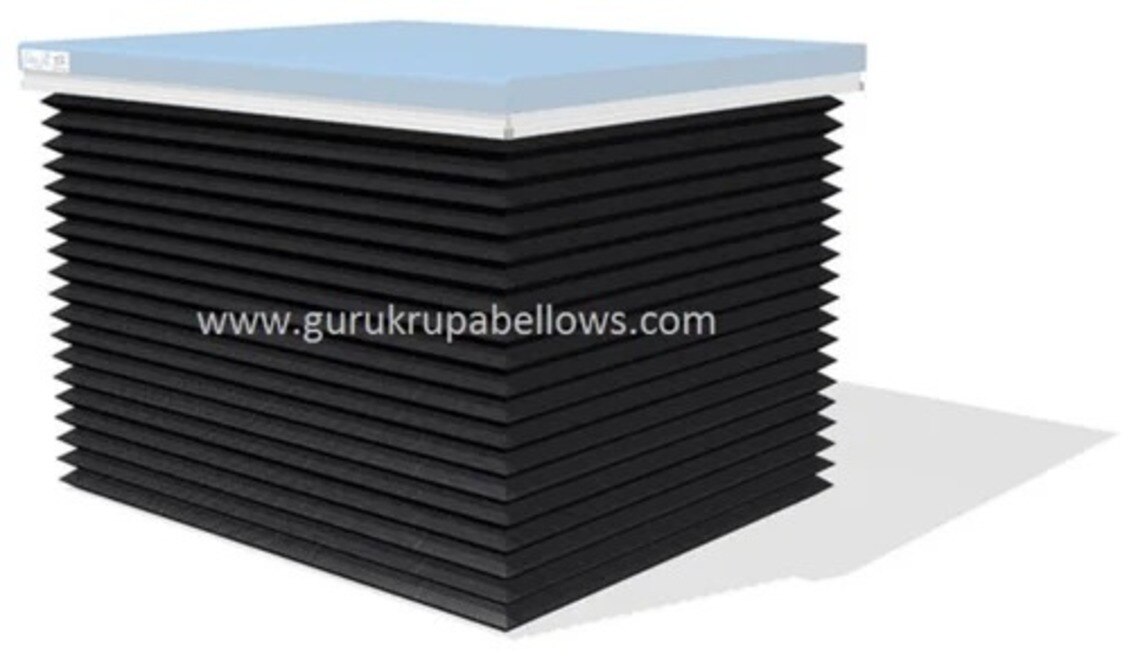
A scissor lift cover is not selected by lift height alone: the right design depends on what moves, what can contaminate it, and how the cover behaves throughout the stroke. By the end, you will know whether you need a bellows cover, a skirt, a cylinder boot, or a complete enclosure, and which measurements and operating details to give a supplier.
Key takeaways
- Protect moving lifts when debris, impact, heat, or access risks threaten the mechanism.
- Choose a bellows, skirt, cylinder boot, or enclosure based on motion and exposure.
- Measure stroke, folded height, clearances, mounting points, and operating temperature first.
- Inspect covers for tears, loose fasteners, rubbing, heat damage, and trapped debris.
Which Gurgaon users actually need scissor lift bellow covers?
Scissor lift bellow covers are needed by users whose moving mechanism faces contamination, impact, or access hazards—not simply by companies carrying a particular industry label. The application can be in Gurgaon or elsewhere; motion, environment, and access risk make the decision.
Typical users include:
- Scissor-lift manufacturers and lift-table builders
- CNC and machine-tool OEMs
- Sheet-metal and fabrication-equipment manufacturers
- Hydraulic equipment builders and automation integrators
- Plant engineering teams and maintenance departments
- Rental fleets, warehouse operators, and companies retrofitting existing lifting equipment
A machine-tool manufacturer may need protection for an exposed hydraulic cylinder, screw drive, guideway, slide, or vertical axis that moves with the platform. Scissor lift bellow covers for machine tool manufacturers in gurgaon must therefore be engineered machine components, not generic fabric curtains.
| User or equipment | Exposure that matters | When protection is justified |
|---|---|---|
| Machine-tool OEM | Cylinder, screw drive, slide, or guideway | Chips, coolant, dust, or pinch access follows vertical travel |
| Warehouse operator | Lift mechanism beneath the platform | Rain, impact, dust, or people can reach the mechanism |
| Retrofit or rental fleet | Existing linkage and drive components | The collapsed and extended positions expose a moving gap |
Scissor lift bellows in gurgaon are relevant when that gap opens and closes during the lift stroke and contamination or contact risk follows it. Industrial lift bellows suit the mechanism; a warehouse needs them only when its actual surroundings create the hazard.
Should you specify a bellows cover, skirt, cylinder boot, or enclosure?
Match the cover to the exposed area, not to the machine’s name. Use a bellows cover for a changing opening around a cylinder, guideway, screw drive, or other mechanism; use a skirt for the platform perimeter.
| Option | What it protects | When it applies |
|---|---|---|
| Bellows cover | A defined moving opening | The opening changes length and a fixed guard would restrict the required stroke |
| Skirt cover | The platform perimeter | Foot or hand access, or debris entering beneath the platform, is the main concern |
| Cylinder boot | One rod or cylinder body | The cylinder needs protection but links, rollers, guideways, and drives remain protected elsewhere |
| Full enclosure | A larger lift-table volume | Framed panels, removable access sections, or interlocked guarding are needed |
Scissor lift skirt covers can restrict access and contain debris, but they may leave the central mechanism exposed. A cylinder boot does not automatically shield the rest of the linkage. Use both a bellows cover and skirt when the mechanism needs contamination protection and the perimeter presents an access hazard.
A flexible cover is not load-bearing and is not automatically a safety-rated guard. Apply an ISO 12100 risk assessment, then provide separate fixed guarding, interlocks, stops, anti-drop devices, and emergency controls where the risk requires them. Check whether the material can be pushed aside, climbed over, reached around, or pulled into the mechanism.
For scissor lift bellow covers for machine tool manufacturers in Gurgaon, treat the cover as an engineered component. Specify bellow covers for lifting equipment when the moving gap must remain protected throughout the stroke.
Which operating conditions justify a cover, and which materials need checking?
Metal chips, grinding dust, welding spatter, coolant, hydraulic oil, abrasive dust, rain, UV exposure, heat, sparks, wash-down chemicals, and pinch-point exposure all justify investigating a cover. Scissor lift bellows in Gurgaon face the same decision as equipment anywhere: contamination, heat, weather, and access risk determine the need.
| Condition | Material or design question | Failure if ignored |
|---|---|---|
| Coolant, hydraulic oil, or wash-down chemicals | Check chemistry, coating, seals, and cleaning compatibility | Folds absorb fluid, swell, delaminate, or crack |
| Chips, abrasive dust, or hot swarf | Check chip shedding, fold geometry, and temperature resistance | Chips lodge in folds or embed in fabric |
| Sparks, welding spatter, or heat | Select construction for hot-particle exposure and rated temperature | The cover burns, stiffens, or develops holes |
| Rain and UV exposure | Specify outdoor-compatible fabric and coating | Water ingress and sunlight shorten service life |
| Pinch points | Check retention, clearances, and guarding function | The cover becomes an entanglement or access hazard |
Coolant resistance and chip behavior can matter more than headline tensile strength. A strong fabric that traps chips or absorbs coolant can fail before a lower-strength coated fabric with suitable folds.
Ask the supplier to assess:
- Coolant and lubricant chemistry, chip temperature, welding or grinding exposure, ambient temperature, and cleaning agents
- Wash-down pressure, UV exposure, and expected cycle count
- Fold interference, vibration, bellows inertia, pressure pumping, and added moving mass
For high-speed tools, verify that the cover will not disturb servo following, positioning accuracy, or lift-cylinder performance. Industrial lift bellows and bellow covers for lifting equipment must be assessed as one system: fabric, coating, folds, retainers, and mounting plates. Do not accept “industrial” as a material specification.
What must be measured before designing the cover?
Nominal lift height is not enough to size a cover. Scissor geometry changes the distance between upper and lower attachment points as the arms rotate, so scissor lift bellow covers for machine tool manufacturers in Gurgaon must follow the complete motion envelope, not a single height figure.
1. Record the closed or collapsed length, extended length, folded height, lift stroke, maximum platform height, protected-component or cylinder diameter, opening dimensions, mounting footprint, attachment points, and mounting-face locations.
2. Record required service access, permissible lateral movement, travel speed, acceleration, cycle frequency, and clearance to scissor arms, rollers, links, pivots, and the drive train. Include the space needed for cylinder removal and lubrication.
3. Check every position: fully lowered, intermediate, and fully raised. The cover must not bind, sag into the linkage, fold into a pinch point, rub against moving arms, or restrict platform travel. A lowered-position fit check is incomplete.
4. Ask for a supplier drawing showing travel direction, allowable compression, minimum fold dimensions, mounting clearances, guide frames or retainers, and replacement method. Bellow covers for lifting equipment may need protected rails, lateral supports, or internal baffles rather than fabric bolted directly to the platforms.
5. Run the cover at intended speed under maximum load, then check emergency lowering, vibration, lateral movement, and cycle operation. Confirm that scissor lift skirt covers do not obstruct the mechanism or service access. A large cover can add inertia, friction, and pressure pumping.
How should you specify, retrofit, and maintain the protection?
Treat the cover as a machine component, not an afterthought. For new scissor lift bellows in Gurgaon, release it with an installation drawing showing mounting faces, retainers, protected clearances, service openings, allowable compression, travel direction, and replacement steps.
1. Specify the motion envelope. Record closed and extended lengths, folded height, opening dimensions, mounting footprint, travel speed, acceleration, cycle frequency, and permissible lateral movement. Check the cover through fully lowered, intermediate, and raised positions so it cannot enter the linkage, rollers, pinch points, or drive train.
2. Retrofit only after inspecting the collapsed envelope. Confirm access for cylinder removal, lubrication, platform inspection, emergency lowering, and cleaning. Design removable sections, zippers, hook-and-loop closures, bolted frames, or quick-release mounts before fabrication.
Where fabric can buckle toward the linkage, add protected mounting rails, guide frames, lateral supports, or internal baffles; bolting fabric directly between platforms is not enough.
3. Tie maintenance to cycle rate and contamination. Inspect loose fasteners, torn or delaminated fabric, cracked mounting plates, damaged folds, contamination buildup, missing guides, and new interference. Record the inspection interval and shorten it for abrasive dust, chips, coolant, outdoor exposure, or heavy cycling.
A supplier such as GURUKRUPA BELLOWS PVT LTD is useful when it reviews the actual motion envelope and supplies an installation layout, not merely a statement that industrial lift bellows or scissor lift skirt covers are custom made. Validate the finished cover on the machine before release.
Related products
 | Bellow Cover ₹5000 Product Details: Brand GURUKRUPA Color Black-Blue Size Customised With the support of our excellent team workers, we have been delivering the best... View product → |
 | Product Details: Brand GURUKRUPA Color Black-Blue Size Customised With support of our excellent team workers, we have been delivering the best... View product → |
Frequently asked questions
Which Gurgaon users actually need scissor lift bellow covers?
Users need them when a scissor lift mechanism faces dust, chips, sparks, fluids, impact, corrosion, or access hazards. Machine-tool builders, lifting-equipment manufacturers, integrators, and maintenance teams should assess the actual motion and exposure rather than rely on industry labels.
Should you specify a bellows cover, skirt, cylinder boot, or enclosure?
Specify a bellows cover for guided folding protection over a moving mechanism, a skirt for perimeter shielding around an open lift, a cylinder boot for protecting an exposed rod, and an enclosure when the mechanism needs broader separation from people or contamination.
Which operating conditions and materials need checking?
Check travel speed, cycle frequency, compressed height, abrasion, oils, coolants, welding sparks, heat, ultraviolet exposure, chemicals, and washdown. Match the fabric, coating, reinforcement, fasteners, and mounting method to those conditions.
What must be measured before designing the cover?
Record maximum and minimum dimensions, stroke, folded height, extension length, lift geometry, mounting points, clearances, bend direction, attachment space, nearby pinch points, and cable or hose movement.
How should you specify, retrofit, and maintain the protection?
Provide the operating conditions and measured geometry in the specification, test a retrofit through the full stroke, prevent rubbing and pinch points, and inspect for tears, loose attachments, heat damage, contamination, and restricted movement.
Related product
 | Scissor Lift Skirt Product Details: Brand GE Color Black,Blue Material PVC Coated Size Anyany Gurukrupa specializes in providing Scissor Lift Skirt for both standard... View product → |