A round bellow cover usually fails from a combination of abrasive chips, packed dust, heat, moisture, chemical exposure or incorrect movement clearance—not from age alone. A disciplined inspection routine, compatible cleaning method and dimension-controlled replacement can prevent a small fold defect from damaging guideways, ball screws, sensors or other protected components.
Key takeaways
- Record cover condition by machine axis after each inspection.
- Replace bellows when cracks, thinning or attachment damage expose moving parts.
- Clean with a soft cloth and manufacturer-approved detergent, not harsh solvents.
- Specify compressed length, extended length, diameter and mounting details before ordering.
What to inspect daily, weekly and during planned maintenance
Set a written round bellow cover care schedule around machine use, not the calendar alone. Record the date, machine axis, cover condition and action taken so a gradual change is visible.
- Daily, before startup, check for exposed guideways, chips trapped in fold valleys, coolant or oil pooling, loose collars, shifted mounting rings and abnormal sag. Cycle the axis slowly and stop if the cover rubs, binds or resists movement.
- Weekly, clean away accumulated dust and metal chips, then inspect each convolution under good light. Look for pinholes, hardening, flattened folds, surface cracks and loss of elasticity, especially where Gurgaon’s heat, ultraviolet exposure and monsoon humidity affect exposed material.
- During planned maintenance, inspect the attachment hardware, end rings, guides and surrounding machine surfaces. Measure compressed and extended length against the drawing, check that the cover does not over-compress or stretch, and examine fold valleys for concealed fatigue or thinning.
Inspect round bellows for industrial equipment after any crash, tool breakage, abnormal axis noise or sudden increase in cover resistance. A damaged reinforcement, guide or mounting ring can fail internally before a tear appears; continued cycling can enlarge it.
Replace the cover before an opening exposes the guideway, ballscrew, spindle or sensor to contamination. Record recurring rubbing, horizontal sag or chip ingress as a design fault, not merely a cleaning issue. The same replacement geometry will fail again unless you correct the unsupported span, movement path or attachment.
How to find cracks, thinning and attachment damage before failure
Stop the machine, isolate its energy, and inspect the round bellow cover with the bellows fully extended and fully compressed. A clean outer face proves little: fold valleys, end attachments and rubbing points reveal damage first.
1. Look along every convolution with a bright light. Mark cracks, pinholes, cuts, exposed reinforcement, torn stitching, hard glossy areas, sticky swelling and permanent flattening. UV and ozone can crack exposed elastomer, while chips and dust abrade crests and valley roots.
2. Compare corresponding folds. Thinning, uneven spacing, excessive sag or a shortened compressed length indicates rubbing, over-compression or loss of elasticity. Do not force a fold to test it; measure thickness only with a method approved for the material.
3. Examine collars, rings, flanges and fasteners for looseness, separation, distortion and pulled stitching. Check for contact with the guideway, ballscrew, spindle or sensor during the complete travel range. A detached attachment can let contamination enter before the cover visibly tears.
4. After a crash, tool breakage, abnormal axis noise or sudden increase in cover resistance, stop cycling and inspect the internal guide, mounting ring and reinforcement. Concealed damage can enlarge with each stroke.
5. Keep operating only when folds remain flexible, attachments stay secure, no through-crack or pinhole exists, and the cover never contacts the protected way. Replace it before an opening admits coolant or chips; patching a moving fold is temporary.
This inspection is central to round bellow cover care for round bellows for industrial equipment, especially where Gurgaon’s heat, ultraviolet exposure, dust and monsoon humidity impose different stresses.
How to clean bellows without damaging the material
Use a cool, dry machine and remove loose contamination before wiping. Vacuum dust and metal chips from convolution crests and fold valleys; use a soft nylon brush for particles that cling. High-pressure air can drive grit into the folds, lift edges or damage reinforcement.
- Wipe coolant and oil with a lint-free cloth dampened with clean water and a neutral, material-approved detergent.
- Rinse detergent residue with a lightly damp cloth, then dry every valley completely before cycling the axis.
- Test any cleaner on a hidden area first. Reject it if the surface becomes sticky, swollen, chalky or discoloured.
- Never use a wire brush, abrasive pad, petrol, kerosene, brake cleaner, chlorinated solvent or unapproved degreaser.
- Avoid steam, hot-water pressure washing and direct heat. Gurgaon’s summer heat can accelerate softening, while trapped monsoon moisture promotes corrosion at collars and mounting rings.
- Keep the cleaned cover away from prolonged sunlight and ozone-producing equipment; UV and ozone harden exposed elastomers and expose valley-root fatigue that surface cleaning cannot repair.
| Contamination or condition | Safer cleaning method | Avoid |
|---|---|---|
| Dust and chips | Vacuum, then soft nylon brush | High-pressure air or scraping |
| Coolant and oil | Approved neutral detergent, damp cloth, thorough drying | Solvent soaking |
| Monsoon moisture | Dry cloth and air circulation with the cover extended | Storing while wet |
| Caked residue | Repeated gentle wiping after softening | Wire brushes and hot washes |
Record the cleaning agent and inspect for cracks after drying. That discipline improves round bellow cover care and replacement in Gurgaon by separating removable dirt from material failure.
When to replace the cover and how to specify the right dimensions
Replace the cover immediately after a crash, tool breakage, abnormal axis noise, sudden increase in cover resistance, or any tear that exposes the moving part. A split valley, through-wall pinhole, detached collar, exposed reinforcement, hardened rubber, or distorted fold also disqualifies continued operation.
A crash can damage an internal guide or mounting ring without leaving an obvious tear; cycling the machine can turn that hidden damage into a jam.
1. Measure the machine and the old cover in its relaxed condition. Do not stretch an elongated cover to recover its apparent original length; permanent set points to overload, heat, chemical attack, or incorrect installation.
2. Record compressed length, free or extended length, usable stroke, inside diameter, outside diameter, and the machine-side clearance envelope. Check the space at full compression and extension so the folds cannot rub nearby guards, tooling, or guideways.
3. Measure the mounting flange or collar dimensions, bolt-hole pattern, number and pitch of convolutions, and the attachment method. A few millimetres of error at the collar can pull the cover sideways and shorten its life.
4. Require a controlled drawing or approved sample that names the elastomer, reinforcement, dimensional tolerances, coolant and oil compatibility, and first-article inspection. “Rubber bellows, same as sample” does not control compound or fold geometry.
5. If the same cover fails repeatedly from chip ingress, high-speed telescoping, or horizontal sag, specify a guided or supported design instead of repeating the same round rubber bellow replacement. Good round bellow cover care and replacement in Gurgaon starts with correcting the failure mechanism, not just fitting another cover.
How to choose material, protection type and a Gurgaon supplier
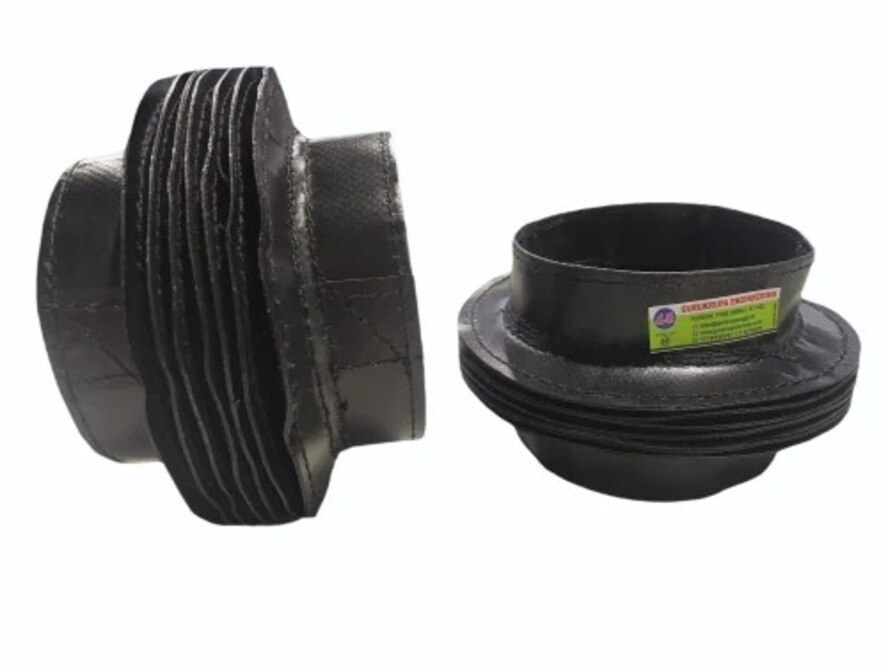
Match material, movement and protection to the machine, not to the cover’s appearance. For round bellows for industrial equipment, identify the stroke, speed, orientation, unsupported span and available clearance before selecting a replacement.
| Condition | Suitable choice | What goes wrong if mismatched |
|---|---|---|
| Mineral cutting oil and grease | NBR compound | Swelling, softening and early leakage |
| Water-based coolant, heat, dust and monsoon humidity | EPDM compound, after fluid confirmation | Petroleum oil can rapidly damage EPDM |
| Hydrocarbons or higher temperatures | FKM compound | An unsuitable elastomer hardens or cracks |
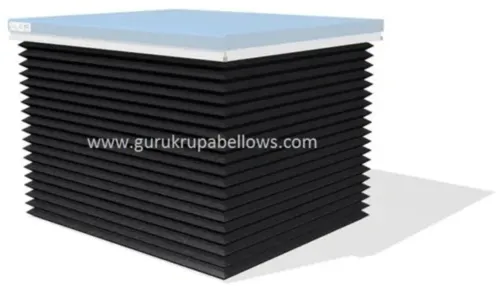
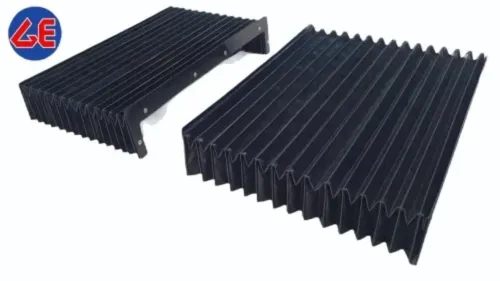
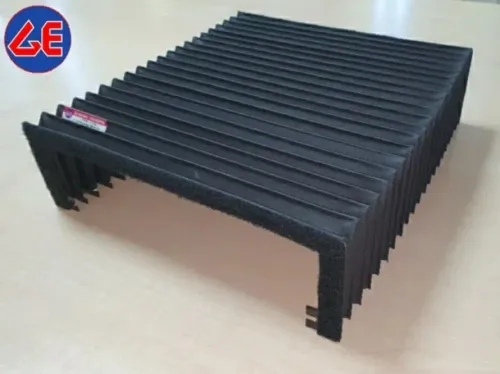
| Repeated chip ingress or high-speed telescoping | Guided or supported bellows | A free round cover rubs, sags or folds unevenly |
| Severe horizontal sag | Supported fabric bellows or redesigned mounting | Convolution valleys fatigue under their own weight |
Treat UV, ozone, abrasive dust, metal chips and heat as separate stresses. Ask for chemical compatibility against your named coolant, cutting oil and cleaning agent at operating temperature; “rubber” is not a material specification.
A round rubber bellow replacement drawing must state:
- Inside and outside diameters, compressed and free lengths, usable stroke, convolution count and pitch
- Flange or collar dimensions, attachment method and machine-side clearance envelope
- Declared elastomer, reinforcement, dimensional tolerances and controlled drawing or approved sample
- First-article inspection results before production release
A round bellow cover supplier in Gurgaon should also explain why the existing geometry failed. GURUKRUPA BELLOWS PVT LTD belongs on your comparison list only after it supplies these controls, rather than accepting “same as sample” as a specification.
Related product
 | Round Bellow Covers ₹1000 To match with our reputation in the market, we are here to present an unparalleled assortment of Round Bellow Covers. View product → |
Frequently asked questions
What should you inspect on round bellow covers?
Check for cracks, thinning, pinholes, heat damage, trapped debris, loose fasteners and damaged attachment points. Record the machine axis and action taken.
How do you clean a round bellow cover without damaging it?
Remove loose debris first, then wipe the cover with a soft cloth and mild, manufacturer-approved detergent. Avoid sharp tools, abrasive pads, high-pressure jets and solvents that attack the material.
When should you replace a round bellow cover?
Replace it when cracks, holes, severe thinning, permanent deformation or attachment damage can expose the protected component or restrict movement.
What dimensions do you need for a round bellow replacement?
Provide compressed length, extended length, outside and inside diameters, stroke, mounting method, flange or ring dimensions, operating temperature and the machine axis layout.