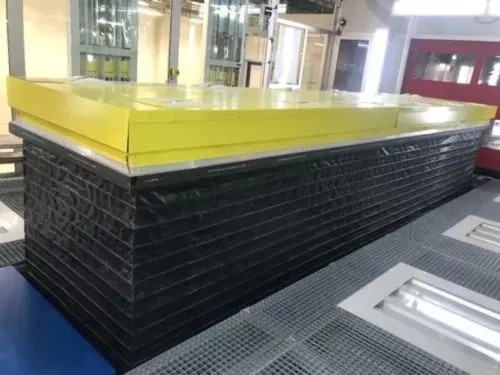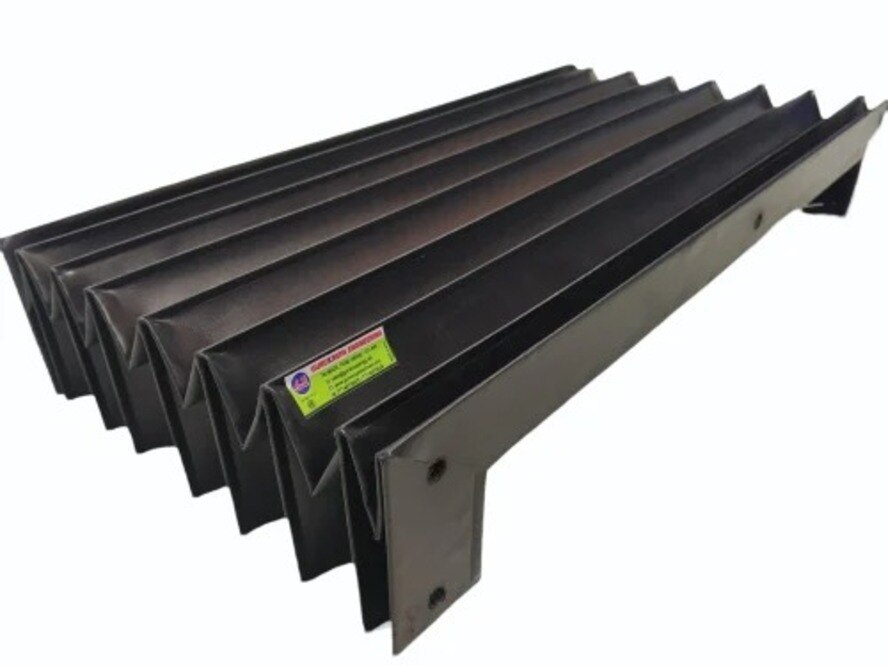
Fine summer dust can pass through scraper lips, section overlaps and mounting gaps, then combine with coolant to form an abrasive paste on guideways. You will be able to compare cover types, measure a machine correctly, specify the sealing details that matter and set a practical inspection routine for Gurgaon conditions.
Key takeaways
- Protect guideways from dust before grit reaches rollers, rails and lubrication films.
- Choose steel covers for hot chips and fabric bellows for flexible, enclosed movements.
- Measure the full travel envelope, including compressed length, extension and clearance.
- Specify wipers, section overlaps and cleaning access around the actual dust path.
Why Gurgaon summer dust damages exposed guideways
Dust turns an exposed guideway into an abrasive sliding surface. Fine particles settle on rails, rollers and lubrication films, then work into the contact area as the axis moves. The result is accelerated wear, contaminated lubricant, rising friction and positioning errors. Larger grit can score the guideway or damage rolling elements.
The damage worsens when dust combines with coolant or cutting oil. This mixture forms a grinding paste that clings to surfaces and can cut scraper lips faster than dry dust. For machine travel protection in Gurgaon, specify the cover for dust, fluid exposure and summer temperature cycling together, not for dust alone.
For telescopic bellow covers for dusty summers in Gurgaon, the steel or fabric panel is rarely the only concern. Dust enters through:
- Scraper and wiper lips that have hardened, torn or lost contact
- Section overlaps where dents reduce the intended shield
- Mounting gaps and end-frame transitions
- Loose guides or fasteners that allow sections to shift
A cover that is labelled “dustproof” without a defined wiper arrangement leaves these entry paths unresolved. Heat also affects alignment: a long steel cover expands, and restricted running clearance can cause section binding, heavier axis load or uneven scraper wear.
Check for grit inside the cover, damaged lips, dents, loose guides and abnormal drive load before treating the cover as a permanent machine structure.
Choosing steel telescopic sections, fabric bellows or ordinary dust covers
Choose steel telescopic sections for a CNC lathe, machining centre or grinder when hot, sharp, heavy or abrasive chips strike a guideway. Choose fabric bellows for low-impact travel where low mass, irregular movement or a short folded length matters. Ordinary dust covers suit simple, low-speed protection rather than exposed precision guideways.
| Option | Best fit | Main limitation |
|---|---|---|
| Steel telescopic cover | Long linear travel, chip impact, coolant and grinding debris | Heavier, needs clearance for thermal expansion |
| Fabric bellows | Short or irregular travel, low chip impact, compact folded length | Can tear, burn or abrade under hot chips |
| Ordinary dust cover | Light dust, simple slides and low-risk environments | Poor sealing and limited protection from chips or coolant |
For telescopic bellow covers for summer dust, inspect the interfaces rather than judging the panel material alone. Scrapers, wipers, section overlaps, mounting gaps and end-frame transitions determine whether fine grit reaches the guideway. Dust mixed with coolant or cutting oil forms an abrasive paste that accelerates wiper wear.
Telescopic covers for industrial machinery must match the complete motion envelope, not just the nominal axis stroke. Check closed length, maximum extension, section count, overlap, cover height and width, mounting face, end-stop clearance and nearby moving parts.
Long steel covers also need running clearance and mounting provisions that allow summer expansion. A cover sized at room temperature can bind, increase drive load or wear one scraper unevenly after heating. Specify travel speed, acceleration, chip temperature and size, coolant exposure, ambient temperature range, cleaning method and required scraper replacement interval.
Measure the complete motion envelope before ordering
A cover matched only to nominal axis travel can leave the guideway exposed at one end of the stroke. Measure the complete motion envelope at the machine, not just the distance shown in its manual.
1. Record axis travel, fully closed length, maximum extended length, section count, section pitch and section overlap. Measure the cover height and width at both fully closed and fully extended positions.
2. Measure the mounting face, bolt pattern, end-frame position and available clearance above, below and beside the axis. Check end-stop clearance and every adjacent moving component, including tool changers, vises, doors, hoses and cable carriers.
3. Record travel speed, acceleration, cycle frequency and mounting orientation. Note whether the cover moves horizontally, vertically or across an inclined axis; gravity changes how sections settle and how debris collects.
4. Identify the material reaching the cover: dry summer dust, chips, coolant, cutting oil or a mixture. Record chip size and temperature, because hot chips and dust mixed with coolant create an abrasive paste that attacks wipers and guideway interfaces.
5. State the ambient temperature range, cleaning method, planned cleaning frequency and required service access. For machine travel protection in Gurgaon, include summer heat and temperature cycling so long steel sections retain running clearance rather than bind.
6. Photograph scraper lips, section guides, overlaps and end-frame transitions, then record dents, loose fasteners, abnormal axis load and the acceptable scraper replacement interval. These details let a supplier size telescopic covers for industrial machinery around actual wear points, not a generic “dustproof” label.
Specify wipers, overlaps and maintenance around the actual dust path
A cover fails at its interfaces, not across an intact panel. For telescopic bellow covers for dusty summers in Gurgaon, specify a continuous scraper or wiper arrangement at every exposed section edge, with enough overlap to remain closed at full extension. Check these bypass points:
- Wiper ends and corners, where a gap can funnel dust onto the guideway
- Section overlaps, where insufficient engagement exposes the sliding box
- Mounting gaps and end-frame transitions, where the cover meets the machine
- Drain or clean-out points, which must discharge away from the guideway
Do not drill open holes in a horizontal cover to release coolant. Use a baffled drain or removable clean-out that blocks a straight dust path, and state whether coolant, cutting oil or hot chips will enter. Dust mixed with oil becomes abrasive paste and can cut wipers faster than dry dust.
Clean telescopic bellow covers for summer dust from the outside in this order: stop and isolate the machine, remove loose chips with a soft brush or vacuum, then wipe each section toward the discharge side. Do not blast compressed air across a wiper; it drives grit beneath the lip.
Remove residue with a clean, compatible cloth, then inspect for lifted edges, hardened rubber and uneven wear.
Record the scraper replacement interval and keep spare wipers available. Replace a damaged wiper before it polishes grit into the guideway, rather than waiting for visible scoring.
Turn the measurements into a supplier-ready summer specification
A supplier needs an operating specification, not just “dustproof cover for a Gurgaon machine.” For machine travel protection in Gurgaon, state the combined exposure to summer dust, coolant or cutting oil, and temperature cycling; dust mixed with coolant becomes an abrasive paste that rapidly wears scraper lips and guideway interfaces.
Put these details in the purchase enquiry:
- Axis data: travel, maximum speed, acceleration, cycle frequency, closed length, extended length, section count, section pitch, overlap, cover height and width.
- Geometry: fully closed and fully extended drawings, guideway width, mounting faces, available clearance, end-stop positions, adjacent moving parts and any interference zones.
- Orientation and dynamics: horizontal, vertical or inverted mounting; attachment points; allowable cover weight; and whether the axis shows abnormal load near the ends of travel.
- Contamination: chip size and temperature, coolant or oil type, spray direction, ambient temperature range, cleaning chemicals, wash-down pressure and cleaning frequency.
- Sealing: scraper or wiper arrangement, lip material, section-overlap requirement, mounting-gap treatment and end-frame transitions. “Dustproof” alone defines nothing.
- Service: access for cleaning, inspection points, fastener access, replacement scraper interval and the checks required for dents, loose guides, damaged lips and material trapped inside.
- Cable routing: keep cable carriers separate unless bend radius, support, hose separation and contamination protection are designed into the assembly.
GURUKRUPA BELLOWS PVT LTD can assess a request more accurately when these figures accompany photographs and a dimensioned sketch, rather than a nominal axis-stroke number alone.
Related products
 | Telescopic Bellow Cover ₹1000 Product Details: Brand GURUKRUPA Ours is a distinguished name in the business that manufactures and supplies Telescopic Bellow Cover that is vastly... View product → |
 | Steel Telescopic Cover Product Details: Brand GURUKRUPA Our company is considered a renowned name in the field that manufactures and supplies Steel Telescopic Cover. View product → |
Frequently asked questions
Why does Gurgaon summer dust damage exposed machine guideways?
Fine dust contaminates lubrication and increases friction, while larger grit can score guideways and damage rolling elements.
Should you choose steel telescopic sections, fabric bellows or an ordinary dust cover?
Choose steel sections for rigid protection from chips and heat, fabric bellows for flexible enclosed motion, and ordinary dust covers only when exposure and movement demands are limited.
What measurements are needed before ordering a telescopic bellow cover?
Record the complete motion envelope: guideway length, travel, closed and extended dimensions, height, width, mounting space, clearance and nearby interference points.
What should a summer dust specification include?
State the dust path, wiper arrangement, section overlaps, material, mounting details, cleaning access, maintenance frequency and the machine's temperature and travel conditions.
Related products
 | Telescopic Cover Product Details: Brand GURUKRUPA Being one of the trustworthy names of the industry, we bring forth CNC Telescopic Cover that can be availed at... View product → |
 | Telescopic Cover ₹5000 Product Details: Brand GURUKRUPA Being one of the trustworthy names of the industry, we bring forth CNC Telescopic Cover that can be availed at... View product → |
 | CNC Telescopic Cover Product Details: Brand GURUKRUPA Being one of the trustworthy names of the industry, we bring forth CNC Telescopic Cover that can be availed at... View product → |