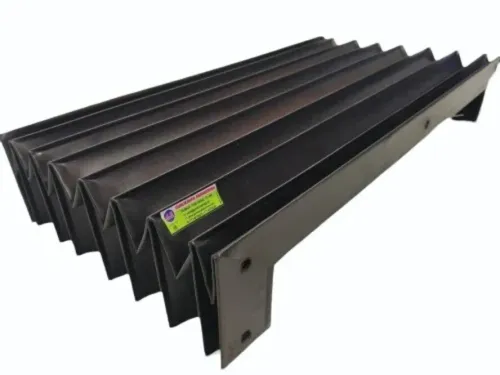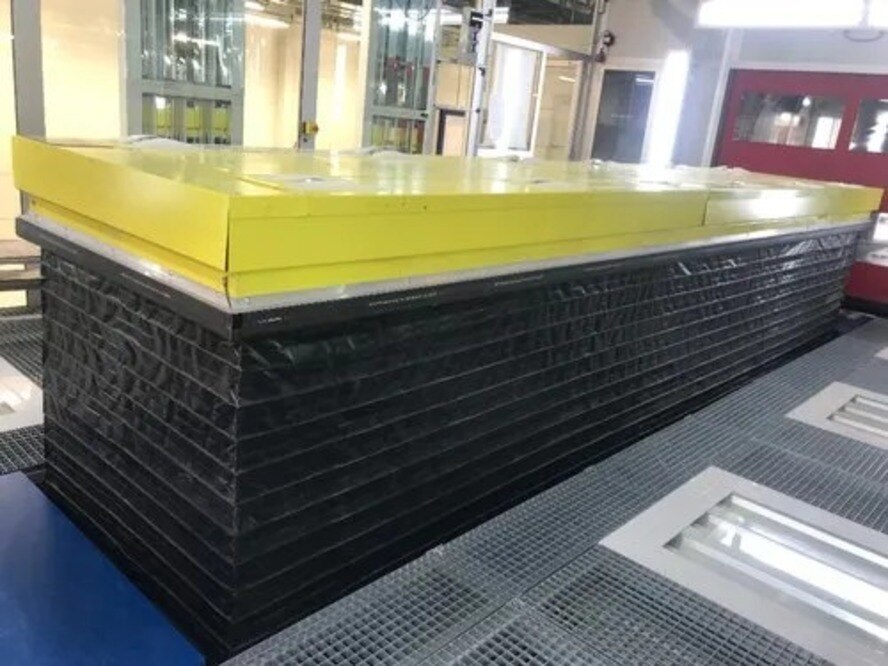
A bellow cover can look correctly fitted when the platform is lowered and still pull out, crease or tear halfway through the stroke. By tracing the cover through every position, identifying the failure point and measuring the actual attachment geometry, you can separate an installation fault from a movement, contamination or material-compatibility problem.
Key takeaways
- Check compression, folding, lateral movement, and mounting tension through the full stroke.
- Inspect corners, seams, guides, anchors, and folds for the first failure point.
- Measure closed length, open length, width, height, stroke, and mounting locations.
- Use dust, heat, moisture, and corrosion evidence to confirm the repair.
What makes a scissor lift bellow cover pull loose during the stroke?
The answer to why scissor lift bellow covers for pull loose in Gurgaon is usually movement, not weak fabric. A bellow is not load-bearing; it must absorb compression, folding, lateral displacement and changing angles without restraining the lift.
The common failure is geometric interference at one point in the stroke. Check for contact between the fold and:
- A scissor arm or frame member
- A hose or cable carrier
- A guard, clamp or fastener
That contact converts motion into tensile load, so the cover can pull from its anchors before scissor lift bellow cover tearing becomes visible. Incorrect anchor spacing, insufficient attachment overlap and excessive compression create the same result.
A design based only on vertical stroke misses the complete minimum and maximum attachment coordinates. Load changes, uneven loading, side thrust, a bent arm or frame misalignment can shift those coordinates and make an acceptable cover pull loose during service.
Lowering the lifting speed only hides the symptom by reducing impact and acceleration. It does not remove the interference or restore missing clearance.
Provide reserve at both end positions: the cover must not become fully stretched before the lift reaches its limit, and it must not pack so tightly that folds, seams or mounting points are crushed. Recheck the geometry through the entire stroke, not only with the platform stationary.
Where has the scissor lift bellow cover failed?
The damage location usually identifies the failed load path, not just the damaged material. Use this procedure to diagnose scissor lift bellow cover failure before repairing it.
1. Inspect the frame or flange perimeter. Fabric pulling out indicates inadequate clamping width, too few fasteners, fasteners too close to the edge, missing backing strips, or attachment to a flexible guard. Check for local curvature that prevents even clamping.
2. Examine any hook-and-loop closure. A loose closure points to poor overlap, dust or oil contamination, or insufficient engagement length. Clean the mating surfaces and measure the overlap before replacing the closure.
3. Follow every stitched seam, especially at fold roots and fixed creases. An opening seam indicates concentrated fold stress, a sharp crease, or thread and fabric construction that cannot tolerate repeated movement.
4. Check the cylinder-side attachment and its adjacent folds. Separation there points to changing alignment, inadequate overlap, or tension transferred from the moving mechanism into the cover.
5. Photograph and mark creases, pinched folds, abrasion lines, corner damage, contact marks, fold-root tears and loose anchors before removing anything. Note whether the defect appears at one lift position or under load.
Reinforcing only the visible tear can shift force into the next seam or anchor. Correct the attachment path, clearance or movement that created the load.
How should you inspect the cover through the complete lift cycle?
A fault that appears only while the platform moves requires a full-stroke inspection, not a stationary fit check. Inspect the cover lowered, at mid-stroke and fully raised, then cycle the lift slowly while watching both sides, every corner and each attachment rail.
1. At each position, look for snagging, bunching, twisting, rubbing, stretched folds, trapped material and tension where the cover attaches. Record any contact with a scissor arm, frame member, guard, hose, cable carrier, clamp or fastener.
2. Confirm that the cover reaches full extension before the mechanism reaches its end position. At full compression, check that it is not tightly packed, crushed or forced against adjacent steelwork. A taut end position leaves no reserve for misalignment or debris and can trigger scissor lift bellow cover tearing.
3. Draw a witness line across the fabric and its mounting rail. After another slow cycle, a broken line shows fabric sliding in the clamp; a shifted rail mark points to clamp movement or frame movement.
4. Correct installation faults before testing again: fixing at the wrong lift height, mounting one side out of square, trapping the bellows in the linkage, insufficient attachment engagement or loose fasteners. Do not cure pull-out by reducing speed.
5. Watch hoses and cable carriers during acceleration, deceleration and the complete stroke. A hose bow, carrier twist or sudden catch can impose a shock load that causes the cover to pull loose. Repeat cycling under normal and uneven platform loading.
What measurements are needed before replacing the cover?
Specify the replacement from the mechanism’s full geometry, not from the platform’s vertical travel. A scissor lift bellow cover failure can recur when changing horizontal displacement, arm angle or attachment spacing forces the cover sideways.
Record these measurements at lowered, mid-stroke and raised positions:
- Cylinder or guideway diameter; compressed length; extended length; and working stroke.
- Mounting-face dimensions, attachment-hole pattern, distance from each scissor arm, and required overlap at every attachment.
- Minimum and maximum attachment coordinates, fold pitch, compressed pack height, and clearance from hoses, guards, fasteners and adjacent steelwork.
Measure the platform’s vertical travel as supporting information, not as the design basis. Include the actual coordinates where the cover attaches at both ends of the cycle; otherwise a cover can reach full extension too early, pack tightly, or pull sideways near the end of travel.
| Fixing method | Check against available mounting area | Access consequence |
|---|---|---|
| Rigid clamping with backing strips | Needs a flat, wide surface and edge clearance | Strong retention, but removal takes tool access |
| Hook-and-loop attachment | Needs clean overlapping faces and protected edges | Fast service access, but contamination reduces engagement |
| Other fixing methods | Match the method to surface shape, load path and overlap | Confirm inspection and replacement access |
Give the supplier fluid names, approximate temperature, concentration, cleaning method, and indoor or outdoor duty cycle. GURUKRUPA BELLOWS PVT LTD can help assess a customised protective solution when these dimensions and conditions are supplied, rather than selecting by appearance alone.
Related products
 | Bellow Cover ₹5000 Product Details: Brand GURUKRUPA Color Black-Blue Size Customised With the support of our excellent team workers, we have been delivering the best... View product → |
 | Product Details: Brand GURUKRUPA Color Black-Blue Size Customised With support of our excellent team workers, we have been delivering the best... View product → |
How do Gurgaon site conditions accelerate damage and confirm the repair?
Treat scissor lift bellow cover damage in gurgaon as an environmental clue, not proof that the material is at fault. Construction dust and abrasive metal particles can enter folds and grind the fabric on every cycle, while monsoon moisture remains trapped in compressed material and outdoor sunlight degrades some coatings and synthetic fabrics.
1. Inspect and clean the folds on a defined schedule. Dry trapped moisture completely, then check for oil, coolant, hydraulic fluid, cleaning chemicals and welding spatter. A repeated abrasion line or debris-filled fold points to contamination; damage at one travel point, with clean surrounding fabric, points to mechanical interference.
2. Match the construction to the named fluids, approximate temperatures, local radiant heat and hot particles. Do not rely on a generic “oil-resistant” label: incompatible chemicals can weaken coatings or elastomers, and welding spatter can burn holes.
3. After repair, confirm clearance from steelwork and linkage, attachment overlap, fastener tightness and reserve at both end positions. Check the cover at lowered, mid-stroke and raised positions; it must not become taut, trapped or fully packed before the mechanism reaches its limit.
4. Observe several slow full strokes, then cycle under normal and uneven loads. If the cover pulls loose again only under load, correct the attachment path, clearance or stroke rather than merely reducing speed.
Treat the cover as a contamination and access barrier, not structural guarding or the personnel-protection system. Remove the lift from service when damage affects safe movement.
Frequently asked questions
What makes a scissor lift bellow cover pull loose during the stroke?
Pull-loose failures result from incorrect compression, folding, lateral displacement, changing angles, excessive tension, or mounting points that restrain the lift. A bellow cover is protective, not load-bearing.
Where does a scissor lift bellow cover usually fail?
Inspect the first damaged corner, seam, fold, guide, anchor, and mounting edge. The failure location shows whether movement, abrasion, heat, contamination, or incorrect tension started the damage.
How should you inspect a scissor lift bellow cover through the complete lift cycle?
Watch the cover while the lift moves from fully closed to fully open and back. Look for bunching, stretching, twisting, rubbing, trapped folds, anchor movement, and contact with the scissor arms.
What measurements are needed before replacing the cover?
Record the closed length, open length, working stroke, cover width and height, mounting-hole locations, attachment method, fold pitch, clearance, and the lift's travel path.
How do Gurgaon site conditions accelerate scissor lift bellow cover damage?
Construction dust, abrasive particles, heat, moisture, monsoon water, oil, and corrosion can stiffen fabric, clog folds, attack seams, and increase rubbing. Match the damage pattern with site exposure before approving the repair.