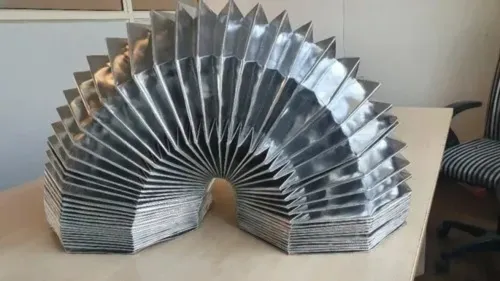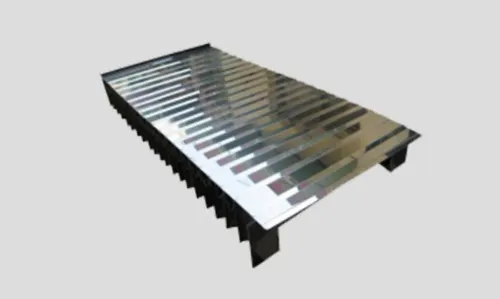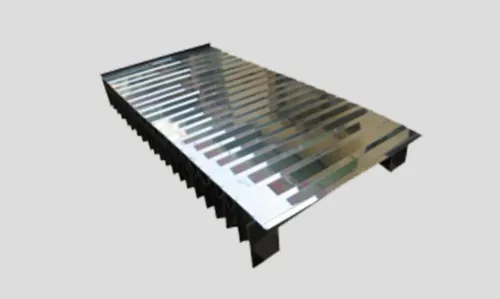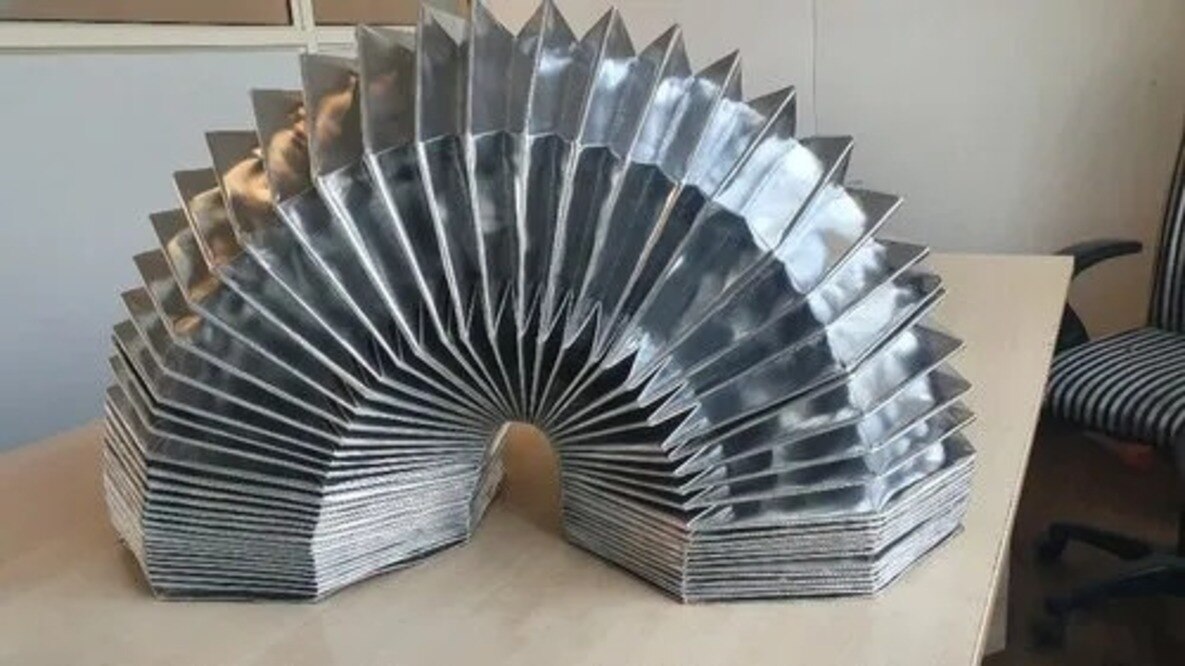
A cover that looks fireproof on a quotation or sample board may only be flame-retardant, while a standard PU-coated or PVC-coated textile may fail when exposed to sparks, radiant heat, or hot swarf. You will be able to separate those claims, match the construction to the hazard, and request evidence that makes fireproof machine bellows supplier quotations in Hyderabad genuinely comparable.
Key takeaways
- Separate flame, heat, spark, and molten-metal protection claims.
- Match fabric, coating, seams, and movement design to the actual exposure.
- Ask for temperature limits, test reports, and failure conditions.
- Compare Hyderabad quotations by construction details, not cover price alone.
Fireproof, flame-retardant, heat-resistant and spark-resistant are different claims
“Fireproof” is not a complete technical classification. It is a marketing term unless the supplier identifies whether the bellow fabric resists ignition, self-extinguishes, tolerates heat continuously, or survives molten-metal splash.
| Claim | What it means | What it does not prove |
|---|---|---|
| Flame-retardant | Slows ignition or flame spread, or self-extinguishes after the flame is removed | It may still shrink, crack, lose strength, or burn through under sustained radiant heat |
| Heat-resistant | Retains defined performance at a stated temperature for a stated duration | It does not automatically resist direct flame, sparks, or hot chips |
| Spark-resistant | Resists brief sparks or small hot particles reaching the protected component | It may fail under repeated hot-chip impact, sharp swarf, or molten metal |
| Fireproof | A broad label requiring a named test and exposure condition | It is not proof of permanent immunity to fire |
For fireproof fabric bellow covers versus standard fabric covers in Hyderabad, ask for the fabric grade, coating, seam construction, test method, temperature, exposure time, and batch certificate. A polyester, PU-coated, PVC-coated, or ordinary textile cover selected for coolant and dust can soften, embrittle, shrink, or delaminate before its base fabric visibly burns.
Check the complete bellow in compressed and extended positions. Inspect folds, seams, edges, coating adhesion, and cracking, but do not treat appearance as evidence of flame performance. Also request abrasion, tear, puncture, hot-chip, and molten-splash results because a flame-tested fabric can still be cut or punctured by swarf.
How the construction changes performance against heat and chemicals
A standard PU- or PVC-coated cover protects against coolant, dust, chips and abrasion, not sustained flame or radiant heat. Its coating can soften, shrink, embrittle or separate from the textile before the base fabric visibly burns. That damage opens gaps at the folds and exposes the guideway.
| Construction | Heat and fire behaviour | Chemical and service-life implications |
|---|---|---|
| PU-coated fabric | Flexible and abrasion-resistant, but coating performance falls quickly under direct flame, hot chips or high radiant heat | Suitable for many coolants and oils; cracking or delamination ends service life |
| PVC-coated fabric | Forms a useful liquid and debris barrier, but softens at elevated heat and can harden after thermal exposure | Check compatibility with coolant, cutting oil and cleaning chemicals; repeated heating accelerates embrittlement |
| Ordinary textile | Provides little protection against sparks, flame or liquid unless treated and coated | Fibres can char, shrink or absorb chemicals; seams become weak points |
| Silicone-, PTFE-, aramid- or silica-based multilayer fabric | Uses heat-resistant reinforcement, selected coatings, barriers and thread to resist a defined exposure | Chemical resistance varies by coating; seam, adhesive, backing and fold flexing determine actual life |
The word fireproof does not prove that the complete bellow will survive. A fireproof fabric bellow cover in Hyderabad should be specified with heat-resistant thread, compatible seam construction, sealed or protected edges, and a coating matched to coolant and oil chemistry.
Check compressed and extended dimensions, fold interference, cracked coatings, seam condition, fabric batch and test certificate. Visual inspection alone cannot establish flame or heat performance.
Choose fabric bellow cover heat protection by the actual exposure
Continuous heat needs a construction rated for the exposure duration, not merely a fibre with a high melting point. Use the following selection logic for fabric bellow cover heat protection:
| Construction | Best suited exposure | Important limitation |
|---|---|---|
| Silicone-coated glass fabric | Continuous heat, welding sparks and intermittent hot chips | Coating can crack, abrade or puncture under sharp, repeated swarf impact |
| PTFE-coated glass fabric | Continuous heat with chemical contamination or low-friction folding | PTFE surface performance does not prove resistance to direct flame or molten splash |
| Aramid fabric, often multilayered | Flame contact, abrasion and repeated mechanical movement | It still needs a suitable outer layer against radiant heat and molten metal |
| Silica fabric or silica-based multilayer | Intense radiant heat, furnace surroundings and direct flame | It can become brittle; protect folds and seams from mechanical damage |
| Purpose-built molten-splash laminate | Molten-metal splash and short peak exposure | Demand a stated splash test, exposure time and replacement criteria |
For hot chips, choose a reinforced outer layer with documented abrasion, tear and puncture resistance. A flame-retardant textile can still burn through when a sharp chip lands repeatedly on the same fold.
Furnace radiation requires shielding, an air gap or reflective outer surface; fibre temperature alone does not describe the heat reaching the bellows. Specify continuous temperature, peak temperature, exposure duration and heat mode in the drawing. ISO 15025 or ISO 6941 evidence describes flame response, not survival against chips, radiant heat or molten metal.
Inspect seams, thread, adhesive, coating adhesion and fold movement as part of the acceptance check.
Temperature ratings, test evidence and the failure points buyers miss
A quoted temperature limit is meaningful only when it names the exposure time, heat source and complete construction. Ask whether the figure covers continuous operation, a short peak, direct contact, radiant heat, flame or hot-chip impact. A glass or silica reinforcement rating does not validate the coating, thread, adhesive, seam or backing.
Request evidence that identifies:
- The exact fabric, coating and layer arrangement
- The test temperature, exposure duration and failure criterion
- Flame-response results to ISO 15025 or flame-spread results to ISO 6941, if those tests are claimed
- Abrasion, tear, puncture, hot-chip or molten-splash evidence for the actual hazard
- Seam type, thread material, overlap, edge treatment and adhesive temperature rating
ISO 15025 uses a small ignition flame on textile specimens, while ISO 6941 examines flame spread on vertically oriented material. Passing either test does not prove survival against welding spatter, continuous radiant heat or moving-machine abrasion.
Predict service life from the weakest part, not the headline fibre temperature. Repeated folding can fatigue stiff glass or silica fabric, fray edges and crack coatings; insulation can enlarge the folded pack and required bend radius. Ordinary polyester thread can fail before heat-resistant cloth.
Run a representative movement and heat trial, then inspect for shrinkage, delamination, seam opening, pinholes and loss of flexibility. A cover that survives a static heat test can still fail during the first production cycle.
How to compare fireproof machine bellows supplier quotations in Hyderabad
Put the exposure into the RFQ, not just the words “fireproof bellow.” State:
- Normal and peak temperatures, exposure duration, heat-source distance, radiant heat, direct flame, sparks, hot chips and molten-metal splash
- Coolant, oil and chemical names, plus travel, cycle rate, compressed and extended dimensions, mounting method and guideway clearance
- Required evidence: fabric batch number, test certificate, flame-retardancy result, abrasion, tear, puncture, hot-chip or molten-splash data
Compare quotations against the same technical fields:
| Quote item | Complete quotation | Weak quotation |
|---|---|---|
| Heat claim | Continuous and peak limits with exposure time and heat mode | One maximum temperature |
| Material | Fabric, coating, seam thread and edge construction identified | “Fireproof fabric” only |
| Movement | Fold geometry, travel, cycle rate and interference clearance stated | Size quoted without motion data |
| Acceptance | Dimensional, seam, coating and batch checks agreed | Visual inspection only |
A flame-retardant cover can still shrink, crack or burn through under radiant heat. Standard polyester, PU-coated or PVC-coated covers may soften or embrittle before the textile visibly burns, while hot chips can puncture fabric that passes a flame test.
A specialist supplier is useful when the cover faces mixed hazards or complex movement. GURUKRUPA BELLOWS PVT LTD can be assessed on its ability to convert machine drawings and exposure details into a tested construction rather than substituting a generic fabric cover. Ask for a sample or inspection plan before approving production.
Related products
 | Bellow Cover We are considered a well-known name in the business that manufactures and supplies Bellow Cover. View product → |
 | Soft Material Bellow Product Details: Brand GURUKRUPA Specifications:- Function of accordion machine shield: water-proof,oil-proof, anti-corrosion, fire-proof... View product → |
Frequently asked questions
Are fireproof, flame-retardant, heat-resistant, and spark-resistant fabric covers the same?
No. Flame-retardant fabric addresses ignition and flame spread; heat resistance addresses operating temperature; spark resistance addresses brief hot particles; molten-metal splash protection requires separate evidence.
How should you choose fabric bellow cover heat protection?
Identify the exposure first: continuous temperature, peak temperature, sparks, flame, molten splash, oil, coolant, chemicals, abrasion, and movement speed. Then match the fabric, coating, seams, and construction to those conditions.
What temperature evidence should a supplier provide?
Request the fabric and coating temperature range, test method, exposure duration, test report, and the conditions that cause cracking, shrinkage, delamination, ignition, or loss of flexibility.
How can you compare fireproof machine bellows supplier quotations in Hyderabad?
Compare dimensions, travel, compressed length, mounting method, fabric layers, coatings, guide systems, seam construction, temperature evidence, chemical compatibility, replacement terms, and delivery scope.
Related product
 | Product Details: Brand GURUKRUPA Color BLACK & OTHER Size ALL On offer from us is available Thermally Bonded Bellows for the clients. View product → |