Choosing between overlapping stainless-steel lamellas, articulated metal flaps and flexible fabric bellows depends on chip temperature, movement, geometry and the cost of added mass. By the end, you will know how to read the construction drawing, compare service limits and request dimensions that prevent a cover from failing through interference, over-compression or chemical attack.
Key takeaways
- Match lamella spacing, compressed length and travel to the machine drawing.
- Choose metal flaps for hot chips, sparks and abrasive debris.
- Choose flexible bellows when low weight, tight folds and flexibility matter.
- Require material, travel, mounting and inspection details in the quotation.
How SS lamella and metal flap constructions differ from flexible bellows
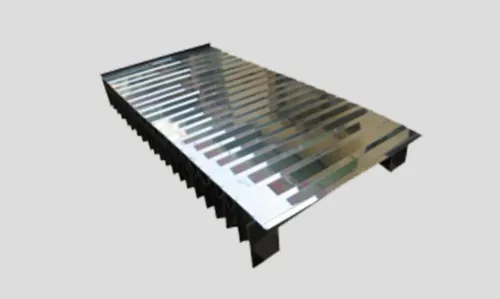
The comparison “SS lamella bellow covers metal flap bellow versus flexible bellows” is a construction question, not a naming exercise. An SS lamella bellow cover usually combines a fabric or coated-fabric bellows body with overlapping stainless-steel strips.
A metal flap bellow may instead use hinged steel plates or an apron-like assembly that articulates as separate sections.
| Construction | What you are actually comparing | How it moves |
|---|---|---|
| Lamella cover | 304 or 316 stainless strips overlap across flexible folds; strips attach to carriers by rivets, screws, clips or bonded retainers | The underlying bellows bends while the lamellas slide over one another |
| Articulated metal flap | Steel slats or plates connect through hinges, pivots or flexible links, forming an apron | The assembly folds at joints rather than flexing as one fabric body |
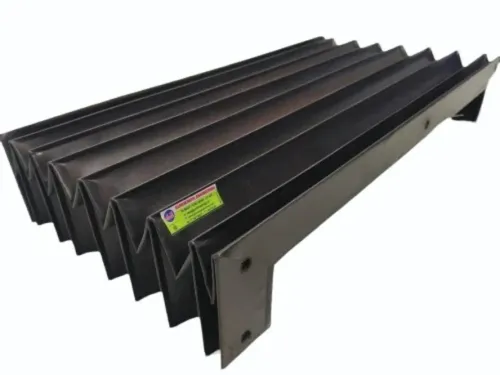
| Flexible bellows | Fabric, rubber, elastomer or coated fabric forms pleats, with stitched, welded or bonded seams | Pleats compress and extend without metal impact plates |
Inspect the carrier arrangement: strips may sit on each fold, ride on side rails or attach to a continuous support. Check for an internal fabric layer, wear liner, wiper or seal between overlaps, plus the end attachment frame that fixes one end and guides the moving end.
Request a cross-section and construction drawing. Product names do not establish whether the cover bends, folds or articulates like a true flexible bellows, nor do they reveal overlap gaps, hinge clearances or frame interfaces.
Which SS lamella bellow specifications determine fit and motion?
Confirm fit from the machine drawing, not from “stainless steel cover” alone. The cover travels along the guideway as its carrier moves; overlapping lamella flaps close the gaps between folds while the bellows compresses and extends. Leave clearance from fixed and moving surfaces through the entire stroke, or the flaps will scrape, jam, or deform.
Request this specification sheet:
- Stainless-steel grade, such as 304 or 316; lamella thickness; strip width; bellows-body material; and mounting method.
- Cover height and width; extended length; compressed length; available stroke; folded height; and minimum bend radius.
- Mass per metre; permissible speed and acceleration; operating temperature; coolant and cleaning-agent compatibility; and expected chip load.
- Moving direction, attachment points, end-frame dimensions, and the complete compressed envelope.
- For vertical or inclined axes, calculated sag, support-rail spacing, guide-shoe requirements, and added load on the moving axis.
| Check | Lamella cover | Flexible bellows |
|---|---|---|
| Speed figure | Require speed and acceleration for the installed cover, including end frames, guides, and chip load | Do not accept an unloaded catalog figure for the machine axis |
| Vertical travel | Calculate sag and provide support rails or guide shoes; mass increases axis load | Check fabric sag, fold interference, and attachment stiffness |
| Clearance | Check flap overlap and carrier movement across the full stroke | Check folds, seams, and adjacent parts across the full stroke |
A quoted speed that excludes end frames, guide parts, or accumulated chips is not a permissible machine-axis speed. Misalignment or over-compression can destroy either construction.
When metal flaps outperform flexible fabric, rubber or coated-fabric bellows
Choose metal lamella or articulated metal flaps when hot chips, welding spatter, sharp swarf or severe abrasion strike the cover; choose flexible bellows when low moving mass, compact compression, tight bends, fast axis response or irregular multi-axis geometry matter more than impact resistance.
| Machine duty | Better construction | Reason |
|---|---|---|
| Dry milling | Flexible coated fabric for light chips; lamella for heavy impact | Dry chips demand abrasion resistance, not automatic waterproofing |
| Turning stringy chips | Metal lamella or flap | Long swarf can snag, cut folds and pull seams |
| Grinding dust | Sealed flexible bellows or protected lamella | Fine dust needs sealed folds and controlled cleaning |
| High-pressure coolant | Lamella with sealed overlaps, or specified chemical-resistant fabric | Jet pressure exposes gaps, seams and coating weakness |
| Washdown | Construction rated for cleaner, biocide and thermal shock | Water resistance alone does not prove chemical compatibility |
A metal-flap bellow comparison in Hyderabad is meaningful only after checking chip shape and coolant exposure. Stainless steel resists impact and heat better than fabric, but it adds moving mass, noise and hinge wear; flexible bellows respond faster and weigh less, but puncture, abrasion and heat can destroy folds.
Do not select flexible bellow covers in Hyderabad by appearance. Require the fabric type, coating chemistry, seam method, adhesive, oil and coolant compatibility, operating temperature limit, and resistance to compressed-air cleaning. Ask whether the stated limit covers hot chips and intermittent thermal shock, not just ambient temperature.
Inspect the overlap, flap clearance and end attachment under full compression and extension. Choose metal protection when direct impact governs; choose flexible construction when motion performance governs. Surface appearance cannot reveal either limit.
What failure modes and lifecycle costs separate the two choices?
A flexible bellows often fails first at a fold crease, seam, or mounting transition. Chips puncture it; abrasion thins it; heat melts fabric or adhesive; repeated motion causes fatigue and sagging. Oil or coolant can permeate the material, while thermal shock breaks coatings and bonded seams.
The cost is frequent replacement, axis downtime, and possible chips reaching guideways or ballscrews.
| Failure point | Flexible bellows | Lamella or metal-flap bellows |
|---|---|---|
| Mechanical damage | Tears, punctures, abrasion, fatigue | Distorted flaps, hinge wear, added moving mass |
| Contamination | Oil or coolant permeation | Trapped chips, blocked compression, leakage between overlaps |
| Geometry | Handles tight bends and irregular paths | Performs poorly on tight bends |
| Chemical attack | Coating and fabric degradation | Chlorides, aggressive cleaners and unsuitable biocides attack grade 304, fasteners, coatings and underlying fabric |
A lamella or flap cover can cost more initially but last longer under hot chips, sharp swarf or welding spatter. Its moving mass can reduce acceleration, and hinge wear or trapped chips can increase cleaning time. Flexible covers usually cost less and improve fast-axis response, but replacement frequency rises in abrasive or high-temperature service.
Compare total cost, not invoice price:
- Cleaning labour and frequency
- Spare-cover availability and replacement time
- Installation access and downtime
- Guideway or ballscrew damage after failure
- Coolant, chloride and washdown compatibility
Stainless steel is not chemically immune. Confirm the grade, fasteners, coatings, fabric and biocide compatibility before choosing between SS lamella bellow covers metal flap bellow versus flexible bellows.
What to require in a Hyderabad quotation and installation drawing
A safe quotation starts with your machine drawing, not a catalogue name. Send the supplier the guideway dimensions, chip profile, coolant details and axis orientation, then require a signed installation drawing and a construction cross-section.
1. Show fixed and moving attachment points, travel direction, extended and compressed lengths, available stroke, cover width and height, folded height, minimum bend radius and the complete compressed envelope.
2. Mark adjacent components, service access and the replacement route. Identify end-frame fixation, support rails, guide shoes and every clearance required during full extension and compression.
3. Require calculations for clearance, sag and moving load. A vertical or inclined axis needs its own support analysis; do not accept a horizontal design simply rotated onto another axis.
4. State the SS grade, lamella thickness, body fabric, seal layers, fasteners and overlap arrangement. Confirm coolant, oil, chloride exposure, washdown chemicals and each cleaning agent are compatible with all materials.
5. Define test conditions: chip type, chip temperature, coolant pressure, cleaning method, travel cycle and accumulated load. Record permissible speed and acceleration for the complete installed assembly, including frames, guides and chips—not an unloaded catalogue cover.
6. If the cover contributes to operator guarding, assess the complete arrangement for access, openings, strength and safe distances. A machine-tool cover alone is not automatically an operator guard.
For a metal flap bellow comparison in Hyderabad, GURUKRUPA BELLOWS PVT LTD can use those drawings and the chip profile to distinguish an SS lamella construction from flexible bellow covers in Hyderabad, rather than treating both as interchangeable catalogue labels.
Related product
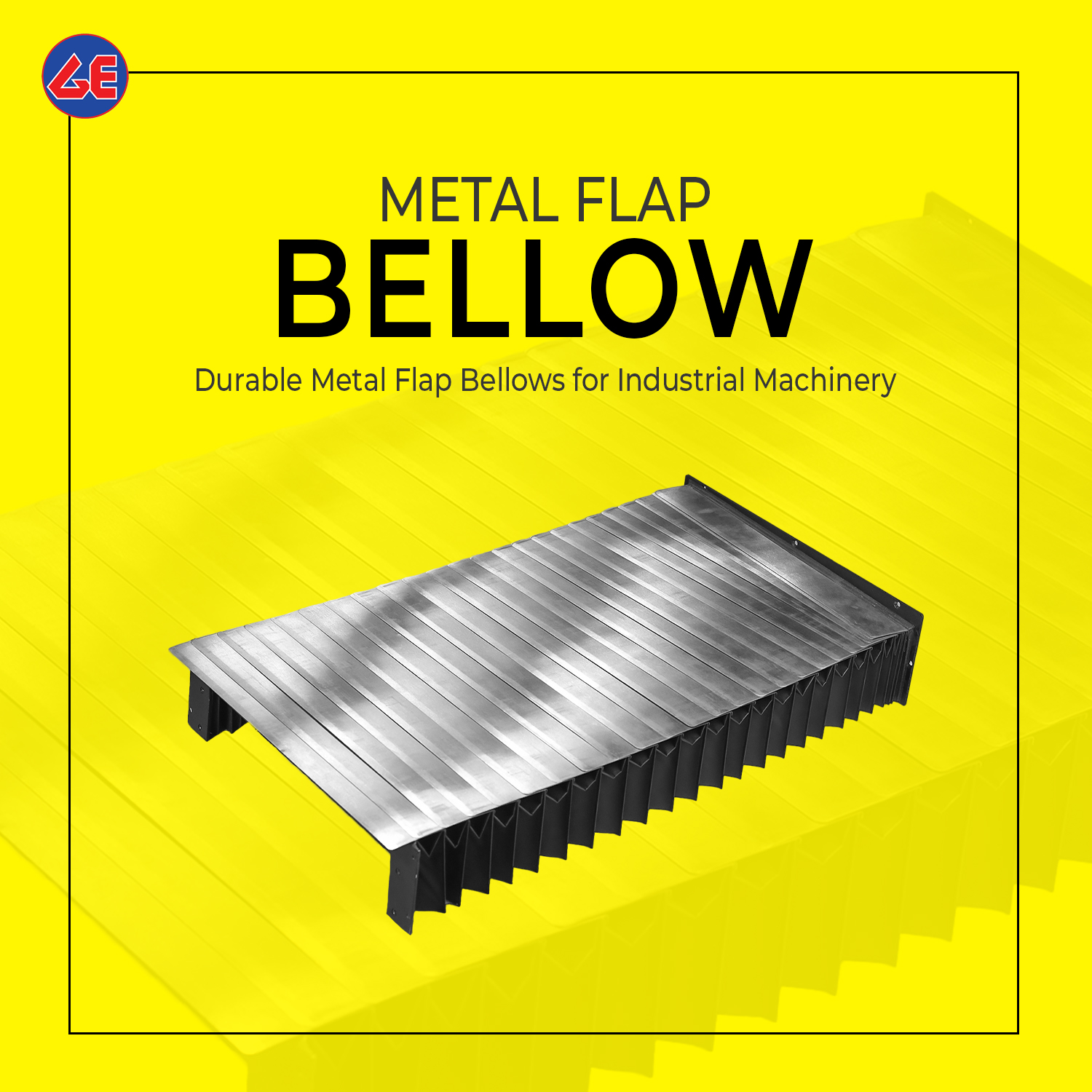 | Flexible Bellows ₹5000 Heavy-Duty Machine Protection At Gurukrupa Bellows Pvt. Ltd., we manufacture high-quality Metal Flap Bellows designed to protect machine guideways,... View product → |
Frequently asked questions
How do SS lamella and metal flap bellows differ from flexible bellows?
SS lamella and metal flap bellows use overlapping stainless-steel strips over a bellows body, while flexible bellows rely on fabric, rubber or coated fabric folds for protection.
Which SS lamella bellow specifications determine fit and motion?
Check installed and compressed lengths, maximum travel, folded height, width, strip thickness, lamella overlap, mounting dimensions, guide arrangement and movement speed.
When do metal flaps outperform flexible fabric or rubber bellows?
Metal flaps are the stronger choice when the cover faces hot chips, sparks, sharp swarf or repeated abrasive contact. Flexible materials suit lighter debris and applications that need low mass or compact folding.
What failures and lifecycle costs should you compare?
Compare torn folds, delamination, seized or bent lamella strips, loose fasteners, contamination ingress, cleaning time, replacement intervals and downtime rather than purchase price alone.
What should a Hyderabad quotation and installation drawing include?
Request travel direction, open and closed dimensions, mounting-hole pattern, material grades, temperature and speed limits, guide details, drain or cleaning provisions, inspection points and installation clearances.