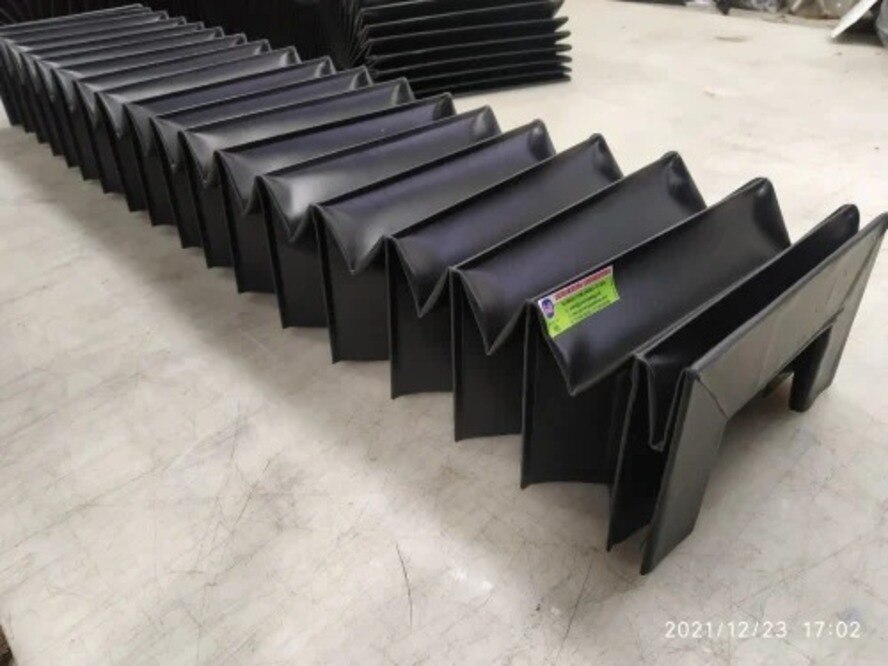
A laser machine bellows cover can protect guideways, linear axes, cables, and hoses from dust, hot spatter, and process residue, but it is not automatically a laser-radiation barrier or the best answer for every machine layout. By the end, you will be able to match the cover to the hazard, compare alternatives, prepare the measurements a supplier needs, and set a practical acceptance test.
Key takeaways
- Treat bellows as debris shields, not laser-radiation barriers.
- Match fabric, coatings, and construction to heat, sparks, coolant, and travel speed.
- Measure travel, compressed length, extension, mounting points, and clearances before requesting a quote.
- Require drawings, materials, test details, and replacement terms in the quotation.
Start with the component and hazard you need to protect
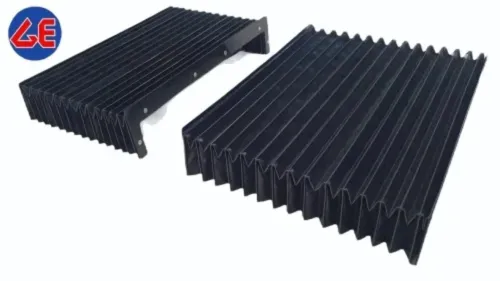
A bellows is appropriate when it shields guideways, linear axes, screws, cables, or hoses from dust, metal fines, coolant, oil, and abrasive debris while the axis moves. It is not a laser-radiation barrier. Your machine still needs a classified enclosure, beam containment, interlocks, and an emergency-stop system.
For laser machine bellow covers for precision manufacturers in Indore, use this suitability checklist:
- Identify the exposure: guideway contamination is a bellows problem; direct or reflected beam energy is an enclosure problem.
- Give the designer the laser source, wavelength, maximum optical power, beam path, and exposure time. A fibre laser near 1 µm and a CO₂ laser at 10.6 µm do not produce identical material behaviour.
- Reject ordinary coated fabric where the cover can receive direct radiation, hot spatter, flame, or concentrated radiant heat. Ask for test evidence for the actual wavelength and power before accepting “laser resistant.”
- Check the full stroke for rubbing, fold interference, abnormal drive force, restricted lubrication access, and contact with the laser head or workpiece.
- Compare the hazard with the alternatives: telescopic steel covers resist hot chips and impact but need space and add moving mass; fixed sheet-metal guarding contains radiation and fumes; cable carriers guide hoses and cables but do not seal guideways.
Choose bellows for low-mass, space-limited protection around moving components. Choose another system when beam exposure, severe impact, or operator access control is the primary risk. A nominally sealed cover that drags can reduce positioning repeatability.
Match the cover to laser energy, debris, heat, and motion
A cover protecting guideways from dust is specified differently from one exposed to direct or reflected laser energy. Tell the supplier whether the source is a fibre laser near 1 µm or a CO₂ laser at 10.6 µm, plus maximum optical power, beam angle, exposure time, and distance.
A conventional coated textile can burn, melt, perforate, or ignite; direct beam exposure may require metal lamellae, sacrificial shielding, or a separate beam enclosure.
| Condition | Material and construction requirement | Sealing or design consequence |
|---|---|---|
| Laser beam or reflection | Wavelength-specific evidence, metallic shielding, or separated containment | Do not accept “laser resistant” without test data for your wavelength and power |
| Fine dust, hot spatter, and metal fines | Wipeable outer layer, sealed folds, abrasion-resistant support | Prevent debris from lodging in folds and reaching guideways |
| Radiant heat, flame, or hot workpieces | Defined temperature limit and heat-resistant laminate or metal elements | Keep heat sources outside the cover’s stated exposure range |
| Coolant, oil, humidity, or cleaning chemicals | Chemical-compatible fabric, coating, thread, and adhesive | Specify cleaning method and inspect seams for swelling or delamination |
| Fast travel, high acceleration, long stroke, or frequent cycling | Reinforced folds, correct internal support, and tested motion rating | Confirm compressed length, bend radius, speed, acceleration, and duty cycle |
Ask a laser machine bellows supplier in Indore for the outer material, coating, seam and thread construction, metallic parts, temperature limits, chemical compatibility, and replacement lead time. Require a site measurement, installed and compressed-position drawing, sample or material data sheet, spare-cover price, and written warranty boundary.
A bellows never replaces the classified laser enclosure, interlocks, beam containment, or emergency stop. If it receives direct radiation, treat that as a safety-engineering issue, not merely a fabric-selection issue.
Compare bellows with steel covers, enclosures, and cable carriers
Choose protection by what reaches the component, not by the cover’s name. Bellows suit guideways and linear axes where installation space is tight, geometry is irregular, and low moving mass matters. They are not beam containment and must not receive direct or reflected laser energy without evidence for the actual wavelength and power.
| Option | Main protection | Space and motion fit |
|---|---|---|
| Bellows | Dust, fines, coolant, oil, and light thermal exposure | Compact, flexible, and suitable for irregular axes |
| Telescopic steel cover | Hot chips, impact, abrasive debris, and heavier contamination | Needs retraction space and adds moving mass |
| Fixed enclosure | Beam containment, operator access control, fumes, and general guarding | Uses stationary space; does not follow an exposed moving axis |
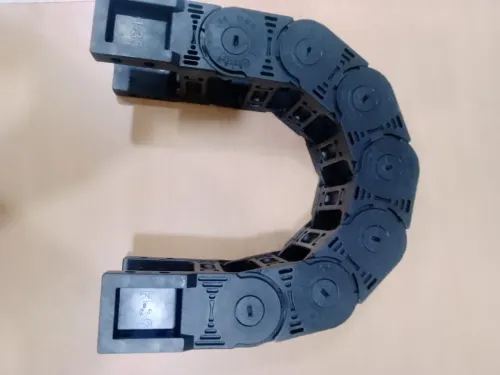
| Cable carrier | Organized routing and bend control for cables and hoses | Follows motion but needs bend radius, travel clearance, and support |
For laser cutting machine protection covers in Indore, compare the complete arrangement rather than choosing a bellows because it is easier to quote. A telescopic steel cover is the stronger choice where hot metal fines strike the guideway; a bellows wins where clearance is limited and impact is low.
A cable carrier protects routing, not the cables from radiant heat, sparks, or fumes. Add shielding or a separated enclosure when those hazards exist. Fiber lasers near 1 µm and CO₂ lasers near 10.6 µm require different material evidence, so demand wavelength-specific test data before approving any “laser-resistant” cover.
Measure the machine before requesting a quotation
Measure the axis in both its home and fully extended positions; a bellows that matches only the nominal stroke can still bottom out, fold incorrectly, or pull against its mount. Record the machine’s actual geometry, not dimensions copied from a catalogue.
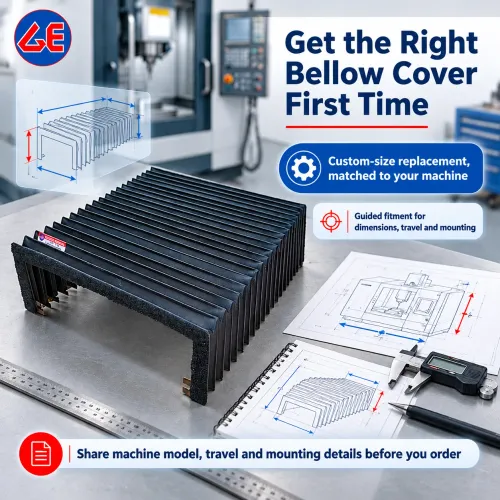
1. Measure protected length, usable stroke, folded length, expanded length, cover width, height, and each mounting flange’s bolt-hole pattern. Include the distance from the guideway or screw to the cover’s mounting surfaces.
2. Record the smallest permitted fold height and the manufacturer’s required bend radius. Check whether the cover must clear a moving carriage, laser head, hose, cable carrier, chip tray, or enclosure wall at every position.
3. Draw the installed and compressed positions, showing fixed and moving mounting points. Mark lubrication ports, inspection panels, extraction gaps, coolant lines, and access needed for maintenance.
4. Run the axis through its complete stroke after a temporary mock-up is fitted. Look for rubbing, trapped folds, abnormal drive force, loss of access, and contact with hot or sharp surfaces.
5. Give the supplier stroke speed, acceleration, cycle frequency, orientation, debris type, temperature, and cleaning method. Request a site measurement, dimensional drawing, material data sheet, replacement lead time, spare-cover price, and written warranty boundary.
Local search results for “laser machine bellow covers in indore” do not prove dimensional competence. Choose a supplier that confirms fit through inspection and installation, then checks repeatable movement rather than accepting a nominally sealed cover that increases axis load.
Turn a supplier quotation into a production-ready decision
Approve the cover only after the quotation becomes a controlled specification, not a line reading “laser resistant.” Compare each laser machine bellows supplier in Indore against the same evidence, because local availability improves measurement and replacement speed but does not prove technical suitability.
| Supplier evidence | Accept | Reject or query |
|---|---|---|
| Site measurement | Drawing shows installed and compressed positions, stroke, clearances, and mounting points | Quote uses dimensions copied from a catalogue |
| Material and laser evidence | Material data identifies construction and test evidence for your wavelength, maximum optical power, exposure time, and angle | “Heat resistant” or “laser resistant” without test conditions |
| Service commitment | Replacement lead time, spare-cover price, installation scope, and written warranty boundary | No defined response time or exclusions |
| Design comparison | Friction, mass, bend radius, sealing, and chip resistance are stated | Price is compared without performance or maintenance impact |
For laser machine bellow covers for precision manufacturers in Indore, record whether the cover protects guideways and cables only. It must not be treated as the classified laser enclosure, beam containment, interlock, or emergency-stop system; direct or reflected beam exposure needs a separate safety assessment.
Before approval, require these acceptance checks:
- Run the axis through its full stroke and inspect rubbing, fold interference, abnormal drive force, and loss of lubrication access.
- Check dimensional repeatability and drive load against the machine’s baseline.
- Confirm the cover survives the actual debris, coolant, oil, heat, flame, speed, acceleration, and duty cycle.
- Obtain a signed drawing and revision-controlled material specification.
GURUKRUPA BELLOWS PVT LTD is one local option to assess through these same documented checks, rather than through location or product naming alone.
Related products
 | Laser Machine Bellows ₹1000 We are committed to manufacture, export, and supply a qualitative range of Laser Machine Bellows for our esteemed clients. View product → |
 | Laser Cutting Machine Bellows ₹1000 We offer Laser Cutting Machine Bellows made specifically for your laser machine. View product → |
Frequently asked questions
Are machine bellows a laser-radiation safety barrier?
No. Bellows protect guideways, screws, cables, and hoses from contamination and wear. Use a classified enclosure, beam containment, interlocks, and an emergency-stop system for laser radiation.
When should you choose bellows instead of steel covers?
Choose bellows when flexible protection must follow moving axes around limited space. Compare steel covers when the machine produces heavy chips, impact loads, or severe abrasion.
What measurements should you give a bellows supplier?
Provide axis travel, closed and extended lengths, width, height, mounting-hole pattern, fold size, maximum speed, acceleration, clearances, and nearby heat or debris sources.
What should a laser machine bellows quotation include?
Request a dimensioned drawing, fabric and coating specification, temperature limits, mounting details, estimated service conditions, inspection requirements, delivery terms, and replacement-part information.