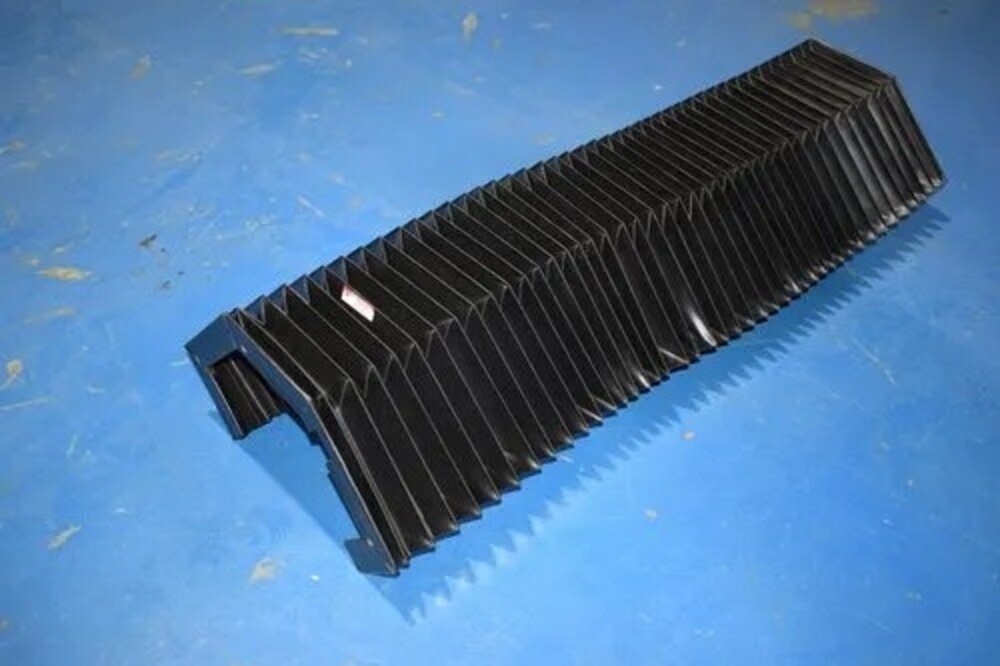
Distributors need to match a machine’s travel, contamination, installation space, and maintenance demands before treating one protective-cover design as interchangeable with another. By the end, you will be able to assess the motion, dimensions, construction, operating limits, supplier drawing, and service terms that determine whether an accordion bellow is the right resale recommendation.
Key takeaways
- Provide travel, compressed length, extended length, and mounting dimensions.
- Match fabric and coating to coolant, chips, heat, sparks, and corrosion.
- Check the drawing for fold direction, mounting points, clearances, and travel limits.
- Compare service life, replacement access, and failure safeguards—not only unit price.
Why an accordion bellow fits some machines better than other covers
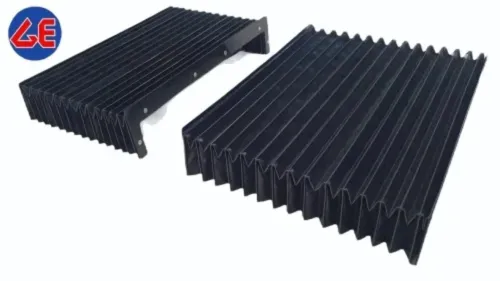
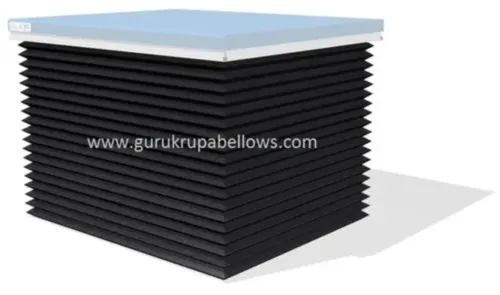
Repeated linear travel is the main reason to choose an accordion bellow. Its folds expand and compress with each stroke, making it suitable for horizontal or vertical guideways where installation space is limited.
It can also be shaped around irregular retrofit geometries and attached to existing surfaces, unlike a telescopic steel cover that usually needs rigid guides, accurate mounting faces, and room for nested sections.
Use this decision checklist:
- Choose an accordion bellow for changing cross-sections, uneven surfaces, short folded height, or a retrofit where steel-cover guides cannot fit.
- Choose telescopic steel when sharp chips, heavy impact, or hot debris demand rigid protection and the machine provides suitable mounting and guide arrangements.
- Choose a round bellow for cylindrical rods or shafts; it is a poor match for a broad rectangular machine way.
- Choose an apron cover for long, relatively open travel where slats can span the way; it may not seal irregular edges as closely.
- Treat a fabric-only guard as a light barrier, not automatically as a sealed way cover. Internal supports, wipers, or chip deflectors may be needed.
- Never leave a guideway exposed: abrasive dust wears sliding surfaces, coolant contaminates lubrication, chips strike precision parts, and wear accelerates.
A machine-way protection bellow is not an air-delivery bellows product. The former shields motion components; the latter moves pressurized air. For accordion bellow covers for distributors in Indore, compare construction and fit—not length alone.
How to size an accordion bellow before requesting a quotation
Do not quote from nominal width and travel alone. A cover with the correct stroke can still collide with the machine or leave the guideway exposed when its folded package is wrong.
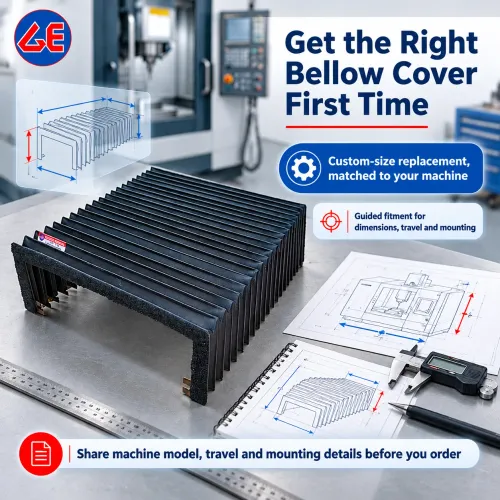
1. Mark fixed reference points on the machine: the stationary mounting face, moving slide face, and both stroke limits. Record closed length, extended length, required usable stroke, travel direction, and the total space available at each end.
2. Measure the opening in both directions. Record cross-section width and height, compressed height, fold pitch, number of folds, and the minimum bend or fold radius allowed by the installation. Fold pitch and fold count determine the package length; they are not interchangeable with travel.
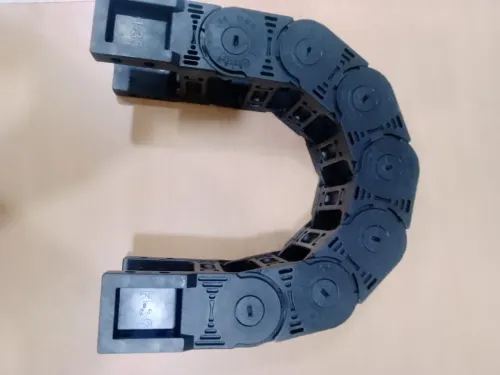
3. Check the complete moving envelope. At full compression and extension, the folded bellows must clear the slide, tooling, adjacent guards, cable carriers, chip paths, and maintenance access. Include coolant flow and chip clearance, not just the static gap.
4. Specify support conditions. Note whether the cover is horizontal or vertical, where horizontal sag could cause rubbing, the required vertical support, and any guide rails, guide strips, frames, or moving supports. State unsupported spans and acceleration if the cover changes shape during motion.
5. Show the mounting frame or flange arrangement, including flange shape, hole pattern, squareness, fixed and moving ends, and sealing faces. Add photographs from both ends and from the side with the direction of motion marked.
Send the sketch, dimensions, photographs, and operating conditions to an accordion bellow cover supplier in Indore. This lets the supplier separate usable travel from total cover length and identify a workable construction before preparing the quotation.
How material, construction, and operating limits change the choice
Sewn fabric suits light dust and flexible, low-load travel; coated fabric adds fluid and abrasion resistance but can fail at cuts. Leather tolerates rubbing and heat better than many fabrics, while elastomer handles selected oils and coolants only when its compound matches the fluid.
| Construction | Strength | Main limitation |
|---|---|---|
| Sewn fabric | Flexible, repairable | Seam damage, leakage, weak spark resistance |
| Coated fabric | Fluid barrier, economical | Edge wicking, coating cuts, hydrolysis |
| Leather | Tough rubbing surface | Variable chemical and outdoor resistance |
| Elastomer | Sealed, flexible | Compound-specific swelling and ageing |
| Bonded or laminated | Layered barrier performance | Delamination and adhesive softening |
| Heat-welded | Sealed joints, repeatable production | Weld damage from heat, sharp chips, or poor settings |
| Internal slats or frames | Shape retention on large or vertical covers | Added mass, folded length, and chip traps |
Ask about the actual coolant concentration, cutting oil, cleaning chemicals, abrasive dust, long stringy chips, welding sparks, outdoor exposure, corrosive chemicals, and hot chips. Request test data for those conditions, not a generic temperature claim; check hydrolysis, delamination, edge wicking, adhesive softening, and seam damage.
For accordion bellows wholesale in Indore, require the complete assembly’s allowable temperature range, speed, acceleration, cycle rate, chip-load pressure, fold radius, and expected cycle life. A material rating alone does not validate the finished cover.
Use slats, guide strips, internal frames, wipers, scrapers, or chip deflectors when sag, flutter, scraping, or chip impact threatens shape retention. Reject them when added mass slows the axis, folded length consumes clearance, or trapped chips create more damage than the unsupported cover.
What distributors should verify in the drawing and supply quotation
A replacement is not interchangeable because its width and travel match. Review the machine drawing against the quotation before accepting the order, then reject any proposal that leaves the compressed package or maintenance access undefined.
1. Match the mounting-hole pattern, flange shape and squareness, fixed end, moving end, guide arrangement, and any mounting frame. A misaligned flange can twist folds and start tearing at the attachment.
2. Confirm fold pitch, number of folds, closed length, extended length, cross-section width and height, unsupported spans, and travel direction. These dimensions establish usable stroke; “price per length” does not.
3. Require the drawing to show the compressed package and full-stroke envelope. Check clearance from tooling, slide bodies, guards, cable carriers, adjacent covers, chip paths, and every interference point.
4. Mark access for maintenance personnel, including whether the cover can be removed without dismantling the slide or major guarding. Ask the quotation to state the material system, fold pitch, mounting pattern, guide details, replacement lead time, and operating conditions.
For accordion bellow covers for distributors in Indore, stocked standard cross-sections can shorten delivery. Fold pitch, mounting flanges, material systems, and guides still need an engineering route because a catalogue cross-section does not prove interchangeability.
Submit measured dimensions, photographs, motion direction, speed, acceleration, coolant, chips, temperature, and mounting orientation to GURUKRUPA BELLOWS PVT LTD when requesting a machine-specific quotation from an accordion bellow cover supplier in Indore. That gives the supplier evidence to price the complete assembly rather than a length-only guess.
Related product
 | Accordion Bellow Cover Ours is a trustworthy name in the business that brings forth Accordion Bellow Cover that is used for delivering controlled pressurized air to a... View product → |
How to control failure, safeguarding, and total replacement cost
1. Inspect the cover on delivery before installation. Check uniform folds, square and firmly attached flanges, supported corners, concealed stitching, smooth internal surfaces, adequate strain relief, and a mounting pattern that matches the drawing. Move it through the complete stroke; every fold must open and compress without binding, stretching, or contacting the slide.
2. Record the failure mechanism during service, not merely the damaged area. Fold flutter and seam fatigue indicate excessive acceleration or cycle rate; rubbing points to poor guidance; tears at mounting ends indicate inadequate strain relief. Chips trapped in folds abrade the material, while damaged or misaligned flanges allow coolant and debris to leak through.
3. Treat protection and safeguarding as separate decisions. An accordion bellow is not automatically a certified machine guard or an IP-rated enclosure. Under ISO 12100 risk-assessment principles, address access to hazardous motion, openings, ejected chips, cover retention, and any reachable moving parts.
4. Compare total cost, not price per metre. Include installation downtime, replacement frequency, guideway damage, coolant leakage, replacement-panel effort, and whether technicians can change the cover without dismantling the slide or major guarding.
Ask an accordion bellow cover supplier in Indore for the material system, fold pitch, mounting pattern, replacement lead time, and complete speed and acceleration limits before approving the quotation.
Frequently asked questions
Why does an accordion bellow fit some machines better than other covers?
Accordion bellows suit machines with repeated linear travel because their folds expand and compress along horizontal or vertical guideways while using limited installation space.
What dimensions should distributors provide before requesting a quotation?
Provide required travel, compressed and extended lengths, cover width and height, guideway geometry, mounting dimensions, clearances, and the machine’s operating orientation.
How do material and construction affect the choice of accordion bellow?
Select the fabric, coating, fold construction, reinforcement, and mounting method according to exposure to coolant, chips, heat, sparks, corrosion, speed, acceleration, and travel frequency.
What should distributors verify in a drawing and supply quotation?
Check the drawing for overall dimensions, fold direction, mounting points, travel limits, compressed height, clearances, and interface details. Confirm quantities, inspection requirements, delivery scope, and replacement parts in the quotation.
How can distributors control accordion bellow failure and replacement cost?
Prevent rubbing, overtravel, trapped chips, incorrect mounting, and unsuitable material selection. Compare protection, inspection access, expected service conditions, and replacement effort alongside the purchase price.