
A telescopic bellow cover is profitable for a reseller only when its fit, duty, service requirements, and replacement economics are predictable. By the end, you will be able to judge whether to stock complete covers, quote them as engineered items, or carry only the parts that reduce customer downtime.
Key takeaways
- Deduct fitting, freight, warranty, stock finance, and downtime costs from gross margin.
- Match cover construction to heat, chips, coolant, speed, and guideway movement.
- Send travel, folded length, mounting, and environment data before requesting a quote.
- Compare supplier evidence for fit, serviceability, lead time, and replacement support.
Start with the reseller’s economic test, not the catalogue price
A telescopic bellow cover earns its place when the expected gross margin exceeds the cost of holding, fitting, repairing, and replacing it. Calculate the sale price minus landed cost, then deduct installation time, emergency freight, warranty exposure, financing of stock, and the margin lost if a damaged cover stops the customer’s machine.
Include these costs in the test:
- Purchase price, packaging, freight, customs, and local delivery
- Drawing review, measurement assistance, installation, and commissioning
- Replacement wipers, sliders, guides, fasteners, and mounting parts
- Expected warranty claims, rework, and supplier-response delays
- The cost of machine downtime while a replacement is engineered or shipped
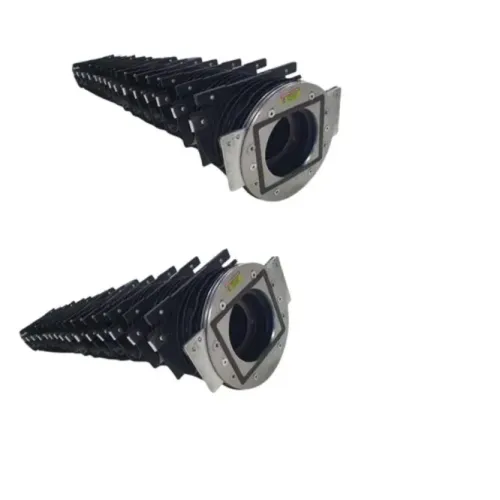
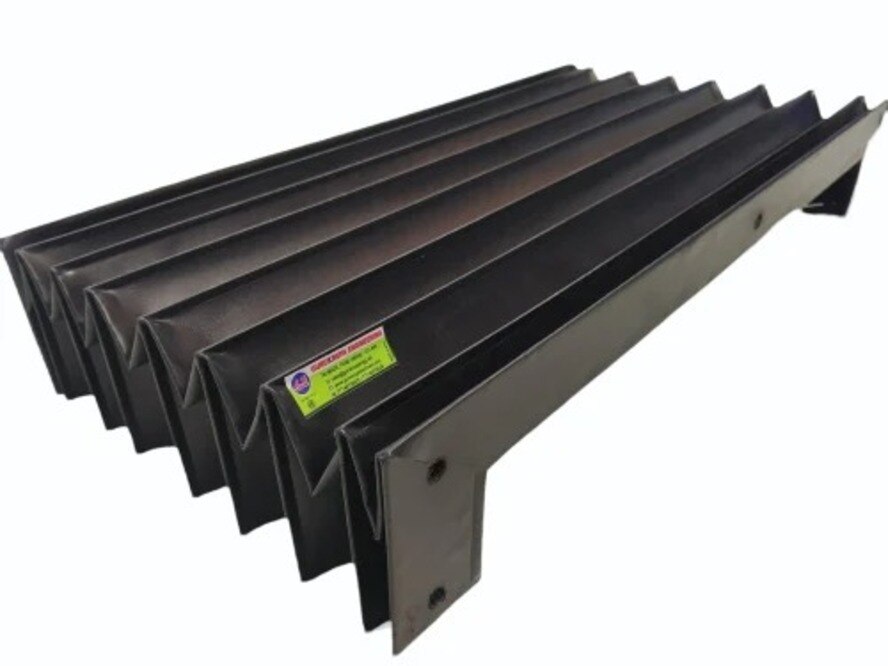
The telescopic bellow covers benefits for resellers are strongest when the same travel lengths, mounting arrangements, and machine-tool geometries recur across several quotations.
Stock a complete cover only when repeat orders are probable and its service life is predictable; otherwise, quote it as engineered-to-order and protect the margin with a clear lead time and design allowance.
A lower unit price is not a saving if one failure creates an imported replacement, a site visit, and several days of customer downtime. Local technical support, drawing checks, installation guidance, and fast access to replacement parts can justify a higher purchase price.
For rebuilds, machine packages, and distributor quotations, compare the contribution margin with the cash tied up until the next sale.
Match the cover type to the machine duty and the sales opportunity
Choose a telescopic bellow cover when the machine needs guided travel protection but cannot carry the mass, noise, or space demands of a steel cover. Compare the duty, not the product name: chips, coolant, heat, speed, access frequency, and available installation envelope determine whether the quote solves a problem or creates a service call.
| Option | Main trade-off | Best sales opportunity |
|---|---|---|
| Telescopic bellow cover | Low mass and flexible travel; less rigid against sharp, hot chips and impact | Retrofitting guarded axes, fast-moving equipment, and machines with limited support space |
| Steel telescopic cover | Highest rigidity and chip protection; heavier, costlier, and dependent on accurate guide alignment | Metal-cutting machines facing heavy chips, cutting-fluid splash, and repeated industrial cleaning |
| Fabric bellows | Light and compact; fabric, seams, and coatings need chemical and temperature checks | Clean or moderately contaminated axes where low moving mass matters |
| Round bellows | Seals cylindrical rods and screws well; unsuitable for wide guideways or irregular openings | Linear actuators, cylinders, and screw ends rather than broad machine beds |
| Rolling curtains | Opens compactly and gives broad access; offers less rigid impact protection | Long openings, frequent operator access, and installations with limited folded space |
| Exposed guideways | Lowest purchase cost; transfers contamination, wear, and downtime risk to the machine | Only where contamination is controlled and the guideway manufacturer permits exposure |
Reject the bellow option when molten material, severe abrasive impact, unusual geometry, or frequent full guideway access defeats its construction. Check mounting space and transition joints; those details often fail before the material does. Do not sell any cover as a safety guard without applying ISO 12100 risk assessment and ISO 14120 guard requirements.
Collect the dimensions and motion data before requesting a custom cover
A stroke length alone cannot price custom telescopic bellow covers. If the supplier lacks the installation envelope or motion profile, the cover may fit at full extension yet buckle, collide, or load its guides during operation.
1. Record the axis data: closed length, extended length, usable opening, cover width and height, travel direction, and mounting orientation. Measure the available installation envelope, including nearby guards, tools, cable carriers, and access panels.
2. Document motion conditions: maximum speed, acceleration and deceleration, cycle frequency, repeated short strokes, vibration, and whether the axis moves horizontally, vertically, or at an angle. Request a rated speed and acceleration for that orientation rather than accepting a generic speed figure.
3. Identify the contamination and service conditions: chip size and sharpness, coolant or lubricant chemistry, operating temperature, abrasive dust, wash-down pressure, and the planned cleaning method. Note whether chips can land on top of the cover or collect beneath it.
4. Photograph the mounting faces and measure bolt-hole locations, clearances, guide surfaces, and drainage paths. Mark fixed and moving reference points so the supplier can verify section travel.
Send this package with the machine model, a sketch, and any existing cover dimensions. Ask the supplier to state the proposed bellows or slat material, frame and guide material, wiper arrangement, drainage provisions, mounting hardware, allowable temperature and chemicals, and whether a 2D assembly drawing or sample will accompany the quotation.
Make the supplier quotation prove performance, serviceability, and fit
Do not approve a custom cover from a price and delivery date alone. A telescopic bellow cover supplier in Pune must make performance, fit, and after-sales support measurable before you promise delivery to your customer.
1. Request a 2D installation drawing showing closed length, extended length, opening, mounting points, guide clearance, wiper arrangement, drainage, and tolerances. Obtain a 3D model when interference with the machine is possible.
2. Make the quotation state bellows or slat material, frame and guide material, coatings, mounting hardware, temperature and chemical limits, maximum travel, speed, acceleration, cycle frequency, and expected service life.
3. Define acceptance criteria before manufacture: allowable dimensions, leakage or coolant-splash expectation, finish, endurance target, and the inspection or test record supplied with the completed cover. “Custom size” is not a performance specification.
4. Ask for maintenance instructions and a spare-parts list identifying wipers, slats, guides, fasteners, and replacement sections. Confirm which parts the supplier can ship separately and the response time for a damaged cover.
5. Demand evidence from a comparable machine duty, including chip type, coolant chemistry, cleaning method, and operating cycle. A photograph proves appearance, not suitability.
For telescopic bellow covers for equipment resellers in Pune, confirm who reviews your measurements, supports installation, and handles a failed cover. Ask GURUKRUPA BELLOWS PVT LTD for the same drawing, limits, service information, and comparable-duty evidence you require from every shortlisted supplier.
Approve only when the documents let you defend both the fit and the delivery promise.
Related products
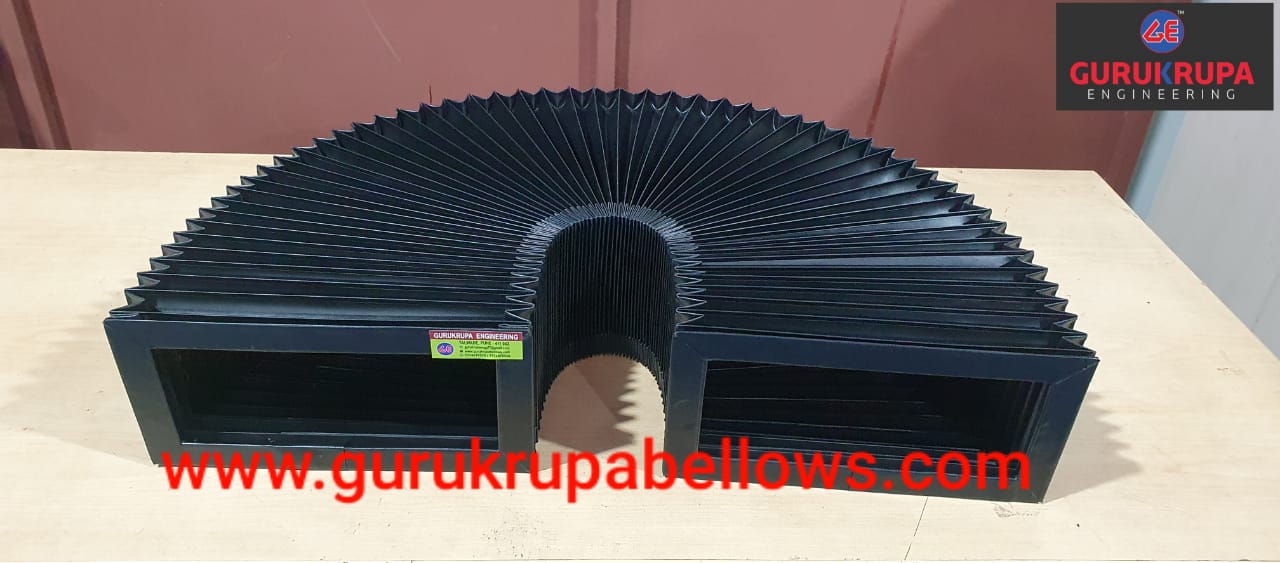 | Telescopic Bellow Cover ₹1000 Product Details: Brand GURUKRUPA Ours is a distinguished name in the business that manufactures and supplies Telescopic Bellow Cover that is vastly... View product → |
 | Industrial Telescopic Covers Our company is known as one of the eminent names of the industry to manufacture and supply Industrial Telescopic Covers. View product → |
Choose an inventory model that protects margin without creating dead stock
Stock complete telescopic bellow covers only when repeat orders share travel lengths, mounting patterns, and machine geometry. Otherwise, capital sits in slow-moving variants while one-off dimensions, coolant, chips, and installation details erode the quoted margin.
| Option | Best use | Main economic risk |
|---|---|---|
| Complete covers | Repeatable machine models with predictable demand | Dead stock, storage damage, and obsolete dimensions |
| Sell with new machines | Bundled machine-builder or distributor projects | Margin disappears if fitting time and warranty exposure are omitted |
| Specify during rebuilds | Retrofit opportunities identified after inspection | Longer sales cycle, but little inventory commitment |
| Replacement parts | Service support for installed covers | Low capital tied up; requires accurate part identification |
For machine protection covers for distributors, replacement wipers, brushes, sliders, guide components, fasteners, and mounting frames are usually safer inventory than complete assemblies. Stock those parts locally when downtime, emergency freight, and installation labor cost more than holding them; their replacement intervals differ from the cover itself.
Use a simple release rule: stock a complete cover only after documented repeat-order probability covers purchase cost, freight, storage, expected service life, repair exposure, warranty risk, and required margin.
For engineered covers, sell against a machine order or specify them during a rebuild, then request the 2D installation drawing, spare-parts list, operating limits, and evidence from comparable duty before approval.
Do not call a cover a safety guard because it encloses an axis. Where access to moving parts exists, apply the machine risk assessment under ISO 12100 and guard requirements under ISO 14120.
Frequently asked questions
How should resellers calculate whether a telescopic bellow cover is profitable?
Subtract landed cost, installation time, emergency freight, warranty exposure, inventory financing, and downtime-related margin loss from the sale price.
Which telescopic bellow cover type suits a machine’s duty?
Match the construction and material to the machine’s heat, chips, coolant, speed, travel, and guideway movement.
What information is needed for custom telescopic bellow covers?
Provide travel, folded and extended lengths, width, height, mounting details, motion speed, cycle frequency, clearances, and operating contaminants.
How can resellers avoid dead stock when carrying machine protection covers?
Stock repeatable standard sizes, use supplier lead-time agreements for uncommon designs, and track demand before expanding inventory.
Related products
 | Steel Telescopic Cover Product Details: Brand GURUKRUPA Our company is considered a renowned name in the field that manufactures and supplies Steel Telescopic Cover. View product → |
 | Telescopic Cover Product Details: Brand GURUKRUPA Being one of the trustworthy names of the industry, we bring forth CNC Telescopic Cover that can be availed at... View product → |