Choosing between a fire-resistant bellows cover and a standard fabric cover depends on the actual hazard, not the word “fireproof” on a quotation. By the end, you will be able to match the cover construction to heat, flame, chips, oil, moisture, movement, and maintenance demands in a Pune machine shop, then request measurements and test evidence that support a fair comparison.
Key takeaways
- Flame resistance does not equal continuous high-temperature resistance.
- Match the cover to heat, chips, oil, movement, and exposure duration.
- Inspect Pune machines for oil, monsoon moisture, and restricted layouts.
- Give suppliers travel, folded length, mounting details, and temperature evidence.
Start with the hazard: flame resistance is not temperature resistance
“Fireproof” does not mean a machine bellow cover is non-combustible or safe beside every heat source. It usually means the material limits flame spread or extinguishes after ignition under a defined test.
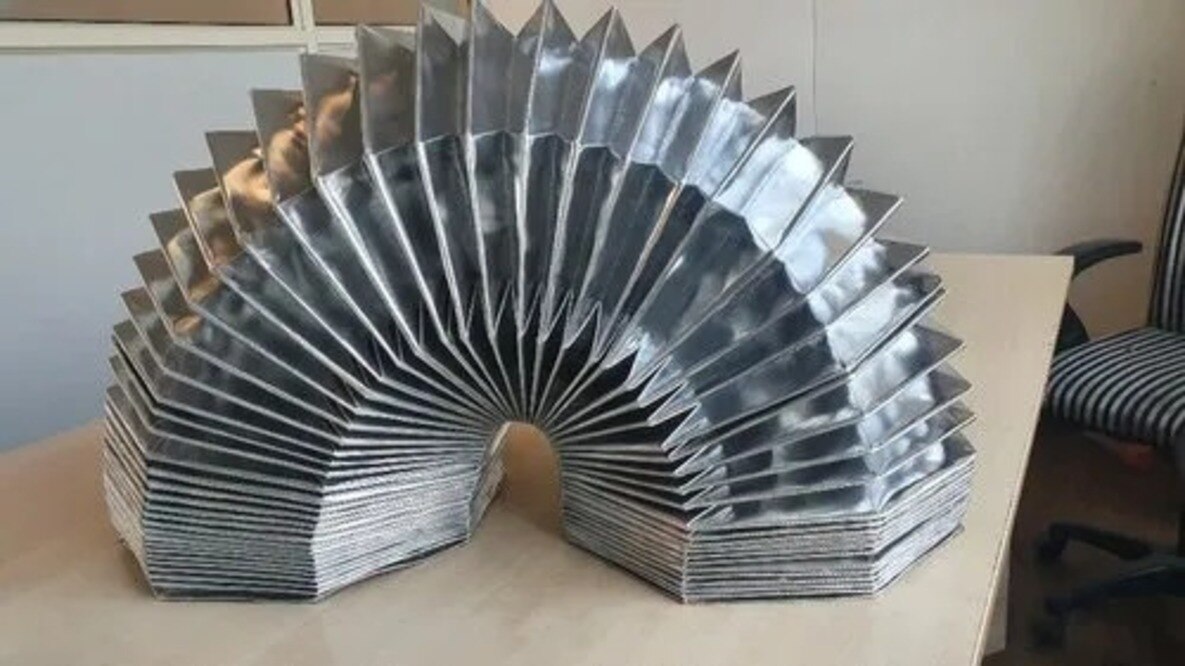
Fireproof fabric bellow cover options must also state continuous temperature, short-duration peak temperature, exposure type, and whether the cover is moving and repeatedly folding.
| Claim | Evidence to request | What it does not prove |
|---|---|---|
| Limited flame spread | EN ISO 14116 classification or ISO 15025 small-flame report | Resistance to continuous heat, hot chips, or molten metal |
| Textile flame performance | NFPA 701 report with test method, specimen details, and after-flame time | Suitability of the finished bellow in a machine |
| Temperature resistance | Continuous and peak ratings for the actual coated fabric, seams, and moving construction | Protection from direct flame or radiant heat without an exposure duration |
Request the complete test report, not a certificate that only says “fireproof.” Check these details:
- Fabric, coating, thread, and reinforcement tested
- Ignition time, after-flame time, afterglow, and char or burn length
- Test orientation and specimen conditioning
- Rating for the completed bellow, including seams and attachments
- Continuous temperature, peak temperature, exposure duration, and movement speed
- Chemical-resistance data for your coolant, hydraulic oil, way lubricant, and cleaning agent
A stationary sample surviving a flame test does not prove a folded cover will survive chips, rubbing, or repeated traverse motion. Flame resistance and oil resistance are separate properties.
Compare cover constructions against heat, chips, oil, and movement
A fabric bellow cover comparison in Pune should separate three failures: burning or heat damage, chip abrasion and rubbing, and chemical or hydrolytic degradation. Flame resistance does not prove compatibility with cutting fluid, hydraulic oil, way lubricant, or cleaning chemicals.
| Construction | Heat and flame | Chips, oil, and movement |
|---|---|---|
| Standard fabric | Lowest heat protection; flexible and economical | Suits low-heat service; chips abrade it, while oil and coolant can shorten life |
| Coated fabric | Coating adds splash and chemical resistance; rating depends on coating | Good general protection, but rubbing, fold fatigue, and coating cracks remain concerns |
| Silicone-coated fiberglass | Handles high heat better than ordinary fabric; the silicone, thread, adhesive, wiper, and frame can fail first | Fiberglass resists heat, not every fluid; repeated tight folding needs verification |
| Aramid | Strong against abrasion and heat; it is not automatically flameproof or oil-resistant | Useful for aggressive chip service; requires fluid-specific data and suitable coating |
| Glass-fibre | Excellent thermal reinforcement but comparatively stiff and prone to flex damage | Better for heat barriers than tight, rapid movement unless engineered as a complete bellows |
| Multilayer | Combines sliding, sealing, thermal, and structural layers | Highest tailoring and cost; service life depends on seams, fold radius, and layer order |
Specify the finished cover, not just its fibre. Request seam samples, reinforcement spacing, mounting details, and test evidence such as EN ISO 14116 or ISO 15025; NFPA 701 does not prove resistance to hot chips or molten metal.
Choose the temperature rating from the exposure, not one headline number
A cover rated for 500°C for ten seconds is not a 500°C continuous-duty cover. Select the rating from the hottest exposure reaching the moving folds, then state how long it lasts and how fast the cover travels. A stationary fabric sample that survives flame may fail after repeated folding at machine-tool traverse speed.
| Exposure | Specify | Why it matters |
|---|---|---|
| Continuous heat | Continuous operating temperature at the fold zone, with the full movement cycle | Sustained heat can embrittle fabric, coating, thread, and adhesive |
| Short peaks | Peak temperature, exposure time, frequency, and recovery interval | A brief chip shower creates a different duty from constant furnace heat |
| Radiant heat | Surface temperature, distance, shielding, and exposure duration | Radiant energy can overheat the cover without touching it |
| Direct flame | Flame type, duration, ignition direction, and post-flame behaviour | Flame-retardant fabric is not automatically non-combustible |
| Hot chips | Chip temperature, size, impact angle, accumulation, and traverse speed | Chips abrade folds and can lodge against the material |
| Molten metal | Metal type, temperature, droplet size, spill volume, and escape path | Molten metal demands a purpose-built barrier, not a headline fabric rating |
| Hot machine surface | Contact temperature, contact area, pressure, and sliding motion | Direct contact transfers heat faster than surrounding air |
Specify the temperature of the complete moving assembly, including seams, reinforcements, guides, wipers, and mounting edges. Compare fireproof fabric bellow cover options using that duty, plus resistance to your actual oil, coolant, chips, and cleaning chemicals. A flame test alone does not establish chemical compatibility or folding life.
Make the Pune comparison practical: oil, monsoon moisture, and machine layout
Choose a standard fabric cover in Pune when the machine has low heat exposure, no ignition source, and mainly produces dust, light chips, oil, or water-miscible coolant. It offers lower cost, easier folding, and simpler replacement.
Specify resistance separately to cutting fluid, hydraulic oil, way lubricant, cleaning chemicals, and abrasive chips; a flame test does not prove chemical compatibility.
A fabric bellow cover comparison in Pune must also address monsoon moisture. Ask how the folds drain and dry, whether seams are sealed, how internal frames resist corrosion, and whether trapped water affects the coolant-resistant coating. “Water-resistant” fabric alone does not make a sealed bellow.
| Option | Better choice when | Main limitation |
|---|---|---|
| Standard fabric | Low heat, flexible travel, frequent replacement, tight budget | Fails faster under flame, hot chips, or severe abrasion |
| Fire-resistant construction | Ignition, laser, welding, grinding, or documented hot-chip exposure exists | Higher cost; flame resistance does not guarantee oil or coolant resistance |
| Steel or roll-up cover | Heavy chips, rubbing, molten-metal splash, or a broad rigid way needs shielding | Adds weight and needs space for guides or winding |
| Hose-and-cable protection | The hazard affects moving cables and hoses rather than a guideway | Does not protect the entire machine slide |
Pay for fire-resistant fabric when the hazard is documented, not because “fireproof” sounds safer. Request EN ISO 14116 or ISO 15025 evidence for the fabric and completed seams, then confirm the folds, mounting profile, guides, and wipers suit the machine layout and traverse speed.
Give the supplier measurements and evidence needed for a reliable quotation
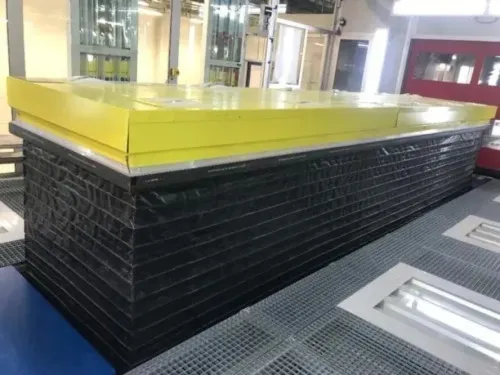
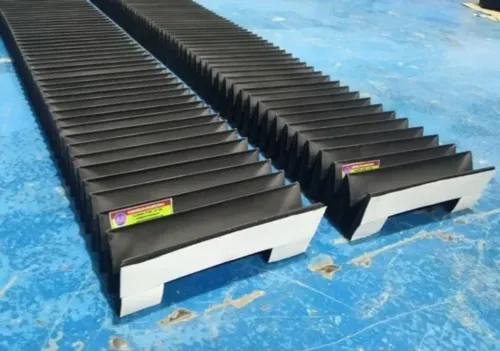
Send a dimensioned drawing, not a request for a cover “like the old one.” A fireproof machine bellow cover supplier needs the closed length, extended length, width, height, fold pitch, mounting-hole pattern, guide clearance, and protected travel opening. Mark fixed and moving ends.
1. Record motion data: stroke length, traverse speed, acceleration, cycle frequency, bend direction, minimum fold radius, and whether the cover moves horizontally, vertically, or over a saddle. State the machine’s operating hours and any vibration.
2. Show the construction: fabric and coating, ply count, seam type, thread, reinforcement strips, frame material, fold spacing, wipers, guides, mounting profile, and attachment method. Request a drawing or sample that shows these details and the replacement procedure.
3. Describe the hazard with numbers: continuous temperature, peak temperature and duration, radiant heat, direct flame, hot chips, molten-metal splash, grinding sparks, laser exposure, and contact with hot surfaces. A stationary fabric test does not prove durability during repeated folding.
4. Identify every contaminant: cutting fluid, water-miscible coolant, hydraulic oil, way lubricant, cleaning chemical, chips, and abrasive dust. Include Pune monsoon exposure, water retention, drying time, condensation risk, and corrosion requirements for internal frames.
5. Request EN ISO 14116 or ISO 15025 evidence, including test duration, post-flame result, and whether testing covered the finished cover, seams, and coating. Ask for temperature data, material datasheets, inspection records, and warranty terms.
For fireproof fabric bellow covers for comparison in Pune, give every bidder identical information. If GURUKRUPA BELLOWS PVT LTD is included, send the same drawing and evidence pack used for competing quotations.
Frequently asked questions
Does a fireproof fabric bellow cover resist every heat source?
No. Fireproof usually describes flame spread or self-extinguishing performance under a defined test. Confirm continuous temperature, peak temperature, heat duration, and radiant exposure separately.
How do fireproof and standard fabric bellow covers compare?
Compare the construction against the actual chips, oil, heat, movement speed, stroke, compression, and flexing cycles. A fire-resistant cover is not automatically the best choice for abrasion or oil exposure.
How should you choose a bellow cover temperature rating?
Use the exposure at the cover surface rather than one headline rating. Record continuous heat, short peaks, radiant heat, hot chips, distance from the source, and exposure duration.
What information does a supplier need for a reliable quotation in Pune?
Provide machine layout images, travel, expanded and folded lengths, width, height, mounting method, guideway dimensions, movement speed, cycle frequency, heat sources, oil exposure, and required test documents.