Cardboard dust, pallet splinters, abrasive grit, oil mist and cleaning water can reach exposed lift components while a scissor platform rises and folds. By the end, you will know which parts a bellow protects, how contamination causes failures, when a flexible cover is suitable, and how to check its fit before installation.
Key takeaways
- Seal the actuator, piston rod and exposed joints against abrasive warehouse debris.
- Choose bellows when the cover must flex repeatedly with the lift mechanism.
- Measure stroke, compressed length, diameter and mounting clearance before ordering.
- Inspect folds, seams and mounts; remove debris without trapping water inside.
How warehouse debris reaches a moving scissor lift
Packaging dust and pallet splinters fall into the exposed scissor pack as the platform rises and lowers. Forklift traffic can throw abrasive grit beneath the platform, while shrink-wrap fragments, metal swarf, oil mist and cleaning water collect around the actuator and rollers.
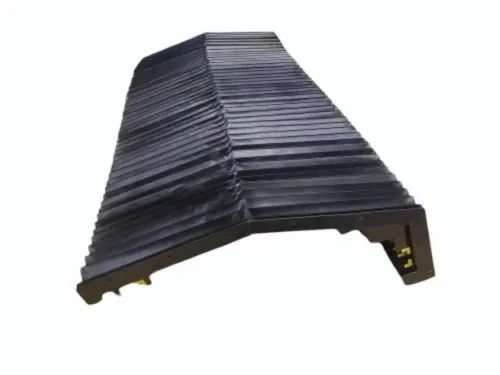
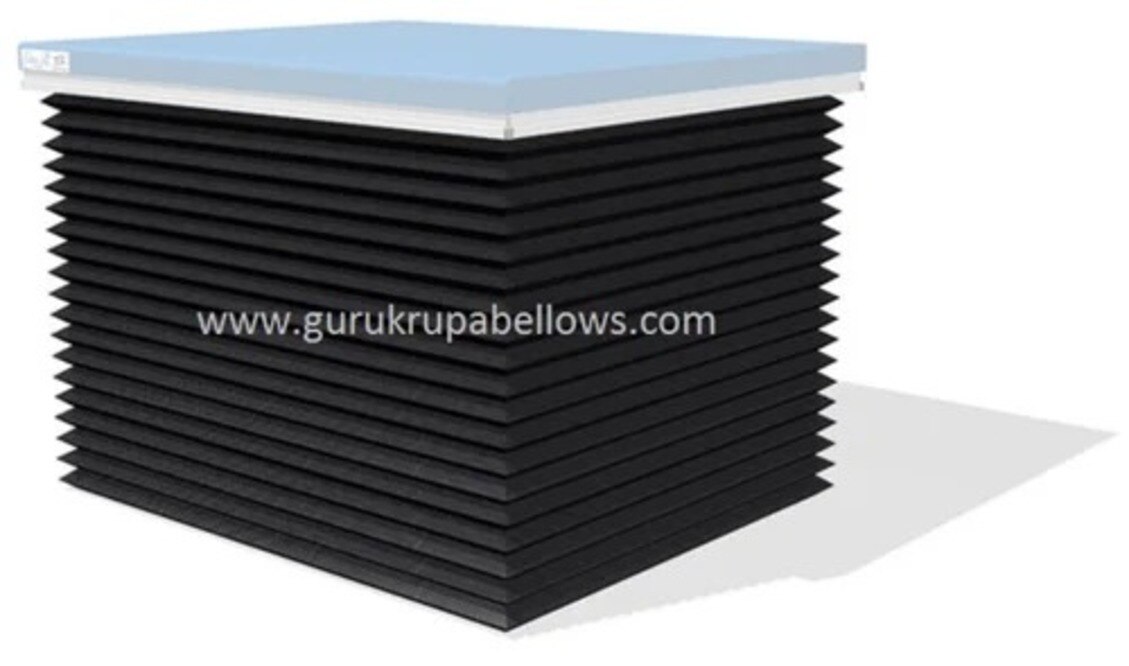
- During lifting, the bellow expands with the mechanism and blocks debris from reaching the exposed piston rod, cylinder barrel and nearby hydraulic connections.
- During lowering, its folds compress without becoming a loose sheet that can snag on scissor arms, rollers or the actuator.
- During platform movement, the cover follows the lift’s changing geometry and shields gaps beneath the platform where debris would otherwise enter.
This is how scissor lift bellow covers for protect equipment in Ludhiana warehouses support warehouse scissor lift protection: they create a flexible barrier while the lift changes height. A clean piston rod gives the seal a smooth surface; grit carried into that seal scratches the rod, causes hydraulic leakage and makes movement stick.
A bellow also keeps grease and oil away from surrounding components, but it does not automatically form a dust-tight or liquid-tight seal.
Check the complete stroke after installation. A cover that rubs a pinch point, stretches at full height or adds resistance near the collapsed position can overload the actuator and prevent the platform from reaching its intended position. It is protective equipment, not a load-bearing member or a substitute for guarding shear, crush and entanglement points.
Which cylinder parts need protection from contamination
A hydraulic cylinder is vulnerable wherever contamination crosses a moving seal. Protect the piston rod, exposed barrel, rod seal, wiper seal, end cap and hydraulic connections. Scratched rods cut seals during each stroke; damaged seals then release oil, admit grit and cause pressure loss, jerky movement or a lift that stops under load.
| Contaminant | Cylinder damage | Nearby component damage |
|---|---|---|
| Cardboard dust and packaging fragments | Clog the wiper, work into seals and form abrasive paste with oil | Wear rollers, pins, guides and scissor-link pivots |
| Pallet splinters and metal swarf | Score the piston rod and tear rod seals | Cut bellows, jam rollers and damage fasteners |
| Oil mist and grease | Soften or swell incompatible fabric and conceal fresh leaks | Attract grit and reduce braking or friction at contaminated contact points |
| Water and wash-down spray | Promote barrel, rod and connection corrosion; dilute lubricant | Corrode pins, welds, rollers and electrical controls |
The scissor lift bellow covers benefits in Ludhiana include reducing exposure to cardboard dust, abrasive grit, oil and cleaning water around an exposed scissor pack or pit. Scissor lift bellows for equipment are not load-bearing guards, and they do not replace controls for crushing, shearing or entanglement points.
Do not assume the cover is liquid-tight. Leave inspection access for seals, hoses, welds and rollers, then check the full stroke for rubbing; a hidden leak or trapped debris can turn protection into delayed maintenance.
When a flexible bellow is the right protective barrier
Choose a cylinder bellow when the main risk is contamination reaching an extending hydraulic cylinder while the lift changes height. Industrial scissor lift bellow covers move with the actuator, but they are not load-bearing members or substitutes for guarding shear, crush and entanglement points around the scissors, rollers and platform.
| Option | What it protects | When it applies | When it is unsuitable |
|---|---|---|---|
| Cylinder bellow | Exposed piston rod, barrel and nearby seals | Debris falls onto a moving actuator beneath an exposed platform or in a pit | The cover would obstruct scissors, rollers, controls or required inspection access |
| Full mechanism guard | The complete scissor pack, rollers, pins and actuator | People, forklifts or large debris can reach the moving mechanism | A fixed enclosure cannot accommodate the full stroke, maintenance access or platform movement |
| Platform skirt | The platform perimeter and openings below its edge | You need to block hands, feet or falling objects at the platform boundary | It cannot follow or shield a separate cylinder through its stroke |
| Guideway cover | Linear rails, guides and sliding surfaces | A lift uses exposed guideways that collect grit | The hazard is an exposed hydraulic cylinder rather than a guide |
| Telescopic steel cover | Rigid machine ways or high-impact zones | Steel protection and guided extension suit a fixed, controlled path | Scissor geometry, lateral movement or limited clearance would cause binding |
| Simple sleeve | A straight rod or hose section | The part moves axially with little lateral travel | Folds, seams or loose fabric could snag, compress or stretch |
A bellow is not automatically dust-tight or liquid-tight. Warehouse scissor lift protection needs tested ingress performance if wash water, oil mist or fine cardboard dust must be excluded; otherwise provide drainage and inspection access. Wide or fast lifts also need guide strips, frames or support bars to prevent flapping.
How to measure and specify a cover before buying
Measure the lift in its fully collapsed and fully extended positions, then map every position between them. Record collapsed height, extended height, lateral travel, platform size, operating speed, scissor-arm geometry and each available attachment point. Platform dimensions alone can produce excess compression, overstretching or interference with the arms.
Give the supplier these details:
- Measure the bellow’s required opening around the piston rod and exposed cylinder barrel, including seals, hydraulic connections and nearby welds.
- Mark the minimum clearance from scissor links, rollers, floor edges and pinch points at every stage of the stroke; do not check only the top and bottom limits.
- Specify compressed and extended cover lengths, fold height, allowable stack height and movement direction.
- State warehouse exposure: cardboard dust, abrasive grit, oil mist, cleaning water, heat and possible forklift contact.
- Choose attachment rings, flanges, clamps or stitched straps that match the cylinder and frame. Verify fastener access, emergency access and secure retention without loading the fabric.
- Require a full-cycle trial. The cover must not rub, snag or add enough resistance to change lift speed, actuator load or end-of-travel position.
Material choice affects service life and movement resistance:
| Material | Best fit | Verify before approval |
|---|---|---|
| Coated fabric | Dust, grit and light splash | Flexibility, seam construction and temperature rating |
| Heat-resistant fabric | Hot surfaces or radiant heat | Continuous temperature limit and fold durability |
| Oil-resistant coated fabric | Oil mist and hydraulic contamination | Chemical compatibility and cleaning method |
GURUKRUPA BELLOWS PVT LTD can use these measurements to develop scissor lift bellows for equipment, but specify industrial scissor lift bellow covers as protection—not as load-bearing guards or substitutes for crush and shear controls. Do not call the assembly sealed without an ingress test for the complete cover, seams and mounting gaps.
Related products
 | Bellow Cover ₹5000 Product Details: Brand GURUKRUPA Color Black-Blue Size Customised With the support of our excellent team workers, we have been delivering the best... View product → |
 | Product Details: Brand GURUKRUPA Color Black-Blue Size Customised With support of our excellent team workers, we have been delivering the best... View product → |
How to inspect, clean and maintain the protection
A cover that looks intact can still hide a hydraulic leak, trapped pallet splinters or fabric rubbing against a scissor arm. Inspect it after installation, after any impact, and at the frequency set by your lift risk assessment.
- Isolate power, lower the platform, apply the manufacturer’s maintenance lock, and inspect the cover through its complete stroke. Check compressed and extended dimensions, lateral clearance, mounting fasteners, seams, folds, abrasion, cuts, heat discoloration, softening and burnt odour.
- Run the lift empty at slow speed, then under its normal load. Stop if the bellow snags, stretches, bunches, contacts a pinch point, changes lift speed, or restricts emergency access, limit switches, guards or manual-release controls.
- Open designated inspection points and look for oil on the piston rod, barrel, seals, hydraulic hoses and fittings. Wipe the rod clean; scratches, wetness or recurring oil indicate a cylinder fault, not a cover-cleaning issue.
- Remove cardboard dust, shrink-wrap, pallet splinters and abrasive grit with a vacuum or soft brush. Do not force debris into folds with compressed air, and do not use wash-down water unless the complete assembly is rated for it.
- Record defects and repair them before returning the lift to service. Never treat the bellow as load-bearing guarding or as a substitute for controls around crush, shear and entanglement points.
The scissor lift bellow covers benefits in Ludhiana warehouses depend on this discipline. Good warehouse scissor lift protection reduces contamination-related wear while preserving visibility, safe access and planned maintenance.
Frequently asked questions
How does warehouse debris reach a moving scissor lift?
Packaging dust and pallet splinters fall into the scissor pack as the platform moves. Forklift traffic adds abrasive grit beneath the platform, while shrink-wrap fragments, metal swarf, oil mist and cleaning water collect around the actuator and rollers.
Which scissor lift cylinder parts need protection from contamination?
Protect the exposed piston rod, cylinder body connection, seals and nearby joints. Grit on the rod can damage seals as it retracts, allowing contamination into the cylinder and accelerating wear.
When is a flexible bellow the right protective barrier?
Use a flexible bellow when the protected part changes length or moves through a repeated stroke. It creates a barrier around the actuator while expanding and compressing with the lift, unlike a rigid guard that can restrict movement.
What measurements are needed before buying a scissor lift bellow cover?
Record the actuator or rod diameter, maximum extended length, minimum compressed length, full stroke, mounting points and surrounding clearance. Check the temperature, oil exposure, cleaning chemicals and debris type so the material and construction match the warehouse.
How should you inspect and clean scissor lift bellow covers?
Check folds, seams, end collars and fasteners for cuts, cracking, abrasion or pulled mounts. Remove trapped grit with a soft brush or low-pressure air, wipe compatible surfaces with a suitable cleaner, and dry the cover before operating the lift.