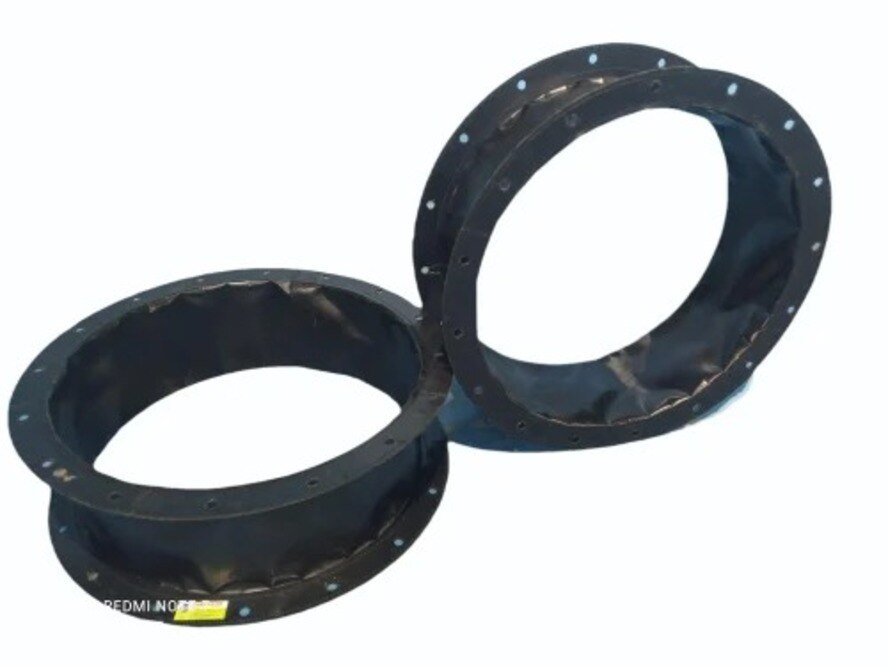
Heavy use can damage a fabric bellow cover without leaving a large, obvious tear: concealed folds can abrade, coatings can blister, and mounting points can loosen. You will be able to set an exposure-based inspection interval, examine the cover safely in compressed and extended positions, select an appropriate diagnostic test, and decide whether to clean, repair, or replace it.
Key takeaways
- Inspect before each shift for debris, sag, contact marks, and exposed damage.
- Examine every fold, ply, seam, coating, attachment, and insulation section.
- Stop movement and isolate hazards before hands-on inspection or diagnostic testing.
- Replace covers with structural, heat, chemical, or movement-related damage you cannot repair reliably.
Set the inspection interval and make the area safe
Inspect the cover before each shift for visible debris, sag, or contact marks, then perform a hands-on inspection at an interval set by operating hours, thermal or pressure cycles, vibration, and exposure to dust, oil, chemicals, or weather. Use the shortest interval for the harshest condition.
Inspect immediately after an impact, overheating event, chemical spill, jam, or abnormal movement.
- Stop the machine and apply its energy-isolation procedure. Isolate electrical, hydraulic, pneumatic, thermal, and stored mechanical energy before touching the cover.
- Wait until hot surfaces, trapped pressure, and coolant have reached a safe condition. Wear the specified gloves, eye protection, and other site-required PPE.
- Clean chips and residue with the method approved for that fabric and coating. Do not scrape the surface, and do not assume high-pressure air or water is safe; it can damage seams or drive debris into bearings and guideways.
- Record the cover’s position, then inspect it fully extended and fully compressed using the approved positioning procedure. Never reach into folds or move the protected axis while your hands are near the cover.
- Keep clear during any later low-speed travel test. Observe from a safe position for rubbing, hesitation, fold inversion, or uneven bunching.
This sequence is the foundation of fabric expansion bellows maintenance and shows how to inspect fabric expansion bellow covers without turning a hidden pinch point into an injury.
Inspect every fold, ply, seam, and coating
Run the cover through its full travel before judging it. Inspect it fully extended, then fully compressed, because concealed folds can hide cuts, abrasion, stuck surfaces, or deformation that disappears when the fabric is stretched.
Clean chips and residue using only the method approved for that fabric and coating. Do not scrape the surface or direct high-pressure air or water into seams, weak edges, bearings, or machine ways.
Use a bright lamp, inspection mirror, and clean gloves. For a fold-by-fold fabric expansion bellow cover inspection:
- Number the folds from one end and examine the outside, inside face, corners, and sliding sections.
- Flex each fold by hand without forcing it; feel for thinning, hardening, brittleness, swelling, tackiness, or layers that have stuck together.
- Check every ply and coating for pinholes, cuts, abrasion-through, frayed reinforcement, coating loss, delamination, blistering, cracking, melted spots, staining, and oil saturation.
- Examine stitched seams, hems, and thread ends for open stitching or pulled reinforcement.
- Shine the lamp behind or inside the cover to reveal pinholes and translucent thin areas, then confirm them by touch.
- Mark every defect by fold number and position, and photograph it before cleaning or repair.
Compare softening, color change, coating lift, and lost adhesion with the actual coolant, cleaner, oil, additive, and concentration used. “Oil resistant” does not prove compatibility with that mixture. A visible outer skin also does not rule out damaged reinforcement or lost heat resistance.
Check attachments, insulation, ductwork, and movement
A mechanically secure cover has no loose clamps, pulled bolts, shifted flanges, or separated end attachments. Lock out all energy before touching it; never reach into folds or move the axis during hands-on checks.
Use this sequence for how to inspect fabric expansion bellow covers:
- Check clamping bars, flanges, bolts, hems, corner frames, and sliding sections for looseness, distortion, missing hardware, and witness marks showing movement.
- Inspect insulation for compression, wetness, exposed edges, heat damage, or displacement that could push against the fabric or leave a hot gap.
- Examine adjacent ductwork, guides, and machine surfaces for cracks, shifted supports, sharp edges, oil deposits, and rubbing marks. A new rub line often identifies the interference point.
- Measure the cover’s extended length, compressed length, lateral position, and fold spacing. Compare each figure with the installation drawing or commissioning record.
Inspect the cover fully extended and fully compressed, including concealed fold faces. A cover that looks sound when extended can hide cut, stuck, or abraded folds when compressed.
After the static inspection, run the protected axis through its travel at low speed from a safe position. Watch for hesitation, fold inversion, asymmetric bunching, sag, guide contact, workpiece contact, compression beyond the specified folded length, or failure to reach either end position.
These faults point to displaced frames, failed attachments, stretched fabric, or incorrect guides—not just surface damage. Record the position and travel condition; this is essential fabric expansion bellows maintenance evidence.
Choose a diagnostic test without creating a new hazard
A backlight is the safest next test for most fabric expansion bellow cover inspection. With the machine isolated, place a cool inspection lamp inside the fully extended cover, then repeat while compressing it slowly by hand.
Pinholes, translucent thin spots, and light appearing through fold valleys identify fabric bellow cover damage without adding pressure or contaminating the fabric.
| Test | What it reveals | When it applies |
|---|---|---|
| Backlight and borescope | Pinholes, thin fabric, concealed cuts, trapped debris, and damaged inner fold faces | Use first when the cover can be opened or safely compressed by hand |
| Low-pressure tracer smoke | Air paths through seams, hems, pinholes, or separated plies | Use only on an isolated cover whose manufacturer provides a test pressure and approves the smoke |
| Soap-solution pressure check | A visible bubble at a discrete leak | Use only on compatible, non-absorbent coatings after confirming the solution will not attack fabric, stitching, or insulation |
Do not inject shop air, nitrogen, water, or solvent into an un-rated cover. Pressure can balloon the bellows, pull clamping bars loose, drive contamination into seams, or rupture weakened fabric. High-pressure air can also propel chips into bearings and ways.
If no approved pressure limit exists, stop at backlighting and a borescope examination; record the suspect fold and send the cover for material-specific evaluation. A clear light path does not prove that reinforcement, coating adhesion, heat resistance, or seam strength remains adequate.
Record defects and decide whether to repair or replace
Replacement is the defensible choice when fabric bellow cover damage compromises exclusion, movement, or attachment strength. A temporary tape or external patch can block debris, but it does not restore fold geometry, fire performance, chemical resistance, or mounting strength unless the manufacturer approves that repair.
Replace the cover if you find:
- A through-hole, open seam, exposed mechanism, or failed end attachment
- A separated structural frame, torn clamping area, or loose flange
- Permanent deformation that prevents full extension or compression
- Repeated snagging, binding, or folds that stick together
- Melted, brittle, hardened, delaminated, or chemically softened fabric
- Damage that lets coolant, dust, or hot chips reach the protected machine
Record the defect by fold number and position, with photographs taken fully extended and fully compressed. Note whether the inside face, coating, stitching, insulation, or adjacent ductwork is affected; cleaning is part of fabric expansion bellows maintenance, but do not hide damage under a coating or patch.
For a replacement, give the supplier the machine and axis, cover shape, overall length in extended and compressed positions, travel, fold count, mounting dimensions, attachment method, operating speed, temperature, pressure, insulation requirement, and actual coolant, oil, cleaner, additive, and concentration. Include operating hours, failure date, exposure conditions, and the failed cover’s material and coating.
GURUKRUPA BELLOWS PVT LTD can use these details to distinguish a dimensional mismatch from a material-compatibility failure.
Related products
 | Fabric Expantion Bellow ₹1000 Make in Heavy duty Fabric’s View product → |
 | Bellow Cover We are considered a well-known name in the business that manufactures and supplies Bellow Cover. View product → |
Frequently asked questions
How often should you inspect fabric expansion bellow covers?
Inspect the cover before each shift, then schedule hands-on inspections based on operating hours, thermal or pressure cycles, vibration, and exposure to dust, oil, chemicals, or weather.
What fabric bellow cover damage should you look for?
Check every fold, ply, seam, and coating for tears, holes, fraying, delamination, burn marks, hardening, cracking, sagging, and contact wear.
What should you check besides the fabric cover?
Check attachments, insulation, ductwork, clearances, and the cover's movement through its full operating range for looseness, rubbing, distortion, or restricted travel.
When should you repair or replace a fabric expansion bellow cover?
Repair minor, localized damage when the surrounding material remains sound; replace the cover when damage affects structural strength, thermal protection, sealing, or safe movement.
Related product
 | Product Details: Brand Gurukrupa Material Nylon Fabric coated with polyurethane Max Temp Resistance 1000 C Offered in the market at the most... View product → |