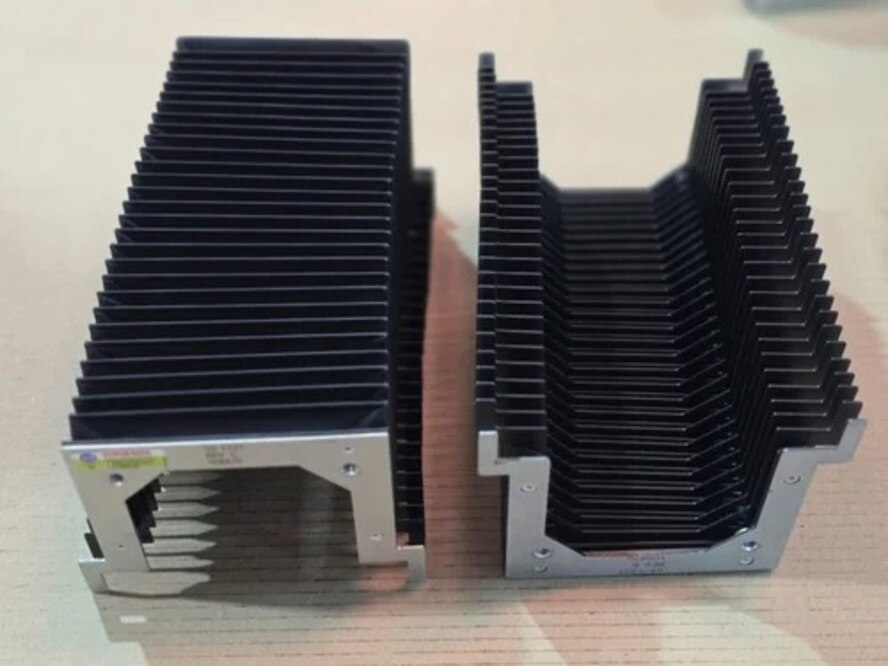
Chips, fine abrasive dust, coolant, oil mist, sparks and corrosive residues can reach rails, screws, rods, cables and seals unless the protection matches the machine’s movement. You will be able to identify the protected component, select a suitable cover construction, measure the installation space and recognise when a bellow is not enough.
Key takeaways
- Bellows shield guideways, screws, cylinder rods, cables, hoses, and moving mechanisms.
- Measure compressed length, extended length, travel, mounting dimensions, and clearance.
- Choose bellows over steel covers when flexibility and low moving mass matter.
- Check material, temperature range, drawings, mounting details, and sample approval before ordering.
Which machine parts do bellow covers protect?
A bellow cover protects moving precision parts by keeping contamination away from their working surfaces. On machines in Ludhiana, what do bellow covers protect on machines in ludhiana? They commonly shield linear guideways, slideways, linear rails, ball screws, lead screws, cylinder rods, telescoping mechanisms, cables, hoses and other moving components.
| Part | Main contamination | Damage prevented |
|---|---|---|
| Linear guideways, slideways and rails | Fine abrasive dust, swarf, coolant | Wear on sliding surfaces, seals and bearing races |
| Ball screws and lead screws | Chips, oil mist, coolant and corrosive contaminants | Damage to screw threads, nuts and recirculating-ball tracks |
| Hydraulic and pneumatic rods | Dust, welding sparks, hot particles and moisture | Scoring of rod surfaces and failure of rod seals |
| Telescoping mechanisms | Swarf, grinding dust and directed coolant | Binding, abrasion and blocked movement |
| Cables, hoses and other moving parts | Chips, heat, oil and chemical residue | Cuts, cracking, contamination and premature flex failure |
Fine dust can enter bearing races and recirculating-ball tracks; long stringy swarf can catch folds or wipers and pull a cover out of alignment. Coolant and oil mist attack exposed sliding surfaces, while welding sparks, hot particles and corrosive chemicals require suitable heat-resistant or chemical-resistant construction.
A bellow is not a machine enclosure, pressure vessel, collision barrier or complete safeguard against ejected tools, broken workpieces or operator access. Open ends, mounting gaps and punctured fabric still admit contamination, and high-pressure coolant or sharp swarf can defeat an unsuitable cover.
How does protection change between guideways, screws, cylinders and cable bundles?
The cover must match the moving part, not merely the machine. A guideway cover travels along a linear axis and keeps folded material clear of rails, tooling and swarf; a screw cover must protect the rotating screw and nut without creating drag or rubbing during rotation.
| Form | Best application | Main design priority |
|---|---|---|
| Round or cylindrical | Ball screws, lead screws and cylinder rods | Clearance around rotation or rod extension |
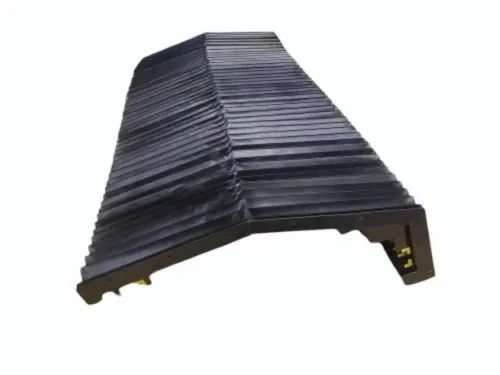
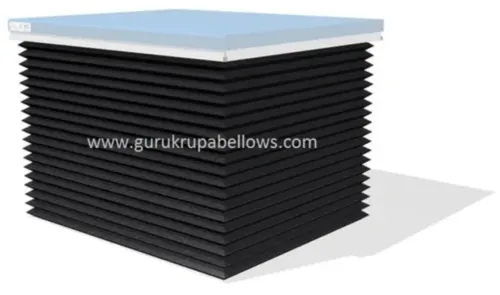
| Rectangular concertina | CNC turning centres, VMCs and grinders | Fold overlap, low compressed height and rail clearance |
| Telescopic | Presses, heavy slides and exposed machine axes | Rigid guidance against impact and sharp chips |
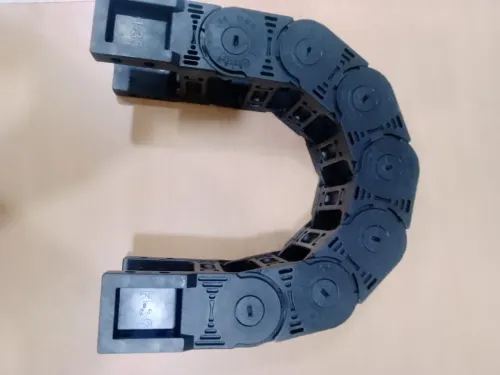
| Flexible cable or hose cover | Automation axes and robotic equipment | Bend radius, torsion and connector access |
For bellow cover applications in Ludhiana, a guideway cover suits the straight travel of a VMC table, while a cylinder bellows must seal around an extending hydraulic or pneumatic rod and cover the exposed barrel zone across its defined stroke.
A cable bundle needs freedom to bend and twist; its cover must not carry excessive bundle weight or block connectors.
Choose the design around the failure you face:
- Long stringy chips need clear fold geometry so swarf cannot wind around rails or screws.
- Sharp swarf demands tougher fabric, shields or telescopic metal because ordinary bellows can puncture.
- Grinders need protection from abrasive dust; presses need impact resistance.
- Welding, laser and hot machining operations require heat-resistant construction and spark shielding, not a dust cover alone.
How do you specify and measure a bellow without restricting machine travel?
Specify the cover from the machine’s fixed mounting faces, not by copying the worn cover. This prevents a replacement from inheriting stretched dimensions, incorrect fold count or a compressed height that blocks travel.
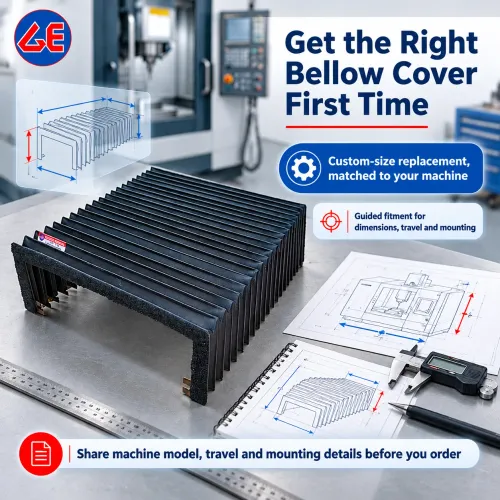
1. Measure axis travel between the two fixed end positions. Record compressed length, extended length, available width and height, mounting-face dimensions, hole pattern and bend direction. Photograph the mounting faces, but verify every dimension with a rule or caliper.
2. Record operating speed, acceleration and temperature, then identify coolant, oil, chips, dust and cleaning chemicals. A drawing-based request for bellow covers for industrial machinery in Ludhiana should include these conditions, not just an overall length.
3. Check the envelope in both positions. Compare maximum extended height and folded height with rails, screws, nuts, tooling, guards and sheet metal; allow the cover to move without rubbing. Provide support and guidance so folds do not carry machine loads.
A sagging cover can contact a screw, while rubbing or bottoming out can overload the axis.
4. Specify fold pitch and number of folds so adjacent folds retain sufficient overlap throughout the stroke. Detail internal guides, end-frame stiffness, drainage paths and end sealing; a cover that blocks liquid at the folds but traps coolant inside can deteriorate quickly.
Never assume a locally made replacement is interchangeable with an OEM cover. Fold geometry, guides and compressed height determine whether the cover follows the axis or restricts it.
When should you choose bellows instead of steel covers, wipers or cable carriers?
Choose bellows when a moving component needs flexible enclosure through repeated strokes, irregular spaces or changing geometry. They fit guideways, rods, sensors and cable or hose bundles where rigid covers would restrict access or require additional clearance.
| Option | Flexibility, access and travel | Heat, puncture resistance and maintenance | Choose it when |
|---|---|---|---|
| Bellows | High flexibility; suit repeated motion, fast travel and irregular spaces; provide enclosure around the moving member | Depends on the selected fabric, elastomer or metal reinforcement; inspect folds, seams and mounting gaps for wear | The component needs a lightweight, flexible cover |
| Telescopic steel covers | Rigid and space-demanding; need accurate guidance and room for sections to telescope | Stronger resistance to impact and sharp chips; inspect slides, seals and dents; suitable construction handles heat better than ordinary fabric | Heavy swarf or collision risk outweighs compactness and access |
| Roller shutters | Flexible in one direction and compact at access openings; travel depends on the shutter design | Metal construction resists hot particles better than fabric, but gaps and damaged slats admit contamination | You need a retracting barrier across a broad opening |
| Fixed guards | No flexibility or travel; restrict access around static zones | Strong puncture and impact protection; little maintenance unless damaged | The hazard or contamination source does not move |
| Wipers | Follow an exposed edge but do not enclose the moving member | Remove chips and coolant at a boundary; wear quickly when abrasive debris passes beneath them | You need edge cleaning, not full protection |
| Cable carriers | Guide cables and hoses through motion; preserve bend radius and connector access | Not automatically sealed against coolant or dust; inspect links, rollers and unsupported bundles | Routing matters more than enclosure |
Match construction to the actual coolant, cutting oil, cleaning chemical, temperature and exposure time. Coated fabric, rubber, polyurethane, PVC and metal are not interchangeable. Near grinding, laser cutting or welding, specify heat-resistant construction and add external spark shielding where hot particles can reach the cover.
What should you check before ordering bellow covers in Ludhiana?
Do not approve a replacement from dimensions alone. Ask a bellow cover supplier in Ludhiana for a drawing-based proposal that ties the cover to the machine’s motion, installation space and contamination pattern.
- Provide axis travel; compressed and extended lengths; available width and height; mounting-face dimensions and hole pattern; bend direction; guide arrangement; operating speed; acceleration; temperature; coolant or chemical exposure; and contamination type.
- Compare the proposal with the machine drawing, not only the old cover. A locally fabricated cover is not automatically interchangeable with an OEM part: fold pitch, fold count, end-frame stiffness, internal guides and compressed height decide whether it collides with the machine, obstructs travel or overloads the axis.
- Before acceptance, inspect for uneven folding, sagging, rubbing, loose end frames, blocked drainage and damaged wipers. Check the fabric for cracks, delamination and pinholes, then examine every fold corner for tears; a small breach can admit chips or coolant before the cover looks failed.
GURUKRUPA BELLOWS PVT LTD is relevant when a Ludhiana manufacturer needs a machine-specific cover for a CNC, grinder, press or automation axis rather than a size-only quotation. Keep the decision anchored to the drawing, material compatibility, motion and contamination—not the supplier’s location or a nominal cover size.
Related products
 | Bellow Cover ₹1000 We are offering an excellent quality of Protective Bellows for all type Guideways. This design covers three sides of the rail. View product → |
 | Round Bellow Covers ₹1000 To match with our reputation in the market, we are here to present an unparalleled assortment of Round Bellow Covers. View product → |
Frequently asked questions
Which machine parts do bellow covers protect?
Bellow covers protect linear guideways, slideways, rails, ball screws, lead screws, cylinder rods, telescoping mechanisms, cables, hoses, and other moving components.
How does protection differ between guideways, screws, cylinders, and cable bundles?
Guideway bellows cover precision running surfaces, screw bellows protect threads from contamination, cylinder-rod bellows shield exposed rods, and cable-bundle bellows flex around grouped cables and hoses.
How do you measure a bellow without restricting machine travel?
Record the required travel, compressed and extended lengths, mounting dimensions, folded height, width, motion direction, and surrounding clearances before finalising the design.
When should you choose bellows instead of steel covers, wipers, or cable carriers?
Choose bellows for flexible protection around moving parts and irregular spaces; use steel covers for heavy chips, wipers for edge sealing, and cable carriers for organised cable and hose routing.
What should you check before ordering bellow covers in Ludhiana?
Confirm the machine drawing, travel, dimensions, material, temperature and contamination conditions, mounting method, production sample, and supplier’s ability to match the application.
Related products
 | Bellow Cover ₹5000 Product Details: Brand GURUKRUPA Color Black-Blue Size Customised With the support of our excellent team workers, we have been delivering the best... View product → |
 | Bellow Cover We are considered a well-known name in the business that manufactures and supplies Bellow Cover. View product → |
 | Product Details: Brand GURUKRUPA Color Black-Blue Size Customised With support of our excellent team workers, we have been delivering the best... View product → |