A quotation is delayed when the supplier receives only a ball-screw diameter and a product name. By assembling the right measurements, motion data, environmental conditions, photographs, and acceptance requirements, you can request a technically usable quotation and identify whether a flexible cover is suitable before fabrication begins.
Key takeaways
- Include machine, axis, quantity, dimensions, and delivery date in your first RFQ.
- Measure installed clearances and travel without removing the existing cover.
- Specify contamination, temperature, coolant, chips, and movement before choosing materials.
- Approve the supplier drawing and inspect fit, stitching, and movement on delivery.
Send a complete RFQ pack on the first contact
Send one complete RFQ pack on your first contact so a ball screw bellow covers supplier in Mumbai can quote without repeated clarification. State the machine model, axis, quantity, required delivery date, and whether the cover is a replacement or new installation.
Attach a dimensioned sketch, photographs with a ruler or scale visible, and the screw-and-nut assembly dimensions.
Include:
- Screw outside diameter; ball-nut maximum outside diameter; nut length and width
- Flange or mounting geometry, mounting-hole pattern, and cover width and height
- Lubrication-fitting and return-tube locations
- Usable axis stroke, direction of movement, and available space at both ends
- Coolant, chips, dust, heat, cleaning chemicals, and other operating conditions
Ask the ball screw bellow covers supplier in Mumbai to confirm the proposed extended length, compressed package length, material or coating, attachment method, quotation turnaround, fabrication lead time, warranty exclusions, and whether installation or fit-check support is included. State the required acceptance dimensions as well.
Do not write only “industrial-duty.” Name the machine, axis, contamination, temperature, and motion conditions that determine the design. A complete pack lets the supplier identify missing information in one reply instead of starting several email cycles.
Measure the cover without dismantling the machine
Use the installed axis as the measuring reference; do not dismantle the machine. Put it at the reference or home position, mark that position on a sketch, and record the screw centreline height and side location.
1. Measure clearance around the ball nut, flange, lubrication fittings, return tube, guideway, and adjacent guard. Photograph each end with a ruler or scale visible.
2. Move the axis to full travel in both directions, then check several intermediate positions. At each travel limit, measure from each end mounting face to the moving nut and record the space available for the cover’s extended length and compressed package.
3. Record the screw outside diameter, nut length, maximum nut width, end-frame dimensions, mounting-hole centres, hole diameter, and the parallelism of the two attachment faces. Include the flange geometry and the cover width and height in the sketch.
4. Separate machine-axis stroke from cover travel. Usable cover travel equals extended length minus compressed package length, less end clearances and mounting allowance. Do not let the cover reach its nominal stroke by bottoming out.
5. Check the proposed compressed dimension against the actual machine. An excessive package can crease folds, cause fold-to-fold rubbing, touch the screw or guideway, and overload a mounting plate that is not parallel.
Send these measurements and photographs to a manufacturer of custom ball screw bellow covers. Never order a replacement solely from the old cover’s outside dimensions; a changed nut, fitting, guard, or mounting position can make those dimensions misleading.
Define what the cover encloses and how the axis moves
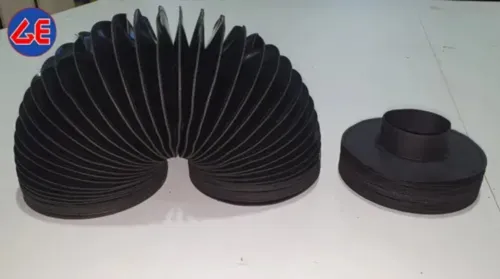
Choose the protection zone before asking a ball screw bellow cover manufacturer for a quotation. Specify whether the cover shields only the rotating screw, clears the ball nut while covering exposed screw sections, or encloses the complete screw-and-nut assembly.
1. Describe the moving attachment and its clearance envelope. It must clear the nut body, flange, lubrication fitting, and return tube at both travel limits and several intermediate positions. Home-position clearance alone is not enough.
2. Send the motion data: usable travel, maximum screw rotational speed, linear feed rate, acceleration, deceleration, cycles per minute or shift, and horizontal or vertical orientation. State whether the folds will stretch, fold, sag, or rub during movement. High screw speed matters because linear feed rate does not show centrifugal loading, vibration, or fold distortion.
3. Mark the machine reference or home position and confirm that the cover will not restrict programmed stroke. For a horizontal axis, report the unsupported extended span; an unverified span can sag into the screw. For a vertical axis, include the cover’s weight and the risk of one-sided fold bunching.
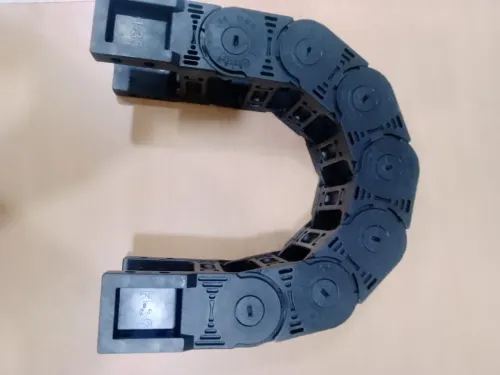
Do not specify a bellows as a cable carrier. Use one only for cable routing when its design explicitly provides the required cable path and bend radius; otherwise, a separate cable carrier is the correct component.
Match materials and construction to the contamination risk
Request custom ball screw bellow covers against the actual contamination profile, not a vague “industrial-duty” specification. Put each exposure in the RFQ as a separate field:
- Coolant type and concentration
- Cutting oil
- Abrasive chip size and volume
- Grinding dust
- Alkaline washdown fluid
- Welding sparks or spatter
- Ambient and peak temperature
- Cleaning method and frequency
- Fire risk
Ask whether the proposed fabric, elastomer coating, adhesive, and seam construction suit every listed exposure. Request their chemical limits, temperature limits, and flexibility limits.
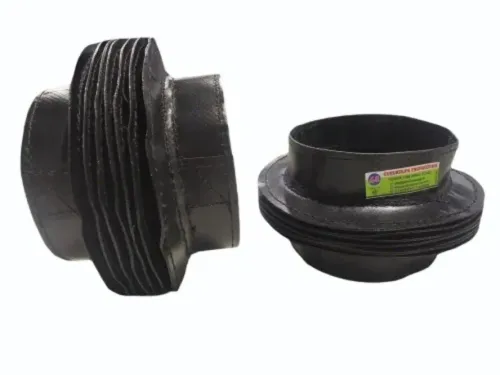
Specify sewn or bonded folds, intermediate support rings, rigid end frames, folded-edge or scraper arrangements, overlaps, drainage, and the required sealing level. Support rings preserve fold shape but add weight and stiffness; sewn and bonded seams alter flexibility and chemical resistance. Rigid end frames improve alignment and attachment, but a bellows is not automatically chip-tight.
| Option | Strength | Limitation |
|---|---|---|
| Flexible bellows | Repeated travel and lightweight conformity | Needs correct sealing and fold guidance |
| Telescopic steel cover | Hot chips and impact | Heavier and less flexible |
| Rollway cover | Compact rolling protection | Requires suitable installation space |
| Brush seals or wipers | Local scraping | Do not enclose the whole assembly |
| Open-frame guarding | Basic separation | Contamination control is secondary |
Choose another arrangement when hot chips, heavy impact, or severe abrasion combine with high-speed motion. A flexible bellows suits repeated travel where a lightweight shield must follow the moving assembly.
Compare local options, approve the drawing, and inspect delivery
A stocked replacement can ship sooner after a search for “ball screw bellows near me,” but adapters or a compromised collapsed length can create fit problems. A made-to-drawing cover matches the nut and mounting pattern more accurately, but requires drawing approval and fabrication time.
| Option | Advantage | Risk or requirement |
|---|---|---|
| Stocked replacement | Faster dispatch | May need adapters or reduce usable compressed clearance |
| Made-to-drawing cover | Matches nut, travel, and mounting pattern | Requires approved drawing and fabrication lead time |
Before approving production, ask GURUKRUPA BELLOWS PVT LTD for:
- The proposed drawing, compressed and extended dimensions, material and coating
- Mounting details, expected quotation date, delivery date, and installation or fit-check support
If the old cover failed, identify the cause instead of copying its outside dimensions: misalignment, trapped chips, nut-flange contact, fold-to-fold rubbing, or forced compression can make an identical replacement fail again.
Record these acceptance dimensions in the purchase order and inspect the installed cover at full extension, full compression, and several intermediate positions. Confirm that no fold touches the screw, nut, guideway, or adjacent guard; mounting stays secure; lubrication access remains open; programmed stroke is unrestricted; and folds neither collapse nor rub.
A complete request to a ball screw bellow covers supplier in Mumbai makes speed a result of complete information, not a trade-off against fit.
Frequently asked questions
What should you include when contacting a ball screw bellow covers supplier in Mumbai?
Send the machine model, axis, quantity, delivery date, replacement or new-installation status, measurements, operating conditions, and photographs.
How can you measure a ball screw bellow cover without dismantling the machine?
Record the compressed and extended lengths, width, height, mounting-hole pattern, clearance, travel, and nearby obstructions while moving the axis through its full stroke.
What operating details determine the right ball screw bellow cover construction?
State the chip type, coolant or oil exposure, temperature, sparks, dust, required flexibility, axis speed, and whether the cover encloses a rotating or moving component.
How should you compare and approve a custom ball screw bellow cover?
Compare material, folded geometry, mounting method, lead time, drawing details, and inspection support, then approve the drawing before production and check fit and movement on delivery.