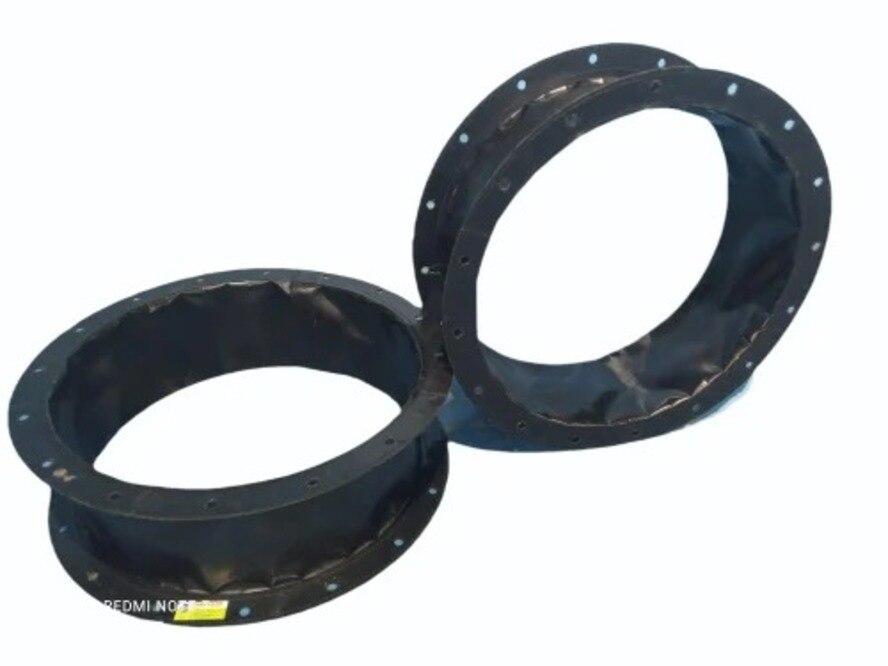
A bellow cover can shield a fabric expansion joint from abrasion, dust, hot particles, oil and ultraviolet exposure, but it cannot restore a torn pressure boundary or failed clamp. You will be able to identify the leak source, distinguish repair from replacement and cover installation, and specify a cover that does not restrict movement or create new damage.
Key takeaways
- Treat a bellow cover as secondary protection, never pressure-boundary repair.
- Find and measure the leak before fitting any cover.
- Specify movement, temperature, particles, chemicals, and UV exposure.
- Replace the joint when its fabric, seams, or restraints have failed.
What a Bellow Cover Can and Cannot Repair
An external bellow cover is secondary protection, not a repair to the pressure boundary. It can limit abrasion, surface puncture, hot-particle attack, dust ingress, oil contamination, UV exposure and vibration-related wear when the underlying joint remains structurally sound.
1. Use a cover after the primary joint passes inspection and the cover is designed as a non-load-bearing shield.
Bellow covers for fabric expansion joint damage in Noida can protect an intact fabric assembly, but they cannot cure a torn gas path, failed stitching or bonding, detached flanges, lost fabric reinforcement, excessive permanent deformation or leakage through the joint itself.
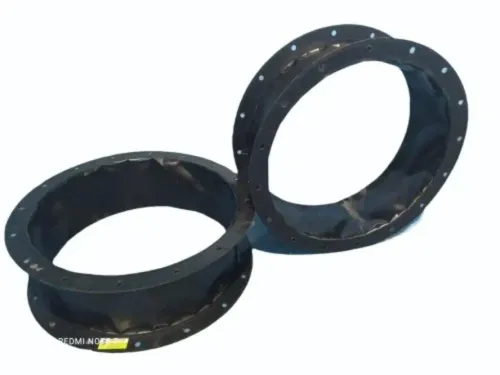
2. Treat a close-fitting sleeve as a shield, not a pressure vessel. It needs clearance throughout the joint’s movement and cannot replace a pressure-containing expansion joint unless its seams, attachments and pressure rating were specifically engineered and tested for that duty.
A machine-tool bellow cover designed for guideways, screws or slides is not automatically a replacement for a duct expansion joint.
3. Stop installation when fabric expansion joint bellow cover problems conceal a leaking, delaminated or movement-restrained joint. Arrange industrial repair or replacement before, or alongside, fitting the cover; otherwise the shield can hide continuing damage while the failed pressure boundary remains in service.
Check the repaired assembly for leakage and movement before returning it to operation.
Find the Leak Before You Fit Any Cover
1. Begin with the joint isolated under the site’s approved safety procedure. Inspect the fabric, liner, insulation, belts, stitching, bonding, retaining bars, clamps and bolt preload for tears, gaps, wetness, corrosion, overheating or movement restriction.
2. Trace the surrounding ductwork before blaming the joint. Check adjacent flanges and gaskets, flexible connections, duct cracks and nozzle joints; otherwise, a new cover can hide a different leak source.
3. Where the medium and site controls permit, use smoke or an approved tracer method to locate escaping gas. Keep ignition, toxicity, ventilation and pressure hazards under the equipment owner’s written controls.
4. Perform a pressure or leak test suited to the service and approved by the equipment owner. Do not substitute an informal soap check for a specified test where temperature, pressure or hazardous gas makes that inadequate.
5. Record installed length, width and height, deformation, leakage location, temperature, pressure and movement. These measurements define fabric expansion joint leak protection and give the repair team a baseline.
6. Do not patch only the visibly damaged outer layer. Loose clamping, misalignment, wet insulation or a damaged liner will keep the leak active beneath a clean patch.
7. Inspect the repaired joint before fitting a cover, then repeat the inspection after the system reaches operating temperature and movement. Check dimensions, leakage and rubbing through the full thermal or mechanical stroke.
Specify the Cover Around Real Movement and Exposure
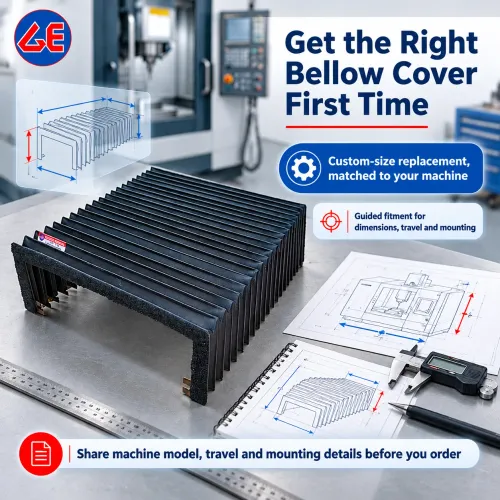
Select the cover from the joint’s actual movement and exposure, not its parked appearance. Record joint length, folded height, width, axial travel, lateral movement, angular movement, installed clearance, travel direction and attachment points.
Check the fit at minimum, maximum and misaligned positions; a restrained cover can redirect thermal loads into duct seams, anchors, fans or nozzles.
Require a drawing or data sheet that states:
- Overall envelope, mounting method, movement in each axis, minimum folded length and extended length.
- Material stack-up, temperature range, chemical compatibility, cleaning method and replacement procedure.
- Clearance through the full stroke, plus access for inspection and drainage where rain or condensation is possible.
| Close-fitting sleeve | Non-load-bearing shield | Needs clearance through the entire stroke; use it for bellow cover damage prevention when the joint remains sound |
|---|---|---|
| Removable inspection cover | Accessible secondary protection | Prioritises access and removal for checking the joint |
| Replacement expansion-joint assembly | New flexible pressure boundary | Use it when the existing pressure boundary has failed |
Exhaust gas and radiant heat require verified continuous and peak temperature limits. A stated 1000°C rating is incomplete without exposure duration, pressure, fabric construction and confirmation that the cover itself reaches that temperature in service.
Specify a wear-resistant surface for abrasive dust, chemical compatibility for acids, alkalis and hydrocarbons, and condensate-resistant, drainable construction for moisture and rain. Outdoor Noida installations also require UV consideration.
Choose Repair, Replacement or a Protective Cover
Choose industrial fabric expansion joint repair when the damage is local and the fabric, reinforcement, insulation, liner, belt, retaining hardware and surrounding duct remain suitable for service. Choose full replacement when the pressure boundary has torn or the joint has lost structural integrity.
| Option | What it means | When it applies |
|---|---|---|
| Industrial fabric expansion joint repair | Correct the failed local layer, seal or hardware | The joint remains aligned, flexible, chemically sound and capable of its specified movement |
| Full replacement | Remove and install a complete expansion-joint assembly | Reinforcement has failed, deformation is permanent, material is chemically degraded, or required movement is lost |
| External protective cover | Add a non-load-bearing shield around the primary joint | The joint is sound or repaired, and the cover stays clear throughout movement |
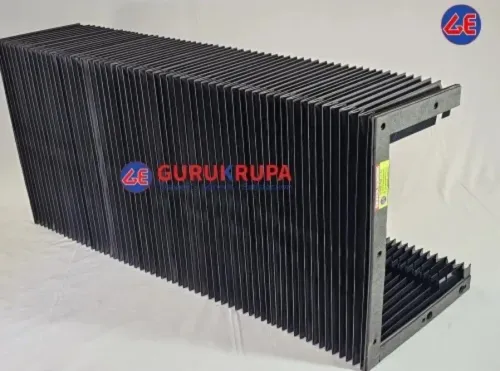
A cover cannot seal a leaking gas path, failed stitching or bonding, detached flange, damaged liner or loose clamping seal. It only limits further abrasion, dust, splash water, UV exposure and mechanical impact. GURUKRUPA BELLOWS PVT LTD is a possible Noida-area source, but documented compatibility matters more than the phrase custom bellow cover.
Ask the supplier for a drawing or data sheet stating:
- Overall envelope, mounting method, movement in each axis, minimum folded length and extended length
- Material stack-up, temperature range, chemical compatibility and cleaning method
- Inspection access, replacement procedure and clearance at minimum, maximum and misaligned positions
Reject the cover if it transfers movement loads into the joint, rubs retaining bars or adjacent ductwork, traps condensate or blocks drainage. Compare the documented fit, movement clearance and service compatibility before approving the intervention.
Related products
 | Fabric Expantion Bellow ₹1000 Make in Heavy duty Fabric’s View product → |
 | Product Details: Brand Gurukrupa Material Nylon Fabric coated with polyurethane Max Temp Resistance 1000 C Offered in the market at the most... View product → |
Prevent the Cover from Creating a Second Failure
A cover protects the joint over time only when it moves freely, stays supported and remains inspectable. Common fabric expansion joint bellow cover problems include folds rubbing retaining bars, inadequate clearance, trapped condensate, loose hardware and unsupported spans that transfer loads into the joint.
Use this commissioning checklist:
- Provide positive guidance and rounded or guarded contact surfaces; add adequate fold clearance at minimum, maximum and misaligned positions.
- Use abrasion-resistant material where rubbing cannot be eliminated, and support long spans without restricting movement.
- Prevent the cover from collecting chips, dust or water. Add drainage where the design requires it, and keep access openings clear.
- Tighten and secure hardware so clamps do not loosen or lose bolt preload during movement.
- After installation or repair, record dimensions, verify movement in every required direction, complete an approved leak or pressure test for gas service, and observe the assembly through the full thermal or machine stroke.
Remove a removable cover during maintenance and inspect for cracking, pinholes, delamination, frayed reinforcement, hardened elastomer, overheating discoloration, wet insulation, clamp corrosion and lost bolt preload. In machine-tool service, remove chips and coolant only with a method approved for the cover material; sharp tools and high-pressure air can puncture folds or drive contamination beneath wipers.
A clean exterior does not prove leak-tightness.
Frequently asked questions
Can a bellow cover repair a damaged fabric expansion joint?
No. A bellow cover protects a structurally sound joint from abrasion, dust, heat, oil, UV exposure, and mechanical wear; it does not restore the pressure boundary or seal a leaking joint.
How do you find a leak before fitting a bellow cover?
Inspect the fabric, plies, seams, clamping bars, frame, liner, and nearby ductwork. Trace soot, dust deposits, hot spots, oil marks, and escaping gas, then confirm whether the joint or an adjacent connection is leaking.
What should you include when specifying a bellow cover?
Record the joint’s installed dimensions, axial and lateral movement, temperature, particle load, chemicals, UV exposure, attachment points, and access requirements.
When should you repair, replace, or cover a fabric expansion joint?
Repair a local, accessible defect when the remaining fabric and restraints are sound. Replace the joint when plies, seams, restraints, or the pressure boundary have failed. Fit a cover when the joint needs added environmental or abrasion protection.
How can a bellow cover cause a second failure?
Prevent it by allowing the joint’s full movement, avoiding contact with hot surfaces, providing drainage and inspection access, and securing the cover without transferring loads to the fabric expansion joint.
Related products
 | Bellow Cover The range of CNC Bellow Cover is manufactured on our premises, under the guidance of our expert professionals. View product → |
 | Bellow Cover We are considered a well-known name in the business that manufactures and supplies Bellow Cover. View product → |
 | Fabric Joints Product Details: Brand GURUKRUPA With its dimensional accuracy and durability, the offered range of Fabric Joints is known to be amongst the finest... View product → |