Rainwater is only one part of the monsoon risk: humidity, mud, airborne dust, condensation and pooled water can reach shafts, guideways and actuators through gaps around an otherwise sound cover. By the end, you will know how to identify the exposed machine parts, measure a cover correctly, verify material and water-resistance claims, and specify an installation that survives repeated movement and seasonal cleaning.
Key takeaways
- Measure travel, compressed length, and mounting diameters before requesting a quotation.
- Specify rubber compatibility, temperature range, flex cycles, and test evidence.
- Add drain paths so pooled rainwater cannot remain inside the folds.
- Inspect folds, clamps, fasteners, and trapped moisture after heavy rainfall.
What monsoon exposure does to a moving machine axis
Rainwater and pooled water can corrode shafts, spindles, screw drives, rotating joints and exposed actuator rods; mud and dust then turn lubrication into abrasive paste. High humidity promotes corrosion on guideways, hydraulic or pneumatic cylinders and fasteners, while condensation can form inside folds or on a cooled machine after shutdown.
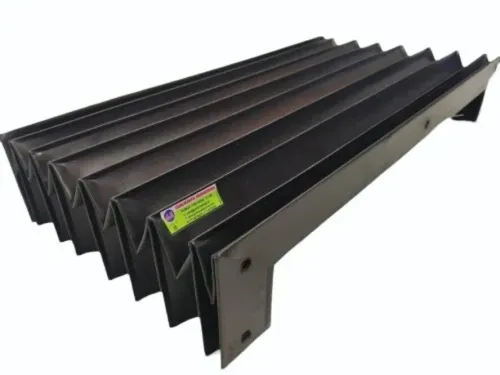
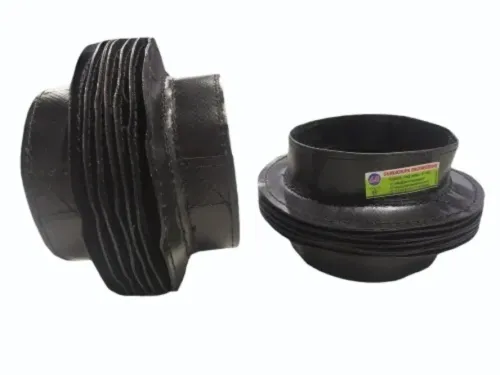
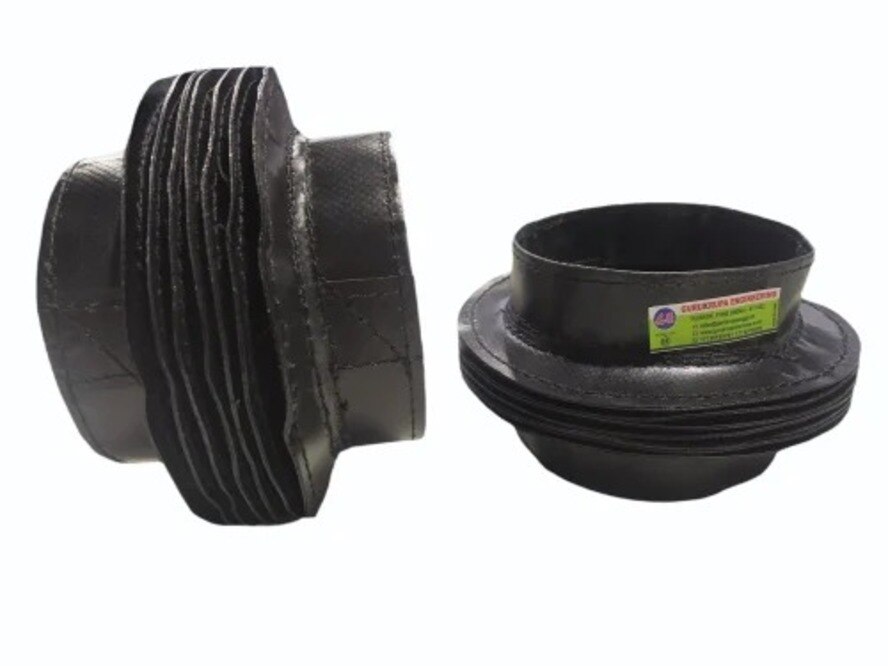
Round rubber bellow covers for monsoon protection in Noida should keep out the actual contaminants reaching the axis: water, mud, dust, mist, oil and coolant. They protect the covered slide, shaft, spindle, guideway or cylinder from direct contamination, but they do not seal cable openings, end plates, collars or adjacent machine gaps.
Water trapped around a machine base can also migrate beneath seals and damage components that the cover does not enclose.
Define the exposure before ordering:
- Direct rain or splash
- Fine mist, dust or light atmospheric exposure
- Oil, coolant or cleaning chemicals
- Standing water around the base
A bellows belongs in a complete protection assembly with way wipers, scrapers, seals or an enclosure where required. Positive clamps, flanges or bonded end fittings prevent movement and leakage better than friction alone.
“Waterproof” is not automatically an IEC 60529 IP rating. An IP rating applies to a tested enclosure or assembly, not an untested bellows, its clamps or the complete machine interface.
| Exposure | Main risk | Protection implication |
|---|---|---|
| Direct rain or splash | Corrosion and contamination | Cover interfaces and drainage need attention |
| Humidity or condensation | Rust inside folds and on guideways | Prevent trapped moisture |
| Mud and dust | Abrasive wear and blocked movement | Use wipers or scrapers |
| Oil or coolant | Swelling, hardening or cracking | Verify chemical compatibility |
How to measure the axis before requesting a quotation
1. Record the moving member’s shaft, spindle, screw or cylinder diameter, then specify the required inside and outside diameters of the cover. A round machine bellows supplier also needs the retracted length, extended length, usable stroke, fold pitch, mounting diameter and each end-flange dimension.
2. Measure the moving and fixed attachment points at full extension and full compression. Check the intermediate position for interference, because nominal diameter and stroke alone cannot reveal an incorrect fold pitch or excessive compression.
3. Record available space above, below and beside the axis. Include the minimum clearance around the moving member and the extra clearance needed for clamps, collars and end fittings. Note allowable bend or lateral movement, travel speed, acceleration and stroke frequency.
4. Check the cover at every position for angular misalignment, end-of-travel loading and rotating parts. Identify exposed threads, burrs, swarf and sharp edges before requesting a quotation; a collar that pulls sideways can twist the folds, while inadequate clearance causes rubbing and premature failure.
5. Send the supplier a dimensioned sketch showing the attachment points, mounting method, compressed and extended lengths, and all obstructions. Mark any pressure or suction effect and state whether the member rotates. Confirm that the proposed cover remains stable through the complete stroke, including acceleration and end stops.
Choosing rubber and testing the claims behind “weather resistant”
Choose the compound against the actual exposure, not the label weather resistant bellow covers. EPDM is the strongest starting point for monsoon water, steam, ozone and outdoor weathering; other elastomers fit different failure risks.
| Material | Main advantage | Choose it when |
|---|---|---|
| EPDM | Water, steam, ozone and weather resistance | Rain, humidity, sunlight or ozone dominate |
| Neoprene | Balanced weather, oil and mechanical performance | Exposure is mixed and flexing loads are significant |
| Polyurethane | High abrasion and tear resistance | Swarf or rubbing is severe, and the specified chemistry resists hydrolysis |
| Silicone | Broad temperature capability | Temperature extremes matter and cutting and abrasion loads are controlled |
| Nitrile | Strong mineral-oil resistance | Mineral oil dominates; do not select it for monsoon exposure alone |
Separate weather resistance, water resistance, oil resistance and fire retardance; one claim does not prove the others. A rain-resistant material can still swell in coolant, harden in oil, or crack under sunlight and ozone.
Ask whether the cover is molded elastomer, fabric-reinforced, or coated fabric. Large diameters, long travel and low folded height can make reinforced construction more suitable than molded rubber.
Request evidence showing:
- Actual compound, reinforcement, wall construction and hardness range
- Minimum and maximum operating temperature
- UV and ozone exposure results, with duration and test conditions
- Chemical compatibility with coolant, oil, cleaners and hydraulic fluids
- A simulated rain-and-cycle test matching the machine’s movement
A static rain test proves water exclusion for that setup, not service life during repeated flexing. Inspect fold roots and stretched regions in particular.
How to install, drain and inspect a bellows during the rains
Secure each end with a suitable clamp, flange or bonded end fitting; friction alone lets a collar slip and pulls the bellows sideways. Set the folds so water cannot rest at a low point, then confirm whether the geometry drains naturally or requires a vent or drainage path.
Do not drill a hole until its effect on sealing and movement has been checked.
1. Before production, move the machine slowly by hand or at low speed. Watch full compression, full extension, acceleration and end-of-travel positions. Stop if a fold rubs against a sharp edge, exposed thread, burr, rotating component or swarf.
2. Check the mounting collars while the axis is stationary and moving. Incorrect fold pitch, excessive compression or insufficient clearance can damage a correctly specified cover before the rubber ruptures.
3. During monsoon inspections, remove mud and abrasive metal particles using a soft cloth or gentle wash that does not cut or stretch the folds. Inspect clamps, flanges, seams, fold roots and the area behind every collar.
4. Look for trapped moisture, corrosion, cracking, hardening, swelling, detached mounts and lost flexibility. Dry standing water before it reaches the protected shaft or guideway.
5. Confirm that lubrication, way wipers, scrapers, seals and the machine enclosure remain effective. A bellows reduces direct contamination; it does not seal adjacent gaps, cable openings or end plates.
What to put in a Noida procurement specification
Reject any quotation that says only “weather resistant.” For round rubber bellow covers in noida, give every bidder the same machine data so price differences reflect construction rather than missing specifications.
- Shaft, spindle, screw or cylinder diameter; required inside and outside diameters; mounting diameter; end-flange dimensions; compressed and extended lengths; usable stroke; and fold pitch.
- Mounting method, allowable lateral movement, minimum clearance, travel speed, acceleration, stroke frequency, and the machine’s minimum and maximum operating temperature.
- Exposure list: direct rain, splash, mist, standing water, humidity, dust, oil, coolant, cleaning chemicals, sunlight, UV and ozone.
Require each supplier to state the elastomer or coating, reinforcement, wall construction, hardness range, dimensional tolerances, mounting details, compressed and extended limits, chemical compatibility, and pressure or suction limits.
| Quote item | Compare | Evidence to request |
|---|---|---|
| Construction | Molded rubber versus fabric-reinforced or coated fabric | Drawing, material designation and hardness range |
| Service limits | Speed, acceleration, frequency, temperature, movement and clearance | Signed operating-limit sheet |
| Monsoon performance | Rain, splash, mist, standing water, dust, oil and coolant | Simulated rain-and-cycle acceptance test using the actual machine movement |
The test must evaluate the complete assembly, including collars, clamps, flanges and drainage—not rubber alone. GURUKRUPA BELLOWS PVT LTD belongs in the comparison when it documents the proposed construction against these measurements. Choose verified fit, exposure evidence, drainage and service limits over a label.
Related product
 | Round Bellow Covers ₹1000 To match with our reputation in the market, we are here to present an unparalleled assortment of Round Bellow Covers. View product → |
Frequently asked questions
What does monsoon exposure do to a moving machine axis?
Rainwater, pooled water, mud, humidity, and condensation can corrode shafts, guideways, screw drives, actuator rods, fasteners, and rotating joints. Mud mixed with lubricant creates abrasive paste that accelerates wear.
How should you measure an axis before requesting a quotation?
Record the shaft or guideway diameter, mounting diameters, maximum extension, compressed length, available clearance, travel direction, bend or rotation requirements, and the positions of nearby clamps or obstructions.
How do you verify a rubber bellow cover is weather resistant?
Ask for the rubber compound, operating temperature range, resistance to water and oils, UV or ozone performance, flex-cycle data, and test documents that identify the tested material and method. Do not rely on the phrase weather resistant alone.
How do you install and inspect a bellows during the rains?
Align the cover with the axis, secure both ends without restricting travel, avoid sharp folds, provide a low-point drain where water can collect, and inspect the folds, clamps, fasteners, and internal moisture after heavy rain.
What belongs in a Noida procurement specification?
State the machine-axis dimensions, travel, compressed length, clearance, mounting method, rubber compound, temperature range, exposure to coolant or oil, expected flex cycles, drainage requirement, inspection documents, and delivery requirements for the round machine bellows.