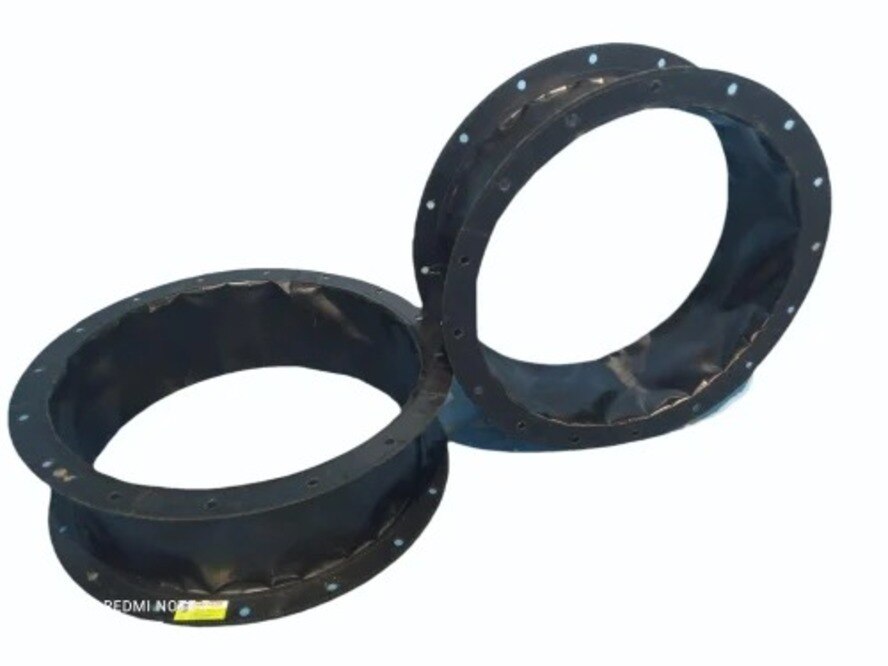
A cover can protect an expansion joint from abrasive dust, rainwater, welding sparks and accidental contact, but it cannot make an unsuitable joint safe or increase its pressure rating. You will be able to decide whether the protection earns its cost by separating the joint’s engineering function from the cover’s shielding role, checking the full movement envelope and requesting the documents needed for a reliable quotation.
Key takeaways
- Identify whether the joint needs shielding, pressure containment or duct connection.
- Specify axial, lateral and angular movement before requesting a cover price.
- Match fabric, coating and insulation to heat, dust, chemicals and outdoor exposure.
- Require service-life evidence, inspection access and material documentation before buying.
Start by identifying what the expansion joint must do
First identify the job: does the item shield a moving joint, contain pressure, or connect flexible ductwork? These are different products with different calculations, tests and failure modes.
- A protective cover sits outside the joint. It shields convolutions, insulation, flanges and nearby personnel from abrasive dust, water, weld spatter, chemical splash and accidental contact. It does not carry line pressure, restrain pressure thrust or increase the joint’s movement rating.
- A pressure-containing expansion joint uses metallic bellows, welds and end connections as the pressure boundary. Check bellows stress, movement cycle life and fatigue against EN 14917 and EJMA guidance. An external cover cannot repair a leaking or under-designed pressure boundary.
- A fabric duct connection joins low-pressure air, flue-gas, dust-extraction or HVAC ductwork. It absorbs thermal or installation movement and limits vibration transfer, but it is not a generic replacement for a metallic pressure joint without documented pressure, leakage and fatigue design.
Treat the phrase bellow covers for industrial expansion joints Rome as a sourcing description, not a technical product class. The same applies to bellow covers for expansion joints: define whether you need shielding or a working pressure boundary before requesting a quotation.
For pressure equipment within Directive 2014/68/EU, identify the fluid group, pressure, volume or nominal size, equipment category and conformity route; “industrial” or “CE marked” alone proves nothing.
Compare the cover options against the actual failure risk
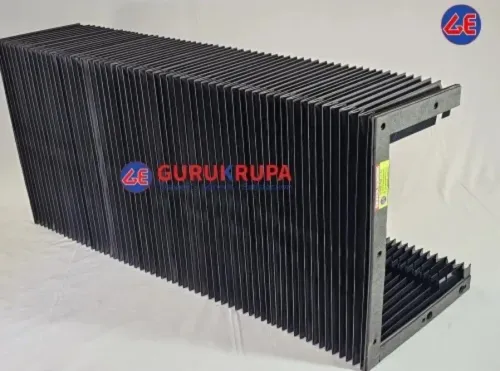
Choose a fabric cover when the main failure risk is external damage rather than pressure loss: abrasive dust entering the joint gap, weld spatter striking convolutions, water reaching insulation, or people contacting a moving gap.
Bellow covers for expansion joints are worth the cost when they prevent contamination, burns, cleaning work or an unplanned joint replacement.
| Option | What it protects against | Choose it when |
|---|---|---|
| Fabric cover | Dust, sparks, splash, heat and accidental contact | Movement is large or combined, access matters, and the cover must flex without adding significant load |
| Rubber bellows | Sealing and moderate movement | You need an enclosed, flexible seal with compatible chemicals and temperatures |
| Metal bellows | Pressure, temperature and fatigue movement | The component is the pressure boundary; an outer fabric cover only protects it |
| Sliding cover | Abrasion and simple linear travel | Movement is mainly straight and the cover can remain clear of the joint |
| Telescopic steel cover | Impact, chips and heavy mechanical abuse | Rigid protection outweighs compactness, noise and added weight |
| No cover | Nothing beyond the joint’s own design | The area is clean, accessible and free from impact, splash and personnel exposure |
Do not use fabric as a pressure-containing repair or to restrain pressure thrust. For a fabric expansion bellow Rome application, reject the cover if its folds rub the pipe, trap water against metal, or restrict axial, lateral, angular or torsional movement.
Compare its price with downtime, cleaning, inspection access and replacement of the protected joint—not with the cover alone.
Specify movement and dimensions before asking for a price
A movement envelope proves whether bellow covers for expansion joints will follow the joint instead of restricting it. The supplier needs the joint’s neutral position, maximum compression and extension, lateral offset, angular rotation, torsion, operating temperature, pressure, and required cycle count.
A cover sized only to the installed length can wrinkle, rub, tear, or transmit loads into the joint.
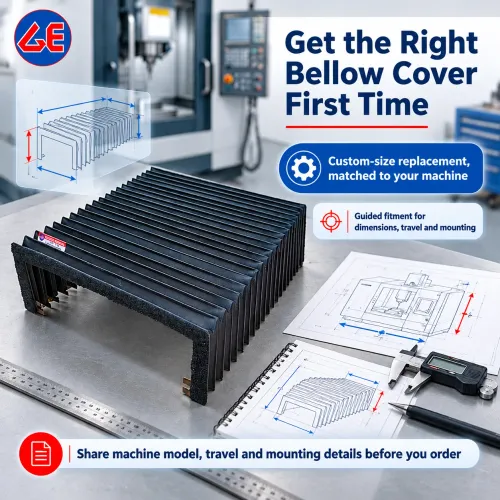
Send these details in a marked-up drawing or data sheet:
- Record the joint’s inside and outside dimensions, face-to-face length, convolution or gap profile, flange and bolt-circle dimensions, and every nearby obstruction.
- Show movement in each direction at the same time, including the worst combined displacement rather than separate ideal values.
- State the minimum clearance between the cover and moving surfaces at neutral and maximum displacement. Check flanges, anchors, insulation, supports, and adjacent pipe.
- Identify heat sources, abrasion, sparks, chemical splash, washdown, and the required inspection or replacement access.
- Specify attachment points and whether the cover must be split, removable, or zippered.
For pressure-containing pipework, do not ask the external cover to compensate for an unsuitable joint. The metallic bellows, welds, pressure boundary, and fatigue life require their own assessment under EN 14917 and applicable EJMA design rules. The cover normally carries none of the line pressure or pressure thrust.
A tight cover can damage a sound joint; a loose, unsupported one can snag and fail.
Select materials for Rome’s exposure and the site’s hazards
Choose the construction from the exposure, not from a temperature rating alone. Rome’s outdoor conditions include ultraviolet light, rain, condensation, solar heating and repeated temperature cycling; an indoor cover can embrittle, trap water or lose seam strength outside.
| Hazard | Specify | Failure if ignored |
|---|---|---|
| Outdoor exposure | UV-stabilised coated glass-fibre or PTFE-laminated fabric, sealed seams, drainage and a stated cleaning method | Coating chalks, water remains against the joint, and fabric hydrolyses |
| Hot particles or fire | A documented flame-resistant, low-flame-spread construction; protect seams and fasteners from sparks | Sparks ignite the cover or damage the insulation beneath it |
| Chemical service | Name each oil, solvent, acid, alkali or cleaning agent and check coating compatibility | The coating swells, cracks or becomes permeable |
| Abrasion and movement | Reinforced contact zones, suitable seam construction and clearance at maximum travel | The cover rubs through or restricts the expansion joint |
| Personnel protection | Guard hot surfaces and moving gaps; assess access, rigidity and trapping under ISO 14120 | A soft cover is mistaken for a safety guard |
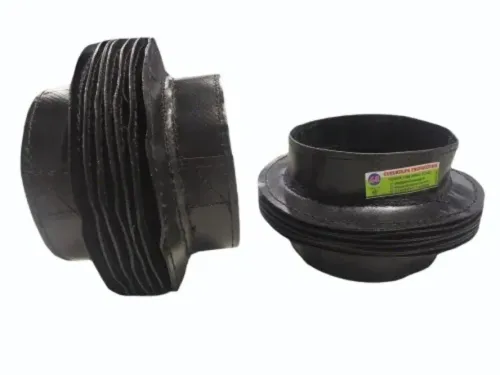
For a fabric expansion bellow Rome specification, compare silicone-coated fabric, PTFE-laminated fabric, elastomeric fabric and multi-layer cushions for permeability, flex-fatigue, abrasion, ozone and chemical resistance. State the temperature profile, pressure or leakage limit, movement cycle and whether the cover protects flanges, insulation or anchors.
Industrial bellow covers Italy buyers must separate an external shield from the pressure boundary. If the joint carries pressure, select the metallic bellows and welds under EN 14917, with geometry and fatigue assessed using EJMA rules; the cover does not make an unsuitable joint safe.
Judge the purchase by service life, inspection access and documents
A cover is worth its cost only when the supplier can show how long it will survive and how you will inspect or replace it. Compare the quoted price with downtime, cleaning, joint replacement and access costs over the planned service interval—not with the cover’s catalogue length alone.
1. Request a dimensional drawing showing installed and maximum length, width, height, clearances, attachment points and the full movement envelope: axial travel, lateral offset, angular rotation and torsion.
2. Request the construction schedule: fabric type, coating or laminate, number of layers, seam method, thread, fasteners, insulation and temperature profile. Ask for abrasion, chemical, hydrolysis, UV and ozone limitations rather than accepting “high temperature” as evidence of service life.
3. Request the inspection and replacement procedure, including inspection intervals, access points, permitted wear, leakage checks, removal time and replacement parts. A cover that must be dismantled to inspect the joint can increase maintenance cost.
4. Request cycle-life evidence for the stated movement and temperature, plus material certificates, conformity documents and any pressure or leakage test records. For pressure-containing pipework, verify the metallic bellows against EN 14917 or EJMA calculations; an external cover does not prove pressure-boundary integrity.
Use the same checklist when comparing bellow covers for industrial expansion joints Rome with industrial bellow covers Italy suppliers. GURUKRUPA BELLOWS PVT LTD should be evaluated on this drawing-and-document package, not on a nominal diameter or temperature claim. A supplier who cannot define inspection access has not shown the cover’s economic life.
Related product
 | Fabric Expantion Bellow Make in Heavy duty Fabric’s View product → |
Frequently asked questions
What must an industrial expansion-joint cover do?
First decide whether it shields a moving joint, contains pressure or connects flexible ductwork. Each duty uses different calculations, tests and failure controls.
What information should you provide before requesting a bellow-cover price?
Provide the joint’s inside and outside dimensions, installation space, axial movement, lateral movement, angular movement, operating temperature, pressure and connection details.
Which materials suit industrial expansion joints in Rome?
Choose the fabric, coating and insulation for the site’s temperature, humidity, rain, UV exposure, dust, chemicals, sparks and fire hazards rather than selecting by price alone.
How do you judge whether a bellow cover is worth buying?
Compare its expected service life and replacement effort with the cost of joint damage and downtime. Check inspection access, cleaning requirements, drawings, material data and test documents before purchase.