Road dust, machining chips, coolant mist and rain can turn a scissor lift’s moving interfaces into abrasive, contaminated wear zones. By the end, you will know how to connect contamination risks to cover design, check the full motion envelope, and specify a replacement without creating new rubbing or access problems.
Key takeaways
- Keep road dust, grit and swarf away from guides, rollers, pins and screw mechanisms.
- Match the cover’s folds, travel direction and attachment method to the lift’s motion.
- Measure compressed length, extended length, width, height and every clearance before ordering.
- Record heat, fluids, UV exposure and folding cycles in the replacement specification.
How Rome Workplace Contamination Accelerates Scissor Lift Wear
Road dust, construction grit and metal swarf act like abrasive paste when they reach a scissor lift’s guides, rollers, pins or screw mechanism. Particles score sliding surfaces, enlarge clearances and contaminate grease, so the lift needs more force to move and develops backlash, binding or uneven travel.
Rome installations add several contamination routes:
- Coolant mist and hydraulic oil soften or swell unsuitable seals, while oil-soaked debris sticks to moving interfaces.
- Rainwater and humidity promote corrosion on pins, fasteners, guideways and cylinder rods.
- Salt air accelerates corrosion near coastal sites, and cleaning chemicals can attack coatings, adhesives and flexible cover materials.
- UV exposure embrittles an outdoor cover; trapped water inside folded bellows keeps mounting hardware and protected components damp.
Contamination also damages cylinders and seals when particles score the rod or lodge at the wiper. A damaged seal then leaks, loses pressure or admits more dirt. Sensors can misread position, while blocked lubrication points leave bearings and lifting joints running dry.
The result is unplanned cleaning, seized motion and secondary damage rather than a single failed part.
The scissor lift bellow cover benefits come from controlling this contamination at the source. Effective scissor lift bellows protection reduces abrasive entry around guides, cylinders, sensors and lubrication points, but it cannot repair misalignment, incorrect lubrication, overload or existing wear.
Choose UV resistance and drainage for exposed equipment; do not treat the cover as a substitute for interlocks, emergency stops, overload protection or crushing-force guarding.
Match the Cover to the Lift’s Motion and Protected Component
A cover that reaches full stroke but collapses into the mechanism is the wrong cover. Choose geometry from the protected component’s movement, not from the lift’s nominal size.
| Cover arrangement | Best fit | Support arrangement |
|---|---|---|
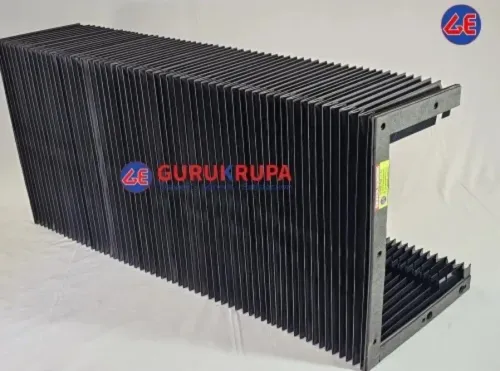
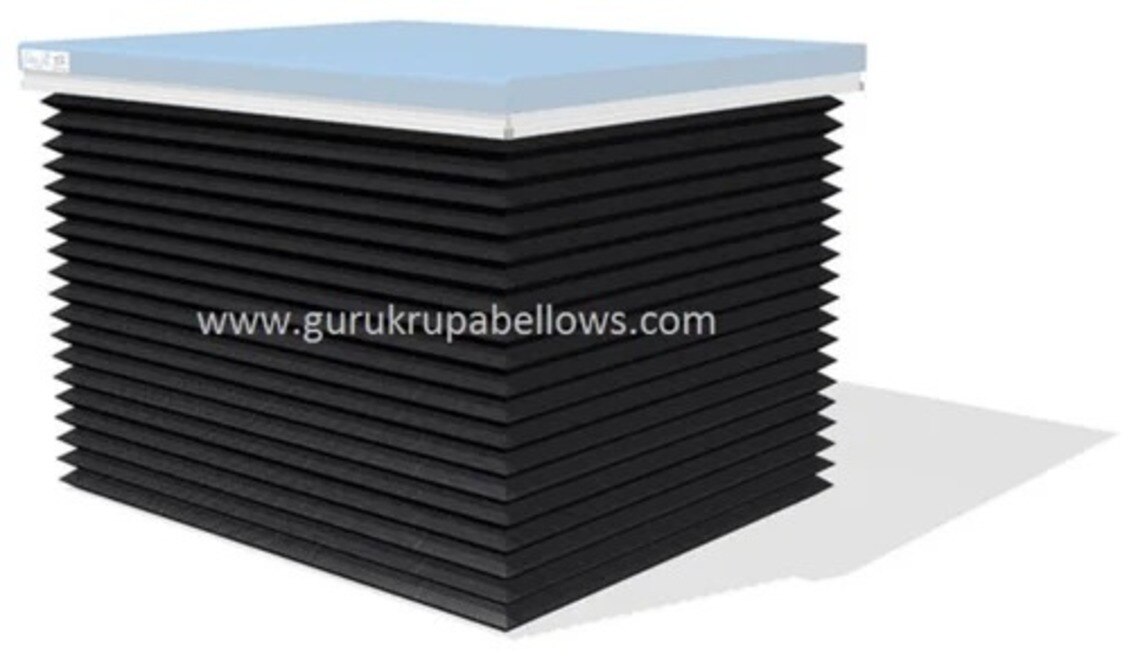
| Accordion bellows | Vertical screw, guideway or cylinder protection with repeated extension | Fixed end frames, with guides or internal frames when the pack could sag |
| Guided bellows | Long stroke, high speed or scissor arms passing close to the cover | Side rails, sliders or wear-resistant guide strips to control lateral movement |
| Flat or framed cover | Broad openings where chips and fluid fall directly onto the mechanism | Rigid perimeter frame with a defined folded zone; avoid unsupported spans |
Set the closed height so the folded pack clears the floor, platform, rollers and crossing arms. Set the extended height to the actual stroke, leaving no taut pull at full extension. Check the minimum bend radius at every fold; sharp compression causes cracked fabric, detached corners and leakage paths.
- Protect screws and guideways with a cover that follows their axis; protect cylinders and sensors with openings and end frames that do not rub during tilt.
- Add guides when acceleration, vibration or an off-centre load can make the bellows swing.
- Confirm the mounting flange, bolt pattern and attachment method before fabrication.
- Run the lift through its complete motion envelope after installation, including the compressed position.
This is how scissor lift bellow covers support service life in Rome: they keep grit and fluids away from moving interfaces without becoming a new obstruction. A cover cannot compensate for misalignment, worn guides or overload.
Measurements and Clearance Checks for a Replacement Cover
A replacement scissor lift bellow cover must match the lift’s measured stroke, not its nominal model size. Record dimensions with the platform fully lowered and fully extended, then verify the cover will not become taut, bunch up, or enter the scissor mechanism.
- Record closed height, expanded height, required stroke, opening width and length, and the cylinder or protected-component dimensions.
- Measure the mounting flange or frame, bolt-hole pattern, hole diameter, attachment method, guide arrangement, and available space around each edge.
- Provide travel direction, maximum speed, acceleration, cycle rate, and any unsupported horizontal span. These details determine folding geometry and support requirements.
- Describe exposure: ambient and internal temperatures, coolant concentration, hydraulic oil, tramp oil, cleaning chemicals, wash-down agents, rainwater, and chip type.
- Photograph the installed cover only as supporting evidence. Include measurements and identify seam separation, punctures, fold abrasion, delamination, swelling, cracked fabric, loose fasteners, or distorted sections.
Check the complete motion envelope before fabrication. The folded pack must clear the floor, platform, cylinder, scissor arms, guides, pinch points, and structural members at every position. It must not carry platform load, guide the mechanism, or correct misalignment.
After installation, cycle the lift slowly with guards in place and inspect the compressed pack, mounting points, and minimum bend areas. A technically correct replacement scissor lift bellow cover can still fail if its folded height removes usable stroke or causes rubbing at the end of travel.
Select Materials for Heat, Fluids, UV and Repeated Folding
Choose the fabric and coating for the harshest exposure, not the average shift. PVC- or polyurethane-coated polyester can suit dust and ordinary moisture, while silicone- or fluoropolymer-based constructions may be needed for higher heat or aggressive fluids; confirm the exact coating’s temperature and chemical limits with the manufacturer.
The scissor lift bellow cover benefits depend on preserving both the barrier and its folding structure. Hydraulic oil, coolant and cleaning chemicals can swell the coating, soften adhesive, or cause delamination. UV exposure embrittles some fabrics, while hot chips puncture or burn them.
A cover that remains attached but has cracked folds no longer protects seals, bearings or guideways.
Define the operating envelope before accepting a service-life claim:
- Record cycle frequency, stroke, speed and acceleration; repeated over-compression or folding along one line causes fatigue faster than calendar age suggests.
- Identify peak temperature, radiant heat and hot-chip exposure; keep the selected fabric below its rated limit.
- Name every fluid contacting the cover, including hydraulic oil, coolant, rainwater and cleaning agents; request compatibility evidence for each.
- Check UV exposure and salt-laden air where the lift operates outdoors or near Rome’s coast.
- Measure unsupported spans and provide guides or supports where the folded pack sags, rubs, or contacts the scissor arms.
Inspect seams, folds, fasteners and coating—not just whether the cover is still mounted. A slower, cleaner lift may outlast a continuously cycling machine with the same cover, so specify expected life by cycles and exposure history rather than years alone.
Turn Inspection Findings into a Defensible Replacement Specification
Do not accept a generic “long service life” claim until the supplier explains the failure you found. Match each defect to a design change, then require evidence that the change suits your lift’s stroke, folded height and contamination exposure.
| Failure evidence | Replacement specification to compare | Evidence to request |
|---|---|---|
| Seam separation or delamination | Welded, stitched or bonded seams suited to the folding direction and exposed fluids | Seam construction, material data and an inspection sample |
| Cracked fabric, oil swelling or coolant damage | Coated fabric selected for the recorded temperature, hydraulic oil, coolant and cleaning chemicals | Chemical-compatibility data for the actual fluids |
| Punctures and fold abrasion | Reinforced zones, suitable fold spacing and a minimum bend radius that prevents sharp creasing | Section drawing and photographs of comparable installations |
| Fastener pull-out | Reinforced mounting edges with the existing bolt-hole pattern and attachment method | Mounting drawing, fastener details and pull-out test results |
| Bunching or loss of shape | Guide strips, support frames or another arrangement for unsupported spans | Full-motion drawing showing the pack at closed and extended positions |
Give GURUKRUPA BELLOWS PVT LTD the inspection photographs, failed-part measurements and cycle conditions, not only the lift’s nominal capacity. Compare the proposed replacement scissor lift bellow cover against the recorded stroke, expanded and closed heights, width, clearances, speed, acceleration and cycle rate.
Reject a design if its folded pack contacts the floor, platform or scissor arms, or if it pulls taut at full extension. Confirm the installed motion envelope through a slow, unloaded cycle before returning the lift to service; scissor lift bellows protection cannot compensate for misalignment or worn guides.
Related products
 | Bellow Cover Product Details: Brand GURUKRUPA Color Black-Blue Size Customised With the support of our excellent team workers, we have been delivering the best... View product → |
 | Product Details: Brand GURUKRUPA Color Black-Blue Size Customised With support of our excellent team workers, we have been delivering the best... View product → |
Frequently asked questions
How does contamination accelerate scissor lift wear in Rome?
Road dust, construction grit and metal swarf enter guides, rollers, pins and screw mechanisms. They abrade sliding surfaces, contaminate grease and cause binding, backlash and uneven travel.
How do you match a bellow cover to a scissor lift?
Match the cover to the protected component, direction of travel, compressed and extended positions, fold movement, attachment points and nearby clearances.
What measurements are needed for a replacement scissor lift bellow cover?
Record the cover’s compressed length, extended length, width, height, mounting dimensions, fold pitch and clearance from moving parts throughout the lift’s travel.
Which material should you select for scissor lift bellow protection?
Choose materials according to heat, hydraulic oil, lubricants, cleaning chemicals, UV exposure, fire risk and the number of repeated folding cycles.