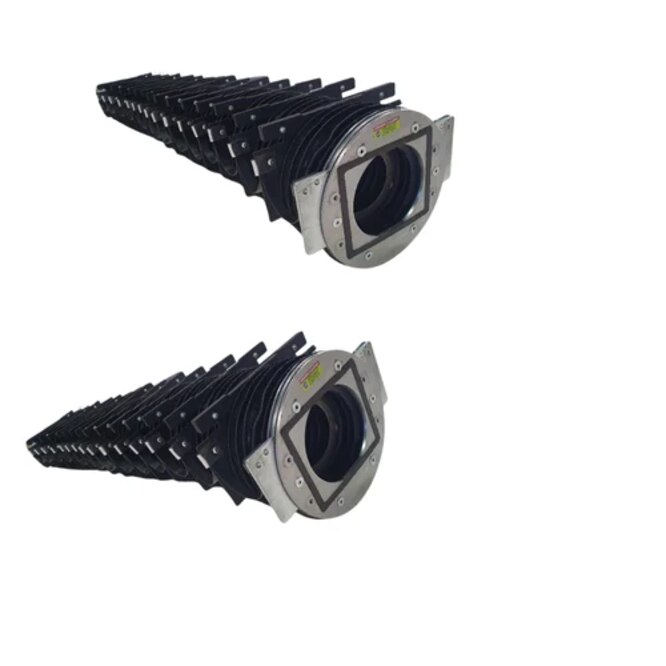
A correct replacement cannot be selected from “Trumpf laser bellows” alone: the machine serial number, axis, mounting interface, travel and exposure conditions determine the fit. By the end, you will have a measurement checklist, a construction-selection method and a supplier brief that a Rome maintenance team can use without removing the old cover prematurely.
Key takeaways
- Use the machine serial number and axis designation to identify the replacement.
- Measure folded length, extended length, width, height, mounting holes, and travel.
- Match fabric, reinforcement, seals, and heat resistance to the laser cell.
- Test full axis travel and clearance before returning the machine to service.
Identify the exact machine, axis and replacement outcome
Start with the machine serial number and axis identification, not the TRUMPF family name. A TruLaser 1030 cover is not automatically interchangeable with a TruLaser 5030 or TruMatic axis cover. The search term trumpf laser bellow covers for precision machines rome still does not identify the required replacement.
Gather these records before requesting a quotation:
- Machine model, serial number, generation or revision, and axis name
- Axis travel direction, nominal travel, maximum speed and acceleration
- Existing bellows’ compressed and extended lengths, width, height, fold count, and fold height
- Mounting-hole spacing, flange or frame dimensions, guide arrangement, and mounting method
- Clearance around the laser head, linear scales, limit switches, cable carrier, lubrication points, extraction ducts, and access panels
- Exposure to sparks, coolant, dust, heat, and the required sealing level
- Ambient temperature and any sensors or cable routing that the cover must preserve
- Photographs of both ends, plus a dimensioned sketch in millimetres
| Record | Why it decides the replacement | What a mismatch causes |
|---|---|---|
| Machine serial and axis | Identifies the correct revision and installation position | An apparently identical cover fits the wrong axis |
| Compressed and extended lengths | Defines package size and usable stroke | The cover restricts travel or collapses poorly |
| Flange and hole pattern | Confirms the physical interface | Drilling or adapters alter alignment |
| Operating conditions | Selects suitable materials and construction | Sparks, coolant, or heat damage the cover |
State the intended outcome: direct replacement, revised protection, or a cover that preserves existing interfaces. If it forms part of a laser enclosure, assess interlocks and enclosure performance separately; material suitability alone does not establish laser safety.
Measure the cover as a moving assembly, not a single size
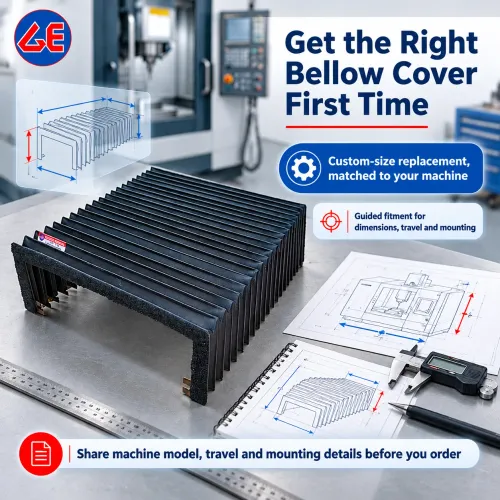
A quotation needs the Trumpf machine bellow cover size as a moving assembly, not one width or length. Measure the cover installed on the correct axis, with the machine at both travel limits.
Record the position of the laser head, guide rails, sensors, cable routing and nearby guards; a cover that fits the drawing can still foul the machine during motion.
Record these dimensions and conditions:
- Compressed length and fully extended length, measured along the travel axis
- Usable travel and travel direction
- Overall width, height and fold height
- Number of folds and the folded-pack thickness
- Mounting-hole spacing, hole diameter and edge distances
- Flange or frame length, width, thickness and fixing method
- Guide arrangement, side clearances and the clearance around the laser head
- Maximum speed, acceleration, sparks, coolant and ambient temperature
Photograph each mounting end with a ruler in view, then provide a dimensioned sketch showing datum points and tolerances. Measure hole centres from a defined edge rather than from the cover’s flexible fabric.
State whether the requested part is an OEM replacement, an exact reverse-engineered equivalent or a redesigned cover, because revised brackets or limit positions change installation.
Send the machine serial number and axis identification with the measurements. Do not rely on “TruLaser” or “TruMatic” alone; covers from different models and revisions are not automatically interchangeable. Ask the supplier to confirm the compressed envelope, full-travel clearance, mounting pattern and sensor access before fabrication.
Match construction and protection to the laser cell
Select the cover by axis speed, heat exposure, debris type and available clearance; no single Trumpf laser bellows option fits every precision-machine axis.
| Option | Best match | Main limitation |
|---|---|---|
| Fabric bellows | Fast, lightly loaded guideways needing low moving mass | Direct sparks and sharp chips can burn or cut the fabric |
| Coated fabric with lamella or slat protection | Laser axes exposed to abrasive dust, sparks and moderate hot particles | Added mass and fold stiffness need acceleration checks |
| Stainless-steel or steel-strip armour | Severe chip, scale and radiant-heat exposure near the cutting zone | Requires clearance and careful guidance |
| Telescopic steel cover with scraper or wiper | Direct impact from hot scale, heavy chips or concentrated debris | Heavier, less flexible and unsuitable for tight folded travel |
Laser-cutting cells need sealed folds and a heat-reflective or stainless layer when sparks, hot particles and metallic dust reach the cover. Match the construction to laser power, cut material, assist gas, piercing behaviour and the distance from the cutting head.
Ask the supplier to verify maximum speed, acceleration, vibration, unsupported span, fold compression and whether the cover is dragged, guided or suspended. A geometrically correct cover can still overload a fast axis through excessive mass, friction or stiffness.
A bellows is not laser safety guarding. If it closes an enclosure or limits radiation access, confirm the replacement’s effect on interlocks, enclosure performance and the machine’s protective system; material suitability alone proves none of those points.
Check whether a bellows is the right protection for the exposed component
Use a bellows when the exposed part needs a flexible, low-mass shield that follows repeated travel without obstructing the axis. It suits guideways and moving axes exposed to dust, fine debris, coolant mist or limited sparks, provided the folds do not exceed their compression, speed or acceleration limits.
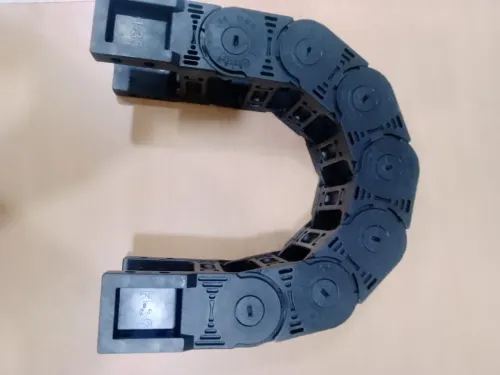
Choose another design when the hazard is severe. Telescopic steel covers or steel-strip armour handle direct chip impact and hot scale better; a fabric bellows can burn, tear or pack with debris. A cable carrier routes and restrains cables and hoses, but it is not a sealed guideway cover.
Use a carrier alongside a bellows when both functions are required.
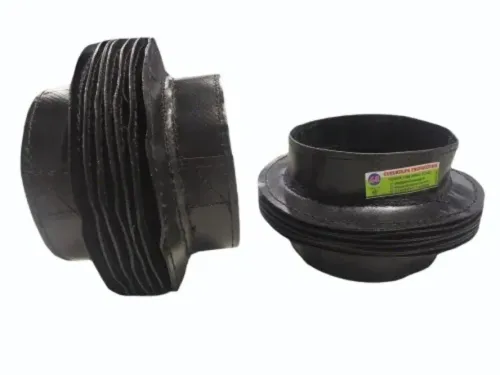
For a hose, select a bellows only when the hose needs an enclosed, flexible shield. A carrier is better when bend radius, unsupported length and repeated cable routing control the decision.
Around a laser head, use a bellows only where it protects a moving interface without touching optics, extraction ducts, sensors or the beam path; guarding and laser containment remain separate duties.
Reject a nominally matching cover if its mass, fold stiffness, friction or compressed package changes axis performance. Check these points before specifying laser bellow covers for precision manufacturing:
- Confirm whether the cover is dragged, guided or suspended.
- Check maximum speed, acceleration, vibration and unsupported span.
- Compare compressed and extended lengths, fold height and mounting flanges with the full travel envelope.
- Check clearance from linear scales, limit switches, lubrication points, cable carriers and access panels.
- Specify the sealing level, temperature, coolant or spark exposure, and required cable routing.
Demand evidence, plan the Rome installation and verify full travel
Require a drawing and evidence of fit, not a visual match. The quotation for trumpf laser bellows options should identify the machine serial number, axis, and whether the part is an OEM replacement, an exact reverse-engineered equivalent, or a redesigned cover requiring new brackets or limit checks.
1. Ask for a dimensioned drawing in millimetres showing compressed and extended lengths, width, height, fold height, number of folds, travel direction, flange dimensions, mounting-hole spacing, guide arrangement, and tolerances. Include maximum speed and acceleration, spark and coolant exposure, ambient temperature, sealing level, sensor clearance, and cable routing.
2. Plan the Rome installation around a controlled shutdown. Photograph both ends, label the old cover’s orientation, isolate electrical and laser energy, protect the guideway from debris, and confirm that the replacement will not alter guarding, access to moving parts, emergency-stop risk, or laser-radiation containment on the CE-marked machine.
3. Inspect every fold, stitched or welded seam, flange, hole, and guide before fitting. Reject a cover with crushed folds, blocked holes, uneven frames, or material damage. GURUKRUPA BELLOWS PVT LTD can be evaluated against the same drawing and interface evidence as any supplier.
4. Fit without forcing the frame, then move the axis slowly through its complete stroke. Check compression, extension, parallel clearance around the laser head, cable movement, sensors, limit positions, and absence of rubbing or buckling. Repeat at operating speed and acceleration; record the result before production resumes.
Related products
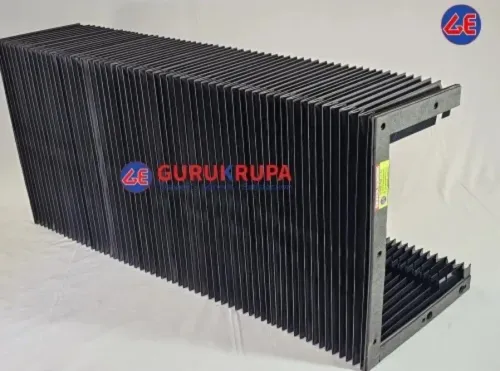
 | Trumpf Laser Bellows Product Details: Minimum Order Quantity 1 Number Brand GE Color Black Size any We offer bellows made specifically for your Trumpf® laser machine. View product → |
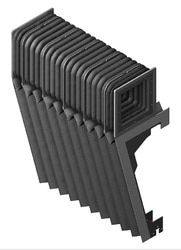 | Laser Cutting Machine Bellows We offer Laser Cutting Machine Bellows made specifically for your laser machine. View product → |
Frequently asked questions
How do you identify the correct TRUMPF laser bellows cover?
Record the machine serial number, exact axis, existing cover dimensions, mounting pattern, travel, and required replacement outcome. A TruLaser family name alone is not enough.
How do you measure a TRUMPF machine bellow cover size?
Measure the cover as a moving assembly: folded length, extended length, width, height, stroke, mounting-hole pattern, frame dimensions, and clearance at both travel limits.
Which TRUMPF laser bellows options suit a precision machine?
Choose construction, fabric, reinforcement, seals, scraper details, and heat or spark resistance according to the laser cell’s debris, coolant, heat, motion speed, and access conditions.
Is a bellows cover right for every exposed laser-machine component?
Use a bellows when the component needs flexible enclosure across a defined stroke. Compare it with telescopic steel covers, guideway wipers, shields, or cable carriers when space, heat, abrasion, or access makes bellows unsuitable.
What evidence should you request before installing laser bellow covers in Rome?
Request a dimensioned drawing, material specification, mounting details, travel limits, photographs or inspection records, and confirmation that the cover was built for the identified machine axis.
Related product
 | Laser Machine Bellows Product Details: Minimum Order Quantity 1 Number Brand GURUKRUPA Color BLACK, SILVER Size ALL Specifications: Capabilities Applied/Processes: Thermal... View product → |