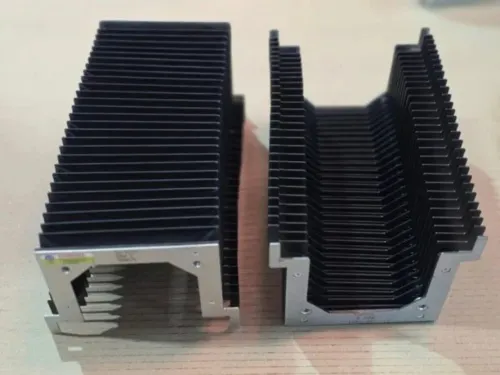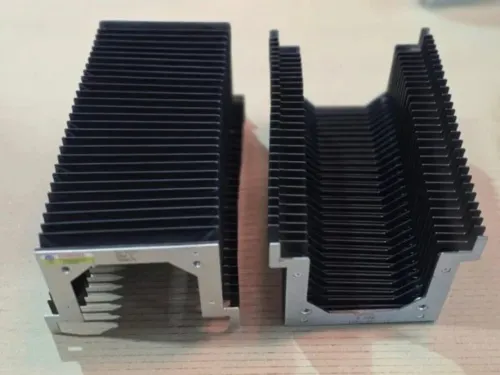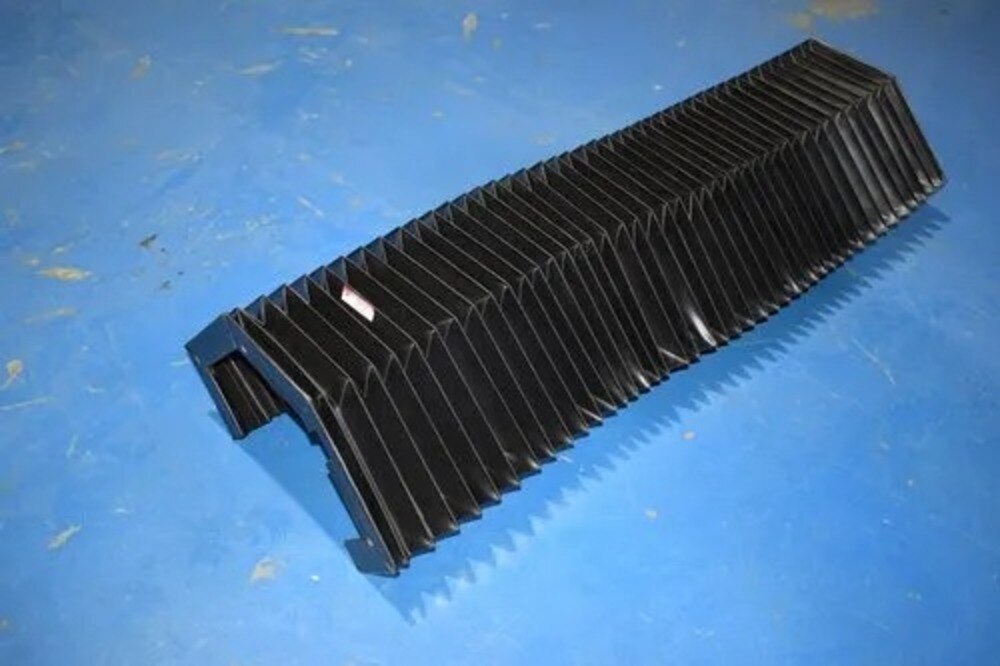
A machine-protection accordion bellow is built as a moving, layered barrier around a guideway or axis, not as a generic air-delivery device. By the end, you will know how manufacturers choose the layers, form the folds, attach the frames, measure the machine, and specify a cover that survives its actual hazards and motion.
Key takeaways
- Separate protective machine bellows from air-delivery bellows before specifying.
- Match fabric, coating and layers to coolant, chips, heat and abrasion.
- Give suppliers compressed length, extended length, travel and folded height.
- Check pleat geometry and seam construction against the machine’s movement path.
What materials and layers define an accordion bellow cover?
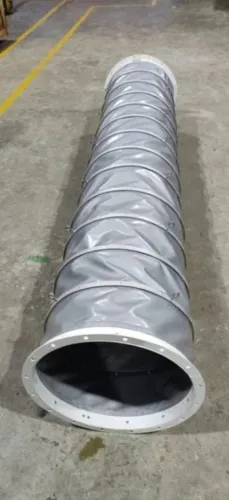
An accordion machine bellow cover shields guideways, screws, cables and moving components from chips, coolant, dust and motion. An air-delivery bellows product does the opposite job: it moves pressurized air. Do not specify the latter for accordion bellow covers for manufacturing.
Fabric or coating changes performance more than thickness alone:
| Material or layer | Performance effect | Check before selection |
|---|---|---|
| Polyester | Flexible, economical base fabric; moderate abrasion and humidity resistance | Oil, coolant, UV and temperature limits |
| Aramid | High tensile strength and heat resistance; useful near hot chips and sparks | Coating, thread and spark-test limits |
| PVC or polyurethane | Flexible thermoplastic coatings with useful dust, coolant and abrasion resistance | Oil, cleaner, UV and welding compatibility |
| Neoprene or rubber | Good flexibility, sealing and general oil resistance | Exact fluid, ozone, heat and aging limits |
| Silicone | High-temperature flexibility and hot-chip capability | Tear resistance, solvent exposure and spark duration |
| PTFE | Strong chemical and temperature resistance with low friction | Flex-fatigue, bonding method and cost |
| Stainless steel or engineered plastic | Reinforces folds, frames or guides against heat, impact and wear | Added mass, corrosion, clearances and movement load |
Hardware includes steel, stainless-steel or plastic frames, fasteners, guide elements and replaceable wipers. Match them to humidity, UV, sand and thermal expansion, not just the fabric.
The assembly is limited by its weakest coating, thread, adhesive, seam or frame. “Fireproof” or “waterproof” proves nothing without a stated temperature range, chemical exposure limit and spark test. A generic material label cannot predict service life.
How are the panels, pleats, seams and end frames assembled?
Start with the approved drawing: confirm extended and compressed lengths, fold count, mounting dimensions and travel direction. Select layers that tolerate the same heat and chemicals, then cut the main panels and corner pieces from flat material.
Mark fold lines, form the panels around a jig or former, and join each fold before attaching the frames.
- Use thread and a defined seam overlap for sewn construction; add corner reinforcement where folds change direction or loads concentrate.
- Use adhesive bonding for compatible layers when a smooth, flexible seam is needed.
- Use hot-air welding, radio-frequency welding or high-frequency welding only when the coatings are compatible thermoplastics. Add a sacrificial layer where hot swarf could damage the working skin.
- Attach aluminum, steel, stainless-steel or plastic end frames after checking squareness. Uneven fastener loading or misalignment pulls the first fold out of shape, damages the frame transition and transfers stress into seams and corners.
The choice affects accordion bellow cover construction and the production of custom accordion bellow covers in distinct ways:
| Method | Flexibility and sealing | Accuracy, repair and production |
|---|---|---|
| Sewn | Highest material and reinforcement compatibility; needle holes need sealing against leaks | Easy to repair, forgiving of fit; slower because cutting and stitching are manual |
| Bonded | Flexible and relatively leak-resistant with compatible surfaces | Good dimensional control; repair depends on adhesive access and cure time |
| Welded | Strong, leak-resistant seams with compatible thermoplastic coatings | Fast and repeatable; limited material choice and difficult field repair |
How do fold geometry and movement determine service life?
A cover’s travel is set by its folds, not by its overall fabric length. Fold height is the depth of each pleat; pitch is the distance from one fold to the next; and the number of folds determines how much movement the cover can absorb.
Extended length is the fully open dimension, compressed length is the packed dimension, and stroke equals extended length minus compressed length.
Manufacturers size the compressed package from the fold pitch and fold count, then check that the available travel matches the machine axis. Shallow folds reduce the packed length, but each fold provides less stroke. Deep folds provide more movement per fold, yet need greater minimum clearance and can create higher rubbing and inertial loads.
Leave clearance so opposing crests do not contact, chips cannot wedge between folds, and the cover does not collapse against the guideway.
Service life depends on where the material flexes and what moves around it. Fold roots and crests see repeated bending; high acceleration can make folds flutter or slap together; frequent cycling magnifies wear. Lateral skew twists the pleats and overloads seams and frame transitions.
- Specify the axis stroke, extended length, compressed length, fold height, pitch, fold count and minimum clearance.
- Check both travel limits for contacting folds, trapped chips and interference with the machine.
- Add guide rails, rollers, support strips or telescoping elements when the opening is wide or acceleration is high.
- Treat accordion bellow covers for manufacturing and accordion machine bellow covers as shields only: a bellows cover protects a moving axis but does not guide it or carry machine loads.
What measurements and construction method should you specify?
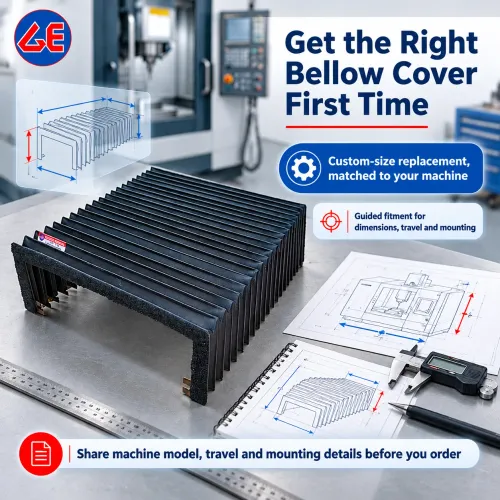
Specify custom accordion bellow covers from the machine envelope outward, not from a catalogue length. The accordion bellow cover construction drawing or 3D model must show the fixed and moving attachment points, fold geometry, frames and available clearance.
- Identify the protected axis, travel direction, stroke, extended length, compressed length, mounting orientation and required service life.
- Measure the guideway and moving component at both travel limits. Record opening width and height, top and side clearance, minimum compressed envelope, and clearance around every fold.
- Provide the mounting-hole pattern, hole diameters, frame dimensions, maximum speed, acceleration and cycle frequency.
- Check interference at full compression, including clamps, cables, lubrication lines and adjacent guards. State whether removal must be possible without dismantling the machine.
Do not compare covers by extended length or a coating label alone. Fold height, pitch, compressed package, seam method and dynamic support determine whether the cover survives.
| Method | Flexibility and sealing | Repair, control and lead time |
|---|---|---|
| Sewn | Highly flexible; seams need overlap and may leak | Easy to repair; accommodates mixed layers; fast to moderate production |
| Bonded | Flexible with good sealing when adhesive matches the layers | Repair is harder; dimensional control depends on fixturing; moderate lead time |
| Heat-welded | Strong, leak-resistant seams for compatible thermoplastics | Limited repair; accurate repeatability; moderate to long lead time |
| Molded | Consistent shape and sealing in elastomer parts | Poor field repair; high dimensional control; tooling creates longer lead time |
How should you match the cover to cutting fluids, heat and Abu Dhabi conditions?
Start with a hazard sheet, not a coating label. For custom accordion bellow covers, record:
- Exact fluid name and concentration, hydraulic-oil type, alkaline or chlorinated cleaner, cleaning method and cleaning frequency.
- Chip temperature, spark exposure time, abrasive-chip load, dust level, UV exposure and ambient temperature.
- Drawing or 3D model, travel, clearances, mounting details and whether hot swarf or welding sparks can reach the cover.
Water-miscible coolant, neat oil, alkaline washdown and chlorinated cleaner attack different coatings, thread systems and adhesives. Hot swarf creates concentrated heat; welding sparks add short, intense exposure, so a thicker fabric alone is not a solution. Require an allowable temperature for every layer, including coating, thread, adhesive, seam and hardware.
For hot-chip service, assess silicone, aramid, PTFE, metal reinforcement or a replaceable sacrificial layer.
For accordion bellow covers in Abu Dhabi, include direct solar exposure, airborne sand, elevated ambient heat and thermal expansion between the cover and machine frame. Specify UV-stabilised outer material, abrasion protection, protected or replaceable wipers and a cleaning plan that removes sand without driving it into the folds.
Ask GURUKRUPA BELLOWS PVT LTD to review the drawing and hazard data, then inspect crests, roots, seams, corners, frame transitions and leakage after testing.
IEC 60529 ratings apply to the tested enclosure or assembly. ISO 14120 and IEC 60204-1 do not make a flexible cover the sole safety guard.
Related products
 | Accordion Bellow Cover Ours is a trustworthy name in the business that brings forth Accordion Bellow Cover that is used for delivering controlled pressurized air to a... View product → |
 | Soft Material Bellow Product Details: Brand GURUKRUPA Specifications:- Function of accordion machine shield: water-proof,oil-proof, anti-corrosion, fire-proof... View product → |
Frequently asked questions
What materials and layers define an accordion bellow cover?
Accordion bellow cover construction uses a flexible coated fabric or elastomeric material selected for the machine’s chips, coolant, heat and abrasion. Reinforcement layers, sliding plates or internal supports add shape and wear resistance where the application requires them.
How are accordion machine bellow covers assembled?
Manufacturers form individual panels and pleats, join them with specified seams or bonded joints, and attach end frames or mounting flanges. The finished cover must open and compress without rubbing against the protected guideway or snagging nearby components.
What measurements should you specify for custom accordion bellow covers?
Provide the protected component’s width, height, travel, compressed length, extended length, pleat height, mounting dimensions and clearance around the moving path. Include the machine’s speed, acceleration and installation orientation.
How do you match accordion bellow covers in Abu Dhabi to operating conditions?
Specify materials and coatings for the cutting fluids, chips, ambient heat, ultraviolet exposure, sand and cleaning chemicals present at the site. Confirm the operating temperature range and seal or frame details when dust ingress is a concern.