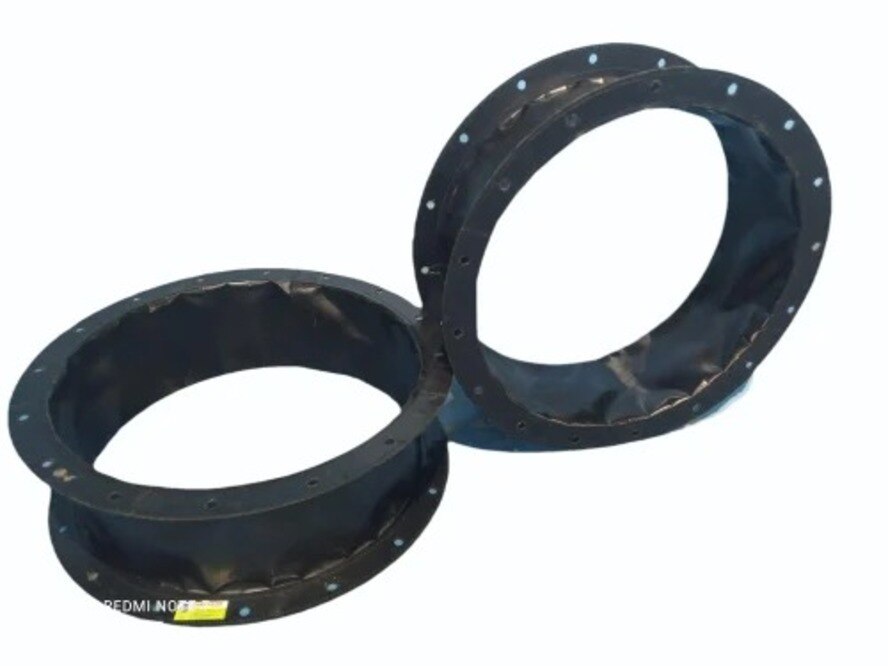
A quoted fabric bellow cover can mean only a sewn flexible element, or a complete assembly with frames, clamps, insulation and mounting hardware. You will be able to identify the included parts, separate machine-tool covers from duct expansion joints, and prepare a specification that makes competing quotations comparable.
Key takeaways
- Identify whether you need a machine-tool way cover or duct expansion joint.
- List bellows dimensions, movement, fabric layers, frames, flanges and fastening hardware.
- Verify temperature, chemicals, pressure, dust, moisture and movement before ordering.
- Send Ahmedabad suppliers a drawing, operating data and inspection requirements.
First identify the application: machine tool or duct joint
A “fabric expansion bellow cover” can mean either a machine-tool way cover protecting guideways, screws and cables, or a fabric expansion joint installed between duct or pipe sections. These products do not share the same movement data, temperature limits or hardware.
| Application | Movement to specify | Typical connection |
|---|---|---|
| Machine-tool cover | Axial travel along a guideway, vertical or horizontal movement, vibration, and multi-axis travel | Fixed and moving machine mounting faces |
| Duct expansion joint | Axial extension or compression, lateral offset, angular movement, vibration, and thermal growth | Anchored duct or pipe sections |
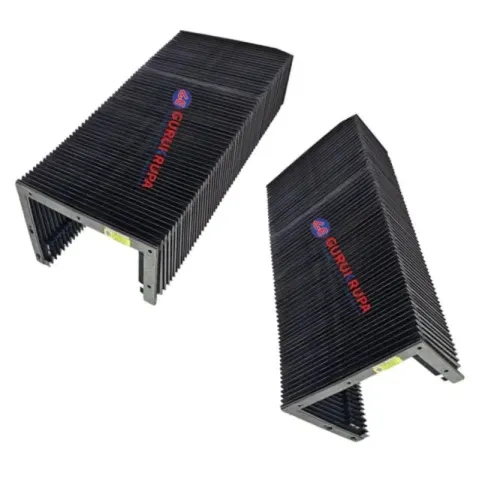
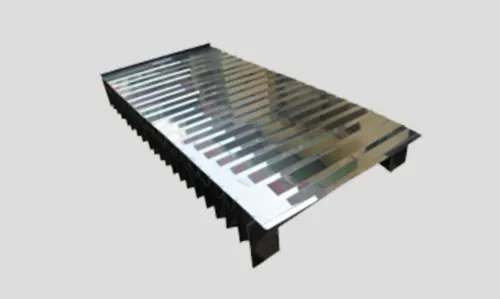
For a machine tool, the quotation may include a fabricated bellows body with end frames, guide strips, sliding shoes, wipers, intermediate supports, mounting angles and fasteners. Treat each item as excluded unless the quotation lists it; one supplier may quote only the sewn cover while another quotes a mounted assembly.
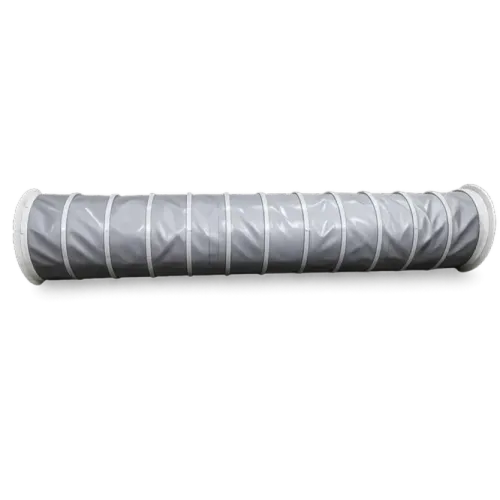
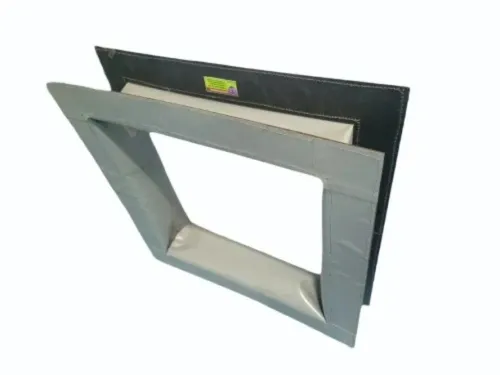
For a duct, the fabric element accommodates movement and seals the gap between sections. It does not carry structural load or correct poor alignment: duct anchors, guides and supports carry the duct, while unsupported weight can tear the joint. Nominal width, height or diameter alone cannot define either product.
Fabric expansion joint details also require the face-to-face length, movement values and connection arrangement.
State these three points in your enquiry:
- Application: machine tool or duct joint
- Movement direction and amount
- Connection point, including fixed and moving faces or duct flanges
What parts can be included in the quoted assembly?
The quoted assembly starts with the flexible fabric body, not automatically with every part around it. Ask for its laminated construction: an outer wear layer, reinforcement layer and inner layer selected for chips, coolant, oil, heat, moisture or abrasion.
Confirm each fabric expansion bellow cover component against this checklist:
- Body and protective layers: insulation or cushioning pillows, thermal barriers, liners, flow sleeves, wear liners and protective outer layers for duct applications.
- Retention and mounting hardware: retaining rings, clamp bars, backing strips, end frames, mounting flanges, intermediate support frames, guide strips, sliding shoes, wipers, skirts, mounting angles and bolting hardware.
- Scope documents and spares: replacement fabric sections, installation instructions and a general-arrangement drawing.
A machine-tool cover does not automatically function as a chip conveyor, chip scraper, coolant seal or load-bearing guard. Hot chips and high-pressure coolant can require stainless-steel slats or separate shields.
For a duct assembly, identify the flexible belt separately from mating flanges or customer-supplied duct frames. Insulation, clamps and liners can also be supplied separately.
“Complete cover” is not a sufficient inclusion statement. Require the quotation to mark every item as included, optional or customer-supplied, including the body, hardware, supports, protection, drawings and replacement sections. A sewn fabric element and a complete mounted assembly are different purchases.
Which construction and dimensional details belong on the specification?
Request fabric expansion joint details with number of plies, fabric grade, coating type and thickness, total thickness, mass per square metre, reinforcement, seam design and thread, fold pitch, and allowable movement. The phrase fabric expansion bellow covers for specifications in Ahmedabad is incomplete without these construction values.
| Application | Dimensional and movement data |
|---|---|
| Machine-tool cover | Closed length, maximum extended length, compressed height, width, height, number of folds, fold depth, mounting-face dimensions, hole pattern and maximum travel. Identify linear, vertical, horizontal, inclined or multi-axis travel, plus speed and acceleration. |
| Duct joint | Opening width and height or pipe diameter, face-to-face length, flange or frame dimensions, axial compression and extension, lateral and angular movement, design pressure or draft, vibration and flow direction. |
For vertical covers, specify fold-sag control and chip-shedding provisions. On high-speed axes, compare moving mass and controlled fold movement; the thickest fabric can slow the axis and worsen tracking.
Attach a drawing showing fixed and moving faces, obstruction zones, fold orientation and the reference position for quoted length. State dimensional tolerances and require checks for mounting-hole conformity, fold symmetry, seam quality, coating continuity, pinholes and delamination. Require full-stroke movement testing.
For ducts, define a leakage test and acceptance limit rather than relying on visual inspection.
How should temperature, chemicals and operating conditions be verified?
A 1000 °C claim does not prove that a cover is suitable or that the quoted assembly includes the right materials. Ask whether it means gas temperature, fabric-surface temperature, radiant heat, a brief peak, or continuous service.
| Verify | Ask for |
|---|---|
| Temperature basis | Tested duration, measurement location, and allowable temperature at the seam and mounting area |
| Material limit | Coating continuous-service range, softening or degradation point, and radiant-heat resistance |
| Construction | Silicone, PTFE-based, or aramid construction when the application demands high-temperature service |
Do not assume polyurethane-coated nylon can withstand continuous exposure at 1000 °C. Request test evidence before accepting the claim, and ask whether hot chips touch the fabric. Direct hot-chip contact or abrasive flow can require liners, outer shields, or a different seam construction.
Specify exposure to oil, gas, solvents, acids, alkalis, moisture, steam, dust, abrasive particles, coolant, grinding sludge, welding spatter, and hot chips. Ask which chemical concentration, pressure, exposure time, and temperature were tested; “corrosion resistant” does not identify chemical compatibility.
For fabric expansion bellow covers for specifications in Ahmedabad, record whether the installation is indoors or outdoors, the ambient temperature range, monsoon moisture, dust, wash-down method, and coolant chemistry. The enquiry should also state whether heat comes from radiant equipment, hot gas, chips, or welding.
These details determine the cover and seam construction, not the temperature figure alone.
How do you write an Ahmedabad fabric bellows ordering request?
1. Attach a marked-up machine or duct drawing and a photograph showing the installation location. For fabric expansion bellow covers for specifications in ahmedabad, state the application type, overall dimensions, fixed and moving faces, travel in millimetres, speed, acceleration, orientation, obstruction zones, media, flow direction, pressure, temperature profile and contaminants.
Mark fold orientation, hole pattern and the reference position for quoted length.
- Mandatory: bellows body, end frames, flanges, intermediate supports, clamp bars, fasteners and mounting angles.
- Options: wipers, liners, insulation pillows, inspection drawing and installation instructions.
3. Require every quotation to identify compressed, nominal and extended length. Ask for dimensional tolerances, fold symmetry, seam quality, coating continuity, freedom from delamination and pinholes, and smooth movement through the complete stroke. For a duct joint, add a defined leakage criterion and test method; visual inspection alone is not acceptance.
Ahmedabad sourcing does not create a universal dimensional standard. Your drawing controls the interpretation of length, mounting and movement.
For fabric expansion bellows ordering with GURUKRUPA BELLOWS PVT LTD, use this checklist and require the quotation to distinguish the sewn cover from a complete mounted assembly. This prevents a flexible fabric element from being mistaken for a ready-to-install cover.
Related products
 | Fabric Expantion Bellow ₹1000 Make in Heavy duty Fabric’s View product → |
 | Bellow Cover We are considered a well-known name in the business that manufactures and supplies Bellow Cover. View product → |
Frequently asked questions
How do you identify whether a fabric bellow is for a machine tool or duct joint?
A machine-tool way cover protects guideways, screws and cables while moving with the machine axis. A duct expansion joint sits between duct or pipe sections and absorbs thermal movement, vibration or misalignment.
What parts can be included in a fabric expansion bellow assembly?
A quoted assembly can include the fabric bellows body, insulation or liner, retaining frames, flanges, clamp strips, corner pieces, bolting, gaskets and mounting hardware. Confirm every included part on the quotation.
Which fabric bellows details belong on the specification?
State the installed length, compressed and extended lengths, width, height, flange dimensions, bolt-hole pattern, number of convolutions, movement in each direction, fabric layers, seams, reinforcement and connection details.
What operating information should you verify before ordering fabric bellows?
Provide continuous and peak temperature, pressure or suction, gas or fluid composition, chemical exposure, dust, moisture, abrasion, fire risk, vibration, cycle frequency and the required service life.
How should you write a fabric bellows ordering request in Ahmedabad?
Name the application, attach a dimensioned drawing, give movement and operating conditions, specify materials and hardware, state quantity and delivery location, and request drawings, test documents and a line-by-line scope of supply.
Related product
 | Product Details: Brand Gurukrupa Material Nylon Fabric coated with polyurethane Max Temp Resistance 1000 C Offered in the market at the most... View product → |