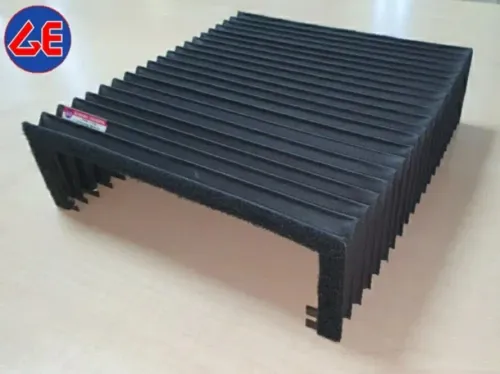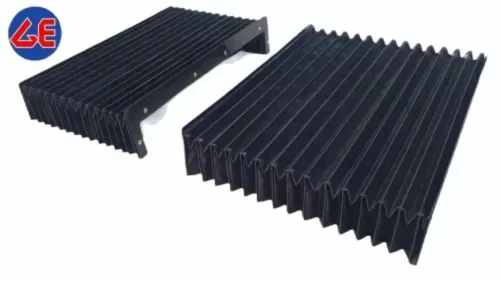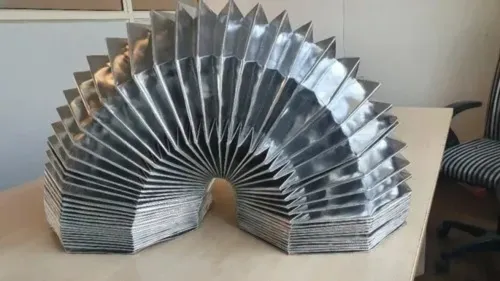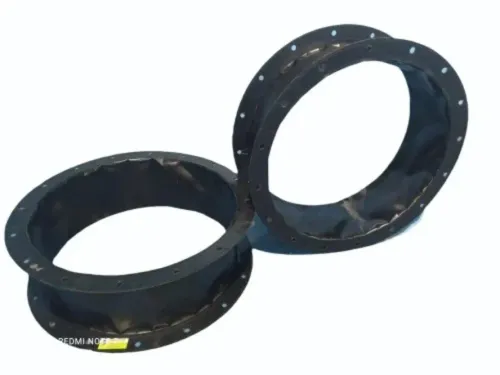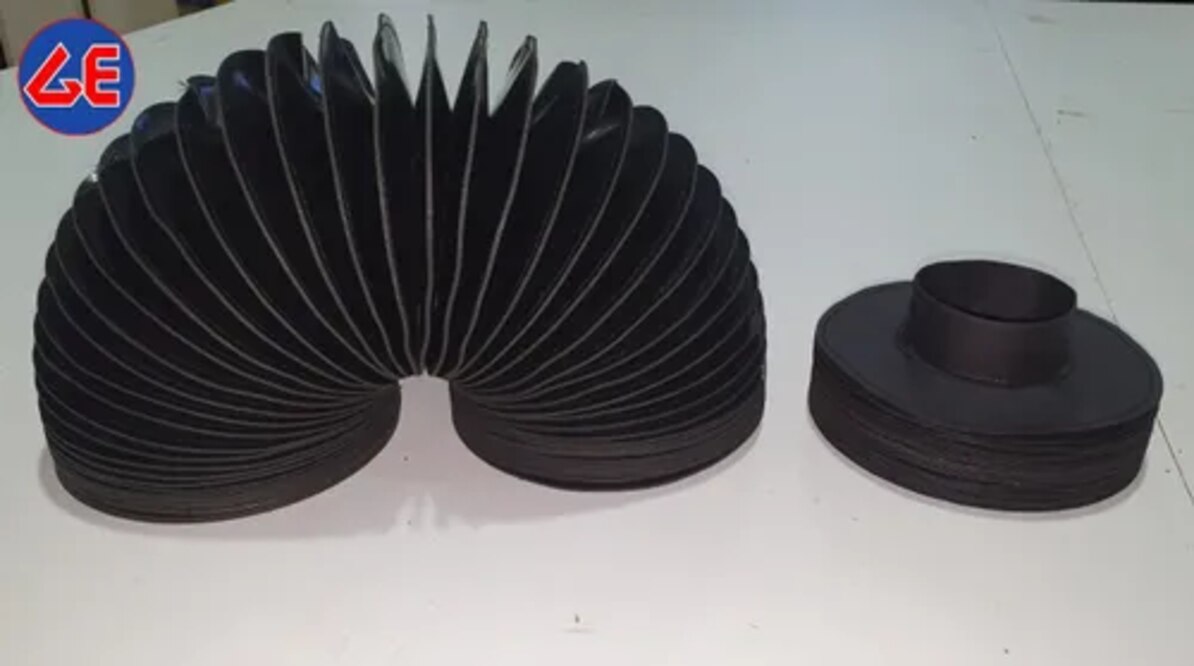
A ball screw cover must handle more than the screw’s diameter: chips, abrasive dust, coolant, way lubricant, humidity, hot swarf and rapid reciprocating motion all affect the design. By the end, you will know how to choose the cover type, record the dimensions, specify materials and limits, install the assembly and maintain it through its service life.
Key takeaways
- Match fabric, coating and seams to coolant, chips, humidity and heat.
- Measure compressed length, extended length, opening, mounting and travel before requesting a design.
- Keep the cover clear of screw rotation, guides, seals and adjacent moving parts.
- Clean chips and coolant routinely; replace torn, hardened, delaminated or leaking bellows.
Why a ball screw needs a dedicated flexible cover
A ball screw needs a dedicated flexible cover because chips and abrasive particles can enter the screw–nut contact path, damage the rolling elements, and turn lubricant into grinding paste. Coolant and hot swarf add corrosion, thermal shock, and hardened deposits that increase torque and shorten service life.
A ball screw bellow cover protects:
- The screw thread from chips, dust, way lubricant, coolant and swarf
- The ball nut’s external body and nearby seals from direct impact
- Lubricant on the screw from being washed away or contaminated
- Adjacent machine surfaces from thrown debris carried by the rotating screw
The cover is a secondary barrier, not a replacement for the ball nut’s wipers or seals. It reduces the quantity and velocity of contamination reaching the assembly; the nut’s wipers still control entry at the recirculation point.
For ball screw bellow covers in Bangalore, specify the actual combination of abrasive dust, metal chips, cutting fluid, humidity and occasional hot swarf. A cover chosen only by screw diameter can fail at its coating, folds or mounting flanges.
A bellows is the right method when the axis has limited installation space, changing geometry, moderate chip loading and a moving nut or carriage that needs flexible coverage. Choose telescopic steel, roller protection, or a combined rigid guard and short bellows for severe chip loading, very long travel, or a long unsupported horizontal span.
The cover must follow the correct moving reference without carrying structural loads. Seal every interface around the nut housing, end plates and flanges.
Choose construction materials for Bangalore’s actual exposure
A ball screw bellows must match the exposure combination, not just the screw diameter. Bangalore’s moderate ambient temperature does not eliminate condensation, settled dust, coolant paste at the folds or occasional hot swarf. Machine tool bellow covers remain a secondary barrier; ball-nut seals and wipers still stop contamination at the recirculation entry point.
| Exposure | Suitable construction | Check before approval |
|---|---|---|
| Coolant, oil and way lubricant | Coated polyester or polyurethane fabric, sealed seams and corrosion-resistant end frames | Chemical compatibility of coating, thread, adhesive and mounting seal |
| Metal chips and abrasive dust | Wear-resistant outer coating, reinforced fold edges, guide strips or internal supports | A plain fabric cover can be cut, packed with chips or dragged into the screw |
| Humidity and condensation | Non-absorbent fabric, sealed stitching and stainless or treated-steel hardware | Inspect folds for abrasive paste and mounting corrosion |
| Hot swarf, sparks or fire risk | Heat-rated silicone-coated glass fabric, aramid reinforcement or a separate steel/telescopic guard | Obtain the complete assembly’s temperature and flame limits; ordinary coolant fabric is not automatically spark-safe |
Specify maximum axis speed, acceleration and cycle frequency. Rapid reciprocation can make folds flap, resonate, rub or heat up even when the material resists coolant.
- Request limits for the complete construction, including frame, thread, adhesive and end mounting.
- Add independent support for long horizontal covers; do not let the bellows guide or carry the screw.
- Use a separate chip or spark shield when grinding dust, welding sparks or high-pressure washdown exceeds the fabric design.
Measure the complete motion envelope before requesting a design
The screw’s nominal diameter is only one input: measure the complete motion envelope, including the nut housing, stroke, compressed and extended cover lengths, and every nearby obstruction. Record the measurements with the axis in its actual orientation, because a long horizontal cover can sag into the screw or guideway.
Use a dimensioned drawing or measurement sheet containing:
- Screw diameter and usable screw length; nut or nut-housing diameter, length and position at both travel limits.
- Maximum carriage travel, travel direction, cycle speed, acceleration, stroke frequency and axis orientation.
- Extended length, compressed length, fold pitch or number of folds, opening sizes and the required extension ratio.
- Fixed-end and moving-end mounting-face dimensions, end-frame orientation, flange thickness, bolt-hole pattern and corner geometry.
- Radial and axial clearance from guards, adjacent axes, ways, cables and coolant lines, plus space for lubrication, inspection and removal.
- Exposure to abrasive dust, chips, cutting fluid, way lubricant, humidity and hot swarf; ambient temperature alone is not enough.
Dimension to compare the moving and fixed interfaces:
| Measurement | Moving end | Fixed end |
|---|---|---|
| Opening | Nut housing clearance | Screw or end-plate clearance |
| Mounting face | Carriage location | Machine-frame location |
| Clearance | Full nut envelope | Adjacent guard and ways |
| Access | Lubrication route | Inspection and fastener access |
Specify guide strips, support rings or slide supports when the span is long; the bellows is not a structural guide. Request custom ball screw bellows from this record.
For ball screw bellow covers in bangalore, GURUKRUPA BELLOWS PVT LTD can use those interface and exposure details to avoid a cover that fits the screw but interferes with the machine.
Set operating limits and install the cover without creating interference
Set the cover’s performance limits from the axis data, not from screw diameter alone. Record the maximum travel speed, acceleration, cycle frequency, extended and compressed lengths, operating temperature, coolant type, chip loading and exposure to hot swarf.
Treat the bellows as a barrier, not a load-bearing guide; the nut’s seals and wipers remain the primary protection.
Define these limits before approving the drawing:
- Maximum extension and compression, with a reserve at both ends of travel
- Permitted fold compression, lateral deflection and mounting misalignment
- Maximum temperature and chemical exposure at the fabric, seams and adhesive
- Acceptable chip size, abrasive dust level and cleaning method
- Lubrication and inspection access without removing the cover
The moving end of the ball screw protection covers must attach to the nut housing or axis carriage that actually travels with the screw. Attach the fixed end to the machine structure. A wrong reference point twists the folds, adds axial or transverse loads and causes early tearing.
Move the axis by hand through its complete stroke before tightening fasteners. Check the cover does not touch the screw, nut, guideway, adjacent axis, cable carrier or end stop when fully extended or collapsed. Close gaps around the nut housing and end plates with correctly sized frames, controlled overlap and clamping or bolted flanges.
Machine tool bellow covers with severe chip loading or long travel may need a rigid telescopic guard as the primary barrier.
Inspect, clean and replace the cover before protection is lost
Inspect the cover at every shift change in chip-heavy machining, and at least weekly on cleaner axes. Stop and isolate the machine before opening guards. A ball screw protection cover that looks intact from outside can hide a split fold or coolant trapped against the screw.
- Remove chips with a soft brush or vacuum; do not drag swarf across the fabric. Wipe coolant and abrasive dust with a lint-free cloth and a cleaning agent approved for the cover material.
- Extend and compress the cover by hand through its travel. Check that folds open evenly and do not sag, rub the screw, catch the nut, or strike nearby axes.
- Examine every fold, seam, coating, end frame, guide strip and mounting hole. Look for pinholes, cuts, delamination, hardened fabric, loose stitching, distorted frames and missing fasteners.
- Check the ball screw after cleaning. Chips or coolant inside the cover indicate a failed barrier, while rising noise, rough motion or abnormal backlash requires ball-screw inspection by a qualified technician.
- Repair only a small, localised surface defect when the surrounding material remains flexible and the fold geometry is unchanged. Replace the cover after a torn seam, through-hole, widespread coating loss, permanent deformation, repeated patch failure or contact with moving parts.
Order replacement custom ball screw bellows from a drawing that records compressed and extended lengths, fold count, clearances, end orientation and mounting-hole pattern. Do not fit a cover that merely matches screw diameter; it must suit Bangalore’s chips, coolant, humidity and abrasive dust.
Frequently asked questions
Why does a ball screw need a dedicated flexible cover?
A dedicated cover blocks chips, abrasive particles, coolant and hot swarf from entering the screw–nut contact path while allowing the axis to travel.
What should you consider when choosing a ball screw bellow cover for Bangalore conditions?
Match the fabric, coating, seams and mounting method to the machine’s dust, coolant, humidity, heat, chips and corrosion exposure.
What measurements are needed for custom ball screw bellows?
Record the compressed and extended lengths, required travel, opening dimensions, mounting points, clearances and the complete motion envelope.
How do you prevent a bellow cover from interfering with a machine axis?
Set operating limits, confirm clearance through the full stroke and keep the cover away from the rotating screw, guideways, seals and adjacent moving parts.
When should you replace a ball screw protection cover?
Replace it when you find tears, holes, hardened or cracked material, delamination, damaged mounting points, leaking seams or restricted movement.