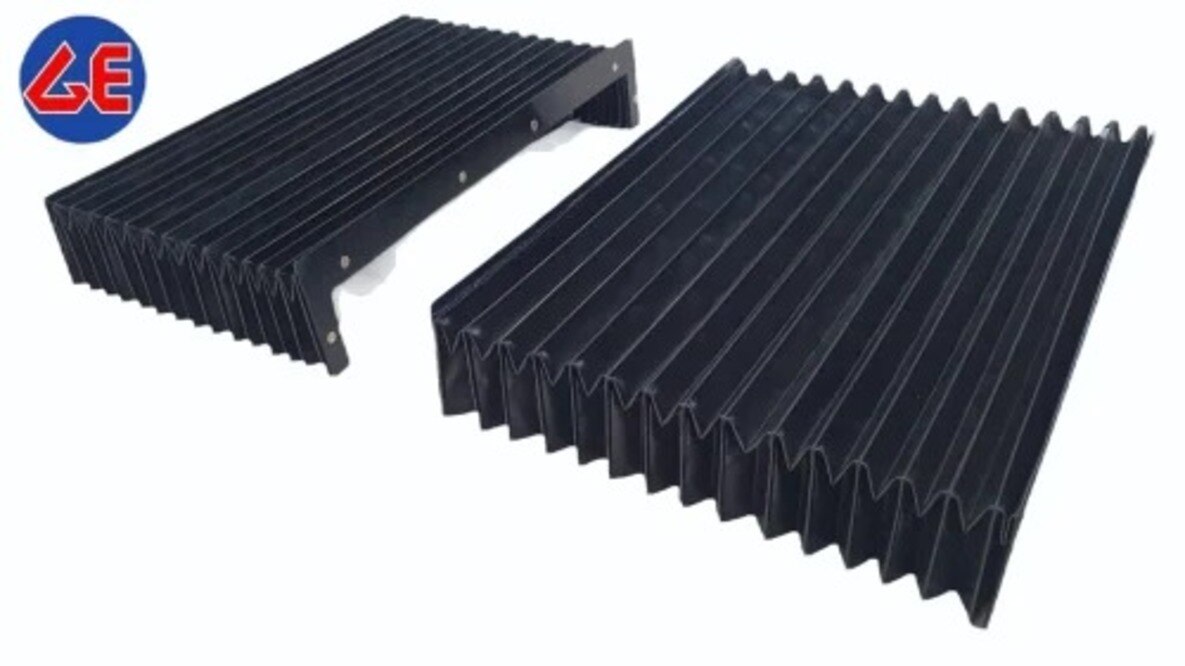
The joining method affects whether a bellow cover keeps out coolant and chips, survives repeated compression, and can be repaired after damage. By comparing the seam, fabric, failure risks and operating conditions, you will be able to choose the construction and write a specification that a supplier can verify.
Key takeaways
- Choose thermal bonding when coolant and fine dust demand a continuous seam.
- Choose sewn covers when flexibility, field repair and complex shapes matter most.
- Match the joining method to coating, temperature, travel and exposure conditions.
- Request seam samples and test results before ordering custom bellow covers.
How thermal bonding and sewing create different seams
A thermally bonded bellow fuses overlapping coated fabric layers with controlled heat and pressure; a sewn bellow cover joins panels with a needle and thread. The bonded seam has no needle perforations, so it offers a cleaner barrier against coolant, fine dust and chips when the fabric coating, temperature, pressure and overlap are correctly matched.
“Heat sealed” does not identify one process. Ask whether the supplier used hot air, hot wedge, impulse or RF equipment, and which coating chemistry was welded. PVC-coated polyester and polyurethane-coated fabrics may suit thermal bonding; uncoated textiles and some silicone- or neoprene-coated fabrics may require sewing or a validated process.
Thermally bonded bellows | Sewn bellow covers Seam structure | Fused coated layers | Thread passes through fabric Leakage path | No needle holes, but a poor weld can split or leak | Needle holes can wick coolant unless sealed or covered Flexibility | Clean, consistent seam with a defined bend limit | Flexible construction and easier panel alterations Surface | Smooth, with fewer exposed contamination traps | Thread and seam ridges collect debris and face abrasion Service life | Depends on coating compatibility and weld control | Depends on thread, seam protection and abrasion
A sewn cover remains practical when you need field repair, modification or a fabric that cannot be welded. A bonded cover suits controlled production and fluid exclusion, but it is not automatically leak-proof; request seam samples, the operating temperature range and leakage or cycling-test results before comparing quotations.
Match the fabric and joining method to the machine environment
Abrasive chips and coolant favour thermally bonded bellows when the fabric and coating accept the specified welding process. Eliminating needle perforations reduces entry paths, but the seam is not automatically leak-proof: overlap, weld temperature, dwell time, pressure, cleanliness and coating compatibility control the result.
| Machine environment | Better starting point | What to specify |
|---|---|---|
| Dry chips and fine abrasive dust | Thermally bonded bellows | PVC-coated polyester or polyurethane-coated fabric, with sealed overlaps and a cycling test |
| Coolant and cutting fluid | Thermally bonded bellows | Fluid compatibility, seam leakage testing and protection against pooled liquid |
| Oil exposure | Either construction | Confirm resistance of the coating and thread; oil can soften some coatings and weaken sewn seams |
| High heat or welding spatter | Heat-resistant coated fabric, often sewn | Specify the actual temperature, radiant heat and spatter exposure; do not assume a heat seal tolerates furnace-level heat |
| Repeated compression and lateral movement | Either, matched to the fold geometry | Check compressed length, stroke, acceleration and fold clearance; a rigid seam can fatigue during misalignment |
| Outdoor Chennai exposure | Either, with weather-resistant fabric | Account for humidity, heavy rain, UV and salt-laden air; protect internal supports from corrosion |
Sewn covers remain the practical choice when you need field repair, alterations, or a textile that cannot be thermally welded. Cover or reposition the seam when coolant or dust follows the contamination path, because needle holes, thread wear and wicking can become the failure route.
Ask which process made the heat sealed bellow covers—hot air, hot wedge, impulse or RF—and request the compatible fabric specification rather than accepting “sealed” as a performance rating.
Compare failure modes, maintenance and repairability
Sewn bellow covers are usually easier to repair or alter in the field; thermally bonded covers usually provide cleaner, more consistent sealing when the fabric and process are controlled. Both can fail early if movement, heat, chips or coolant exceed the design.
| Option | Common failure modes | Maintenance and repairability |
|---|---|---|
| Sewn bellow covers | Needle holes leak or wick coolant; thread frays; seams abrade; patches pull away from weakened fabric. | Inspect thread and seam tape regularly. A damaged panel can often be restitched, patched or replaced locally. |
| Thermally bonded covers | Welds can peel, crack or become brittle when heat, pressure, overlap or coating compatibility is wrong; contamination during bonding creates weak spots. | Wipe-down is easier because there are no needle perforations. Field repair needs compatible coated fabric and controlled heat, so replacement is often simpler than rewelding. |
| Sewn versus bonded | Both can stretch, split at folds or suffer support-frame corrosion in Chennai’s humidity, rain and salt-laden air. | Keep the cover clean, check travel and inspect folds before damage reaches the guideway. |
Look for these failure signs:
- Coolant appearing on the protected side points to an open seam, failed tape or a bonded seam defect.
- White abrasion marks, exposed thread or lifted edge tape indicate a sewn seam needs prompt repair.
- A hard, glossy, cracked weld line indicates heat damage or coating degradation, not a minor cosmetic fault.
- A repair must restore free movement; a thick patch can snag during compression and cause a second tear.
Choose sewn construction when local repairability matters most. Choose thermal bonding when fluid exclusion, cleanability and repeatable sealing outweigh easy field modification.
What to specify and test before placing an order
A quotation for heat sealed bellow covers is incomplete unless it names the fabric construction, coating chemistry, joining process and operating limits. Ask whether seams use hot air, hot wedge, impulse, RF or another process; “thermally bonded” is not one universal method.
Send the supplier a machine drawing and require these details:
- Open length, compressed length, stroke, fold pitch, mounting dimensions and available clearance
- Axis speed, acceleration, moving mass, minimum bend radius and support or guide arrangement
- Chip type, coolant, oil, welding spatter, outdoor exposure and salt-laden coastal air
- Operating-temperature range, humidity limits and resistance of the coating to each fluid
- Number and location of seams, plus the proposed seam overlap and mounting interface
- Leakage-test method, cycling-test target, test speed and acceleration, and recorded result
| Check | Thermally bonded | Sewn |
|---|---|---|
| Fabric evidence | Name the coated fabric, such as PVC-coated polyester, polyurethane-coated fabric or silicone-coated fabric | Include thread type, needle construction and any seam tape, sealant or coating |
| Fit evidence | Confirm compressed-length clearance; inadequate space causes buckling and rubbing | Confirm the same clearance, because stitching does not correct a poor geometry |
| Acceptance test | Require leakage and stroke-cycle results at the specified temperature and contamination exposure | Inspect needle holes, seam wicking and thread abrasion after cycling |
Reject “custom” or “heavy-duty” alone as a rating. A cover that matches the stroke but exceeds the available compressed length will fail before its material rating matters.
Making the choice for a Chennai machine installation
Choose thermally bonded bellow covers in Chennai when coolant exclusion, cleanability and consistent sealing matter more than field alteration. Choose sewn construction when you expect repairs, dimensional changes or materials that cannot be heat-welded.
| Option | Strength in a Chennai installation | Choose it when |
|---|---|---|
| Thermally bonded | Sealed seams reduce wicking and trap fewer chips; controlled bonding gives repeatable movement | Coolant, oil, fine dust or frequent washdown reaches the cover |
| Sewn | Easier to open, patch and modify; thread and seam design accommodate more fabric choices | Maintenance access, field repair or uncoated and silicone-coated fabrics matters |
| Either, if specified correctly | Service life depends on fabric, coating, supports and cycle testing—not the label | The supplier documents the actual process and test result |
For thermally bonded covers, ask whether the seams use hot air, hot wedge, impulse, RF or another process. Require the fabric construction, coating chemistry, operating-temperature range, seam locations, compressed length and leakage or cycling test.
Chennai installations also need protection against humidity, monsoon rain, heat and salt-laden coastal air. Specify corrosion-resistant internal supports and check that the coating will not degrade before the machine reaches its stroke-cycle target.
For custom bellow covers in Chennai, give the supplier the contaminant, fluid, temperature, speed, acceleration, stroke, mounting method and allowable folded length. GURUKRUPA BELLOWS PVT LTD can be evaluated against those same measurable requirements rather than a generic “heavy-duty” description.
If the quotation only says “heat sealed,” return it for technical details. A neat seam is not proof of a durable cover.
Related product
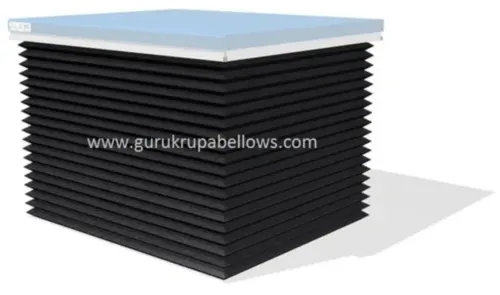
 | Thermally Bonded Bellows ₹1000 Product Details: Brand GURUKRUPA Color BLACK & OTHER Size ALL On offer from us is available Thermally Bonded Bellows for the clients. View product → |
Frequently asked questions
How do thermally bonded and sewn bellow covers differ?
Thermal bonding fuses overlapping coated fabric layers with heat and pressure, while sewing joins panels with thread and needle perforations. Bonded seams provide a continuous barrier when the coating and process are correctly matched.
Which joining method suits a coolant-heavy machine environment?
Thermally bonded bellows suit coolant and fine-dust exposure when the coated fabric, seam temperature, pressure and overlap are compatible. Confirm performance with a representative seam sample.
When are sewn bellow covers the better choice?
Sewn bellow covers are useful when the design needs flexibility, unusual panel geometry or practical field repair. Inspect thread, needle holes and seam protection as part of the specification.
What should you test before ordering heat sealed bellow covers?
Test a representative seam for leakage, flexing, temperature exposure, abrasion and the machine's travel cycle. Specify fabric coating, operating temperature, dimensions, overlap and repair requirements.