Fly ash loading creates a difficult connection point: fine abrasive powder escapes as displaced air, vehicle movement, poor sealing and overfilling combine. You will be able to identify the correct loading-bellow type, measure the installation, specify materials and verify dust control before accepting a supply.
Key takeaways
- Measure travel, inlet diameter, mounting height and extraction connection before ordering.
- Use abrasion-resistant fabric, reinforced cones and sealed joints for fly ash service.
- Bond conductive components and connect dust extraction before loading begins.
- Require dimensional drawings, material details and a witnessed movement test at handover.
What the loading bellow does at the tanker or receiving inlet
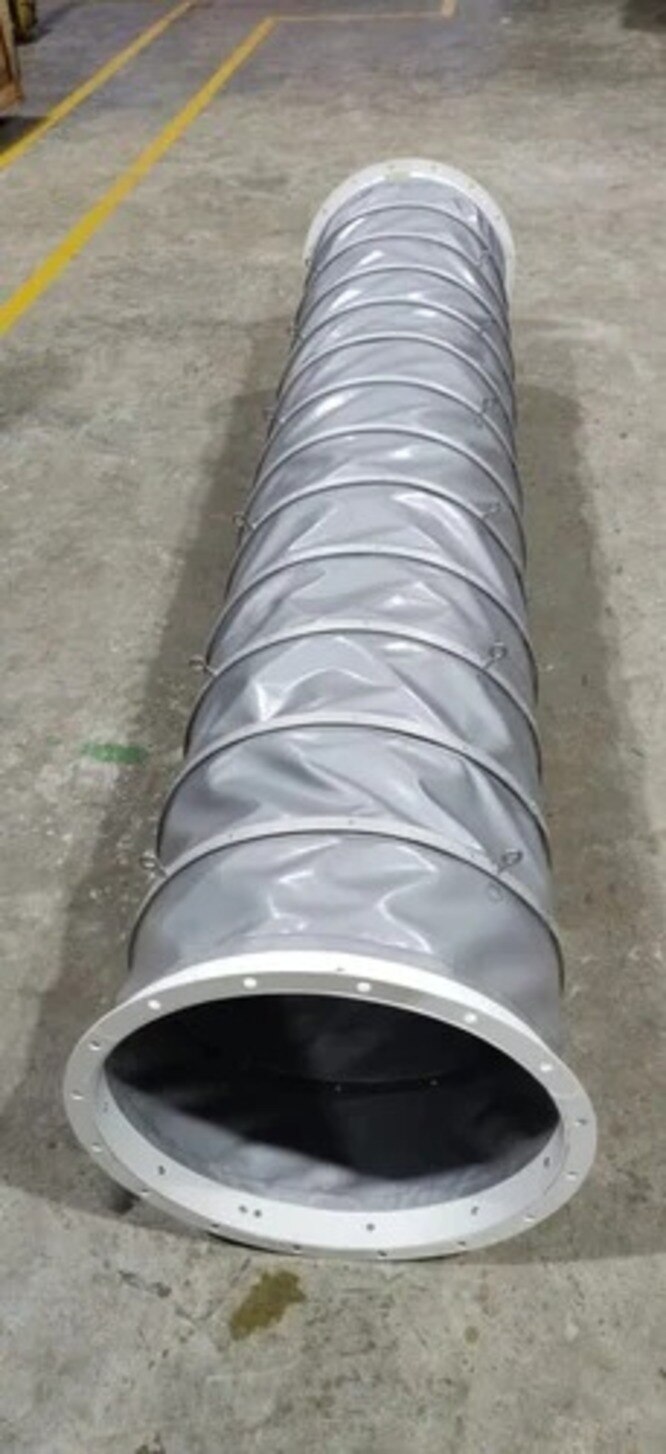
A fly ash bulk loading bellow forms the moving, enclosed connection between a silo or loading spout and a tanker, rail wagon, truck inlet or receiving port. The assembly normally combines a flexible telescopic section, a rigid inlet or outlet cone, suspension hardware, an interface seal and a dust-extraction connection.
During loading, the bellow extends until its outlet seats against the vehicle inlet. After filling, it retracts to clear the vehicle and remains supported in its parked position. The seal must stay aligned while the vehicle settles or shifts; a poor fit lets fine ash escape and allows rainwater or washdown fluid into the folds.
| Type | Function | Limitation |
|---|---|---|
| Loading spot bellow | Reaches the vehicle during filling and encloses the transfer path | Requires correct extension, support and inlet sealing |
| Spout bellow cover or dust sleeve | Protects or encloses a connection | May not provide the complete loading geometry or vehicle reach |
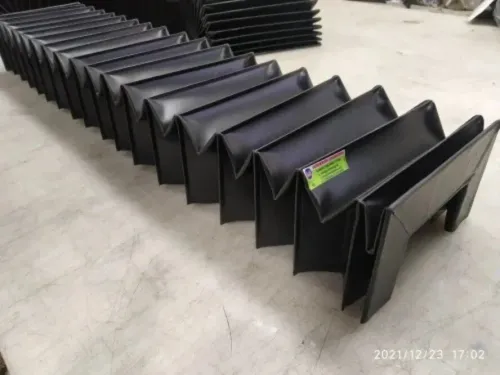
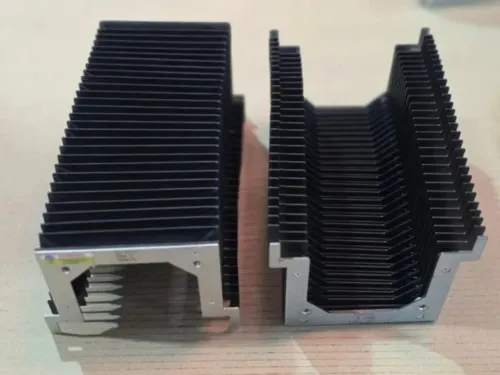
| Machine-guideway protective bellow | Shields moving machine components from chips and debris | Not a substitute for fly ash bulk loading bellows |
Bellow covers for fly ash need more than a closed sleeve. Powder entering the tanker displaces air, which needs a controlled return path or correctly positioned extraction line. Without it, pressure drives fugitive dust through folds and gaps; overfilling creates a larger release, and poor sealing can expose workers to respirable crystalline silica.
Bulk loading bellows must therefore be designed around both material flow and air movement.
How to measure the loading point before ordering
Measure the complete loading envelope, not nominal vertical travel alone. The bellow must reach the highest and lowest truck or rail-wagon inlet positions, tolerate vehicle-positioning error, retract high enough for clearance, and avoid lateral or swing movement that could pull it off the seal.
Record these dimensions before specifying bulk loading bellows:
- Collapsed length, working extension and total stroke
- Internal diameter, outlet diameter and connection height
- Retraction height and available clearance above and around the parked bellow
- Distance from the support to the vehicle connection
- Actual outside diameter at the mating inlet
| Measurement | Check | Failure prevented |
|---|---|---|
| Highest and lowest inlet positions | Include positioning tolerance | Bottoming out or losing the seal |
| Parked height and surrounding clearance | Include roof, rails, ladders and platforms | Hanging too low or striking equipment |
| Lateral and swing movement | Measure movement during vehicle approach and loading | Fold distortion and outlet misalignment |
| Receiving inlet shape | Record round, oval, flanged or clamped | Incorrect outlet or interface seal |
At the existing installation, photograph and sketch the silo outlet, rigid cone, suspension points, flange or clamp pattern, bolt-hole circle, gasket face, extraction port and nearby obstructions. Measure the available space around the parked bellow, not just the gap below the silo.
If the inlet has no standard interface, request a dimensional drawing and a full-stroke test fit before manufacture. These checks also prevent a spout bellow cover from being ordered with the wrong connection geometry.
Which construction and material suits abrasive fly ash
Specify the lower outlet and first working folds for the measured abrasion load; do not accept “heavy-duty fabric” as a material specification. Fine ash fills fabric pores, penetrates stitched seams and grinds repeated folds, while moisture can cake inside and restrict movement.
| Option | Strength | When it applies |
|---|---|---|
| Coated fabric | Practical cleanable barrier; performance depends on coating, fabric mass and seam design | Moderate abrasion and controlled temperature |
| Elastomeric | Better flex-fatigue and sealing around moving folds | Repeated telescoping, dust penetration or higher flex demand |
| Fluoropolymer | Strong chemical, heat and low-adhesion performance | High temperature, alkaline or cement dust, and difficult cleaning |
For bellow covers for fly ash loading equipment in Chhatrapati Sambhajinagar, request fabric mass, coating type and thickness, seam construction, flex-fatigue results, abrasion resistance and a defined cleaning method. Match the temperature rating to measured ash temperature, start-up peaks, radiant heating and heat transfer from the metal cone—not ambient air.
Use a replaceable lower liner, wear strips or reinforced lower section where the outlet contacts the powder stream. Segmented or concertina construction controls repeated telescoping; add wire reinforcement only for shape retention or collapse resistance, because exposed wire creates an abrasion path.
Specify UV-stabilised outer fabric, protected fasteners and compatibility with cement or alkaline dust. Avoid water-trapping pockets and state how operators will remove caked ash. These details separate durable bellow covers for fly ash from generic covers and determine whether fly ash bulk loading bellows remain mobile through sun, heat, monsoon moisture and dust accumulation.
How to control dust, static and moisture during loading
The outlet must seat against the tanker, truck or rail-wagon inlet before powder flows. The folds must extend freely without touching guards, suspension parts or the vehicle; displaced air must return through a controlled vent or extraction line, or pressure will push fly ash through the folds and seal.
1. Design the extraction connection around the complete loading geometry. Locate and size the connection beside the actual dust-release zone, not as a nominal port added after fabrication. Poor placement can pull the fabric inward or leave a dust plume at the vehicle inlet.
Specify the gasket, seal or clamp, plus a high-level trip, feed shutoff and overfill response.
2. Specify a conductive or dissipative construction where electrostatic ignition is credible. Name the permitted resistance range in ohms for the fabric and complete assembly, identify bonding points, and require a continuity test from the outlet and each bonded section to the plant earth using a calibrated low-resistance meter.
“Antistatic” alone is not an acceptance criterion.
3. Treat fly ash as a possible respirable crystalline silica source. Verify enclosure leakage and extraction performance during filling; a cover does not prove containment. For coal-derived ash, test representative material and process conditions for combustion risk, including Kst and Pmax where applicable.
4. Protect the parked unit from rain and washdown, then provide a dry-access cleaning method. Isolate and empty the line before removing caked ash with a HEPA vacuum or non-sparking brush; do not force wet ash into the folds with compressed air.
Apply the same controls to fly ash bulk loading bellows, bulk loading bellows and spout bellow covers.
What to require from a supplier and test at handover
A supplier quote is incomplete without a drawing and acceptance plan. Treat bellow covers for fly ash loading equipment in Chhatrapati Sambhajinagar as engineered interfaces, not generic “durable” fabric products. GURUKRUPA BELLOWS PVT LTD can be evaluated on the same documented evidence as any local industrial supplier.
1. Request a dimensioned drawing showing collapsed length, full extension, internal and outlet diameters, flange or clamp pattern, bolt-hole circle, suspension points, extraction-port location, outlet seal, grounding points and parked clearance.
2. Require a material schedule stating fabric mass, coating, seam construction, temperature range, UV resistance, abrasion rating and compatibility with alkaline ash. Specify a replaceable lower liner or reinforced first folds; these areas wear fastest. Record spare liners, wear strips, fasteners and seals, with part numbers and lead times.
3. Obtain written cleaning instructions covering dry removal, washdown limits, trapped-water prevention and access to every fold. Specify protected fasteners and UV-stabilised outer fabric for sun, heat, monsoon moisture and dust.
4. At the factory and site, run the bulk loading bellows through the complete stroke. Check fold interference, suspension travel, outlet seating, vehicle clearance and retraction. Under actual loading, measure extraction flow and inspect for leakage at seams, seals and the receiving inlet.
5. Where specified, test electrical-bond continuity using the agreed method and resistance limit. Inspect the parked bellow for rainwater entry, lower-section abrasion and accessible cleaning points.
Log inspections at defined intervals for folds, seams, liners, fasteners, seals, grounding connections and extraction performance. Local climate sets the maintenance attention, not the temperature, dust or movement specification.
Related products
 | Fly Ash Bulk Loading Spot Bellow Fly Ash Bulk Loading Spot Bellow ₹10000 Product Details: Minimum Order Quantity 01 Number Brand GURUKRUPA Size ANY We manufacture a wide range of Fly Ash Bulk Loading Spot Bellow in various... View product → |
 | Cement Plant Bulk Loading Unloading Bellows Cement Plant Bulk Loading Unloading Bellows ₹5000 Product Details: Brand GURUKRUPA Size ANY Having rich experience and thorough understanding of the market operations, we are engaged in manufacturing... View product → |
Frequently asked questions
What does a fly ash loading bellow do?
It creates an enclosed, flexible connection between a silo or loading spout and a tanker, truck, rail wagon or receiving inlet. It also supports dust extraction and limits material escape during transfer.
What measurements are needed before ordering a loading bellow?
Record the fixed and moving connection diameters, vertical travel, mounting height, flange bolt pattern, available retraction space, outlet clearance and dust-extraction port size.
Which materials suit abrasive fly ash?
Specify a wear-resistant flexible fabric with reinforced seams, abrasion-resistant liners where needed, and rigid cones protected against impact and erosion. Match the material to temperature, ash chemistry and movement frequency.
How do you control dust, static and moisture during loading?
Connect extraction at the designed port, seal the tanker inlet, bond conductive parts to earth and inspect for leaks. Keep the bellow and ash stream protected from rain and condensation.
What should you require from a bellow supplier?
Request a dimensional drawing, material and temperature limits, travel rating, extraction-port details, earthing provisions, installation instructions and inspection records. Test full extension, retraction, alignment, sealing and extraction at handover.