The right cover depends on more than whether the machine uses aluminium, steel, or fabric. By comparing movement, chip exposure, available retraction space, sealing, and maintenance requirements, you can identify the design that protects the guideway without creating a new interference or service problem.
Key takeaways
- Choose nested rigid boxes for enclosed linear travel and strong chip protection.
- Choose articulated slats when the cover must roll into a compact package.
- Check axis travel, folded height, speed, heat, coolant and chip load before selection.
- Give suppliers dimensions, motion data and hazard details before requesting a quotation.
Start with the construction: nested boxes, articulated slats, or flexible folds
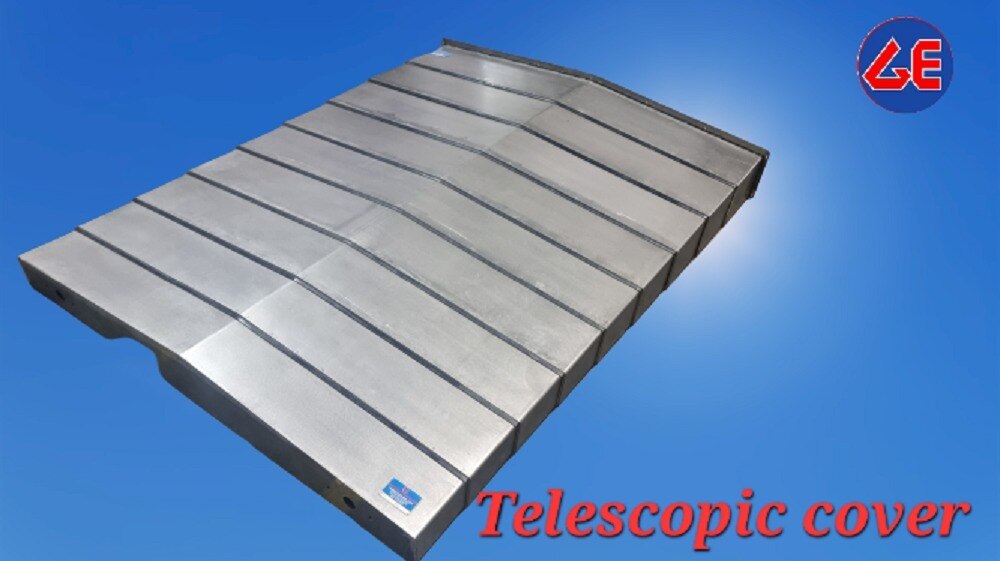
A telescopic cover is built from nested rigid boxes that slide inside one another along a machine axis. An apron cover uses overlapping metal slats or articulated segments linked into a flexible chain, often rolling into a compact package.
| Construction | Physical movement | Main structural feature |
|---|---|---|
| Telescopic steel cover | Sections telescope into one another | Rigid surfaces, guides, wipers and drainage |
| Apron cover | Linked slats bend, roll or fold | Overlapping joints and a shallow retracted package |
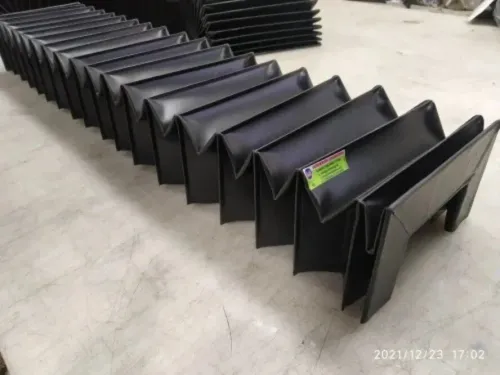
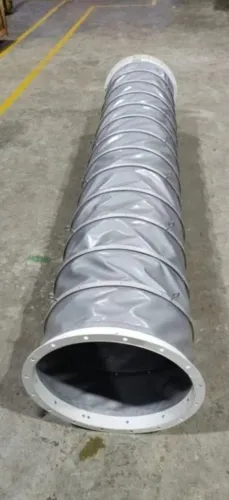
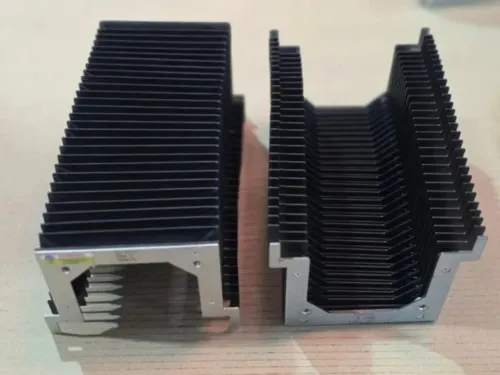
| Fabric bellow | Accordion folds compress and extend | Flexible coated fabric supported by frames or stays |
A bellow cover is different again: its protection comes from flexible accordion folds rather than sliding boxes or linked slats. That distinction matters because fabric handles movement and mass differently from steel, while hot chips, sharp swarf and coolant attack the materials and joints in different ways.
The phrase telescopic bellow cover requires clarification because suppliers use it inconsistently. It may mean a steel telescopic cover fitted with flexible bellows, a fabric bellow designed for telescopic-style extension, or a hybrid assembly combining rigid sections and folded fabric. Do not compare names alone.
Before requesting a quotation, check these points:
- Ask for a cross-section showing boxes, slats, folds, seals and supports.
- Confirm whether the moving structure is steel, aluminium, coated fabric or a combination.
- Request the retracted and extended lengths, not only the advertised travel.
- State whether the cover must resist hot chips, abrasive swarf, coolant or oil.
- Ask how joints, edges and openings are sealed, drained and serviced.
Match the cover to the machine axis and the hazard
Linear guideways facing hot, sharp, heavy chips need a rigid telescopic cover; long-travel axes with little room for a retracted stack often suit an apron cover. Coolant, chip shape, and axis orientation decide the choice more reliably than machine name alone.
| Axis or application | Preferred design | Reason and warning |
|---|---|---|
| Linear guideway on a machining centre | Telescopic cover | Rigid sections deflect broken carbide and steel chips; add wipers and drainage for flood coolant. Clean chips trapped between boxes. |
| CNC lathe cross-slide | Telescopic cover or compact apron | Telescopic covers for machine tools handle turning chips and coolant well. Choose an apron where the slide has restricted retracted length. |
| Long bed or large travel axis | Apron cover | Linked slats roll or fold into a smaller storage zone; verify slat overlap against fine chips and coolant splash. |
| Surface or cylindrical grinder | Sealed telescopic cover or coated-fabric bellow | Fine abrasive dust demands tight wipers and positive drainage. Keep grinding swarf from entering joints. |
| Fast, light auxiliary axis | Fabric bellow or hybrid | Low moving mass supports rapid motion; shield the chip-impact zone with rigid sections. |
The practical telescopic bellow cover benefits include rigid chip deflection, compact retraction, and compatibility with exposed guideways. They disappear if hot chips weld to the leading edge, coolant pools inside, or worn wipers admit abrasive sludge.
Use a hybrid when a telescopic section protects the impact area while an apron or flexible bellow covers a longer, quieter travel path. For any option, confirm the cover’s material and seals against the actual coolant, oil, chip temperature, and chip shape—not a generic machine category.
Compare movement, installation space, and likely failure points
Choose by the axis motion and the space available at full extension and full compression, not by travel length alone. Apron covers versus telescopic covers becomes a practical decision when retracted length, speed, acceleration, and access for maintenance are measured together.
| Option | Movement and installation space | Likely failure points and maintenance |
|---|---|---|
| Telescopic cover | Nested sections extend along a straight axis and stack into a defined retracted length. It needs clearance for overlap, wipers, rollers, sliding shoes, drainage, the saddle, and adjacent guarding. | Hot chips can dent sections; chips or coolant can damage wipers and jam sliding parts. Inspect overlaps, guides, drains, and seals. |
| Apron cover | Linked metal slats roll or articulate, making a shallow package for long travel and allowing curved paths. Check roller space, bend radius, end attachments, and the roll-up envelope. | Bent slats, worn links, bearings, rollers, or attachments cause tracking errors and higher drive force. Replace damaged slats before they distort the whole apron. |
A telescopic cover suits a straight, fast axis when rigid sections can absorb chip impact and the machine provides enough compression space. High acceleration and frequent cycles expose weak guides, loose fasteners, and excessive moving mass quickly; submit those values, not just maximum travel.
An apron cover suits restricted retracted length or a curved route, but its moving joints create more wear points. Leave access to clean chips, inspect links, and replace rollers. Check clearances in both positions: a cover that fits the guideway can still collide with the saddle or tooling.
Use operating conditions to make the decision
Hot, needle-like chips and high-pressure coolant favour telescopic covers; long travel, restricted retracted length, and lower-impact cutting favour apron covers. Choose from the operating conditions, not from the name alone.
| Condition | Telescopic cover | Apron cover |
|---|---|---|
| Chip temperature and shape | Best for hot, sharp, heavy chips that strike the cover; rigid boxes deflect impact. | Suits cooler, lighter chips; sharp chips can damage slat joints and overlaps. |
| Coolant | Handles flood coolant with wipers, drainage, and scrapers designed into the cover. | Needs sealed overlaps, scrapers, drainage, and the correct orientation; joints can admit fine chips and coolant. |
| Travel length | Offers compact retraction but requires space for nested boxes and controlled motion. | Suits long travel and limited retracted length when roll-up storage is available. |
| Dynamic loads | Check acceleration, cycle frequency, moving mass, and support; poor alignment can jam sections. | Lower moving mass can suit fast travel, but slat shock and uneven loading can shorten joint life. |
| Sealing need | Better choice for a defined sealed barrier around linear guideways. | Select it only when its slat design meets the required leakage and contamination limit. |
The telescopic bellow cover benefits include rigid chip deflection, compact storage, integrated wipers, and drainage. A fabric bellow can reduce mass and noise, but verify resistance to the actual coolant, oil, heat, and abrasion.
Use a hybrid when an apron handles long travel or tight retraction while a telescopic or reinforced bellow section protects a hot-chip zone. Define the boundary between both covers so chips cannot collect at the transition.
Turn the choice into a specification before requesting a quotation
Send the supplier a machine-specific specification, not only an axis length. For telescopic bellow covers versus apron covers in Chhatrapati Sambhajinagar, the same engineering inputs determine fit, life, and service response.
1. Record maximum and minimum cover lengths, travel, available height and width, guideway dimensions, mounting points, orientation, and every nearby obstruction. Include retracted clearance and the allowable moving mass.
2. Attach a dimensioned machine drawing, guideway cross-section, photographs, and the mounting-face tolerances. Mark cable carriers, lubrication points, wipers, drains, and access panels that the cover must not block.
3. State axis speed, acceleration, cycle frequency, travel direction, and daily operating hours. A cover sized for travel alone can fail when repeated acceleration pulls sections, slats, or attachments apart.
4. Describe the hazard precisely: chip shape and temperature, grinding dust, welding spatter, coolant type and additives, cleaning chemicals, ambient temperature, and required sealing. For telescopic covers for machine tools, request the steel grade or fabric, coating, scraper material, fold or slat construction, and temperature and chemical-resistance ratings.
5. Ask for a cross-section because “telescopic bellow cover” is ambiguous: confirm nested rigid boxes, a flexible accordion bellow, or a combined design. Request replacement wipers, slats, rollers, fabric modules, fasteners, lubrication instructions, inspection intervals, warranty exclusions, lead time, and local repair response.
GURUKRUPA BELLOWS PVT LTD should receive these inputs before quoting, so its proposed cover can be checked against the machine drawing rather than selected from a name or photograph.
Related products
 | ALUMINIUM APRON COVER MAG SPECHT ALUMINIUM APRON COVER ₹1000 Flexible apron covers are a critical component of machine protection. View product → |
 | Extruded Aluminum Apron Covers Extruded Aluminum Apron Covers Product Details: Brand GURUKRUPA Color Silver Condition New Size Customised We are offering a wide range of Extruded Aluminum Apron Covers. View product → |
Frequently asked questions
What is the main construction difference between telescopic and apron covers?
Telescopic covers use nested rigid boxes that slide along an axis. Apron covers use overlapping metal slats or articulated segments linked into a flexible chain.
Which cover suits telescopic machine-tool guideways?
Telescopic covers suit linear machine-tool axes that need enclosed protection from chips, coolant and debris across a defined travel path.
When are apron covers preferable to telescopic covers?
Apron covers are preferable when limited installation space, compact retraction or a rolling cover arrangement matters more than a rigid enclosure.
What operating conditions should you compare before choosing a cover?
Compare axis travel, speed, acceleration, folded height, chip shape, coolant exposure, heat, abrasive dust and the available mounting space.
Related products
 | Telescopic Bellow Cover ₹1000 Product Details: Brand GURUKRUPA Ours is a distinguished name in the business that manufactures and supplies Telescopic Bellow Cover that is vastly... View product → |
 | Aluminium Apron cover ₹5000 We are leading manufacturer of Aluminium Apron Cover. These Apron Covers are made out of anodised aluminium lamellas coupled by flexible and... View product → |
 | Bellow Cover ₹1000 We are offering an excellent quality of Protective Bellows for all type Guideways. This design covers three sides of the rail. View product → |
 | Apron Covers Product Details: Brand GURUKRUPA Size Customised Being one of the celebrated names of the market, we bring forth Apron Covers that is used for... View product → |