A scissor lift changes shape every time its hydraulic cylinders extend or retract, opening pinch points and exposing rods, pivots, hoses and sensors to chips, dust, oil and water. By the end, you will know which parts need protection, how a folding cover must move through the complete stroke, and what measurements and operating conditions to provide before requesting a quotation.
Key takeaways
- Map pinch points across the entire raised and lowered stroke.
- Leave clearance for arms, rollers, pins, cylinders and emergency access.
- Specify folded length, extension, material, heat exposure and drainage.
- Inspect folds, fasteners and trapped debris before failures damage the lift.
How the Scissor Lift Mechanism Moves and Creates Exposure
Crossed lift arms rise and lower as they pivot around pins while hydraulic cylinders extend and retract. That action changes the distance between arms, rollers and fixed guide surfaces, so pinch points appear and shift throughout the stroke—not only when the platform is fully lowered.
Exposed areas include:
- The hydraulic cylinder rod, where scratches score the surface and damage the seal during retraction.
- The cylinder barrel, pivot pins and arm joints, where debris mixes with oil and accelerates wear.
- Rollers and guide surfaces, where chips and abrasive dust obstruct travel or cause uneven loading.
- Hydraulic hoses, which can rub against moving members or trap contamination at fittings.
- Nearby sensors, switches and connectors, which water, hydraulic oil and outdoor debris can foul or damage.
Metal chips can gouge a rod; welding spatter can burn through a cover or bond to moving parts. Abrasive dust works into seals and pivots, while water promotes corrosion and carries contamination into joints. Outdoor debris can block rollers and interfere with sensors.
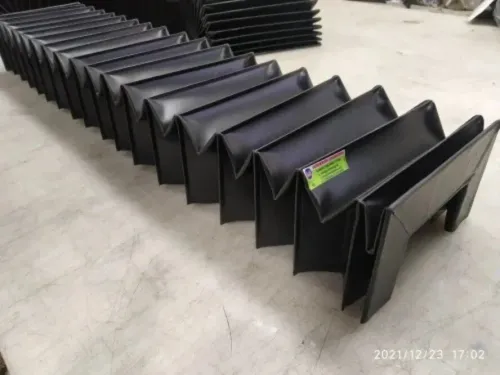
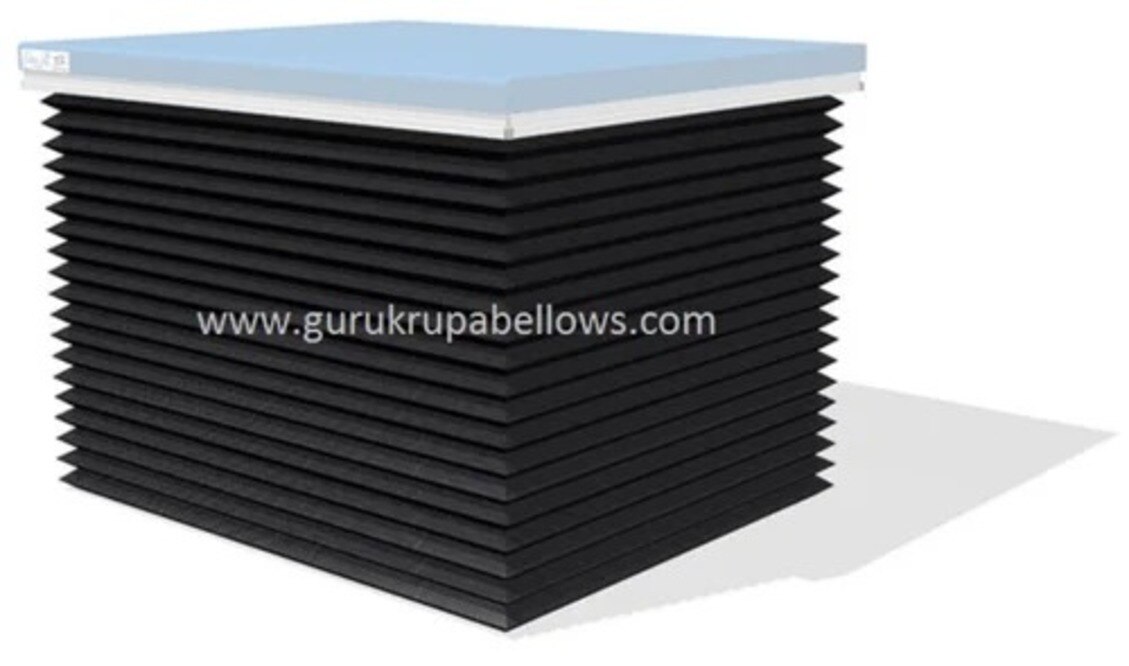
Scissor lift bellows act as contamination barriers around these vulnerable areas. They fold as the geometry changes, keeping chips, dust, spatter and liquids away without strengthening the scissor structure or carrying the platform load.
The cover must still clear every moving part; a barrier that rubs, snags or enters a pinch point becomes another failure hazard.
What a Folding Cover Protects—and What It Must Leave Free
Scissor lift machine protection starts with matching the cover to the part that moves, not assuming one bellows shields the whole lift. A hydraulic rod cover protects the polished rod and its seals; it does not enclose crossed arms, rollers, guideways or pivot pins.
Complete-arm protection requires a separate enclosure sized around the assembly’s moving envelope.
| Component | What the cover shields | What remains exposed |
|---|---|---|
| Hydraulic rod | Dust, chips, water and spatter reaching the rod and seals | Cylinder barrel and mounting clevis |
| Cylinder barrel | Contamination on exposed barrel sections | Rod, ports and fittings |
| Pivot areas | Abrasive debris near pins and bushings | Pin ends and grease points if left accessible |
| Guide surfaces and rollers | Chips and dirt that can obstruct travel | The full guide path unless the cover spans it |
| Hoses | Abrasion, oil, water and falling debris | Hose fittings and bend zones needing inspection |
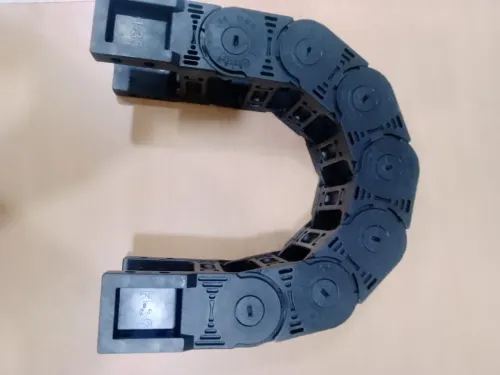
| Cable carriers | Chips and spatter entering carrier links | Cable exits and unsupported loops |
| Sensors | Direct contamination and impact | Their brackets, wiring and sensing gap |
A bellows normally attaches between a stationary frame and a moving lift member, folding as the geometry closes and unfolding as it rises. Attachment points must tolerate reversing motion, vibration and off-axis movement; rigidly clamping flexible material can tear the first or last fold.
Wide or vertical lift mechanism bellow covers may need internal frames, slats or guide strips to stop sagging into pinch zones. Check both coverage and interference at lowered, mid-stroke and raised positions, including rubbing, snagging, restricted descent, roller contact and access for maintenance.
Loose fabric or hardware can enter rollers or scissor arms and obstruct emergency lowering.
How to Measure the Cover and Check the Complete Lift Cycle
Size lift mechanism bellow covers from the complete geometry, not maximum lift height alone. Record the folded and extended positions, then calculate the total stroke and confirm that the cover neither bottoms out when compressed nor pulls apart at full extension.
Measure:
- Closed length, expanded length and total stroke
- Inside and outside dimensions
- Fold height and minimum bend or fold allowance
- Mounting-face dimensions and attachment-hole pattern
- Available clearance around the cover and mechanism
- Cylinder rod diameter, barrel diameter and mounting orientation
Check the cover with the platform fully lowered, at mid-stroke and fully raised. A cover that clears at mid-stroke can be pinched when collapsed, bottom out against the frame, restrict descent or pull apart at full extension.
Map the full moving envelope of arms, pivots, rollers, hoses and cable carriers, then add clearance for maintenance access, tools and hand placement.
Provide the supplier with travel speed, cycle frequency, operating temperature, contaminant type, and photographs or drawings taken at all three positions. Include coolant, oil, chips, welding spatter, water and outdoor debris where they apply.
| Position | Check | Failure to catch |
|---|---|---|
| Fully lowered | Folded length, bottom clearance and arm overlap | Cover bottoms out or enters a pinch point |
| Mid-stroke | Fold movement, hose routing and roller clearance | Cover rubs, snags or restricts travel |
| Fully raised | Expanded length, attachment tension and maintenance access | Cover pulls apart or blocks servicing |
How Materials, Drainage and Inspection Control Real-World Failure
A cover that survives dust can still split, swell or ignite in service. Select scissor lift machine protection against coolant chemistry, hydraulic oil, chip impact, welding spatter, ambient temperature, UV exposure, required flexibility and flame behaviour—not dust protection alone. A general-purpose PVC-coated fabric is not universal.
| Exposure | Material or design response | Failure if mismatched |
|---|---|---|
| Coolant and oil | Check chemical compatibility of the coating, fabric and thread | Swelling, softening, delamination or seal-like leakage |
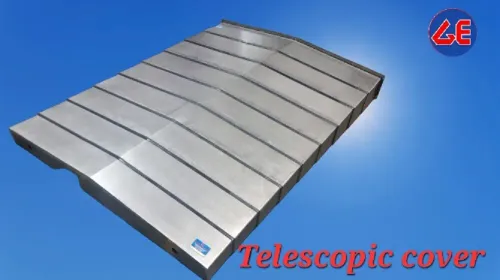
| Hot chips and welding spatter | Use heat-resistant fabric, lamellae or external shields | Burn-through, brittle coating or welded-on debris |
| Temperature and UV | Specify the operating range and UV-resistant construction | Cracking, hardening and shortened flex life |
| Flexing and flame risk | Match fold geometry, flex rating and flame behaviour to the cycle | Torn folds, ignition or restricted movement |
Avoid unintended low points that retain coolant and chips. Provide cleaning access and direct runoff away from bearings, switches and electrical connectors; trapped contamination turns drainage into a failure mechanism.
At every shift or scheduled service interval, inspect:
- Cuts, delamination, hardened coating and loose stitching
- Trapped chips, damaged end frames and loose hardware
- Lost clearance through the full stroke
- Loose fabric or a detached frame that could enter rollers, scissor arms or an emergency lowering route
Include ISO 13857 safety distances and ISO 14120 guard-design principles in the risk assessment. A flexible scissor lift bellows is supplementary protection, not a replacement for rigid guarding, safe distance or an interlocked access door.
What to Put in a Procurement Specification for a Local Application
A reliable quotation starts with measured geometry, not the label “scissor lift bellows.” That phrase does not reveal the folded length, extension, movement envelope, material exposure or attachment method, so a standard cover can bottom out, snag an arm or restrict the stroke.
- Collapsed and extended cover dimensions, total stroke and fold height
- Mounting envelope, minimum clearance and required bend or fold allowance
- Hydraulic rod diameter, barrel diameter, mounting orientation and attachment-hole pattern
- Travel speed, cycle frequency and required service life
- Clearance around arms, pivots, rollers, hoses, cable carriers and maintenance access
- Contaminant type, such as metal chips, abrasive dust, welding spatter, oil, water or outdoor debris
- Minimum and maximum temperature, UV exposure and cleaning chemicals
- Drainage needs, including low points, runoff direction and access for removing trapped chips
- Any flame-behaviour or heat-shield requirement
3. Attach photographs or dimensioned drawings with the platform fully lowered, at mid-stroke and fully raised. Mark pinch zones and verify that the folds do not rub, pull apart or enter the emergency lowering route at any position.
For scissor lift bellow covers in Chhatrapati Sambhajinagar, a buyer can ask GURUKRUPA BELLOWS PVT LTD to review the measured envelope, material exposure and attachment arrangement; that review does not make an unverified standard cover suitable.
Related products
 | Bellow Cover ₹5000 Product Details: Brand GURUKRUPA Color Black-Blue Size Customised With the support of our excellent team workers, we have been delivering the best... View product → |
 | Product Details: Brand GURUKRUPA Color Black-Blue Size Customised With support of our excellent team workers, we have been delivering the best... View product → |
Frequently asked questions
Why do scissor lift mechanisms need bellow covers?
Pivoting arms, rollers and guide surfaces create shifting pinch points that expose components to dust, chips, heat and mechanical wear. A folding cover shields those areas while following the lift stroke.
What must a scissor lift bellow cover leave free?
The cover must not restrict arm pivots, rollers, hydraulic cylinders, pins, lubrication points, emergency access or the platform’s full movement. Check clearance at fully lowered, intermediate and fully raised positions.
How do you measure a bellow cover for a scissor lift?
Record the protected opening, compressed and extended lengths, mounting dimensions, available clearance and the complete lift stroke. Test the proposed dimensions through every position before production.
Which material and drainage details matter for lift mechanism bellow covers?
Select the fabric, coating and reinforcement for the site’s heat, oil, coolant, sparks, abrasion and cleaning chemicals. Add drainage paths so liquid and chips cannot collect in the folds.
What belongs in a procurement specification for local scissor lift bellows?
State the lift model, drawings, stroke, folded and extended dimensions, mounting method, operating environment, material requirements, inspection points and delivery or service needs for the local application.